
Social Consensus Needed for Game Prize Regulations, GSOK White Paper Published
게임 경품 규제 사회적 합의 필요, GSOK 백서 발간
2025.12.23 18:29 UTC+9
AI Summary
GSOK has released its fourth white paper detailing the history of game prize regulations in Korea. It analyzes the evolution from the 1980s through the post-Sea Story era, highlighting the tension between industry growth and social protection. The full report is now available for public review on the official GSOK website.
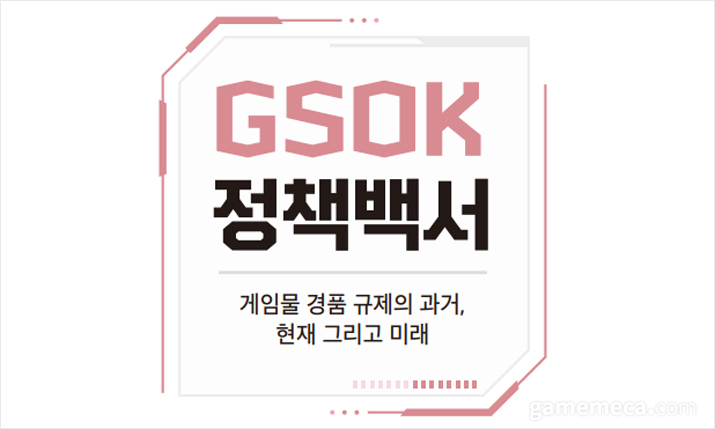
The Game Self-Regulation Organization of Korea (GSOK) has published its latest white paper, 'Past, Present, and Future of Game Prize Regulations', providing a deep dive into the history and shifting landscape of prize control within the domestic gaming sector.
This marks the fourth installment in the annual GSOK policy white paper series, offering a diachronic analysis of how the regulatory framework for game prizes has taken shape and evolved over the years.
The report covers the legal definitions of prizes, the drafting and evolution of prize notifications, the policy shifts following the 'Sea Story' incident, relevant legal precedents, administrative measures, and a comparative analysis of domestic and international policy environments.
It examines the timeline from the early 1980s, when the foundation for prize notifications was first laid, through the high-intensity regulatory pivot triggered by the 2006 'Sea Story' scandal, up to the present day.
While general retail and marketing sectors have seen a gradual easing of prize restrictions, the gaming industry remains under a strict regulatory regime due to concerns over addiction and gambling.
The white paper emphasizes that prize regulation is not merely an administrative issue but is inextricably linked to public perception, societal sensitivity to gambling, and the balance between public interest and industry growth. It notes that deregulation cannot be pursued based on necessity alone; it must be discussed alongside the securing of public interest through social consensus, such as youth protection and gambling prevention.
Hwang Sung-ki, Chairman of GSOK, remarked, "Through this white paper, one can confirm the path that prize regulations have taken to arrive where they are today. We hope this serves as an important foundation for building a system that both the industry and society can trust, and for continuing relevant discussions in the future."
The GSOK policy white paper series is available on the official GSOK website.
한국게임정책자율기구(이하 기구)는 국내 게임 경품 규제 역사와 제도 변화를 정리한 GSOK 백서 '게임물 경품 규제의 과거, 현재 그리고 미래'를 발간했다.
한국게임정책자율기구가 매년 발간하는 GSOK 정책백서 시리즈의 네 번째 권으로, 국내 경품 규제 체계가 형성되고 변화한 과정을 통시적으로 분석했다.
구체적으로 경품의 개념 및 법·제도적 정의, 경품 고시의 제정과 변천, 바다이야기 사건 전후 정책 변화, 관련 판례 및 행정 조치, 국내외 비교와 정책 환경 분석, 향후 제도 개선 논의 등을 다룬다.
1980년대 초반에 경품 고시 제정을 통해 제도적 기반이 형성되던 시기부터 2006년 바다이야기 사건 후 고강도 규제 체계로의 전환을 거쳐 현재까지의 규제 변화를 조망한다.
일반 유통·마케팅 분야에서는 경품 고시가 사라지는 등 점진적으로 규제가 완화됐으나, 게임산업은 중독과 사행성 등을 이유로 엄격한 규제가 유지됐다.
백서는 경품 규제가 행정 규제 문제를 넘어 사회적 인식과 여론, 사행성에 대한 민감도, 공익 가치와 산업 진흥 사이의 균형 문제와 직결된 영역임을 강조한다. 또한 현실적으로는 규제 완화가 단순히 필요하다는 이유만으로 추진되기 어려운 영역임을 설명하고, 청소년 보호와 사행성 방지 등 사회적 합의를 통한 공익 가치 확보와 함께 논의되어야 함을 지적한다.
기구 황성기 의장은 "이번 백서를 통해 경품 규제가 어떤 경로를 거쳐 자리 잡고 변화해 왔는지 확인할 수 있을 것"이라며, "경품 규제 영역에서 산업과 사회가 함께 신뢰할 수 있는 체계를 마련하기 위해 고민하고, 향후 관련 논의를 이어가는 데 중요한 토대가 되길 바란다"고 말했다.
GSOK 정책백서 시리즈는 한국게임정책자율기구 공식 홈페이지에서 확인할 수 있다.
This news was translated by AI.

Let's not lose our initial resolve. Meticulously, one by one. risell@gamemeca.com
MOST POPULAR NEWS
- SANABI crowdfunding success story, Gyeonggi Content Agency and Tumblbug host pop-up exhibition
- 2026 LCK Regular Season Enters Final Week to Determine Final Standings
- New DLC and Level Cap Increase, Borderlands 4 Content Revealed
- Massive GTA 6 Leak Reveals Gameplay Footage and Map Details
- Total Prize Pool of 2.8 Billion KRW, EWC 2026 CROSSFIRE Event Starts on the 18th
- “Satisfying for Soulslike fans” Mortal Shell 2 receives an 84 Metacritic score
- 100-Year Career Mode Added, NBA 2K27 Core Content Revealed
- Fortnite Introduces 'Override Console' to Change Battlefield Rules
- Lenoa, Haru, and Meilin Arrive in Epic Seven: Chaos Zero Nightmare Collaboration Announced
- Epic CEO Tim Sweeney: “Opening the Platform, Leading Toward Unreal Engine 6”
MEDIA PARTNERSHIPS



GAMEMECA SNS