
Why do Chinese game companies hide their key developers?
중국 게임사가 핵심 개발자를 노출하지 않는 이유는?
2026.08.05 14:22 UTC+9

AI Summary
Chinese game studios hide developers to prevent poaching and retain total control. While poaching tactics were once rampant, recent legal crackdowns have cooled the practice significantly. Today, the focus is shifting toward system-based team building rather than relying on star directors.
There is a distinct, somewhat unsettling atmosphere that hits you when dealing with Chinese game studios. In South Korea, Japan, or the West, the launch of a new title is usually a red-carpet affair for the creators. Producers, directors, programmers, and even lead artists step into the spotlight, hosting interviews, streaming for fans, and tackling Q&As at industry events with a sense of pride.
In China, however, it is a different story. Developers are kept firmly behind the curtain, regardless of whether a game is pre- or post-launch. Media interviews are a rarity, and even when they do occur, it is common for the interviewee to demand complete anonymity—no names, no photos, just a vague handle. Industry insiders suggest this culture of secrecy stems from China’s cutthroat talent wars and rigid corporate control. The fear is simple: if a developer becomes a public face, they become a prime target for headhunters dangling astronomical salaries.
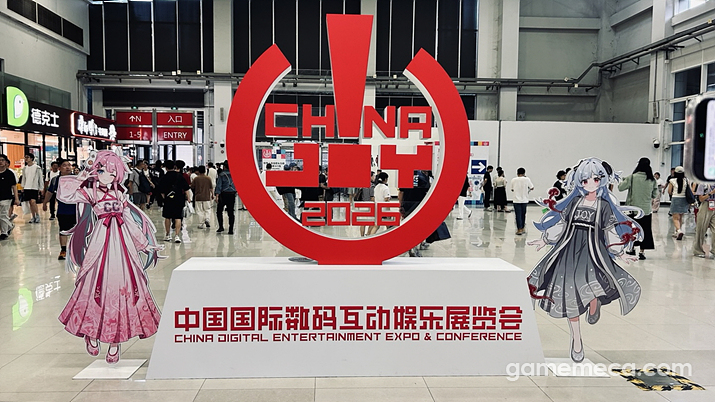
Gamemeca traveled to Shanghai last week for ChinaJoy 2026 to get to the bottom of this. We sat down with three local industry insiders. 'A' is a former developer from a major Chinese firm who moved to indie development after a high-profile, yet ultimately unstable, poaching attempt. 'B' is a current public relations official at a major Chinese gaming corporation. Finally, 'C' is a freelance journalist covering the industry and platforms like Bilibili. All three requested anonymity for our conversation.

Is Hiding Developers Really About Preventing Poaching?
When asked if this secrecy is a defensive move against poaching, A agreed, noting that Chinese firms view top talent as corporate property. The moment a director becomes a 'star,' their individual leverage threatens the company’s system. A explained, 'Just like Hideo Kojima, once you make a director a star, their influence over the company system grows. They demand higher pay and immediately top the hit list for rival headhunters.' To prevent this, big studios reduce developers to mere 'screws' (Luo Si Ding) in the machine, pushing the corporate brand rather than the individual.
B, however, dismisses the idea that keeping developers out of the spotlight stops headhunters. 'If you think hiding a director stops the competition from finding them, you are mistaken,' B asserted. 'Headhunters and HR departments have sophisticated networks. They know exactly who is who, regardless of media exposure.' B argues that talent retention comes from better pay and environments, not hiding names. B noted that for their own firm, the market trend is shifting, with directors now appearing in live streams and interviews to engage directly with users.
B did agree with A on the desire to avoid 'star power' within the company. 'When a director builds a personal fandom, their bargaining power skyrockets,' B stated. 'If a game's success is tied to an individual rather than the company, the studio risks losing its soul when that person leaves. Companies have a strong desire to suppress personal branding and keep the focus squarely on the studio and the game title.'
A admitted that media exposure and headhunting aren't strictly linked, saying, 'You don't need a public profile to prove your skill. Word of mouth regarding who wrote the core logic for a project spreads quickly in private developer communities on WeChat or at tech seminars. Headhunters use that information.' Still, A added that companies remain cautious, as any media presence makes a developer visible to rival executives.
What Does Talent Poaching Actually Look Like?
The tactics used to poach talent are a contentious subject. A insists they are still very much alive, while B claims such practices are largely a relic of the past.
A described several workarounds to bypass legal risks, such as hiring talent through third-party entities. 'Companies set up shell firms or subsidiaries under the name of relatives or partners, disguised as IT consultancies. They then sign technical advisory or outsourcing contracts with the target studio,' A explained. 'Some even use legal entities in Singapore, Hong Kong, or North America where Chinese law is harder to enforce, allowing the poached talent to manage domestic teams remotely. It takes forever to challenge these arrangements in court.'
A recalled being shackled by 'Golden Handcuffs' (Jin Shou Kao) at a previous job—long-term bonuses or stock options spread out over years. 'When a game hit it big, competitors would offer double my base salary, plus a lump sum to cover the breach-of-contract penalties and the forfeited bonuses. It’s cheaper for them to pay that than to spend two years building a team from scratch. They would poach entire groups of directors, art leads, and planners in one go. We called it Chu Qu Gao Shi Qing—going out to stir up trouble.'
B countered that while these shell-company tactics were common, they have largely vanished over the last two to three years. 'The industry has matured. Major firms now prefer legal, transparent methods, such as supporting a director in establishing an independent studio and taking an equity stake, rather than resorting to risky poaching schemes.'
A added that poaching isn't always about talent acquisition—sometimes it's about sabotage. 'If a competitor is about to launch a hit, we might pay a fortune to poach their core engine team. It’s a 'decapitation strike' (Zhan Shou Xing Dong). Even if they don't thrive at our company, the competitor’s project loses continuity and gets delayed. It’s worth spending tens of millions to wipe out hundreds of millions in potential revenue for a rival.'
C offered a more legal perspective, noting that Chinese courts are now handing out harsh criminal penalties for source code theft and breach of non-compete agreements. Legal risks have spiked, and projects born from illicit poaching often fail due to internal friction or court-ordered injunctions. Consequently, the frenzy of poaching between major firms has cooled significantly.
C pointed to the case between Tencent and Xu Zhenhua, the founder of Moonton Technology, as a turning point. Xu, a former Tencent developer, secretly founded a separate company while still under contract. Despite attempts to use legal loopholes, the court ruled that Xu had infringed on trade secrets and engaged in unfair competition, ordering Xu to pay approximately 19.4 million yuan (about 4 billion KRW) in damages and return stock options.
C stated, 'After that case, the industry realized that you can't escape consequences. Companies now include clauses that claw back all stock earnings upon breach of non-compete agreements.' C noted that courts are increasingly thorough, tracking IP logs, source code commits, and financial flows to prove violations.
Most cases are settled out of court, however. Major firms prefer private arbitration to avoid the reputational damage and the risk of exposing their own source code or organizational structure during a public trial.

High Salaries Don't Guarantee Success
Furthermore, our interviewees noted that high-salary poaching often fails. A described the internal 'tank' culture of major firms, where teams are pitted against each other. If a project fails or a manager falls out of political favor, the team is quickly discarded. A compared it to 'throwing venomous insects into a jar and letting them eat each other until only the strongest one remains.'
B agreed, having seen many poached directors fail because they lacked the specific engine support or team infrastructure they enjoyed at their previous firms. This has led the industry to prioritize studio-wide systems and teamwork over reckless individual poaching.
Ultimately, while preventing poaching is a factor, the secrecy around developers is also about maintaining corporate control and protecting staff from the toxicity of extreme fan culture in China, where social media influencers hold immense sway.
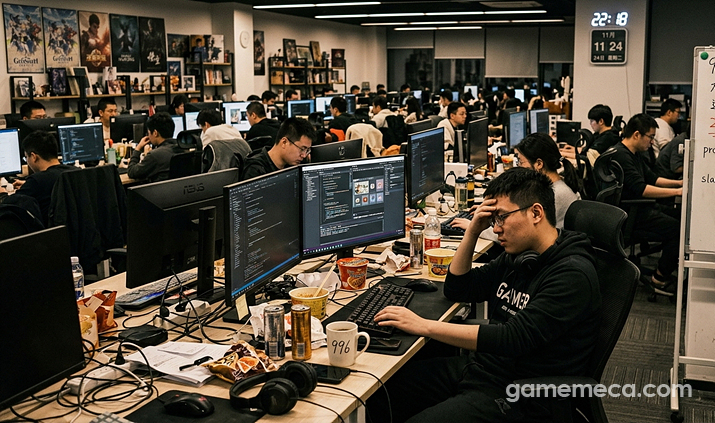
A concluded by mentioning the '35-year-old crisis' (35 Sui Wei Ji). With the grueling 996 culture (9 am to 9 pm, 6 days a week), developers over 35 are often seen as 'cost-inefficient' and face layoffs. Those who haven't reached executive status by then are often 'harvested' and cast aside. In a world where AI is increasingly handling coding and art, the pressure to land a high-paying role before that cutoff is immense, making developers more tempted to jump ship or market themselves aggressively.
언젠가부터 중국 게임사들과 소통하다 보면 독특한 분위기가 관찰된다. 보통 신작 게임을 공개하거나 출시할 때가 되면, 한국과 일본 및 서양 게임의 경우 개발자들이 전면에 나선다. 게임사는 프로듀서, 디렉터, 프로그래머, 아티스트, 사업 담당자 등을 내세워 매체들과 인터뷰를 적극적으로 진행하고, 방송을 통해 소통하고, 행사장에서 직접 발표도 하고 유저들로부터 질의응답도 받는다.
하지만 유독 중국 개발사들은 출시 전후를 막론하고 개발자들을 외부에 노출시키지 않는 경우가 많다. 국내외 매체를 통틀어 인터뷰를 아예 진행하지 않는 경우는 흔하고, 설령 진행되더라도 사진이나 이름 없이 철저히 닉네임과 익명으로 처리해 달라는 요구를 하기도 한다. 업계 일각에서는 이러한 폐쇄적 분위기의 원인으로 중국 게임산업 특유의 치열한 인재 쟁탈전과 철저한 기업 통제 시스템을 꼽았다. 인터뷰 등을 통해 개발자 이름과 얼굴이 알려지면 고액 연봉으로 경쟁사에 스카우트 되는 경우가 비일비재하기 때문에, 이를 숨기려 든다는 것이다.
게임메카는 지난 주 '차이나조이 2026'를 맞아 중국 상하이를 찾았다. 위 같은 소문의 진상을 확인하기 위해 현지 업계 관계자 3인을 각각 만나 관련 이유를 상세히 들어보았다. A씨는 중국 대형 게임사에서 10여년 간 근무하며 대형 게임 프로젝트에서 핵심 역할을 맡았던 전직 개발자로, 고액 스카우트 제의를 받아 이직했지만 이직한 회사에서 자리를 못 잡고 퇴직해 현재는 인디 개발자로 일하고 있다. B씨는 중국 대형 게임사에서 홍보 담당으로 수 년간 근무 중인 현직 직원이다. 마지막으로 C씨는 중국 게임매체와 빌리빌리 등 플랫폼에서 프리 라이터로 활동 중인 기자로, A씨와 B씨가 말한 내용을 듣고 첨언해 주었다. 셋 모두 익명을 요청해 인터뷰에 응했음을 밝힌다.
개발자 숨기기, 외부 스카우트 방지 목적인가 아닌가?
일단, 게임사가 개발자를 외부에 노출하지 않는 이유에 대해 A씨는 외부 스카우트 방지 목적 중 하나는 맞다고 말했다. 그는 중국 게임사들은 인재를 회사의 철저한 자산으로 보고 있다고 강조했다. 특정 디렉터를 스타로 띄우는 순간 개인의 영향력이 회사 시스템을 잡아먹게 된다는 것이다. 그는 "코지마 히데오처럼 특정 디렉터를 스타로 띄우는 순간, 개인의 영향력이 회사 시스템을 잡아먹게 된다. 연봉 협상 때 목소리가 커지는 건 기본이고 경쟁사 헤드헌터들의 1순위 타겟이 된다"고 밝혔다. 이에 대형 게임사들은 개발자를 철저히 시스템의 일부, 현지 은어로 ‘루오쓰딩(螺丝钉, 나사)’으로 만들어 버리고, 개발자 개인보다는 기업 브랜드를 앞세운다고 덧붙였다.
반면, B씨는 개발자 외부 노출을 막는 이유가 스카우트 방지 목적이 아니라고 일축했다. 그는 "디렉터를 외부에 노출하지 않는다고 해서 헤드헌터나 경쟁사의 눈을 가릴 수는 없다. 업계 헤드헌터나 회사 인사팀의 인재 탐색망은 생각보다 훨씬 정교하다"고 단언했다. 사내 네트워크와 업계 평판 등을 통해 누가 핵심 인재인지는 미디어 노출 여부와 상관없이 완전히 파악된다는 것이다. 인재 유출을 막는 핵심은 외부 노출을 숨기는 것이 아니라, 적절한 보상과 비전, 환경을 제공하는 것이라고 밝혔다. 또한 자사의 경우 주요 신작 발표 시 디렉터가 미디어 인터뷰 전면에 서며 라이브 방송에 출연해 유저들과 소통하는 등 시장 흐름이 급격히 바뀌었다고 덧붙였다.
이에 더해 B씨는 앞서 A씨가 언급한 개인 영향력 강화 방지 목적에는 동감했다. 그는 "디렉터 개인의 이름값이 올라가고 팬덤이 형성되면 사내에서 발언권과 몸값이 폭등한다. 게임 흥행의 공로가 회사가 아닌 디렉터 개인에게 돌아가면 추후 퇴사 시 민심이 함께 흔들리기에, 회사 입장에서는 개발자 개인의 브랜딩을 억제하고 오직 스튜디오와 게임 타이틀의 브랜드만 키우고 싶어 하는 욕구가 강하다"고 밝혔다.
A씨 역시 개발자의 언론 노출과 경쟁사의 인재 탐색망 사이에 절대적 상관관계가 있는 것은 아니라고 동의했다. 그 역시 "이름이 안 알려진다고 실력을 못 증명하는 게 아니다. 위챗의 비공개 개발자 커뮤니티나 기술 세미나에서는 누가 어느 프로젝트의 핵심 로직을 짰는지 입소문이 다 돈다. 헤드헌터들은 그러한 정보를 통해 접근한다"고 말했다. 다만, 언론 노출 여부 역시 헤드헌터나 경쟁사 임원들의 눈에 띄는 것은 마찬가지기에 조심하고 있는 것이라고 첨언했다.
실제로 어떤 이직 사례가 있었나?
실제로 중국 게임업계에서는 경쟁사의 핵심 인재를 빼오기 위한 편법이 난무했다. 이 부분에 대해서는 의견이 다소 엇갈렸다. A씨는 이를 현재 진행형이라고 말했고, B씨는 과거의 일이며 현재는 일어나지 않는다고 밝혔다.
A씨는 "법적 리스크를 피하기 위한 수법 중에서는 새로 영입할 핵심 인재를 곧바로 본사에 고용하지 않고 제 3사를 앞세워 계약시킨다. 자회사나 제 3자(친척 등) 명의 법인으로 위장한 신생 회사를 세워, IT 컨설팅이나 기술지원만 하는 것으로 위장하는 것이다. 이후 이직할 회사와 기술 자문이나 외주 개발 계약을 맺는다"고 설명했다. 이어 "싱가포르나 홍콩, 북미 등 중국 내 법적 효력이 미치지 않는 곳의 법인과 계약을 체결해 자문역으로 두고 실제로는 원격 근무 형태로 중국 국내 개발팀을 총괄하는 방식도 있다. 이 경우 소송이 들어오더라도 해외 법인과의 고용 관계를 입증하고 법적 절차를 밟는 데 오랜 시간이 걸린다"고 말했다.
A씨는 본인의 경험을 들며 "전 직장에서 나를 포함한 개발자들에게 ‘진셔우카오(金手铐, 황금 수갑)’를 채웠다. 거액의 스톡옵션이나 장기 보너스를 몇 년에 걸쳐 분할 지급하는 것이다. 못 받은 성과급이 수억 원이 넘는 경우도 있기에, 함부로 나갈 수 없었다. 그런데 게임이 잘 되자, 경쟁사에서 기본급 2배와 함께 경업금지 위반 위약금과 황금 수갑 보상비로 연봉의 몇 배를 한 방에 꽂아버리는 식으로 스카우트 제의를 했다. 바닥부터 팀 꾸리고 호흡 맞추는 1~2년의 시간을 성공한 팀 영입으로 때우면 그게 더 이득이니까. 당시 디렉터 뿐 아니라 아트 디렉터와 핵심 기획자 등 십수 명을 패키지로 한꺼번에 스카우트했는데, 내부에선 일명 '추취가오스칭(出去搞事情)'이라 불렀다. 집단 이직으로 사고 한 번 치자는 뜻이다."라고 밝혔다.
이에 대해 B씨는 기술 컨설팅 자회사 및 제3자 명의 법인 위장, 해외 법인 취업 등은 흔하게 쓰였던 우회 수단이 맞지만, 현재는 이런 꼼수가 거의 자취를 감췄다고 말했다. 최근 2~3년 사이에 업계 양상이 크게 바뀌었으며, 해당 편법들이 더 이상 먹히지 않는다는 것이다. 그는 "과거 중국 게임업계가 고성장기와 인재 쟁탈전을 거치며 실제로 겪었던 잔혹사이지만, 최근 저희 회사를 비롯한 메이저 게임사들은 탐나는 인재나 팀이 있다면, 억지로 빼오는 위험한 방식 대신 해당 디렉터에게 독립 스튜디오 설립을 지원하고 지분 투자를 단행하는 등 정당하고 합법적인 수단을 활용한다"고 설명했다.
한편, A씨는 단순히 게임 잘 만들라고 팀을 빼오는 것이 아닌 다른 경우도 있다고 말했다. "경쟁사의 신작이 출시되면 우리 매출에 치명타가 올 것 같을 때, 그쪽 핵심 디렉터나 엔진 최적화 팀을 거액 주고 통째로 빼오는 경우가 있다. 이들이 우리 회사에 와서 대박을 치면 좋고, 아니어도 상관없다. 그들이 빠진 경쟁사는 프로젝트 연속성이 끊어지고 출시가 밀리니까. 수백억을 써서 경쟁사 매출 수천억을 날려버리는, 일명 '잔쇼우싱동(斩首行动, 참수작전)’이다." 라고 현지 상황에 대해 설명했다. 옛날에는 영입한 개발자와 팀의 개발 노하우만 흡수하고 내버리는 용도로 쓰기도 했다는데, 특히 중국 게임산업 초기에 한국 개발자들을 고액 연봉으로 영입한 후 이런 식으로 많이 소모했다고.
입장이 엇갈리는 가운데, 현직 프리 라이터인 C씨는 직접적인 법정 사례들을 언급했다. 중국 법원 및 사법 당국이 소스코드 유출, 영업비밀 침해, 경업금지 위배에 대해 징역형 등 형사 처벌을 강하게 때리기 시작하면서 법적 리스크가 상당히 커졌다는 것이다. 여기에 편법으로 팀을 빼와 만든 프로젝트들 역시 정작 조직 간 갈등, 법적 가처분 신청으로 인한 서비스 중지 등으로 실패하는 경우가 부지기수였다며, 대형 게임사 간에도 인재 빼오기 열풍이 많이 식은 분위기라고 설명했다.
이와 관련해서 C씨는 업계에 경종을 울린 대표 사례로 텐센트와 문톤 테크놀러지 창립자인 쉬젠화(徐振华) 간의 사건을 예로 들었다. 해당 사건은 중국 게임업계에서 경업금지 위반 소송 중 가장 유명하고 배상액이 컸던 사건 중 하나로, 텐센트의 핵심 개발자였던 쉬젠화가 텐센트 재직 중과 퇴사 후 경업금지 및 비밀유지 의무를 위반하고 비밀리에 별도 회사를 설립해 운영한 사건이다. 당시 쉬젠화는 법적 책임을 피하기 위해 앞서 언급된 방법들을 활용했으나, 중국 법원은 "실질적으로 동일한 경쟁 게임을 개발하고 영업비밀을 침해했다"고 판단해 쑤젠화에게 약 1,940만 위안(한화 약 40억 원)에 달하는 위약금 및 주식/스톡옵션 환수 판결을 내렸다.
C씨는 "이 사건 이후 업계에서는 '뭘 해도 결국 걸린다'는 인식이 퍼졌고, 기업들은 핵심 개발 인력의 이탈과 창업을 막기 위해 경업금지 위반 시 주식 수익 전액을 환수한다는 조항을 넣기 시작했다"라며 "이외에도 중국 법원의 최근 판례들을 보면 어디서 일하든, 누구와 계약했든 상관없으며, 실제 거주지/업무지가 중국 내이거나, 개발한 결과물이 전 직장의 핵심 경쟁 제품과 직접 대립할 경우, 법원은 이를 명백한 경업금지 위반으로 보고 있다. 전 직장 역시 전력을 다해 다양한 방식으로 소스코드 커밋 기록, IP 접속 내역, 자금 흐름 내역 등을 추적해 제출한다"고 밝혔다.
다만, 이런 사례들이 보통 언론에 상세히 보도되진 않는다고 덧붙였다. 대부분의 대형 게임사는 소송 판결까지 가기 전에 중재 단계에서 강력한 법적 증거를 밀어붙여, 퇴사자가 스스로 경쟁사 프로젝트에서 손을 떼게 만들고 비공개 합의로 마무리짓는다고. 기업 이미지 리스크와 함께, 정식 재판에 들어가면 자사의 핵심 게임 기획서, 소스코드, 인력 구조 등이 노출될 우려가 있기 때문이라는 것이다.
고액 스카우트에도 성공은 보장되지 않아
더불어, 인터뷰이들은 고액 스카우트가 성공으로 이어지지 않았다는 점도 언급했다. A씨는 중국 대형 게임사들에 고액 연봉자 팀 여럿을 경쟁시키고, 사내 정치 라인을 타지 못 하거나 성과가 안 나오는 이들은 순식간에 도태된다고 말했다. 성과가 안 나오면 기존 회사 라인의 낙하산이 내려와 감시하고, 팀원들은 다른 프로젝트의 부품으로 흡수되거나 해고된다는 것이다. 그는 대형사 내부 스튜디오끼리 예산과 인프라를 두고 무한 경쟁을 벌이며 데이터와 지표를 무기로 서로 찌르는 아수라장 같은 사내 정치가 존재한다고 통렬하게 비판했다. 그는 이를 '독충을 항아리 안에 잔뜩 집어넣고 서로 잡아먹게 해서 가장 센 놈 하나를 기르는 것'에 비유했다.
B씨 역시 스카우트 이후 프로젝트가 좌초된 사례를 수없이 목도했다고 전했다. 그는 "엄청난 연봉을 주고 디렉터를 스카우트했지만 막상 전 직장에서 누리던 개발 환경과 엔진 지원이 없어 프로젝트가 좌초된 사례가 꽤 많다"고 설명했다. 그는 이러한 영향으로 중국 게임업계가 무분별한 인재 빼오기보다 스튜디오 전체의 시스템과 팀워크를 중시하는 방향으로 시장이 성숙해졌다고 결론 내렸다.
발언들을 종합해 보면, 중국 게임사들이 핵심 개발자를 노출시키지 않았던 이유는 경쟁사 스카우트 방지의 이유도 있지만 단순히 그 이유만은 아니다. 언론 노출 방지는 실질적으로 인재 탐색망을 막지 못하며, 스타 개발자의 탄생을 미연에 방지하고 회사가 프로젝트의 완전한 주도권을 쥐려는 의도가 더 강하다. 여기에 우리나라보다 SNS와 인플루언서 영향력이 강한 중국 게임유저 특성을 고려해 극성 유저의 악플과 신상 털기로부터 직원을 보호하려는 방어적 기제도 함께 맞물린 결과다.
마무리로, A씨는 이러한 사태가 벌어진 이유에 대해 '35세의 위기(35쑤이웨이지, 三十五岁危机)'를 언급했다. 중국 게임업계의 996 문화(아침 9시~저녁 9시, 주 6일 근무)를 버티기 어려워지고, 고액 연봉을 받기 시작하는 35세 이상의 실무 개발자는 가성비가 떨어진다고 판단해 구조조정 1순위가 된다. 임원이나 디렉터 등으로 권력을 잡지 못한 99%는 여기서 ‘수확(베이쇼우거,被收割)'당해 쫓겨나는 것이 일상이라는 것이다. 여기에 AI가 코딩을 짜고 아트를 만들고 기획까지 하는 세상에 40세 이상 현역 개발자는 정말로 드물다고 한다. 이 같은 현실로 인해 개발자들은 짧은 시간 동안 고연봉을 받을 수 있는 타 회사로 이직하기를 간절히 원하고 있으며, 이러한 유혹에 쉽게 흔들리거나 오히려 본인이 더 적극적으로 타 회사에 자신의 성과를 직접 어필하기도 한다고. 아무리 법과 계약으로 옭아매더라도, 이러한 현실 속에서 개인이나 팀 단위 편법 이직을 막는 것은 어려울 것이라 덧붙였다.
This news was translated by AI.

I am the head of the GameMeca editorial team. jong31@gamemeca.com
READ MORE
-
 [G-Star 26] Webzen to Showcase Demo Booth for New Game 'Digamepok: Last Stage'
-
 [Today's steam] First 90% Discount, Far Cry 6 Ranks at the Top for Consecutive Days
-
 [TGS 26] Shangri-La Frontier Held an Original Voice Actor Talk Show
-
 THE FINALS Confirms Three Representative Teams for Grand Major APAC 2026
RECOMMENDED NEWS

MOST POPULAR NEWS
- [Today's steam] Animorphs officially released, recording 100,000 Concurrent Players
- GTA 6 Online to support up to 32 players, confirmed through lawsuit documents
- An Ensemble Drama with Four Heroes, Fire Emblem Mazachanhong
- Gathering Cheonhwi and Slowly Falling for the Charm of 'Animo'
- [Today's steam] PC version of The War of Genesis Raising achieves 30,000 Concurrent Players
- What is the recently popular indie game genre 'DB Thriller'?
- [TGS 26] A world breathing with the Nexon Games style, Pareidolia
- [Photo] How does Riftbound captured in cards look?
- [TGS 26] Hyung-tae Kim "AI video was an experiment, I apologize"
- [TGS 26] Tokyo Game Show decided to close one day early due to typhoon
MEDIA PARTNERSHIPS



GAMEMECA SNS