
[precedent.zip] If KartRider Classic opens, will past data be revived?
[판례.zip] 카트 클래식 열리면 과거 데이터도 부활할까?
2026.08.15 10:00 UTC+9

AI Summary
Classic game revivals are legally considered new contracts, not continuations of the past. Personal data is usually deleted by law, and game items are temporary usage rights, not property. Once the original service and refund periods end, your old assets have no legal standing.
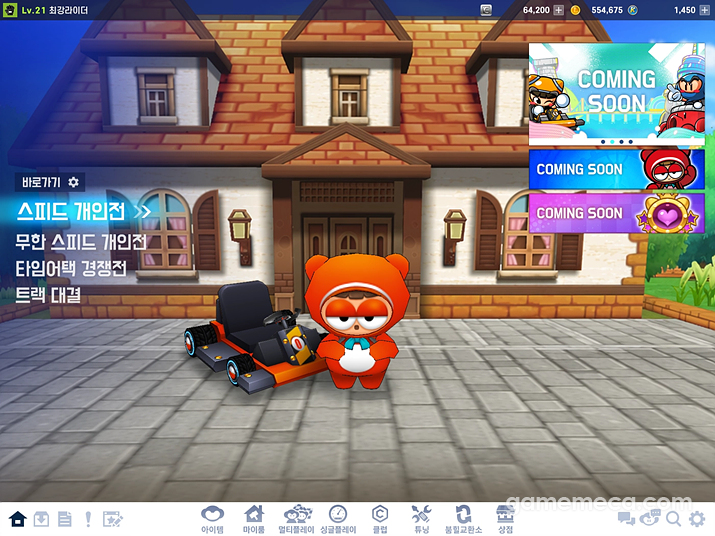
In the gaming industry, 'classic' re-releases are the go-to card for stirring up nostalgia. KartRider, a title once considered a national pastime in South Korea, is returning to its roots after service termination, leaving many veteran players feeling rather giddy.
Naturally, this leaves players with a burning question: "Since my Nexon account is still active, won't my old items and records just magically reappear?"
While such expectations are understandable, the legal reality is far more convoluted. In this edition of [precedent.zip], we are diving deep into how the data of defunct games is treated under the law, examining the obligation to delete personal information and the thorny issue of game item ownership.
Account exists, so the data must be there, right?
One might assume that because you haven't deleted your integrated account (like those for Nexon or NC), your specific game data is sitting safely on a server somewhere.
However, under Article 21 of the Personal Information Protection Act, that data should have been 'deleted without delay.' Current law dictates that personal information must be disposed of once its collection purpose has been achieved and it is no longer required.
Once a game service is fully shuttered, the legal basis for a company to retain your play logs or item history effectively vanishes. While nicknames or play logs might not identify an individual in isolation, when combined with your integrated account info, they become protected personal data.
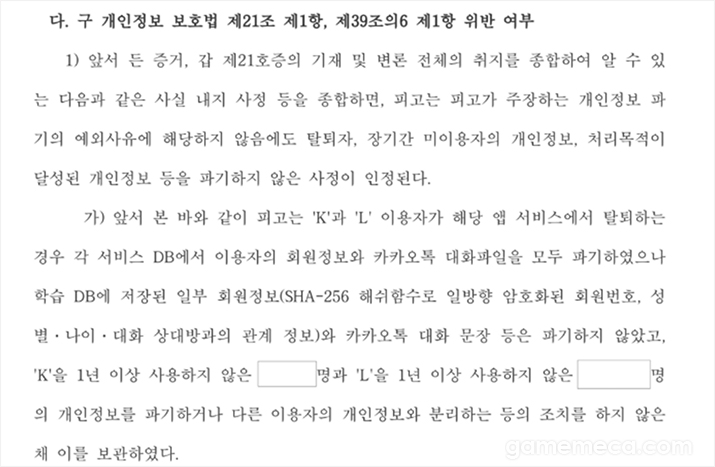
In this regard, the Seoul Eastern District Court (case 2021Gahap104007) ruled that failing to delete or isolate personal information of withdrawn users or those with long-term inactivity constitutes a violation of the Personal Information Protection Act.
The Personal Information Protection Commission has also sanctioned multiple companies for hoarding member data after the service purpose ended. In short, legally speaking, a company should only keep the bare minimum info needed for platform operations and scrub or strictly isolate the play logs of a dead game. This leads to the paradoxical conclusion that if the company followed the law properly, your data should be gone, even if they wanted to restore it.
"But I paid for it!" Who actually owns your game items?
Let's assume, just for a moment, that your old data miraculously survived in the depths of a server. Is the company then obligated to restore those items you once spent real money on?
To summarize the court's stance in one line: "You do not own your game items."
While the Supreme Court has yet to issue a definitive ruling on item rights during service termination, lower courts consistently define these items as 'usage rights' rather than 'ownership'.
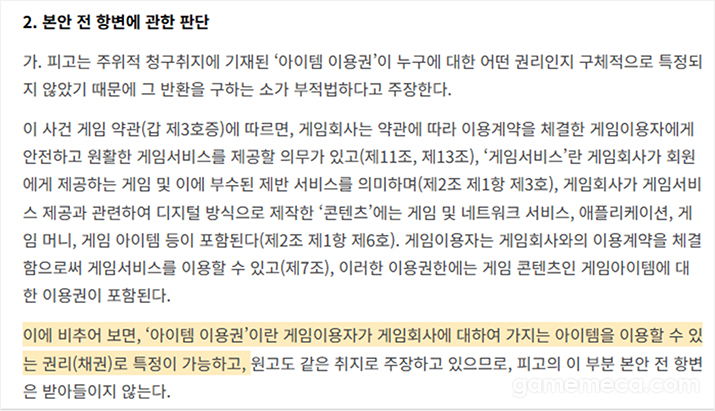
In other words, the law does not view game items as a property right (real right) that you control exclusively and permanently. Instead, they are seen as a content usage right (obligatory right) that allows you to use items on the company's servers for a specific duration.
Since items are mere usage rights, once the company terminates the service in accordance with their terms of service, your right to use those items expires. If the shutdown was legal, your usage rights have effectively vanished into thin air.
Even if a 'classic' version reopens down the line, it is legally the start of an entirely new contract, making it difficult to argue that your past rights should automatically be resurrected.
Can a game company just close servers whenever they feel like it?
That doesn't mean companies can just pull the plug and vaporize items at a whim. The Fair Trade Commission has previously flagged clauses allowing companies to unilaterally delete items without good cause as 'unfair terms' and ordered them to be corrected.
A recent ruling from the Daejeon District Court (2023Na225090) clearly defined the scope of refunds when a service ends. By looking at the ruling, we can see exactly where the court draws the line based on the terms of service.
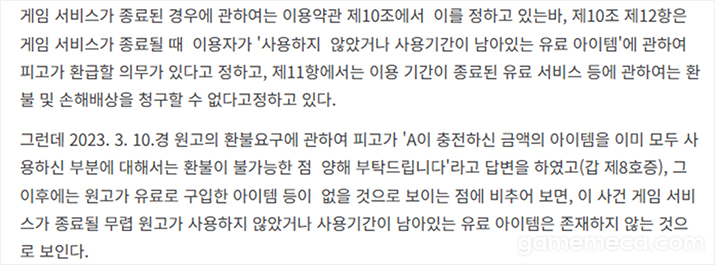
The court ruled based on Article 10 of the game's terms, stating that the defendant (the gaming company) is obligated to refund users for 'unused paid items or those with remaining validity' when the service ends.
Conversely, according to Article 11, users cannot claim refunds or damages for paid services that have already expired. In this specific case, the company told users, "Refunds are not possible for items you have already used," which the court supported.
The court sided with the gaming company, finding that at the time of termination, there were no unused items or remaining validity periods for the user in question.
While this case relied on a specific company's terms, the general legal consensus is that only unused paid items or those with valid durations are eligible for refunds.
Ultimately, if a company has followed the terms of service and completed the refund process for unused currency at the time of shutdown, their legal obligations are considered satisfied.
Past glory as a memory, a new starting line for classics
Summing it all up, even if a defunct game returns as a 'classic' version, players effectively have no legal power to force the company to restore old data or items.
As we've seen, play logs were likely scrubbed in accordance with the law. Even if a digital ghost of your account remains, you held a temporary usage right, not permanent ownership, and that right expired the moment the original service ended and the refund period closed.
The new 'classic' is not an extension of the past but a legally distinct, fresh contract. It might sting not to get back the time and money invested, but you must accept the cold reality of laws and terms of service before embarking on your new adventure.

게임업계에서 과거 향수를 자극하는 '클래식'은 성과가 검증된 카드로 널리 활용되고 있습니다. 국민 게임이었던 ‘카트라이더’ 역시 서비스 종료 후 과거 모습으로 돌아온다고 발표되며 많은 올드 게이머를 설레게 하고 있죠.
이때 유저들의 머릿속을 스치는 질문이 있습니다. "넥슨 계정은 그대로 살아 있으니까, 예전에 내가 쓰던 아이템이랑 전적도 그대로 복구되는 거 아닐까?"라는 궁금증일 것입니다.
유저 입장에서는 당연한 기대일 수 있지만, 법적인 시선으로 보면 이는 생각보다 훨씬 복잡한 문제입니다. 이번 판례.zip에서는 서비스가 종료된 게임의 데이터가 법적으로 어떻게 취급되는지, 개인정보보호법상 파기 의무와 게임 아이템 소유권 쟁점을 낱낱이 파헤쳐 보는 시간을 마련했습니다.
계정이 살아 있으니 데이터도 존재한다?
통상적으로 게임사의 통합 계정(예: 넥슨, 엔씨 계정 등)을 탈퇴 처리하지 않았으니, 개별 게임 데이터도 서버에 안전하게 보관되어 있을 것이라 생각할 수 있습니다.
하지만 개인정보보호법 제21조에 따르면, 오히려 그 데이터는 ‘지체 없이 파기’되었어야 합니다. 현행법상 개인정보는 수집 목적이 달성되어 불필요해진 경우 즉시 파기해야 하기 때문입니다.
게임 서비스가 완전히 종료됐다면, 플레이 기록이나 아이템 보유 내역을 회사가 계속 보관할 법적인 근거와 목적이 사라지게 됩니다. 게임 내 닉네임, 플레이 기록, 아이템 내역 등은 단독으로는 개인을 식별하기 어려울 수 있으나, 이것이 통합계정의 가입자 정보와 결합되면 명백한 개인정보로 취급되어 개인정보보호법 적용 대상이 되기 때문입니다.
이와 관련해 서울동부지방법원 2021가합104007 판결은 처리 목적이 달성된 개인정보, 탈퇴자, 장기 미이용자의 개인정보를 파기하거나 분리 보관하지 않은 행위를 개인정보보호법 위반으로 판단한 바 있습니다.
개인정보보호위원회 역시 목적이 종료된 회원 정보를 파기하지 않고 보관한 기업에 제재를 가한 사례가 다수 존재합니다. 즉, 법적으로 따져볼 때 회사는 통합 플랫폼 운영에 필요한 최소한의 기본 정보만 남겨두고, 이미 서비스를 종료한 특정 게임의 상세 플레이 기록과 아이템 내역은 파기하거나 엄격히 분리 보관하는 것이 맞습니다. ‘법을 제대로 지켰다면, 복구해 주고 싶어도 데이터가 남아 있지 않아야 정상’이라는 다소 역설적인 결론이 나오는 이유입니다.
"내가 내 돈 주고 산 건데!" 게임 아이템의 진짜 주인은?
설령 회사 서버 구석에 유저의 옛날 데이터가 기적적으로 남아 있다고 가정해 봅시다. 그렇다면 회사는 유저가 과거에 돈을 주고 구매한 아이템을 의무적으로 복구해 주어야 할까요?
법원 판단을 한 줄로 요약하면 "게임 아이템은 당신의 소유가 아닙니다"입니다.
아직 대법원이 온라인게임 서비스 종료 시 아이템 권리에 대해 직접적으로 확정한 판례는 없습니다. 다만 다수의 하급심 판례는 게임 아이템의 법적 성질을 일관되게 ‘소유권’이 아닌 ‘이용권’으로 정의하고 있습니다.
즉, 우리 법원은 게임 아이템을 유저가 배타적으로 영구히 지배하는 소유권(물권)으로 보지 않습니다. 약관에 따라 게임사 서버 내에서 일정 기간 이용할 수 있는 콘텐츠 이용권(채권)으로 볼 뿐인데요.
아이템이 소유권이 아닌 이용권에 불과하다면, 회사가 사전에 약관이 정한 절차에 따라 적법하게 서비스를 종료했을 때 해당 아이템을 이용할 권리 역시 함께 소멸합니다. 기존 서비스가 적법하게 마무리됐다면 유저의 아이템 이용권도 이미 없어진 셈입니다.
훗날 '클래식'이라는 이름으로 전작과 비슷한 게임이나 서버가 다시 열린다고 하더라도, 법적으로 이는 완전히 새로운 계약의 시작일 뿐 과거 권리가 자동으로 부활한다고 보기는 어렵습니다.
게임사가 마음대로 서버를 닫아도 될까요?
그렇다고 게임사가 언제든 마음대로 서버를 닫고 아이템을 공중분해해도 된다는 뜻은 당연히 아닙니다. 공정거래위원회는 사업자가 상당한 이유 없이 일방적으로 캐릭터나 아이템을 삭제할 수 있도록 한 조항을 불공정 약관으로 보아 시정을 요구한 바 있습니다.
최근 대전지방법원 2023나225090 판결은 서비스 종료 시 유저가 어디까지 보상받을 수 있는지에 대해 환불 범위를 명확히 짚었습니다. 판결문을 살펴보면 법원이 약관을 바탕으로 환불의 선을 어떻게 긋고 있는지 구체적으로 확인할 수 있는데요.
재판부는 해당 게임의 이용약관(제10조)을 근거로 다음과 같이 판단했습니다. 약관 제10조 제12항에 따라 게임 서비스가 종료될 때 이용자가 '사용하지 않았거나 사용기간이 남아 있는 유료 아이템'에 관하여는 피고(게임사)가 환급할 의무가 있습니다.
반면, 약관 제11항에 따라 이미 이용 기간이 종료된 유료 서비스 등에 관하여는 환불 및 손해배상을 청구할 수 없다고 보았는데요. 실제로 이 사건에서 게임사는 유저 환불 요구에 "충전하신 금액의 아이템을 이미 모두 사용하신 부분에 대해서는 환불이 불가능하다"라고 답변한 바 있습니다.
재판부 역시 서비스가 종료될 무렵 해당 유저에게 사용하지 않았거나 사용기간이 남아 있는 유료 아이템이 더 이상 존재하지 않는다고 판단해 게임사의 손을 들어줬습니다.
비록 위 판례는 개별 게임사의 약관에 근거한 것이긴 하지만 결제 후 사용하지 않았거나, 유효기간이 남아 있는 유료 아이템은 환불 대상이 된다고 보는 것이 일반적인 법의 시각입니다.
결국, 서비스 종료 당시 약관에 따라 미사용 유료 재화 등의 적법한 환불 조치가 완료됐다면, 회사는 과거 아이템에 대한 법적인 책임을 모두 털어낸 상태가 됩니다.
과거의 영광은 추억으로, 클래식은 새로운 출발선
지금까지 살펴본 것을 종합하면, 서비스가 종료된 게임이 '클래식' 버전으로 부활하더라도, 유저가 법적으로 본인의 옛날 데이터와 아이템 복구를 게임사에 강제할 권리는 사실상 없는 셈입니다.
앞서 살펴본 바와 같이, 개인정보보호법에 따라 과거 플레이 기록과 데이터는 이미 적법하게 파기되었을 가능성이 높습니다. 설령 물리적으로 데이터의 흔적이 어딘가에 남아 있다고 하더라도, 유저가 가졌던 것은 영구적인 소유권이 아니라 한시적인 이용권이었기에 기존 서비스 종료 및 환불 절차가 마무리됨과 동시에 그 권리는 이미 완전히 소멸한 상태입니다.
즉, 새롭게 열리는 클래식은 과거의 연장선이 아니라 법적으로 '완전히 새로운 계약'의 시작입니다. 과거에 투자했던 시간과 비용을 온전히 돌려받을 수 없다는 점이 쓰라릴 수 있지만, 법과 약관이 정한 냉정한 현실을 인정하고 새로운 마음으로 클래식 버전을 맞이해야겠습니다.
This news was translated by AI.
READ MORE
-
 [+9 Enhanced] RedMagic Astra 2, 'Tier 0' in both performance and heat control
-
 [precedent.zip] Does deriding the appearance of a character modeled after a real person constitute the crime of insult?
-
 [Board Game] There is no story, but the sense of command remains, Nikke
-
 [Board Game] Cyberpunk art catches the eye, AI brain battle Compile
RECOMMENDED NEWS
MOST POPULAR NEWS
- Recommended for the holidays, what is the trend in gaming tablets?
- Golden Joystick Awards Nominees Revealed, Crimson Desert Rises in Two Categories
- South Korean National Team Set to Compete, PUBG MOBILE Asian Games Finals Imminent
- Into the Deeper Depths of Snezhnaya, Exploring Genshin Impact Version 7.1
- Enjoy Cute Adventures One-Handed, Animo Mobile Version Released
- [Today's steam] Factory-style graveyard management, Graveyard Keeper 2 released
- Nivalis Nights, Running a Restaurant in a Cyberpunk City
- Optimization Issues Lead to 'Mostly Positive' Steam Reception for Silent Hill: Townfall
- [Game Rank Analysis] "This is the real classic," WOW draws back veterans in droves
- Com2uS to Host SWC2026 European Cup in Hamburg, Germany
MEDIA PARTNERSHIPS



GAMEMECA SNS


 GAMEMECA GLOBAL SITE