[precedent.zip] Even if the original owner reclaims the account after a transaction, protection is difficult
[판례.zip] 계정 거래 후 원 주인이 되찾아가도, 보호 어렵다
2026.07.15 13:30 UTC+9

AI Summary
Account trading remains a dangerous gamble with little protection for buyers. Courts often rule that original owners retain rights due to strict terms of service. We need a modern, realistic approach to protect digital assets rather than ignoring this reality.

We’ve all been there—tempted by the allure of skipping the grind and instantly acquiring a powerful character that someone else spent ages building. This desire fuels the rampant 'account trading' market.
However, this market is haunted by a particular myth: the 'Invincible Original Owner' theory. The legend goes that even if the original owner reclaims the account by resetting the password after selling it, they cannot be punished because game company terms and conditions strictly forbid such trades in the first place.
But is this invincibility theory actually legally sound? Let’s dig through the precedents to find out.
Did they touch someone else’s account? The dilemma of computer fraud
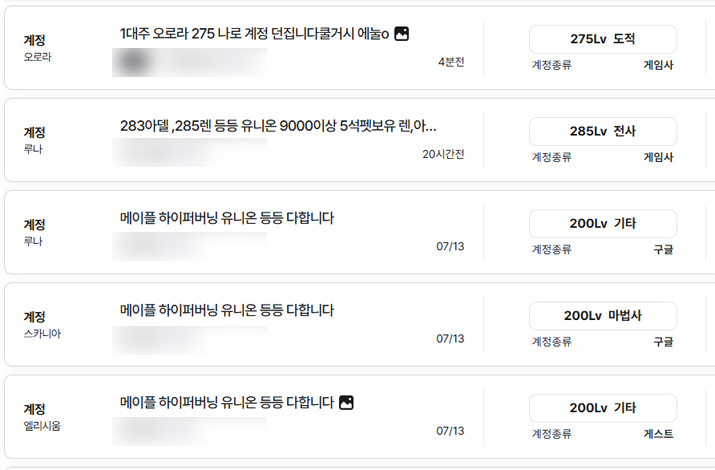
The most intuitive legal challenge regarding account trading is criminal fraud under the Penal Code.
If it is proven that the seller had 'fraudulent intent'—meaning they had no intention or ability to hand over the account but simply wanted to snatch the money—they will face harsh penalties. This typically applies to those who sell non-existent accounts or vanish after taking the payment.
Even if the account was handed over, if the seller harbored a secret plan to 'reset the password and take it back in a few days,' this is viewed as a clear act of deception, and the hammer of fraud charges will surely fall. In short, if they never intended to fully relinquish the account, the legal verdict is relatively straightforward.

However, the most frequent and problematic disputes arise when an account is sold legitimately, only for the seller to suddenly change the password to 'reclaim' it, or to sneak in and strip away valuable items the buyer spent significant time and money to acquire.
The real courtroom battlefield is whether the act of interfering with an account already in someone else’s possession constitutes computer fraud.
Computer fraud is defined as acquiring pecuniary benefits by inputting or altering information without authorization. The conflicting rulings hinge on a single question: 'Based on whom do we judge the lack of access authority?'
Rulings that lean toward conviction focus on the private trust relationship with the buyer and the objective monetary value of the account itself.
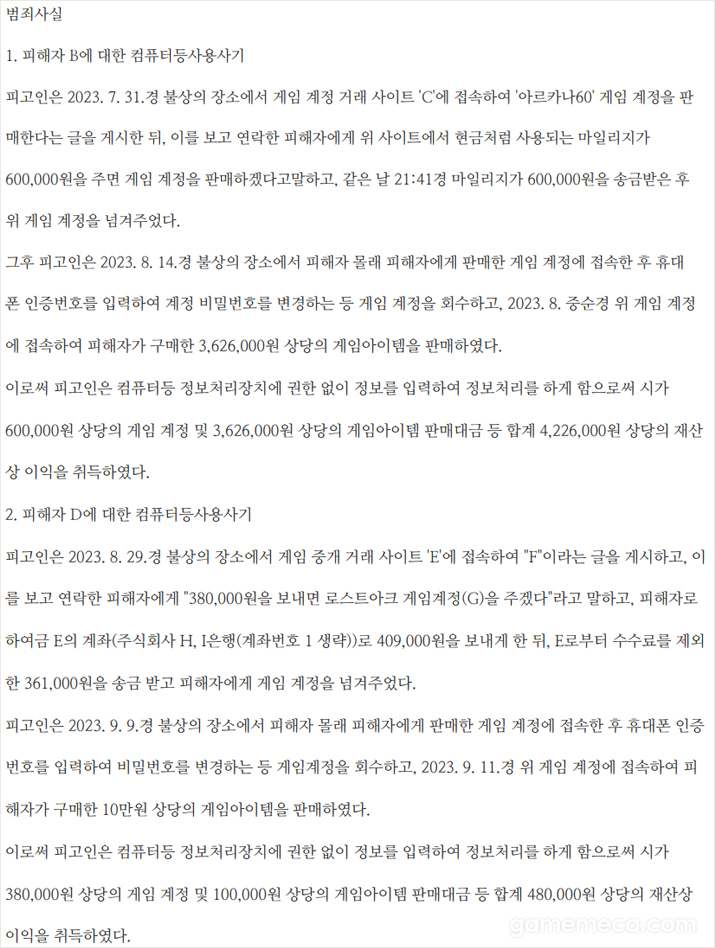
Take, for instance, the Seoul Northern District Court judgment from November 22, 2024 (Case 2024Gojung509), which highlights this exact situation.
The defendant sold an account for 600,000 KRW, only to sneak back in two weeks later via mobile verification to reset the password. The defendant then liquidated 3,626,000 KRW worth of in-game items the victim had purchased. The same defendant pulled a similar stunt on another victim after selling an account for 380,000 KRW.
The court clearly ruled this as unauthorized input into an information processing system to gain financial benefit, sentencing the defendant to a fine of 3,000,000 KRW.
Is 'Audacity' legal? The 'Invincible Original Owner' theory birthed by the Information and Communications Network Act
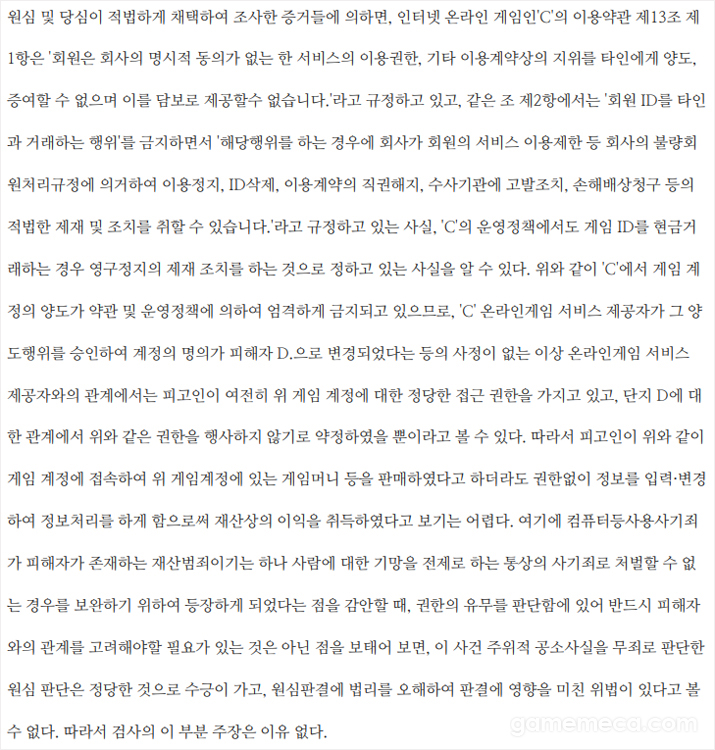
On the other hand, there are many precedents where the court acquits the original owner, using the relationship with the 'game service provider' as the absolute benchmark for judgment.
The Incheon District Court judgment on November 6, 2020 (Case 2020No34) illustrates this perspective perfectly.
In this case, the game company strictly prohibited the trading or transfer of user IDs through their terms of service. The court reasoned that unless the company formally approved the transfer and changed the name on the account, the 'legitimate' access authority remained with the original creator.
In other words, since the seller only made a private agreement with the buyer not to exercise their rights, accessing their own account to liquidate assets was not deemed 'unauthorized' input under the law, resulting in an acquittal.
Let’s also examine the Daegu District Court judgment from December 3, 2009 (Case 2009No3339), which serves as a cornerstone for the 'Invincible Original Owner' theory.
The defendant sold an account for 5,000,000 KRW, providing a signed waiver and even a copy of their resident registration certificate to prove intent. Yet, the defendant later used their public key certificate to reset the password.
The court pointed out that the terms of service forbade the trade, asserting that the only entity authorized to grant access is the service provider.
Consequently, the court ruled that because the buyer had no legitimate access rights while the original creator did, the defendant’s act of resetting the password did not constitute the 'damage of another’s information' prohibited by law. Acquittal followed.
Even more shocking is the legal interpretation from the Suwon District Court Anyang Branch on January 25, 2024 (Case 2023Gojung202).
In this case, the defendant, who purchased a hacked account, was fined 700,000 KRW. The court reaffirmed that only the game company can grant legitimate access rights.
Since the terms of service explicitly prohibited transfers, the court judged that even if money was exchanged, the buyer had no inherent right to access an account registered to a third party without the company’s consent.
The defendant argued they were unaware the account was hacked, but the court maintained that anyone other than the original creator lacks the fundamental right to access it.
This ruling painfully illustrates the grave legal risks faced by account buyers.
Even if you genuinely believe you’ve paid for and received an account, if it turns out to be a hacked account and the original owner files a report, you could find yourself branded a criminal for unauthorized network intrusion overnight. The buyer’s authority is essentially negated by the game company’s terms.
Regardless of fraud charges, in the eyes of the Information and Communications Network Act, the buyer’s rights are completely voided, while the original owner’s status is absolutely protected. It’s a legal loophole that cements the 'Invincible Original Owner' theory.
A ticking time bomb: The high-stakes gamble of account trading
In conclusion, the 'Invincible Original Owner' theory is at least half-true. While clear fraudulent intent leads to criminal charges and civil liabilities, the original owner isn't entirely untouchable by the law.
However, as the majority of precedents regarding network intrusion show, as long as game companies prohibit trading, it is nearly impossible for a buyer to be fully protected. You risk being labeled a hacker based on a single malicious report from the original owner. Even if you clear your name after a grueling legal battle, the lost time, money, and stress remain yours alone to bear.
Despite this, account trading has long been an everyday culture and a massive market among gamers. Given the real-world value of digital assets built with massive time and money, dismissing all disputes as 'mere user misconduct for violating terms' is not a viable solution.
It is time to move past the outdated regulations of blanket bans and punishment. We need serious social discourse on rationalizing the market, refining the system, and protecting the legitimate property rights of users within the bounds of the law.

게임을 즐기다 보면 남들이 오랜 시간 공들여 키워놓은 강력한 캐릭터를 단숨에 얻고 싶은 유혹에 빠지곤 합니다. 이로 인해 게임 계정을 사고파는 이른바 '계정 거래'가 빈번하게 일어나고 있습니다.
하지만 계정 거래 시장에는 항상 꼬리표처럼 따라붙는 괴담이 하나 존재합니다. '1대 본주(최초 계정 생성자) 무적론'입니다. 계정을 팔고 나서 비밀번호를 바꿔 다시 빼앗아가더라도, 게임사 약관상 계정 거래가 허용되지 않으므로 원래 주인인 1대 본주는 처벌받지 않는다는 이야기입니다.
과연 이 무적론이 법적으로 타당한 이야기일까요? 실제 판례를 통해 자세히 살펴보겠습니다.
남의 계정에 함부로 손을 댔는가? 컴퓨터등사용사기죄의 딜레마
계정 거래와 관련해 가장 직관적으로 떠올릴 수 있는 범죄는 형법상 사기죄입니다.
거래 당시 처음부터 계정을 넘길 의사나 능력이 없었으면서 돈만 가로채려는 ‘편취의 고의’가 인정된다면 일관되게 사기죄가 성립해 엄한 처벌을 받게 됩니다. 애초에 계정을 보유하지도 않았으면서 판다고 속이거나, 대금을 받은 뒤 생활비로 쓰고 잠적하는 경우가 대표적입니다.
일단 계정을 넘겨주긴 했으나 속으로 '며칠 뒤에 비밀번호를 바꿔서 다시 찾아와야겠다'고 마음먹은 상태로 거래한 경우에도 처음부터 회수할 의도를 숨긴 명백한 기망행위로 보아 사기죄의 철퇴를 맞게 됩니다. 즉, 처음부터 계정을 안 줄 생각으로 접근했다면, 법적 판단은 앞서 살펴본 것처럼 다소 간단해집니다.
하지만 게임 계정 거래에서 가장 문제가 되고, 빈번하게 발생하는 분쟁은 계정을 정상적으로 판매하고 나서 돌연 비밀번호를 바꿔 '회수'해가거나, 구매자가 오랜 시간과 돈을 들여 육성한 계정에 몰래 접속해 값비싼 아이템 등만 쏙 빼가는 행위입니다.
거래가 일단 성립된 후 마음이 변해 남의 손에 넘어간 계정을 건드리는 경우, 과연 컴퓨터등사용사기죄가 성립할 수 있는지가 법정에서 치열한 쟁점이 됩니다.
컴퓨터등사용사기죄는 권한 없이 정보를 입력하거나 변경해 재산상 이익을 취득할 때 성립하는 범죄입니다. 엇갈리는 판결의 핵심은 '누구를 기준으로 접근 권한이 없다고 판단할 것인가'에 있습니다.
유죄를 선고한 판례는 계정을 양도받은 피해자(양수인)와의 사적인 신뢰 관계 및 계정 자체가 가지는 현실적인 재산적 가치에 주목했습니다.
서울북부지방법원 2024. 11. 22. 선고 2024고정509 판결을 살펴보면 이러한 상황이 확실히 드러납니다.
피고인은 게임 계정 거래 사이트에서 60만 원을 받고 계정을 판매하고 약 2주 뒤 피해자 몰래 접속해 휴대폰 인증을 통해 비밀번호를 변경하는 수법으로 계정을 회수했습니다. 피해자가 본인 돈으로 구매해 둔 362만 6,000원 상당의 게임 아이템까지 팔아치웠죠. 이 피고인은 또 다른 피해자에게도 38만 원에 계정을 넘긴 뒤 열흘 만에 똑같은 수법으로 계정을 가로채고 아이템을 처분했습니다.
재판부는 이러한 행위가 정보처리장치에 권한 없이 정보를 입력해 재산상 이익을 취득한 범죄에 해당한다고 명확히 판단해 피고인에게 벌금 300만 원을 선고했습니다.
적반하장도 합법? 정보통신망침해죄가 낳은 1대 본주 무적론
반면, 1대 본주의 손을 들어주어 무죄를 선고하는 판례도 다수 존재합니다. 이를 보면 범죄 성립을 판단하는 데 '게임 서비스 제공자(게임사)'와의 관계를 절대적인 기준으로 삼고 있습니다.
인천지방법원 2020. 11. 6. 선고 2020노34 판결이 이러한 시각을 잘 보여주는데요.
이번 사건에서 게임사는 온라인게임 약관 및 운영정책을 통해 회원 ID를 타인과 거래하거나 양도하는 행위를 엄격하게 금지하고 있었습니다. 법원은 게임사가 양도 행위를 승인해 계정 명의가 양수인으로 변경되는 등 특별한 사정이 없는 한, 게임사와의 관계에서 계정에 대한 정당한 접근 권한은 여전히 최초 개설자인 피고인에게 있다고 판단했습니다.
즉, 피고인은 피해자와의 관계에서만 그 권한을 행사하지 않기로 사적인 약정을 맺었을 뿐이므로, 자신의 명의로 된 계정에 접속해 게임머니 등을 처분한 행위가 정보처리장치에 '권한 없이' 정보를 입력한 범죄에 해당하지 않는다고 단정하며 무죄를 선고한 것입니다.
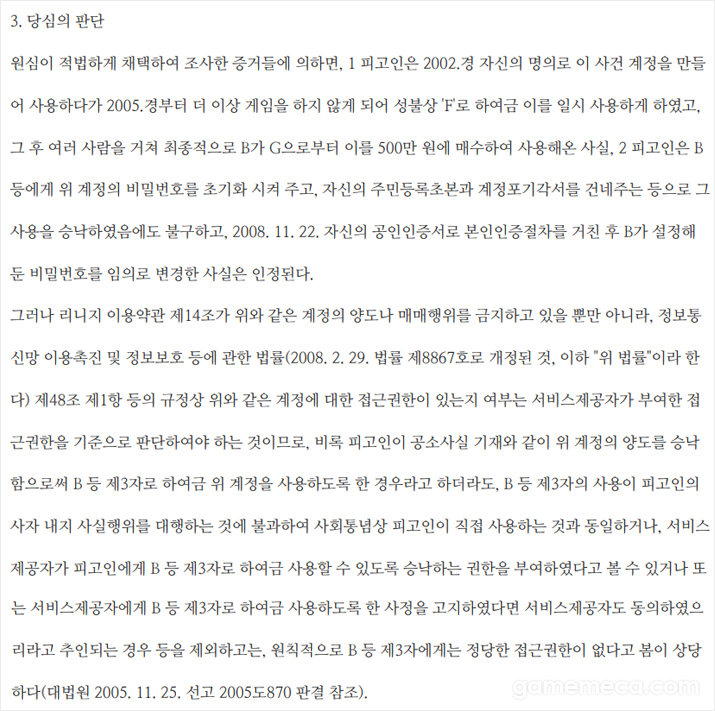
1대 본주 무적론의 강력한 근거로 작용하는 대구지방법원 2009. 12. 3. 선고 2009노3339 판결도 살펴보겠습니다.
피고인은 자신이 개설한 게임 계정을 타인에게 500만 원에 양도하면서 계정포기각서, 주민등록초본까지 건네주는 등 확실하게 사용을 승낙했습니다. 그럼에도 불구하고 나중에 자신의 공인인증서를 이용해 본인인증을 거친 뒤 임의로 비밀번호를 변경했습니다.
재판부는 게임 이용약관이 계정 양도나 매매를 금지하고 있다는 점을 지적하며, 접근 권한 부여의 주체는 오직 서비스 제공자(게임사)라고 선을 그었는데요.
이에 따라 계정을 구매한 양수인은 정당한 접근 권한이 아예 없는 반면 최초 계정 개설자인 피고인은 여전히 정당한 접근 권한을 가지고 있으므로, 피고인이 비밀번호를 변경한 행위는 법에서 금지하는 '타인의 정보'를 훼손한 것이 아니라고 판단해 무죄를 선고했습니다.
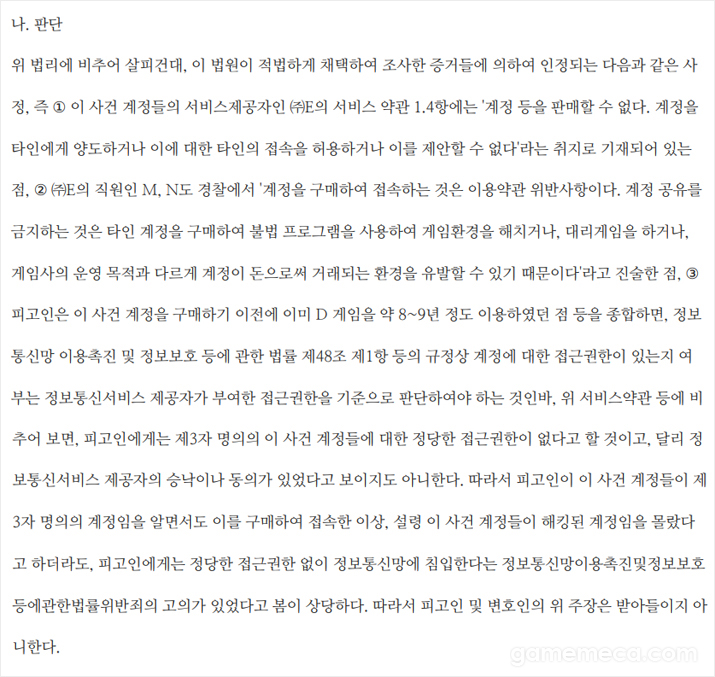
더 충격적인 것은 최근 수원지방법원 안양지원 2024. 1. 25. 선고 2023고정202 판결이 보여준 법리 해석입니다.
이 사건은 해킹된 계정을 구매한 피고인에게 벌금 70만 원이 선고된 사례인데요, 재판부는 정보통신망법상 계정에 대한 정당한 접근 권한은 오직 게임사만 부여할 수 있다고 재확인했습니다.
해당 게임사 약관은 계정 양도를 명시적으로 금지하고 있었으므로, 돈을 주고 계정을 샀더라도 게임사가 승낙하지 않은 이상 구매자는 애초에 제3자 명의의 계정에 접속할 정당한 권한이 없다고 판단한 것입니다.
피고인은 해킹된 계정이라는 사실을 몰랐기에 고의가 없었다고 주장했으나, 법원은 계정을 처음으로 만든 사람이 아니라면 애초에 접근 권한이 없었다는 입장을 고수했습니다.
이 판결은 해킹된 계정 거래 등으로 문제가 발생했을 때, 계정 구매자가 얼마나 치명적인 법적 위험에 노출될 수 있는가를 뼈저리게 보여줍니다.
정상적으로 돈을 지불하고 계정을 넘겨받았다고 굳게 믿었더라도, 알고 보니 타인의 해킹된 계정이었고 이에 대해 1대 본주의 피해 신고가 접수된다면, 구매자는 하루아침에 정보통신망을 무단 침입한 범죄자로 전락할 수 있습니다. 게임사 약관을 근거로 구매자의 접근 권한 자체가 원천적으로 부정되기 때문입니다.
사기죄나 컴퓨터등사용사기죄 등 다른 범죄의 성립 여부는 차치하더라도, 최소한 정보통신망법 위반(정보통신망침해죄)이라는 법적 잣대 앞에서는 구매자 권리가 완벽히 부정되고 1대 본주의 지위가 절대적으로 보호받게 되는 셈입니다. 정보통신망법 영역에서만큼은 '1대 본주 무적론'이 더 견고하게 심화되는 법리적 맹점을 여실히 보여주는 대목입니다.
시한폭탄을 안고 하는 위험한 도박, 계정 거래
결론적으로 '1대 본주 무적론'은 최소한 절반은 진실이라고 하겠습니다. 처음부터 편취의 고의가 있었다면 사기죄로 중한 처벌을 받게 되고, 하급심 재판부의 법리 해석에 따라 컴퓨터등사용사기죄의 철퇴를 맞는 등 1대 본주 역시 형사 처벌과 민사상 손해배상 책임이라는 법망을 완전히 피해 갈 수는 없습니다.
하지만 정보통신망침해죄의 판례 다수가 시사하듯, 게임사에서 약관으로 계정 거래를 원천적으로 금지하면 법 테두리 안에서 계정 구매자가 온전히 보호받는 것은 사실상 불가능에 가깝습니다. 정당하게 돈을 지불했음에도 본주의 악의적인 신고 한 번에 해킹범으로 몰릴 수 있는 치명적인 리스크도 감수해야만 합니다. 설령 치열한 법적 공방 끝에 억울함을 푼다고 하더라도, 그 과정에서 잃어버린 시간과 금전, 극심한 스트레스는 온전히 유저 본인의 몫으로 남게 됩니다.
그럼에도 불구하고 게임 계정 거래는 수많은 게이머 사이에서 일상적인 문화이자 거대한 실물 시장으로 자리 잡은 지 오래입니다. 오랜 시간과 막대한 비용을 투자해 일궈낸 디지털 자산의 실질적인 가치를 고려할 때, 거래 과정에서 파생되는 모든 법적 분쟁과 피해의 책임을 단순히 '약관을 위반한 유저 개인의 일탈'로만 치부하는 것은 근본적인 해결책이 될 수 없습니다.
이제는 무조건적인 금지와 처벌이라는 과거 규제에서 벗어나, 현실화된 거래 시장을 합리적으로 양성화하고 유저들의 정당한 권리와 재산을 법의 테두리 안에서 안전하게 보호할 수 있도록 전향적인 제도 정비와 약관 개선에 대한 진지한 사회적 논의가 필요한 시점입니다.
This news was translated by AI.
READ MORE
-
 Is it okay to start Warframe now, which is in its 13th year?
-
 [+9 Enhanced] RedMagic Astra 2, 'Tier 0' in both performance and heat control
-
 [precedent.zip] Does deriding the appearance of a character modeled after a real person constitute the crime of insult?
-
 [Board Game] There is no story, but the sense of command remains, Nikke
RECOMMENDED NEWS
MOST POPULAR NEWS
- Top-tier tournament, FC Pro Champions Cup 2026 South Korea National Team to participate
- 2026 Worlds Theme Song Unveiled, Capturing Faker's Sixth Championship Glory
- Representative Cho Seung-rae: "Gamescom's Strength is Strong B2B, Desperately Needed for G-Star"
- Wardogs, which became the trend of shooting games, starts its second season on the 15th
- Valve's New Game 'Deadlock' Concurrent Players Surpass Team Fortress 2 Record
- [LOL Meme] "Is it you guys again?" Worlds favorites Hanwha Life Esports, Gen.G, and BLG
- [Today's steam] RimWorld switched to its own engine
- [Cartoon] The arrival of the sharpshooter 'Aion 2'?
- Summoners War to Gift Monsters to SWC2026 Participating Players
- A Meeting of Isaac and Doom, Boomer Shooter 'Paperhead' Released on Steam
MEDIA PARTNERSHIPS



GAMEMECA SNS


 GAMEMECA GLOBAL SITE