
KeSPA Announces Research Results on the Economic Impact of Esports
KeSPA, e스포츠 경제효과 분석한 연구 결과 발표
2026.02.20 12:41 UTC+9

AI Summary
KeSPA has unveiled a new model to accurately measure the massive economic impact of esports events. The study shows the 2023 LoL World Championship generated 740 billion KRW in value. The association is now pushing for concrete tax benefits and infrastructure support for the industry.
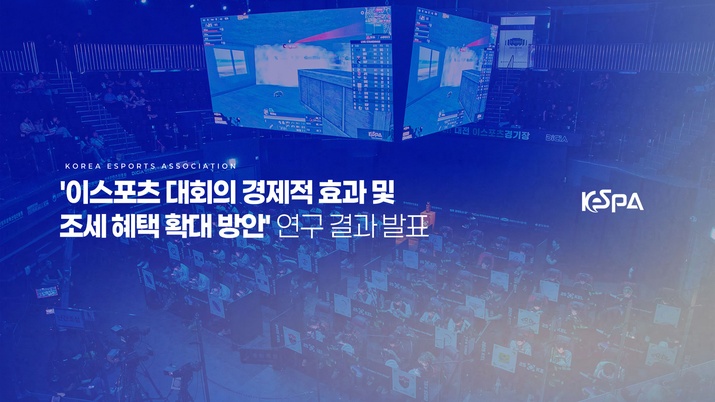
On the 20th, the Korea e-Sports Association (KeSPA) announced the results of a study conducted over the last year, titled 'Economic Impact of Esports Tournaments and Expansion of Tax Benefits.' The study, which spanned five months of consultation with key stakeholders in the esports ecosystem such as game publishers and professional teams, aims to build a solid institutional foundation for the industry's sustainable growth.
The researchers developed and deployed the MEEI (Multi-layered Esports Economic Impact) model, a bespoke analytical tool for the sector. Standard sports metrics often fail to capture the nuances of digital viewership and IP-based value, which leads to the economic contribution of esports being significantly undervalued. By contrast, the MEEI model quantifies both tangible and intangible assets by tracking digital metrics such as online ad reach and the consumption patterns of global fandoms.
The MEEI model was applied to a diverse range of events, including the 2023 League of Legends World Championship, the 2022 Mid-Season Invitational (MSI), the 2024 VALORANT Champions, the 2024 LCK (League of Legends Champions Korea) Summer Finals, the 2025 T1 Home Ground, and the 17th Korea e-Sports Games (KeG) and Eternal Return tournaments. The results showed that the 2023 League of Legends World Championship generated approximately 740 billion KRW in production-inducing effects, far exceeding the previous estimate of around 200 billion KRW.
The study further dissected the value of individual events, noting that the 2025 LCK Finals generated roughly 58.5 billion KRW, while the T1 Home Ground event brought in about 30 billion KRW. These figures prove that esports is far more than just competitive content; it is a serious industry driving value across tourism, hospitality, IT, and infrastructure.
The research suggests that policy support should reflect this economic contribution. The report advocates for tax relief to ensure the financial stability of professional teams, alongside the development of public infrastructure, the formation of collaborative councils, and the creation of dedicated funds. KeSPA plans to use these policy recommendations to standardize stadium models and strengthen existing infrastructure.
Furthermore, the association intends to launch follow-up research this year focused on talent cultivation and the establishment of a safeguarding system. The full report on the 'Economic Impact of Esports Tournaments and Expansion of Tax Benefits' can be found at the KeSPA official website resource center.
한국e스포츠협회는 20일, e스포츠 산업의 지속 가능한 성장을 위한 제도적 기반을 마련하고자 지난해 추진한 'e스포츠 대회의 경제적 효과 및 조세 혜택 확대 방안' 연구 결과를 발표했다. 이번 연구는 e스포츠 조세 혜택의 근거를 마련하고 확대 방안을 도출하는 데 초점을 맞추었으며, 약 5개월간 종목사와 구단 등 e스포츠 생태계 주요 이해관계자를 대상으로 진행됐다.
연구에서는 e스포츠 산업에 특화된 분석 모델인 엠이아이(MEEI, Multi-layered Esports Economic Impact)를 개발해 적용했다. 기존의 전통 스포츠 중심 분석 방식은 e스포츠의 핵심 가치인 디지털 시청 데이터와 아이피(IP) 라이선스 기반 가치를 충분히 반영하기 어려워 e스포츠 산업의 경제 효과가 과소평가된다는 한계가 있었다. 엠이아이 모델은 온라인 광고 도달률, 글로벌 팬덤 소비 패턴 등 디지털 지표를 반영해 유무형 가치를 정량화했다.
엠이아이 모델을 적용한 연구 대상에는 글로벌 메가 이벤트인 2023 리그 오브 레전드 챔피언십(League of Legends Championship), 국제 전문 이벤트인 2022 MSI(Mid-Season Invitational)와 2024 발로란트 챔피언스(VALORANT Champions), 국내 지역 활성화 이벤트인 2024 LCK(League of Legends Champions Korea) 서머 결승, 구단·팬덤 특화 이벤트인 2025 T1 홈그라운드, 아마추어·국산 종목대회인 제17회 대통령배 KeG(Korea e-Sports Games)와 이터널 리턴(Eternal Return) 대회가 포함됐다. 연구 결과 2023년 리그 오브 레전드 월드 챔피언십은 약 7,400억 원 규모의 생산 유발 효과를 산출하여 기존 추정치인 약 2,000억 원을 크게 상회했다.
이와 함께 2025년 LCK 결승이 약 585억 원, T1 홈그라운드 이벤트가 약 300억 원의 경제적 효과를 창출하는 등 대회 성격별 분석을 통해 e스포츠 이벤트의 경제적 가치가 더욱 구체화됐다. 이번 분석은 e스포츠가 단순한 경기 콘텐츠를 넘어 관광, 숙박, IT, 인프라 등 전후방 산업 전반에 걸쳐 부가가치를 창출하는 산업임을 수치로 증명했다.
연구는 e스포츠의 경제적 기여도에 부합하는 실질적인 지원책도 함께 제시했다. 구단의 재정 안정성을 위한 세제 지원과 공공 인프라 운영, 상생협의체 구축, 기금 조성 등 정책적 뒷받침이 필요하다는 제언이 포함됐다. 협회는 이번 연구에서 제시된 정책 과제를 반영하여 경기장 및 관련 시설 표준 모델을 정립하고 인프라 내실화를 추진한다.
또한 업계 전문 인력 양성과 세이프가딩 체계 마련을 위한 후속 연구도 올해 추진한다. 'e스포츠 대회의 경제적 효과 및 조세 혜택 확대 방안' 연구 보고서 전문은 한국e스포츠협회 홈페이지 자료실에서 확인할 수 있다.
This news was translated by AI.

I will greet you with a good article. niro201@gamemeca.com


MOST POPULAR NEWS
- [Today's steam] Valve's new title 'Deadlock' surpasses 230,000 Concurrent Players
- Representative Cho Seung-rae: "Gamescom's Strength is Strong B2B, Desperately Needed for G-Star"
- 2026 Worlds Theme Song Unveiled, Capturing Faker's Sixth Championship Glory
- [Cartoon] The arrival of the sharpshooter 'Aion 2'?
- Valve's New Game 'Deadlock' Concurrent Players Surpass Team Fortress 2 Record
- 'Dave the Diver' Complete Edition Released with All Expansions
- Wardogs, which became the trend of shooting games, starts its second season on the 15th
- "Destined to Disappear Anyway" CyberConnect2 CEO Supports Abolishing Physical Discs
- Dokkaebi World Achieves Number 1 Popularity on Both Major App Markets on Launch Day
- A Meeting of Isaac and Doom, Boomer Shooter 'Paperhead' Released on Steam
MEDIA PARTNERSHIPS



GAMEMECA SNS


 GAMEMECA GLOBAL SITE