
Korea Game Society Proposes National AI Data Governance
한국게임학회, 국가 차원의 AI 데이터 거버넌스 제안
2026.02.26 17:44 UTC+9
AI Summary
The Korea Game Society held a seminar on AI data governance. Experts proposed a 'Designed Open' model to balance innovation and copyright. The goal is to establish a national framework for AI data accountability.
The Culture and Arts Division of the Korea Game Society, the Myongji College Industry-Academic Cooperation Foundation, and OGQ hosted the second 'K-Culture Data Governance Seminar' online on the 20th. Experts from public, private, academic, and research sectors gathered to discuss the 'standards for AI training data sharing and accountability structures'.
Lee Kwon-soo, a team leader at the Korea Culture Information Service, kicked things off by stating that 'AI still struggles to fully grasp the nuances of Korean culture', emphasizing the need for high-quality datasets that capture narrative context. By securing copyright-cleared text, images, and audio, they have been working on 'reference data'—ranging from emotional labeling of traditional patterns to 8K historical costume footage and standardized traditional music. As Lee put it, while the public sector cannot build every single dataset, it must provide what he calls 'the answer key' for AI to reference.
Next, Shin Chul-ho, CEO of OGQ representing the Myongji University Industry-Academic Cooperation Foundation, pointed out the structural tension between AI evolution and copyright protection, proposing an IP Clearing House model as a solution. 'We need a system that manages who owns the rights, who earns what, and how it is all settled,' he argued. He proposed a five-step framework covering rights verification, revenue aggregation, settlement, disclosure, and anti-forgery, insisting that we move away from litigation-heavy reactive measures toward trust-based proactive design.
Professor Lee Eun-jin of Myongji College, who also serves as a board member of the Game Rating and Administration Committee, framed cultural data as a strategic asset that shapes a nation's cognitive framework. 'AI training data isn't just content; it's the bedrock that builds a nation's worldview,' she noted, asserting that cultural sovereignty is essentially a matter of cognitive sovereignty.
She moved beyond the traditional 'Open' policy, suggesting a 'Designed Open' governance model that incorporates purpose-based access control and logged training histories. She advocated for a clear division of labor: the public sector sets the baseline data, while the private sector handles the tech and operations. Crucially, she warned that separating the functions of private aggregators from independent verification infrastructure (the Clearing House) is the only way to prevent the concentration of power.
Gil Se-gi, a center director at the Korea Institute of Sport Science, detailed the roadmap for a sports dataspace, arguing that we need to connect fragmented sports data on a foundation of trust. By leveraging data catalogs, participant authentication, transparent settlement, and a 'compute-to-data' approach, he aims to shift the industry from a production-centric focus to one driven by utility.
The Korea Game Society concluded that this seminar served as a pivotal moment to re-evaluate AI data governance. They have effectively redefined the issue as a national design challenge, built on three pillars: public sector reference data, private sector settlement and rights protection, and a governance structure anchored in cultural sovereignty, all tied together by a robust accountability tracking system.
한국게임학회 문화예술분과와 명지전문대학 산학협력단, 오지큐(OGQ)는 지난 20일 'K-컬처 데이터 거머넌스 세미나(2차)'를 온라인으로 진행했다.'AI 학습 데이터 공유 기준과 책임 구조'을 주제로 공공·민간·학계·연구기관 관계자가 의견을 나눴다.
먼저 한국문화정보원 이권수 팀장은 "AI는 아직 한국 문화를 완전하게 읽지 못한다"며, 맥락과 서사가 반영된 고품질 문화 학습 데이터 구축이 필요하다고 강조했다. 이에 저작권을 확보한 텍스트·이미지·음원 등으로 문화 데이터를 구축하고, 전통문양 감성 라벨링, 8K 기반 고증 복식 촬영, 국악 표준화 음원 제작 등을 통해 AI가 학습할 수 있는 '기준 데이터'를 마련했다고 밝혔다. 이권수 팀장은 "공공은 모든 데이터를 만들 수는 없지만, AI가 참고할 수 있는 정답지에 가까운 데이터를 제공해야 한다"고 강조했다.
어어서 명지대학교 산학협력단 OGQ 신철호 대표는 AI 발전과 저작권 보호 간 구조적 긴장을 지적하며, IP 클리어링 하우스 모델을 해법으로 제시했다. 그는 "누가 권리자인지, 누가 얼마를 벌었는지, 어떻게 정산되었는지까지 통합 관리하는 구조가 필요하다"며, 권리 확인 수익 집계, 정산, 공시, 위변조 방지까지 5단계 체계 구축을 제안했다. 또한 "소송 중심의 사후 해결이 아니라, 신뢰 기반의 사전 설계가 필요하다"고 말했다.
명지전문대학 이은진 교수(게임물관리위원회 이사)는 문화 데이터를 국가 인지 체계를 형성하는 전략 자산으로 규정했다. 이 교수는 "AI 학습 데이터는 단순한 콘텐츠가 아니라, 국가의 세계관과 인식 체계를 형성하는 기반"이라며, 문화주권은 곧 인지주권의 문제라고 밝혔다.
이어서 기존의 개방(Open) 중심 정책을 넘어, 목적기반 접근 통제와 학습 이력 기록이 내장된 설계된 개방(Designed Open) 거버넌스 모델을 제시했다. 또한 공공이 기준 데이터를 제시하고, 민간은 운영과 기술을 담당하는 역할 분리가 필요하다고 전했다. 특히 민간 집행 주체(Aggregator)와 독립 검증 인프라(Clearing House)의 기능 분리를 통해 권력 집중을 방지해야 한다고 덧붙였다.
한국스포츠과학원 길세기 센터장은 스포츠 데이터스페이스 구축 방향을 발표하며, 분산된 스포츠 데이터를 신뢰 기반으로 연결하는 구조가 필요하다고 밝혔다. 데이터 카탈로그, 참여자 인증, 거래·정산, 이력관리, 컴퓨터 투 데이터(Compute-to-Data) 방식 등을 포함한 운영 모델을 통해 생산 중심에서 활용 중심으로의 전환을 제시했다.
한국게임학회는 이번 세미나를 통해 공공의 기준 데이터 제공, 민간의 정산·권리 보호 체계 구축, 문화주권 기반 거버넌스 설계, 스포츠 데이터 신뢰 인프라 마련을 축으로 삼아 AI 학습 데이터의 거버넌스 구축 문제에 대해 돌아봤다고 설명했다. AI 학습 데이터 문제를 '공공 기준 데이터 제공–민간 운영–책임 추적 체계'로 이어지는 국가 설계 과제로 재정의했다고 평가했다.
This news was translated by AI.

Let's not lose our initial resolve. Meticulously, one by one. risell@gamemeca.com
READ MORE
-
 One Day Prior to Launch, 'Zeus' Ranks First in Popularity on Apple App Store
-
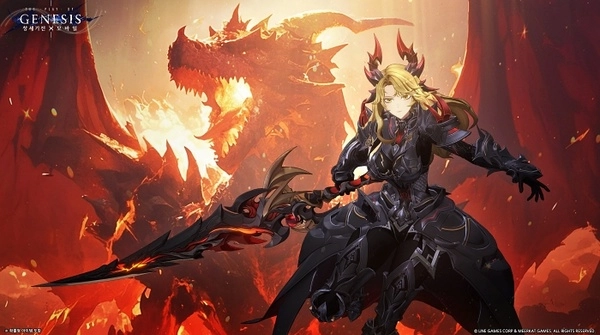 Antaria's God-Created Fire Dragon, Genesis Mobile Introduces 'Hellkite'
-
 [Gamescom 26] The female protagonist of Fable has become noticeably prettier
-
 CK Development Company Paradox's New Game 'Afterworld' Leaked Before Gamescom
RECOMMENDED NEWS

MOST POPULAR NEWS
- New DLC and Level Cap Increase, Borderlands 4 Content Revealed
- SANABI crowdfunding success story, Gyeonggi Content Agency and Tumblbug host pop-up exhibition
- Massive GTA 6 Leak Reveals Gameplay Footage and Map Details
- 100-Year Career Mode Added, NBA 2K27 Core Content Revealed
- Fortnite Introduces 'Override Console' to Change Battlefield Rules
- Lenoa, Haru, and Meilin Arrive in Epic Seven: Chaos Zero Nightmare Collaboration Announced
- Epic CEO Tim Sweeney: “Opening the Platform, Leading Toward Unreal Engine 6”
- Among Us introduces Judge role, allowing ejection regardless of vote results
- [Today's Steam] Phantom Blade Zero, joined by Donnie Yen, remains at the top for consecutive days
- [Today's Steam] Bioshock Vibes, 'Twisted Tower' Receives Overwhelmingly Positive Reviews
MEDIA PARTNERSHIPS



GAMEMECA SNS