
Deepening Deficits and a Relay of Closures: The Crisis of Small and Medium Game Companies Through Numbers
깊어진 적자와 폐업 릴레이, 숫자로 본 중소 게임사 위기
2026.04.16 19:06 UTC+9

AI Summary
The Korean game industry is suffering from its worst recession, marked by widespread losses and bankruptcies. While major firms struggle, subculture developers like Epid Games show that unique IP and fandoms are the only path to survival. The market is rapidly restructuring into a harsh environment where only the most competitive players remain.

Last year, the keyword dominating the performance of major listed game companies in Korea was 'the worst recession,' with many firms seeing stagnant growth or failing to escape the red. This shadow has loomed even larger over the domestic small and medium-sized game sector. Looking at the annual reports of major unlisted game companies disclosed by April 15, the majority experienced deteriorating performance, and some even went out of business, unable to weather the storm.
Clover Games, which announced its bankruptcy filing to the court on the 9th, was indeed in a dire financial state. Last year’s revenue plummeted by 42.1% year-on-year to just 7.5 billion KRW, with operating losses widening to 11.2 billion KRW. Furthermore, the company fell into a state of 'complete capital impairment,' exhausting its equity and leaving its survival in doubt. While Clover Games released its new title 'Heaven Hells' in February this year, it failed to make a mark in major markets.
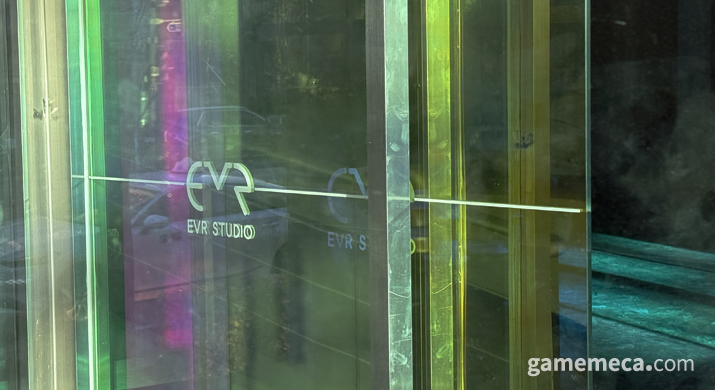
EVR Studio, which caught eyes with 'Wudang: Two Hearts'—set in a chaotic Korean Peninsula after reunification—is also effectively heading toward closure. Its annual revenue last year was a mere 660,000 KRW, while it posted an operating loss of 6.6 billion KRW. Currently, EVR Studio has failed to secure external investment and is operating with a skeleton crew under two CEOs, making the completion of its game a distant dream.
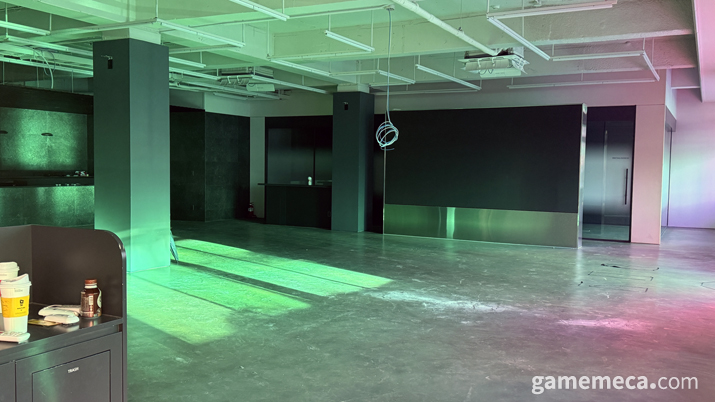
In fact, when we investigated in early January this year, the studio in Gangnam-gu, Seoul, had already been cleared out, with new tenants scheduled to move in. As for the address listed in the audit report, a site visit revealed that the company wasn't actually located in that building; it was merely a registered address. Essentially, no real development is taking place. EVR Studio claims to be shifting its business direction from large-scale development to IP licensing, but given its state of complete capital impairment, its future remains uncertain.
Although its business report hasn't been disclosed, 4:33 Creative Lab, once considered a solid mid-sized game company, is also reportedly in the process of winding down, with most employees having already departed.
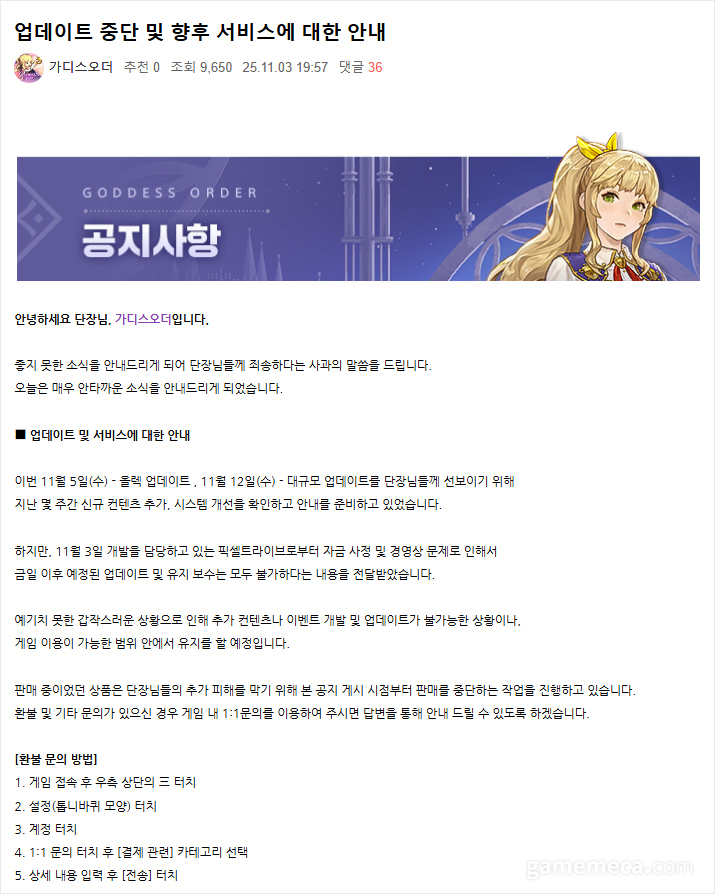
RoadComplete, which spun off PixelTribe—the developer of 'Goddess Order' that announced it would halt updates just one month after launch—also swung to a loss last year, posting an operating loss of 3.6 billion KRW. A 25.3% year-on-year decline in primary game revenue weighed heavily on their performance. Furthermore, PixelTribe was declared bankrupt by the Suwon Rehabilitation Court in December last year, and Goddess Order’s service ended on January 31 this year.
Even established mid-sized game companies weren't safe
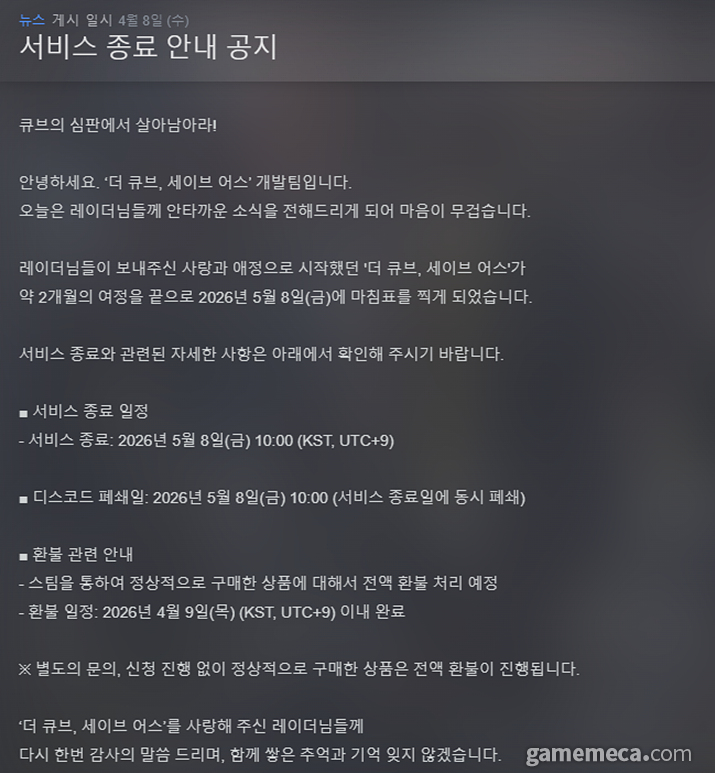
Mid-sized developers that have long been mainstays in the industry also saw their performance deteriorate significantly last year. XL Games is a prime example. Its revenue dropped by 39.2% to 31.1 billion KRW, with operating losses ballooning to 24.2 billion KRW. Long-term complete capital impairment has severely damaged its financial structure. While the company projected a turnaround via its new title 'The Cube, Save Us' as of the March 31 business report disclosure, it announced the termination of the title’s Early Access service on April 8.
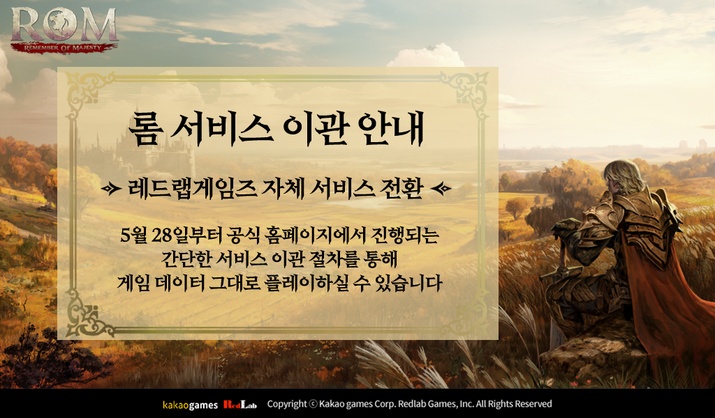
RedLab Games, currently servicing the MMORPG 'ROM: Remember of Majesty (hereinafter ROM)', also saw revenue shrink by 47.2% to 14.1 billion KRW, with operating profit plunging 99.7% to a mere 34 million KRW. Cash flow from operating activities turned negative, and cash holdings decreased by 36.4%. On the 16th, RedLab Games announced that it would terminate its publishing contract with Kakao Games for ROM to switch to self-publishing for operational efficiency—a move intended as a desperate self-rescue measure.
Additionally, several other small to medium-sized developers are facing crises: Nimble Neuron, developer of 'Eternal Return', swung to an operating loss of 130 million KRW and remains in complete capital impairment; DreamAge recorded an operating loss of 63 billion KRW even after the release of 'Architect: Land of Exiles' last October; NPIXEL continues to face capital impairment with 13.6 billion KRW in operating losses; and Ironmace saw revenue drop by 60.7% to 10.5 billion KRW while maintaining an operating loss of 10.1 billion KRW.
Lionheart Studio, which rose to prominence with 'Odin: Valhalla Rising', did not record a loss but saw its performance take a significant hit. Revenue fell 6.8% to 85.6 billion KRW, and operating profit plummeted 53.9% to 17.5 billion KRW. The direct cause is analyzed to be the lack of new revenue sources as the long-term service of Odin leads to shrinking revenue, coupled with a longer-than-expected hiatus for new titles.
Smilegate, ranking 5th among domestic game companies with 1.4365 trillion KRW in revenue last year, saw its operating profit fall 30.1% to 359.8 billion KRW due to increased investment in new titles. While Crossfire, Lost Ark, and Chaos Zero Nightmare are putting up a fight, the long-awaited Lost Ark Mobile and 'Miraesi: Invisible Future' need to deliver meaningful results in profit margin improvement.

The fortunes of small to medium-sized companies focusing on subculture themes have been mixed. Epid Games, expanding globally thanks to the success of the domestic re-release of 'Trickcal Revive', saw revenue jump 116.3% to 46.8 billion KRW, with operating profit surging 136.1% to 8.9 billion KRW. Project Moon, which has put 'Limbus Company' on a growth trajectory following 'Lobotomy Corporation' and 'Library of Ruina', recorded 125.5 billion KRW in revenue and 67.6 billion KRW in operating profit—an increase of 115.2% and 142% respectively.
On the other hand, Studiobside, which released 'Star Savior' last year, saw revenue increase to 12.9 billion KRW but watched its operating loss widen to 12.5 billion KRW. Naddic Games, which broadened the subculture game base in Korea with 'Closers', also continued to post an operating loss of 830 million KRW and remains stuck in complete capital impairment.

An unprecedented cold snap: The game industry's growth engine has weakened significantly
We have looked at the performance of many small and mid-sized unlisted game companies last year. The numbers clearly show they have endured an unprecedented cold snap characterized by deepening performance degradation, complete capital impairment, and a string of bankruptcies. Promising developers like Clover Games and EVR Studio have been unable to survive, and even major mid-sized firms like XL Games and RedLab Games are facing massive operating losses and deteriorating cash flow. It has been the 'worst recession,' where the growth engine of the entire game industry has weakened considerably.
Amidst the growing crisis across the industry, the success of subculture game companies with clear target audiences and IP competitiveness highlights the market's growing polarization. Epid Games and Project Moon recorded triple-digit growth in revenue and profit based on solid fandoms, proving that success is possible even in a downturn. Ultimately, the current game market suggests that it is being restructured into a harsh ecosystem where survival depends not on past formulas or simple new releases, but on securing unique IP, clear competitiveness to capture users, and rigorous management efficiency.
작년에 국내 주요 게임 상장사들의 실적을 관통한 키워드는 ‘최악의 불황’이었고, 업체 다수가 성장이 정체되거나 적자에서 벗어나지 못하는 지지부진한 행보를 보였다. 이러한 그림자는 국내중소 게임업계에 더 짙게 드리웠다. 4월 15일까지 공시된 국내 게임 주요 비상장사의 작년 연간실적을 살펴보면, 전년보다 실적이 악화된 업체가 대다수이며, 실적 악화를 버티지 못하고 폐업한 곳까지 다수 발생했다.
지난 9일 법원에 파산 신청서를 접수했다고 밝힌 클로버게임즈는 실제로 재무 상황이 상당히 좋지 않았다. 작년 매출은 전년 동기보다 42.1% 감소한 75억 원에 그쳤고, 영업손실은 112억 원으로 확대됐다. 여기에 자기자본이 모두 바닥난 ‘완전자본잠식’에 빠져 회사 존속이 불확실해진 상황이었다. 클로버게임즈는 올해 2월에 신작 ‘헤븐헬즈’를 출시한 바 있으나, 주요 마켓에서 두각을 나타내지 못했다.
남한과 북한이 통일된 후 혼란에 빠진 한반도를 배경으로 한 ‘무당: 두 개의 심장’으로 눈길을 끌었던 이브이알스튜디오 역시 사실상 폐업 수순에 접어들었다. 작년 연매출은 약 66만 원에 불과하며, 영업손실 66억 원을 기록했다. 현재 이브이알스튜디오는 외부 투자 유치에 실패했고, 대표 2인 체제로 조직을 축소해 운영 중이라 게임 완성이 요원한 상태다.
실제로 올해 1월 초에 본지가 직접 취재해본 결과 작년에 운영하던 서울 강남구 소재 스튜디오는 이미 정리됐고, 새로운 게임사 입주가 예정되어 있었다. 감사보고서에 기재된 주소지의 경우, 현장에 방문해보니 해당 빌딩에 입주한 것이 아니라 주소만 빌린 상태다. 실질적인 게임 개발은 이뤄지지 않는 상태인 셈이다. 이브이알스튜디오는 대규모 개발 중심에서 IP 라이선싱으로 사업 방향을 전환한다고 설명했다. 다만 이곳 역시 완전자본잠식에 빠졌기에 기업 존속이 불확실하다.
사업보고서가 공시되지는 않았으나, 탄탄한 중견 게임사로 평가됐던 네시삼십삼분 역시 직원 대부분이 퇴사했고, 회사를 정리하는 수순으로 알려졌다.
크루세이더 퀘스트 개발사이자, 출시 한 달 만에 업데이트를 중단한다고 밝힌 ‘가디스오더’ 개발사 픽셀트라이브를 인적분할했던 로드컴플릿도 작년에 영업손실 36억 원을 기록하며 적자 전환했다. 주 사업은 게임매출이 전년보다 25.3% 줄어든 것이 실적에 악영향을 미쳤다. 아울러 픽셀트라이브는 작년 12월에 수원회생법원에서 파산이 선고됐고, 가디스오더는 올해 1월 31일에 서비스가 종료됐다.
시장에 자리잡았던 중견 게임사도 안전하지 못했다
장기간 게임업계에서 활약하며 이름을 알려온 중견 게임사도 작년에 실적이 큰 폭으로 악화됐다. 대표적인 곳이 엑스엘게임즈다. 엑스엘게임즈 작년 매출은 전년보다 39.2% 감소한 311억 원이며, 영업손실 242억 원으로 적자 폭이 커졌다. 완전자본잠식이 장기화되며 재무 구조도 크게 악화됐다. 사업보고서가 공시된 3월 31일 당시 엑스엘게임즈는 신작 ‘더 큐브, 세이브 어스’를 통한 실적개선을 전망했으나, 지난 4월 8일 앞서 해보기 단계에서 서비스 종료가 발표된 바 있다.
MMORPG ‘롬: 리멤버 오브 마제스티(이하 롬)’를 서비스 중인 레드랩게임즈 역시 작년 매출이 전년보다 47.2% 줄어든 141억 원에 그쳤고, 영업이익은 전년보다 99.7% 감소한 3,400만 원에 불과했다. 영업활동으로 인한 현금흐름도 마이너스를 기록했고, 현금보유량도 36.4% 감소했다. 레드랩게임즈는 16일 서비스 및 운영 효율성을 고려해 롬에 대해 카카오게임즈와 퍼블리싱계약을 종료하고, 자체 서비스로 전환한다고 밝혔는데, 이를 통해 자구책을 찾아내야 하는 상황이다.
이 외에도 영업손실 1.3억 원으로 적자전환에, 완전자본잠식 상태가 해소되지 않은 ‘이터널 리턴’ 개발사 님블뉴런, 작년 10월에 아키텍트: 랜드 오브 엑자일 출시 이후에도 영업손실 630억 원을 기록하며 적자가 큰 폭으로 늘어난 드림에이지, 작년에 136억 원 영업손실에, 부채가 자산보다 많은 자본잠식이 이어지고 있는 엔픽셀, 작년 매출이 60.7% 감소한 105억 원에, 영업손실 101억 원으로 적자가 지속된 아이언메이스 등 여러 중소 게임사가 위기에 봉착했다.
오딘: 발할라 라이징으로 두각을 드러냈던 라이온하트스튜디오는 적자를 내지는 않았으나, 실적이 크게 악화됐다. 작년 매출은 856억 원으로 6.8% 감소했고, 영업이익은 175억 원으로 53.9% 줄었다. 오딘이 서비스 장기화에 따라 매출이 축소되는 가운데, 신작 공백이 예정보다 길어지며 새로운 매출원을 찾아내지 못한 것이 직접적인 원인으로 분석된다.
작년에 매출 1조 4,365억 원을 기록하며 국내 게임사 중 5위에 자리한 스마일게이트 역시 신규 타이틀 제작에 대한 투자가 증가하며 영업이익은 전년보다 30.1% 하락한 3,598억 원에 그쳤다. 크로스파이어, 로스트아크, 카오스 제로 나이트메어 등이 분전하는 가운데, 장기간 제작해온 로스트아크 모바일과 미래시: 보이지 않는 미래 등이 이익률 개선 등에서 의미 있는 성과를 올려줄 필요가 있다.
서브컬처 테마를 앞세운 중소 게임사들의 실적은 희비가 엇갈렸다. 트릭컬 리바이브 국내 재출시 성과에 힘입어 글로벌 서비스로 영역을 넓히고 있는 에피드게임즈는 작년 매출이 전년보다 116.3% 증가한 468억 원에 달했고, 영업이익도 136.1% 늘어난 89억 원을 달성했다. 로보토미 코퍼레이션, 라이브러리 오브 루이나에 이어 림버스 컴퍼니도 흥행 궤도에 올린 프로젝트 문 역시 작년 매출 1,255억 원, 영업이익 676억 원을 기록했다. 전년과 비교하면 각각 115.2%, 142% 늘어난 수치다.
반면 작년에 신규 타이틀 ‘스타세이비어’를 출시한 스튜디오비사이드는 매출은 129억 원으로 증가했으나, 영업손실 125억 원으로 적자가 되려 확대됐다. 클로저스로 국내에서 ‘서브컬처 게임’ 저변을 넓혔던 나딕게임즈 역시 영업손실 8.3억 원으로 적자가 지속됐고, 완전자본잠식에서 벗어나지 못했다.
유례없는 혹한기, 성장동력 크게 약화된 게임업계
이렇게 비상장사 중 국내 중소 및 중견 게임사 다수의 작년 실적을 돌아봤다. 심화되는 실적 악화와 완전자본잠식, 그리고 연이은 파산이라는 유례없는 혹한기를 겪었음이 숫자로도 명징하게 드러났다. 클로버게임즈, 이브이알스튜디오 등 유망했던 개발사들이 경영난을 이기지 못해 폐업 수순을 밟았고, 엑스엘게임즈와 레드랩게임즈 같은 굵직한 중견 게임사조차 막대한 영업손실과 현금흐름 악화에 직면했다. 게임업계 전반의 성장동력이 크게 약화된 '최악의 불황'이었다.
이처럼 업계 전반에 위기감이 고조되는 가운데, 확실한 타깃층과 IP 경쟁력을 갖춘 서브컬처 게임사들의 약진은 시장의 양극화를 뚜렷하게 보여준다. 에피드게임즈와 프로젝트 문 등은 탄탄한 팬덤을 바탕으로 세 자릿수의 매출 및 영업이익 성장률을 기록하며 불황 속에서도 돋보이는 성과를 거뒀다. 결국 현재의 게임 시장은 과거의 성공 공식이나 단순한 신작 출시에 기대기보다, 독보적인 IP 확보와 유저를 사로잡을 명확한 경쟁력, 뼈를 깎는 경영 효율화를 이뤄내야만 살아남을 수 있는 혹독한 생태계로 재편되고 있음을 시사한다.
This news was translated by AI.

Let's not lose our initial resolve. Meticulously, one by one. risell@gamemeca.com
READ MORE
-
 PvE Matchmaking Begins, Arc Raiders Teases 'Frozen Mountain Path'
-
 First cash dividend since listing, ActozSoft announces 5 billion won dividend plan
-
 Today's steam: 'Dressmaker', which even received a user Korean patch, is becoming a hot topic day after day
-
 [Dead Game Spotlight] 'MindsEye', which was confident it would be the new GTA
RECOMMENDED NEWS
MOST POPULAR NEWS
- Recommended for the holidays, what is the trend in gaming tablets?
- Golden Joystick Awards Nominees Revealed, Crimson Desert Rises in Two Categories
- South Korean National Team Set to Compete, PUBG MOBILE Asian Games Finals Imminent
- Into the Deeper Depths of Snezhnaya, Exploring Genshin Impact Version 7.1
- Enjoy Cute Adventures One-Handed, Animo Mobile Version Released
- [Today's steam] Factory-style graveyard management, Graveyard Keeper 2 released
- Nivalis Nights, Running a Restaurant in a Cyberpunk City
- Optimization Issues Lead to 'Mostly Positive' Steam Reception for Silent Hill: Townfall
- [Game Rank Analysis] "This is the real classic," WOW draws back veterans in droves
- [Today's steam] A game to make your own dress is released, followed by favorable reviews
MEDIA PARTNERSHIPS



GAMEMECA SNS


 GAMEMECA GLOBAL SITE