
The Return of High-End Grand Strategy After 12 Years, Europa Universalis 5
12년 만에 돌아온 고급 대전략, 유로파 유니버설리스 5
2025.10.29 15:41 UTC+9

AI Summary
Paradox Interactive is set to launch Europa Universalis 5 on November 5. The title introduces a deep Pop-based simulation and complex logistics for war. It marks the series' first official inclusion of the Korean language.
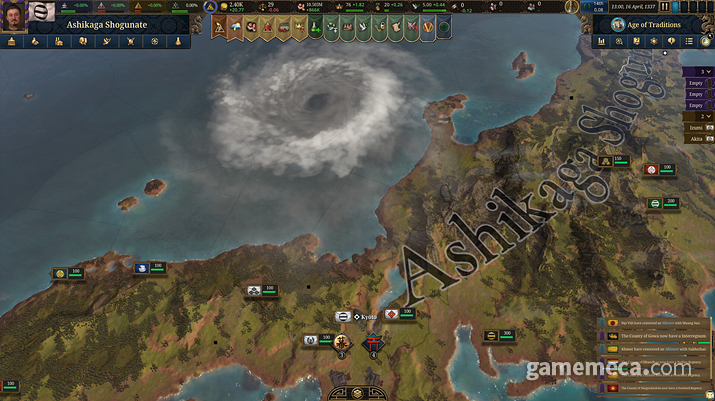
It has been a long 12-year wait. Paradox Interactive is finally set to launch the next numbered title in their legendary grand strategy series, 'Europa Universalis 5', on November 5. The game promises to carry the torch of the genre, tasking you with managing a nation through five centuries of war, trade, and diplomacy.
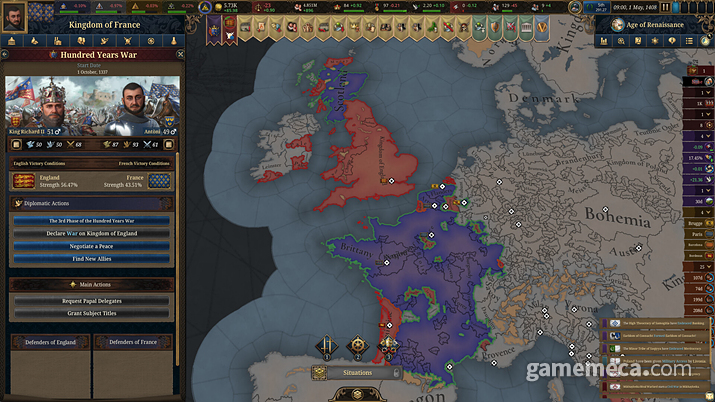
From the late Middle Ages to the Age of Revolutions, you will lead one of hundreds of nations—be it the Yuan Dynasty, an Italian city-state, the Papal States, or a Japanese feudal house. You can relive the Hundred Years' War or the Reformation, or embrace the chaotic beauty of alternative history, like a Mongol-dominated Russia or a Chinese maritime empire. And for the first time in the series, it officially supports Korean, much to the delight of the local community.
The heart of a 'Living World': The Pop system
Spanning from 1337 to 1837, the game aims to move beyond abstract numbers to create a 'living world'. The focal point is the 'Pop' (population) system. Unlike the generalized statistics of the past, this is an attempt to simulate every individual present in 1337. Each Pop acts as an individual worker with their own specific needs and desires.
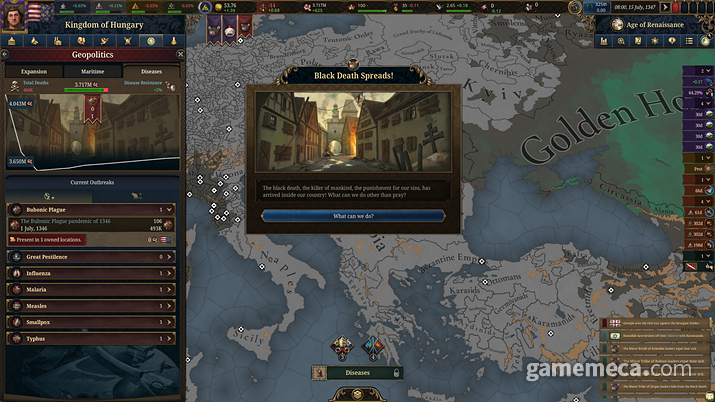
Pops are essentially your nation's lifeblood. They demand food and jobs, forming the backbone of your labor force, military, and tax base. Without them, buildings grind to a halt and colonization remains a pipe dream. A food surplus fuels population growth, while crop failures or wars lead to famine, crippling your manpower and military potential. Even natural disasters like volcanic eruptions or smallpox can lay waste to your population.
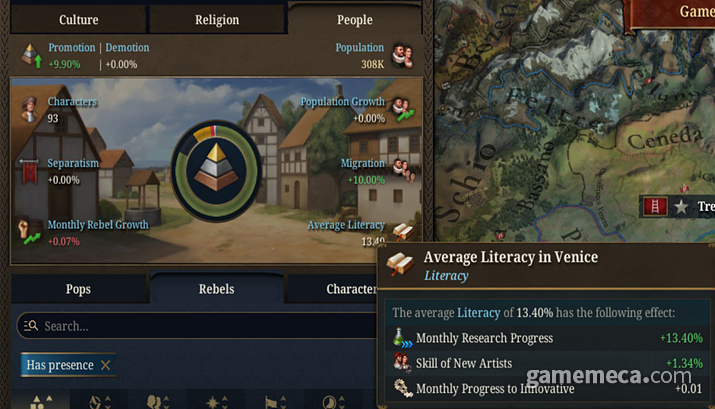
Every Pop belongs to one of thousands of cultures and hundreds of religious faiths, meaning truly homogeneous regions are a rarity. An Iberian peasant class, for instance, could be a mix of Catalan Catholics, Andalusian Sunnis, and Sephardic Jews. This diversity directly influences core systems like cultural prestige, technological progress, and literacy.
Pops also adhere to social classes. Citizens and laborers produce economic goods, nobles and soldiers handle defense, and the clergy provides literacy. These form the basis of the class system—nobles, clergy, citizens, and commoners. Granting nobles the privilege of serfdom might bolster their loyalty, but it certainly won't do the happiness of your oppressed peasant Pops any favors.
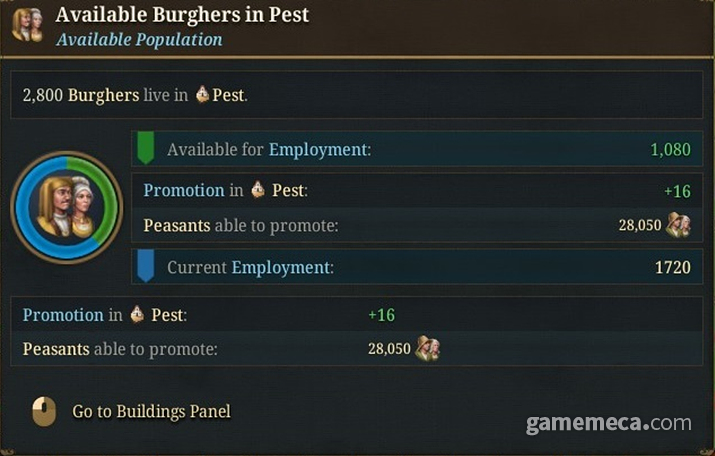
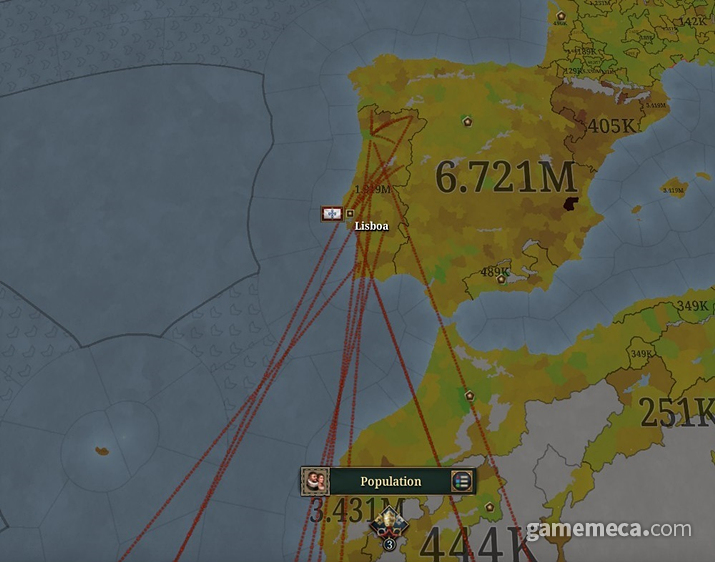
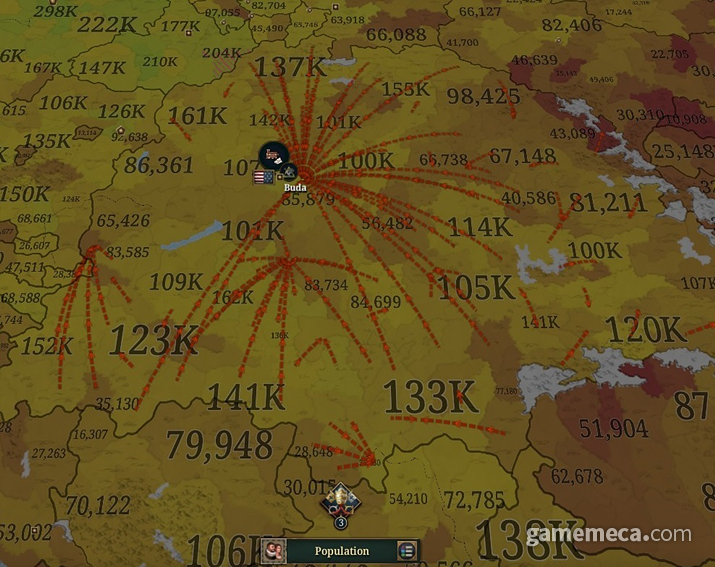
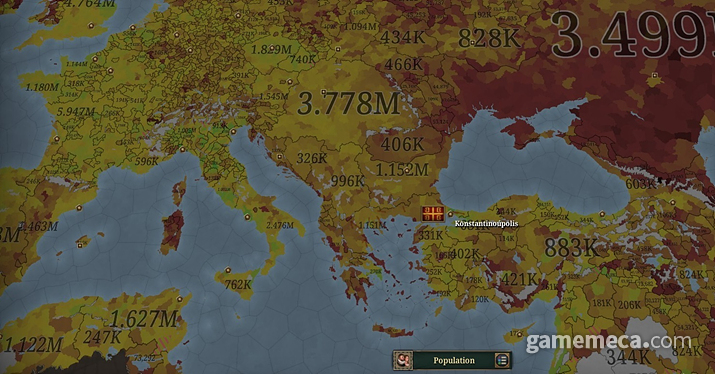
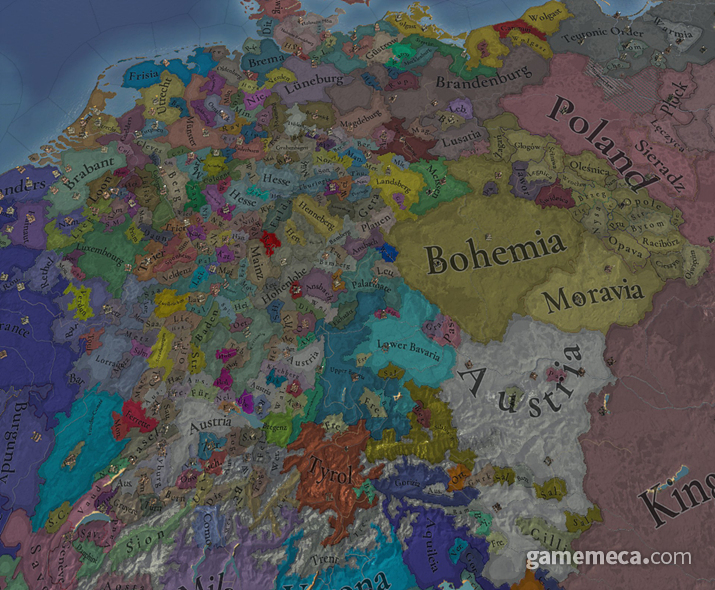
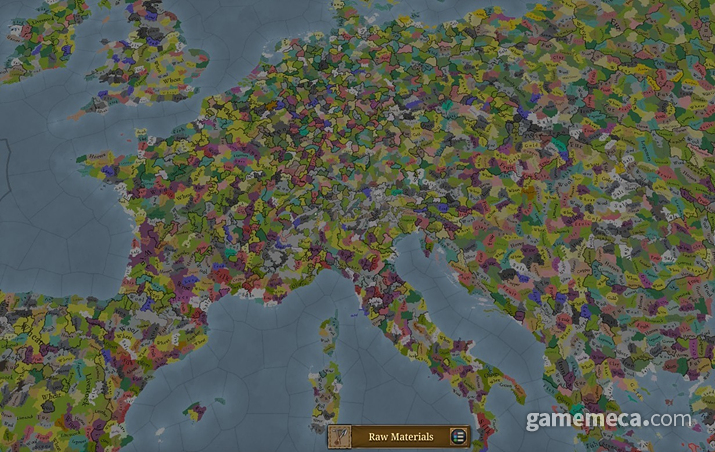
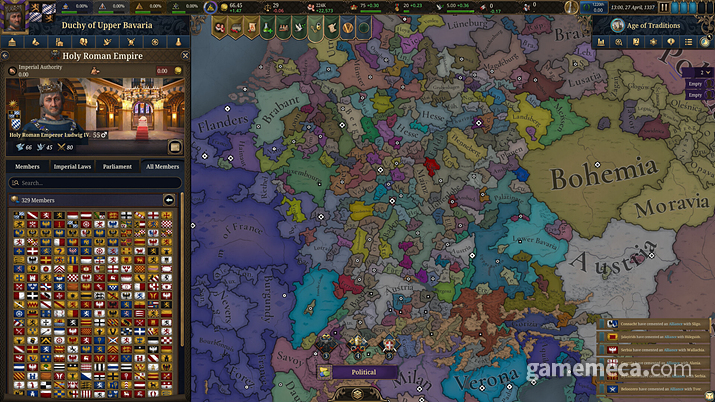
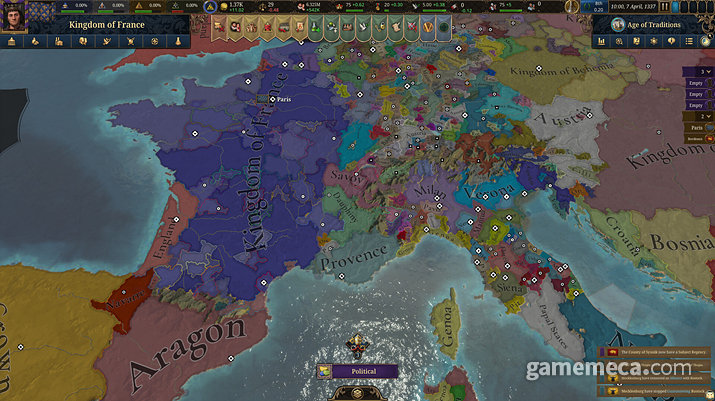
To bring this world to life, the map has been sliced into roughly 30,000 detailed locations. There are over 1,000 playable civilizations, and the Holy Roman Empire alone is depicted in granular detail with over 300 states, including single-city nations. Geographic factors—geography, climate, and vegetation—directly impact combat, as you might expect; cavalry dominates the plains, while infantry hold the advantage on hills.
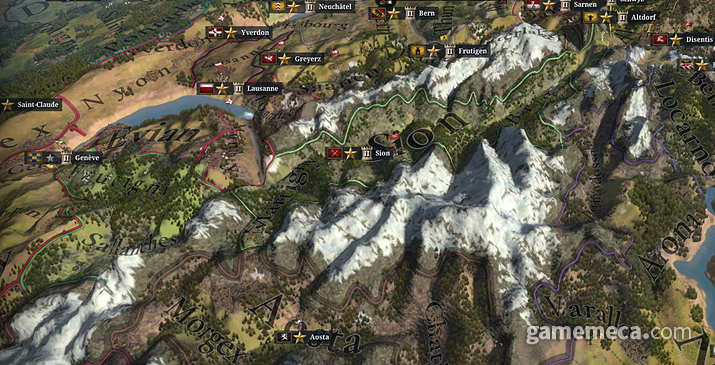
Seasonal changes are more than just eye candy. A snow-covered Alpine winter can stop an army in its tracks, while an Indian monsoon season can throttle production. Rivers and straits serve as strategic chokepoints for trade and defense. With over 70 different map modes available, the new population map mode is particularly useful for visualizing those granular Pop data points.
Governing the nation: Government, Economy, and Trade
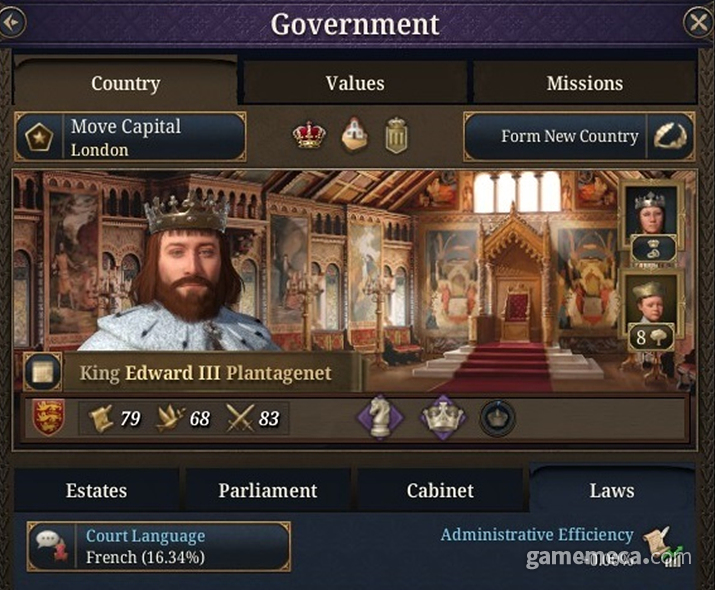
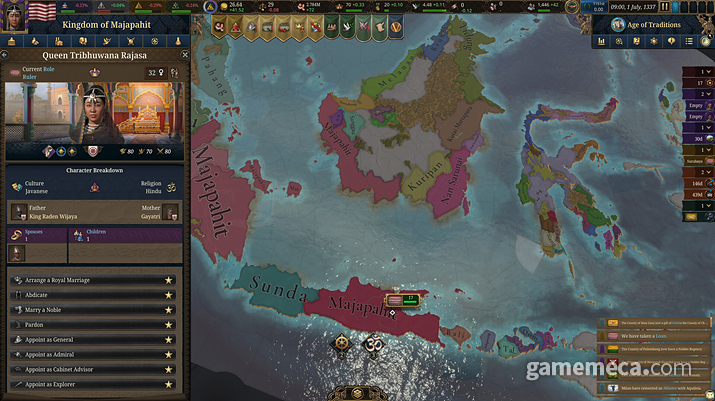
You function as the 'royal authority', abstractly representing the individual or group leading the nation. There are various government types—monarchies, republics, theocracies, tribal systems—each with unique mechanics. You can even see a monarchy transition into a revolutionary republic. Notably, a new 'Character' system has been introduced, allowing various figures representing social classes to influence politics directly.
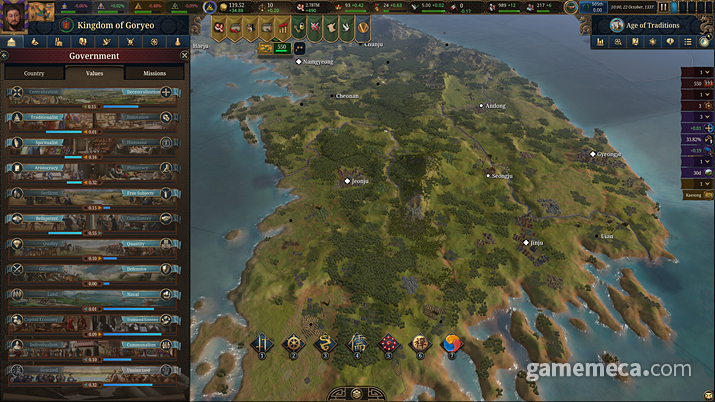
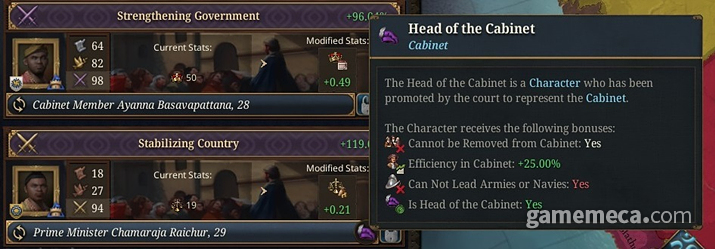
These individuals can be appointed to your cabinet to carry out key tasks like promoting social values, developing provinces, or suppressing rebellions. You must manage them carefully, as the cabinet's efficiency depends on their administrative, diplomatic, and military stats relative to your ruler's own capabilities. The 'Social Values' system, represented by sliders (e.g., decentralization vs. centralization, traditionalism vs. innovation), defines your nation's ideological path.
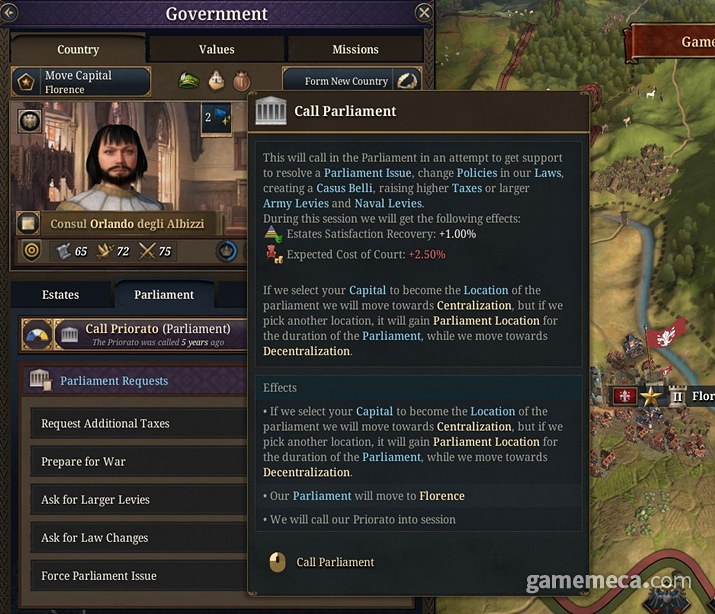
Laws dictate how your nation functions across religious, military, and class sectors, composed of various sub-policies. 'Government Reforms' allow you to evolve your political, social, and administrative structures step-by-step. There are numerous unique reforms for different nations, such as the Anatolian Beyliks, the Kingdom of Castile, or French feudal nobility.
Production is the bedrock of your economy. With over 70 unique goods, raw materials are extracted via 'Resource Gathering Operations' (RGOs). These are staffed by laborer Pops (or sometimes slaves) and are influenced by geography and climate. For instance, cloves are historically produced in Southeast Asia, and cocoa in specific parts of Central and South America.
There are hundreds of building types, categorized into basic industry, infrastructure, trade, military, culture, government, and unique buildings. Buildings require specific population classes—like nobles, clergy, or citizens—as labor, and their efficiency depends on the availability of input materials. For example, a Tool Guild uses iron to produce tools and can be upgraded into a Tool Factory as technology advances.
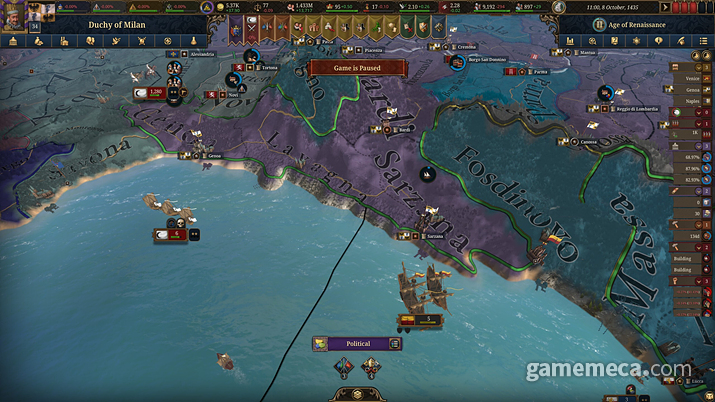
Unlike the rather static trade nodes of the fourth game, the fifth entry introduces a dynamic market system. Markets are based on a 'Market Center', and their reach expands or contracts based on the competition between 'Market Attractiveness' (the power to draw in surrounding regions) and 'Market Protectionism' (the power to block competing markets). Commodity prices are determined by supply and demand within the market. The further a region is from the center, the lower its 'Market Access', which reduces available goods, production, and local taxes. 'Trade Power' determines the total volume of goods moving between markets, while 'Trade Dominance' dictates export priority.
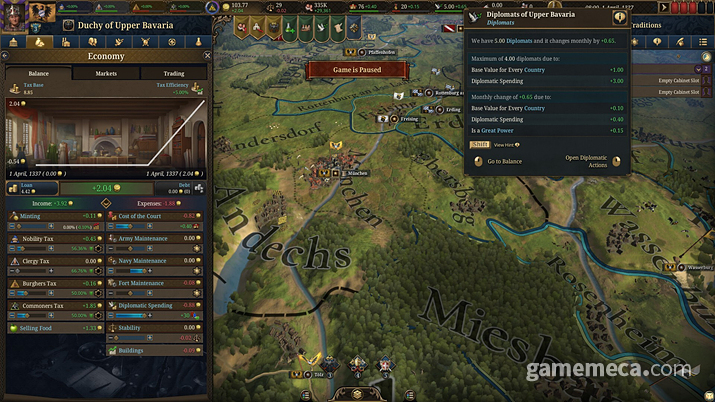
Tax collection is separated by class and is influenced by a new 'Control' system. Control is calculated based on proximity to the capital and can be boosted via road construction or cabinet actions. Higher control allows for efficient tax collection; in regions with 0% control, you aren't collecting a dime.
Conflict and harmony: Culture, Religion, and Diplomacy
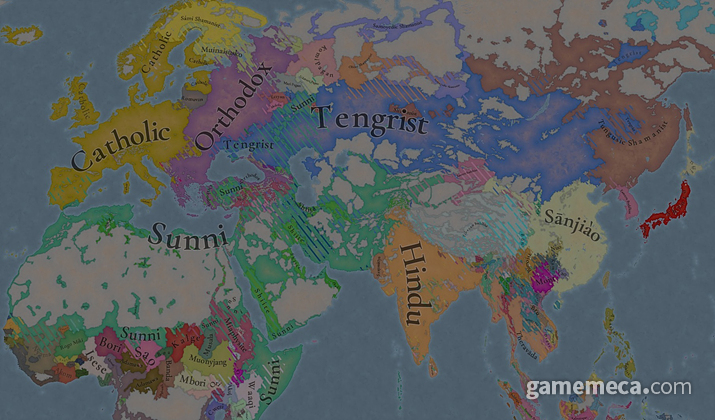
The game features around 300 unique religions. These faiths are grouped into broader religious spheres like Christianity, Islam, and Dharma. There are also multinational religious organizations, such as the Moscow Patriarchate, that transcend borders. Religions can also emerge dynamically during a campaign, such as Sikhism or Lutheranism.
Religion is managed through a tolerance system. Nations can set tolerance levels for their primary faith, heretics (different sects within the same religious sphere), and heathens (different religious spheres), which impacts population satisfaction and the spread of ideologies. Conversion relies on clerical literacy, control over the location, and laws. Changing your state religion is possible, but be prepared for a massive stability hit and rebellions from Pops clinging to the old faith.
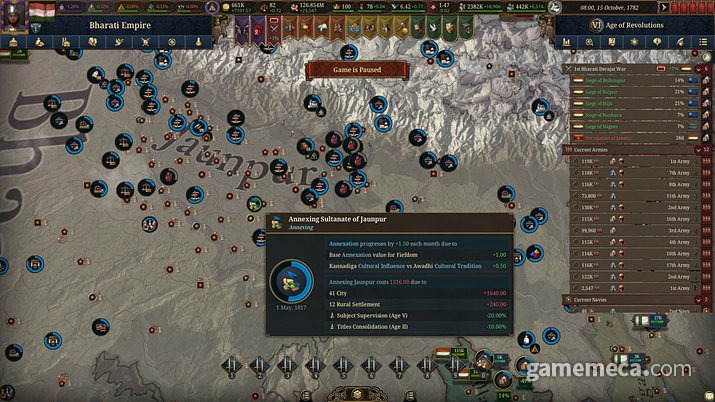
There are over 2,000 cultures implemented. Most nations possess numerous secondary cultures. Culture can be 'tolerated' or 'accepted' by spending 'Cultural Acceptance' resources, which increase through nation rank (duchy, kingdom, empire), progress, or laws. Cultural assimilation follows a 'Culture War' mechanism between 'Cultural Influence' (offense) and 'Cultural Tradition' (defense). Influence is bolstered by art, prestige, and cultural buildings, while tradition is bolstered by buildings and social values. The nation with the highest cultural influence worldwide gains 'Cultural Hegemony', allowing them to assimilate entire provinces rather than individual locations.
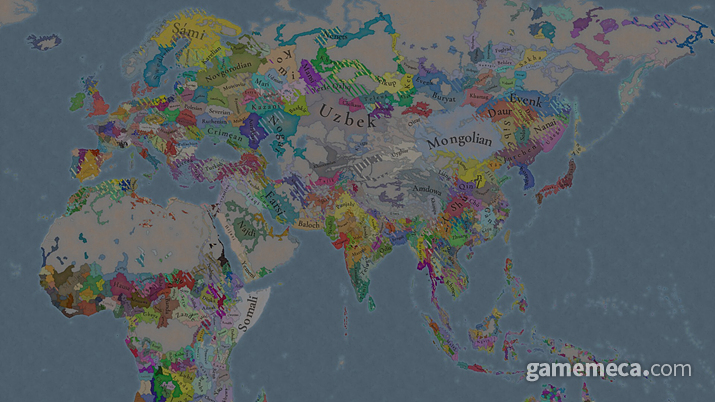
A language system has also been introduced. Within the game, a single nation distinguishes between court, everyday, market, and liturgical languages. For example, in 1337, England uses French as its court language, English for everyday life, and Latin for liturgy. Furthermore, when an artist creates an 'Artwork', your nation's cultural influence and prestige increase, though these works can be stolen or destroyed by invading armies during wartime.
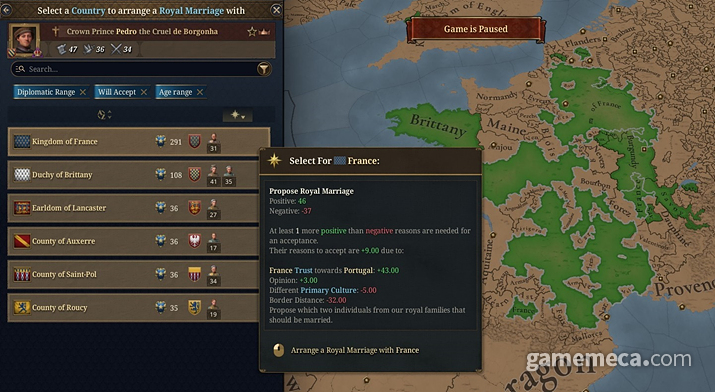
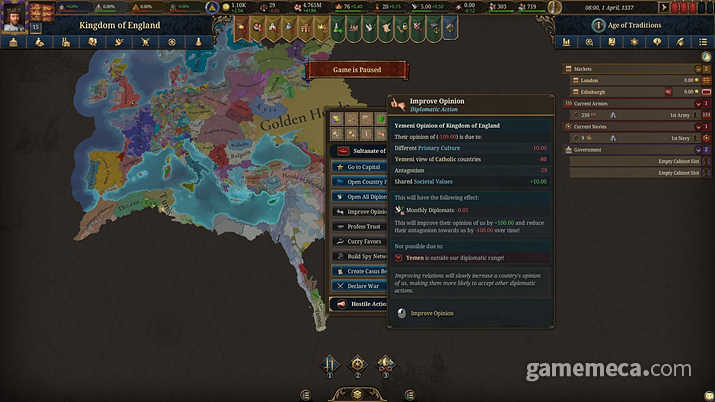
Diplomats have been changed from specific individuals into a diplomatic resource that recovers over time. Immediate actions like forming alliances consume a set amount of diplomats, while ongoing actions like improving relations or building spy networks require monthly costs. 'Diplomatic Capacity' limits the number of formal relationships (alliances, subjects) you can maintain. An alliance with a powerhouse like France will cost more capacity than one with a minor state like Ulm. 'Hostility' is similar to past aggressive expansion, but it stems from differences in values, religion, and culture, not just territorial conquest. If hostility accumulates over 50, a coalition can form.
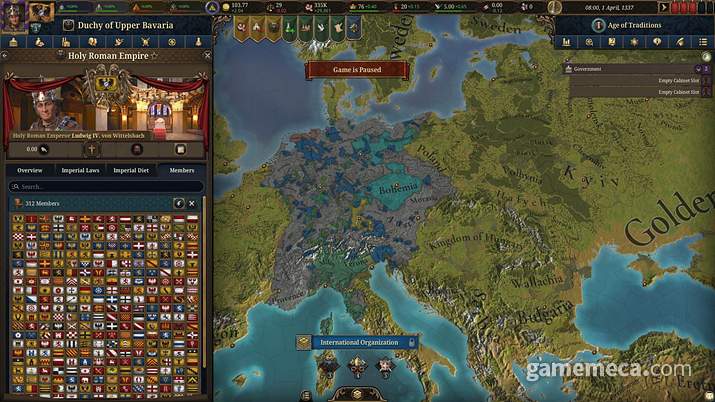
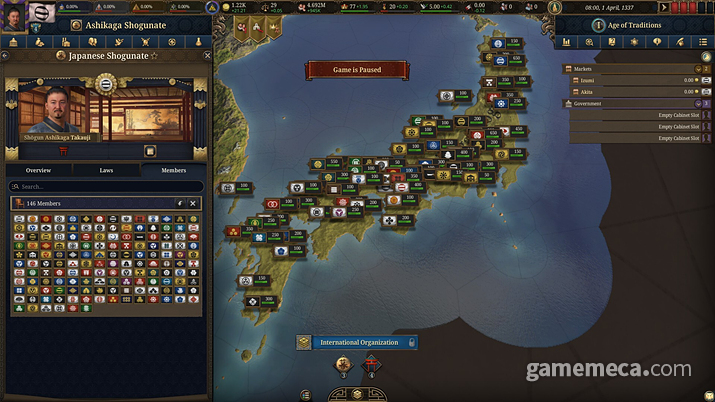
Finally, a new concept called 'International Organization' (IO) has been introduced to manage entities like the Holy Roman Empire, the Japanese Shogunate, Crusades, and coalitions. Personal unions are also treated as a type of IO, and after 50 years, members can be integrated via a parliamentary vote.
Expansion and conquest: Exploration, Colonization, and Military
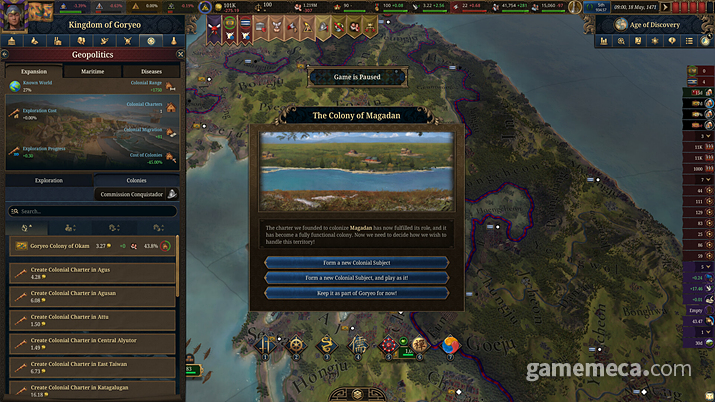
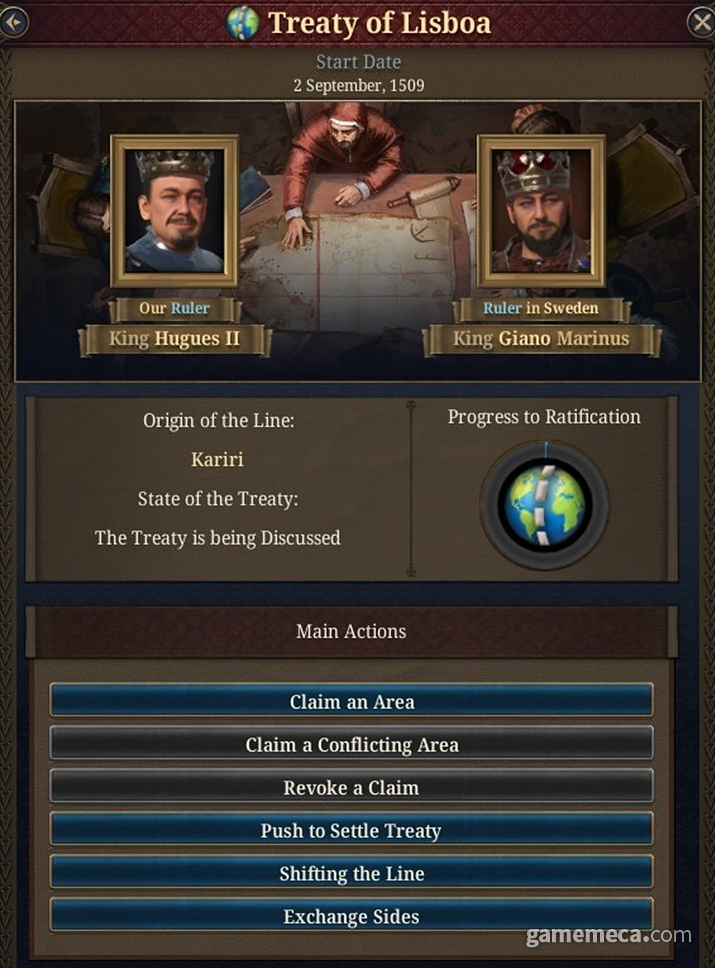
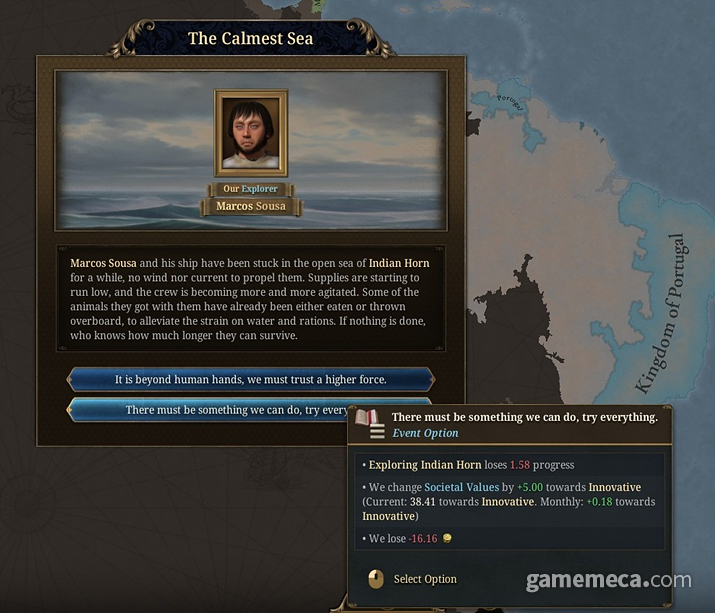
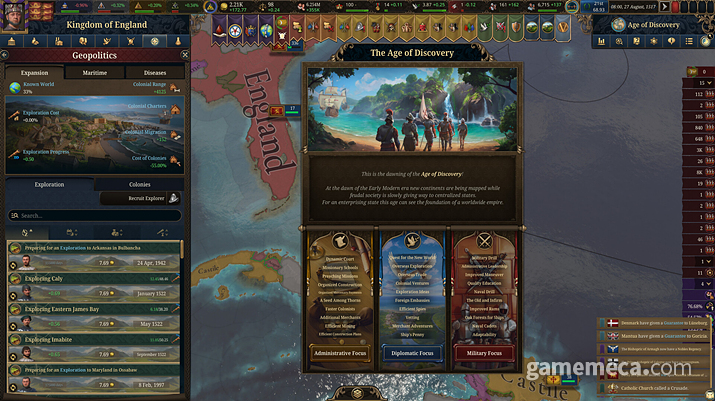
Expanding your reach, building colonies, and meeting new nations are essential. Exploration is managed in the 'Geopolitics' tab and is possible within your nation's 'Exploration Range'. Missions require ducats, sailors or manpower, and resources like timber or naval supplies. You must assign a 'Character'—including historical figures like Columbus or Magellan—as your explorer. Exploration speed is affected by tailwinds, while storms or disease can cause delays, and you always run the risk of your explorer dying or the voyage failing entirely. New terrain is only revealed once the expedition returns home.
Colonization happens at the province level via 'Colonial Charters'. You must choose the origin of the Pops migrating from your home nation, and the 'Colonial Migration' speed is influenced by technology, laws, and the 'Outward-facing' social value. Difficulty varies significantly based on indigenous population density, harsh climates, and diseases like malaria. Multiple nations can target the same region, leading to 'Colonial Competition'. The nation that sends the most Pops first gains control, but the Pops from the losing nations remain, creating a multicultural colony.
Inevitably, you will clash with other nations, potentially leading to war. In the early game, the military relies mostly on levies. These are drawn directly from your population (Pops): peasants serve as low-discipline infantry, while nobles serve as heavy cavalry. Levies are not reinforced during campaigns; if they die in battle or to disease, that population is permanently lost. As technology and institutions evolve, you can transition to a 'Standing Army'. 'Soldier' Pops employed in military buildings like armories or drill grounds form your manpower pool, from which you recruit regiments. The size of these regiments grows from 100 in the early game to over 3,000 in the late game.
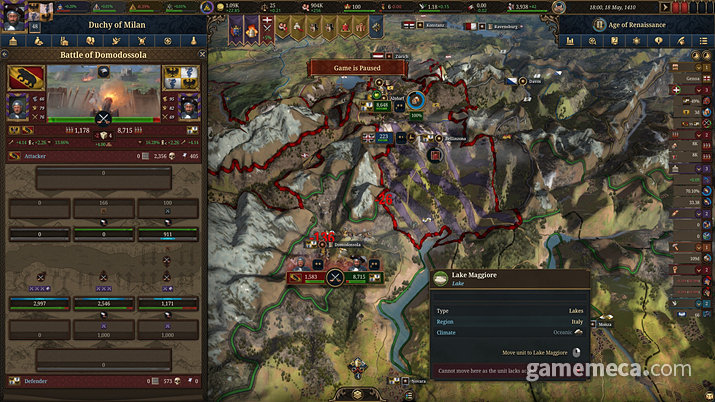
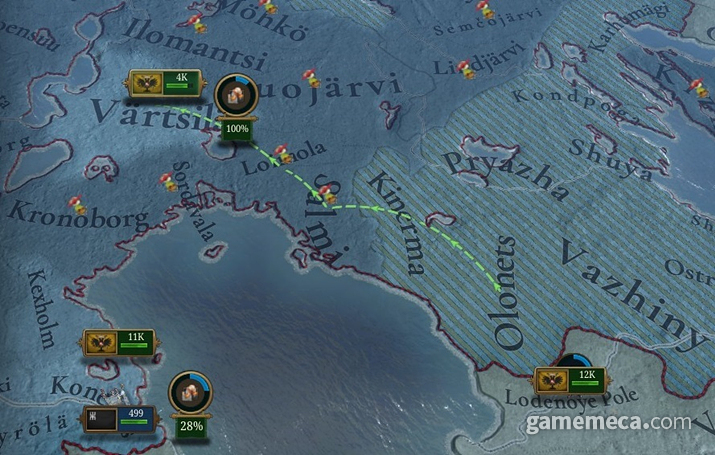
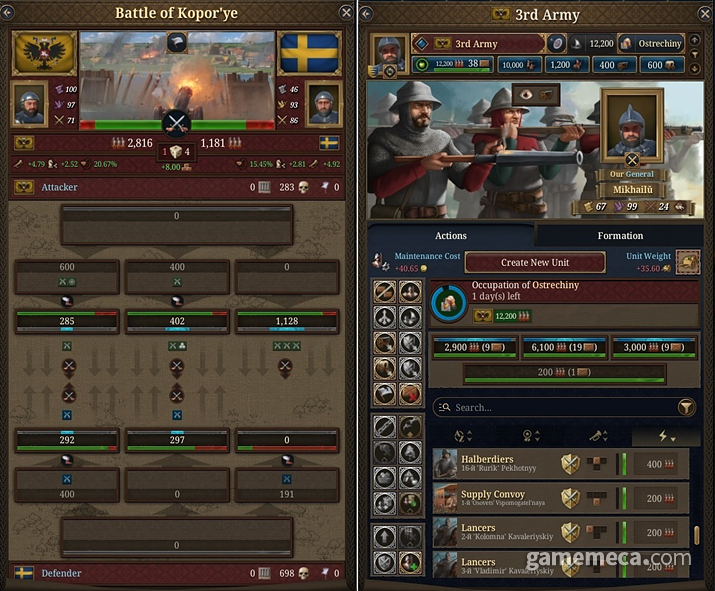
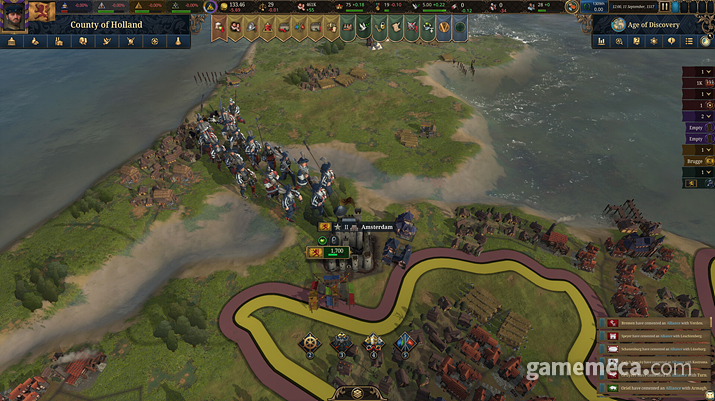
Warfare centers on logistics and supply. Armies carry food, but ultimately must maintain a 'supply line' from friendly territory. If that line is cut by enemies or stretches too far, your army suffers heavy attrition. Weather is a critical variable; winter reduces food production and increases attrition, and can even freeze coasts, allowing armies to cross the sea. Armies are organized into left, center, right, and reserve flanks, with high 'Initiative' units like cavalry entering battle first. If one flank collapses, the center is exposed, leading to a chain reaction of defeat. Additionally, 'Auxiliaries' have been introduced—'Camp Follower' units that increase your army's food storage to extend the duration of expeditions.
[Related Articles]
패러독스 인터랙티브의 대표적인 역사 대전략게임, '유로파 유니버설리스'가 전작으로부터 12년 만인 오는 11월 5일, 신규 넘버링 타이틀인 '유로파 유니버설리스 5'를 정식 출시한다. 이번 작품은 5세기에 걸친 역사를 배경으로, 전쟁, 교역, 외교를 통해 국가를 운영하는 장르의 핵심을 계승한다.
플레이어는 중세 후반부터 혁명 시대까지, 원나라, 이탈리아 도시 국가, 교황령, 봉건 시대 일본 가문 등 전세계 수백 개의 국가 중 하나를 이끌게 된다. 백 년 전쟁이나 종교 개혁 같은 역사적 사건은 물론, 몽골의 러시아 지배가 계속되거나 중국이 해상 제국을 건설하는 등의 대체 역사 탐험도 가능하다. 특히, 시리즈 최초로 한국어를 공식 지원해 국내 마니아들의 호응도 높은 상황이다.
'살아있는 세계'의 핵심, 팝(Pop) 시스템
1337년부터 1837년까지의 시대를 다루는 이번 작품은 추상적인 수치를 넘어선 '살아있는 세계' 구현을 목표로 했다. 그 중심에는 '팝(Pop, 인구)' 시스템이 자리한다. 이는 과거의 일반화된 통계와 달리, 1337년에 존재했던 모든 개인을 세밀하게 시뮬레이션하려는 시도다. 각 팝은 고유한 필요와 욕구를 가진 개별적인 일꾼으로 묘사된다.
팝은 국가의 생명줄과 같다. 이들은 식량과 일자리를 요구하며, 국가의 노동력, 군사, 세금의 기반이 된다. 팝 없이는 건물 가동이 멈추고 식민지 개척도 불가능하다. 식량 과잉은 인구 성장을, 흉작이나 전쟁은 기아를 유발해 노동력과 군사 잠재력 감소로 이어진다. 화산 폭발이나 천연두 같은 재앙 역시 인구를 황폐화시킬 수 있다.
모든 팝은 수천 개의 문화와 수백 개의 종교적 신념 중 하나를 가진다. 이로 인해 완전히 동질적인 인구 구성을 갖는 지역은 드물다. 예를 들어 이베리아의 한 농민 계층은 카탈루냐 가톨릭, 안달루시아 수니파, 스파라딤 유대인 등으로 다양하게 구성될 수 있다. 이러한 다양성은 문화적 위신, 이용 가능한 진보, 문해력 등 게임 시스템에 직접적인 영향을 미친다.
팝에게는 사회 계급도 존재한다. 시민과 노동자는 주로 경제 상품을 생산하고, 귀족과 군인은 방어를 담당하며, 성직자는 문해력을 제공한다. 이들은 귀족, 성직자, 시민, 평민으로 대표되는 계층 시스템의 기반이 된다. 귀족에게 농노제를 허용하는 특권을 부여하면 귀족의 충성도는 높아지지만, 억압받는 농민 팝의 행복도는 떨어진다.
이러한 세계를 구현하기 위해 게임은 지도를 약 3만 개의 세부적인 위치(locations)로 쪼갰다. 플레이 가능한 문명은 1,000개가 넘으며, 신성 로마 제국만 해도 도시 하나 크기의 국가를 포함해 300개 이상의 국가로 세밀하게 묘사된다. 지형, 기후, 식생 등 지리적 요소는 평야에서 기병이 우세하고 언덕에서 보병이 유리한 것처럼 전투에 영향을 준다.
계절 변화 역시 단순한 시각적 요소를 넘어, 겨울철 눈 덮인 알프스가 군대 이동을 막거나 우기의 인도 평원이 생산을 방해하는 등 실질적인 게임 효과를 제공한다. 강과 해협은 무역과 방어의 핵심 전략적 요충지 역할을 한다. 70개 이상의 다양한 지도 모드가 제공되며, 특히 새로운 인구 지도 모드는 세부적인 팝 데이터를 시각적으로 보여준다.
정부, 경제, 무역으로 나뉘는 국가 통치
플레이어는 국가를 이끄는 개인, 또는 집단을 추상적으로 대표하는 '왕권'으로서 기능한다. 군주정, 공화정, 신정, 유목정 등 다양하고 고유한 시스템을 가진 정부가 있으며, 캠페인 진행 중 군주정이 혁명 공화정으로 바뀌는 등 역동적인 변화도 가능하다. 특히 이번 작품에서는 국가 내 여러 계층을 대표하는 '인물' 시스템이 새롭게 도입되어 정치에 적극적으로 영향을 미친다.
이러한 인물들은 내각에 임명되어 사회적 가치 진흥, 주 개발, 반란 방해 같은 핵심 과업을 수행한다. 이들의 행정, 외교, 군사 능력치와 통치자의 능력치가 내각 전체의 효율을 결정하기에 주의 깊게 관리해야 한다. 또한 '사회적 가치' 시스템은 지방분권 대 중앙집권, 전통주의 대 혁신주의 같은 슬라이더 형태로, 국가의 이념적 방향성을 규정한다.
'법률'은 종교, 군사, 계층 분야에서 국가의 작동 방식을 규정하며, 하위 '정책'들로 구성된다. '정부 개혁'은 단계적인 선택을 통해 국가의 정치, 사회, 행정적 구조를 진화시킨다. 아나톨리아 베이국, 카스티야 왕국, 프랑스 봉건 귀족제 등 국가별 고유 개혁이 다수 존재한다.
경제의 기반은 생산이다. 70가지 이상의 고유 상품이 존재하며, 원자재는 '자원 채집 운영(RGO)'을 통해 추출된다. RGO는 노동자 팝(때로는 노예)이 담당하며, 지리와 기후의 영향을 받는다. 예를 들어 정향은 동남아시아, 코코아는 중남미 일부 지역에서만 역사적 배경을 반영하여 생산된다.
건물은 수백 종류가 존재하며, 기본 산업, 인프라, 무역, 군사, 문화, 정부, 고유 건물 등으로 나뉜다. 건물은 귀족, 성직자, 시민 등 특정 인구 계층을 노동력으로 요구하며, 운영에 필요한 재료의 가용성에 따라 효율이 결정된다. 예를 들어 도구 길드는 철을 투입 자원으로 사용하여 도구를 생산하며, 기술 발전에 따라 도구 공장으로 향상된다.
4편의 다소 정적이었던 무역 노드와 달리, 5편에서는 동적인 시장 시스템을 도입했다. 시장은 특정 지역의 '시장 중심지'를 기반으로 하며, '시장 매력도'(주변 지역을 끌어들이는 힘)와 '시장 보호주의'(경쟁 시장을 막는 힘)라는 두 힘의 경쟁을 통해 범위가 팽창하거나 축소된다. 상품 가격은 시장 내 수요와 공급의 균형에 따라 결정된다. 시장 중심지에서 멀리 떨어진 지역일수록 '시장 접근성'이 낮아져, 이용 가능한 상품이 줄고 생산량과 지역 세금이 감소할 수 있다. '무역 능력'은 시장 간 상품 이동 총량을, '무역 우위'는 수출 우선권을 결정한다.
세금 징수는 계층별로 분리되어 이루어지며, '통제(Control)'라는 새로운 시스템의 영향을 받는다. 통제는 수도와의 근접성에 따라 계산되며, 도로 건설이나 내각 행동을 통해 높일 수 있다. 통제 수준이 높을수록 효율적인 세금 징수가 가능하며, 통제가 0%인 지역에서는 세금을 징수할 수 없다.
문화, 종교, 외교로 구성되는 충돌과 조화
게임 내에는 약 300개의 고유한 종교가 구현된다. 이 신앙들은 기독교, 이슬람, 다르마 등 더 포괄적인 종교권으로 묶이며, 모스크바 독립 총대주교청처럼 국경을 초월하는 다국적 종교 조직도 존재한다. 시크교나 루터파처럼 캠페인 진행에 따라 역동적으로 등장하기도 한다.
종교는 관용 시스템으로 관리된다. 국가는 주요 종교, 이단(같은 종교권 내 다른 교파), 이교(다른 종교권)에 대한 관용 수준을 정할 수 있으며, 이는 인구 만족도와 시대관 확산에 영향을 미친다. 개종은 성직자 문해력, 해당 위치에 대한 통제력, 법률 등에 영향을 받는다. 국교 변경도 가능하지만, 큰 안정도 하락과 구 신앙 팝의 반란을 감수해야 한다.
문화는 2,000개 이상이 구현됐다. 대부분의 국가는 수많은 2차 문화를 보유한다. 문화는 '문화 수용력'이라는 자원을 소모하여 '관용' 혹은 '수용' 상태로 만들 수 있으며, 이 수용력은 국가 등급(공국, 왕국, 제국)이나 진보, 법률을 통해 증가한다. 문화 동화는 '문화 영향력'(공격력)과 '문화 전통'(방어력) 간의 '문화 전쟁' 메커니즘을 따른다. 문화 영향력은 예술 작품, 위신, 문화 건물 등으로 강화되며, 문화 전통은 건물, 사회적 가치 등으로 강화된다. 전 세계에서 가장 높은 문화 영향력을 가진 국가는 '문화적 패권'을 획득하여, 개별 위치가 아닌 지방 전체를 동화시킬 수 있게 된다.
언어 시스템도 도입됐다. 게임 내에서는 같은 국가라도 궁정 언어, 일상 언어, 시장 언어, 전례 언어가 구분된다. 예를 들어 1337년 잉글랜드는 궁정 언어로 프랑스어를, 일상 언어로 영어를, 전례 언어로 라틴어를 사용한다. 어불어 예술가가 '예술 작품'을 생성하면 국가의 문화 영향력과 위신이 증가하며, 이 작품은 전쟁 중 침략군에 의해 도난당하거나 파괴될 수 있다.
외교관은 특정 인물이 아닌, 시간에 따라 회복되는 외교적 재화(자원) 형태로 변경되었다. 동맹 결성 같은 즉각적 행동은 일정량의 외교관을 소모하고, 관계 개선이나 첩보망 구축 같은 지속적 행동은 월간 비용을 요구한다. '외교 역량'은 국가가 유지할 수 있는 공식적인 관계(동맹, 속국)의 수를 제한한다. 프랑스와 같은 강대국과의 동맹은 울름 같은 소국과의 동맹보다 더 많은 역량을 소모한다. '적대감'은 과거의 공격적 확장과 유사하나, 영토 정복뿐 아니라 가치, 종교, 문화의 차이에 의해서도 기본적으로 발생한다. 적대감이 50 이상 누적되면 반국가연합(코올리션)이 결성될 수 있다.
마지막으로 '국제 조직(IO)'이라는 새로운 개념이 도입되어 신성로마제국, 일본 막부, 십자군, 반국가연합 등을 관리한다. 동군 연합 역시 국제 조직의 일종으로 취급되며, 연합 형성 50년 후 의회 투표를 통해 구성원 통합이 가능하다.
탐험, 식민지, 군사로 구분되는 확장과 정복
국가 범위를 넓히고 식민지를 건설하거나 새로운 국가를 만나는 것 역시 중요한 요소다. 탐험은 '지정학' 탭에서 관리하며, 국가의 '개척 범위' 내에서 가능하다. 탐험 임무에는 두캇, 선원 또는 인력, 그리고 목재나 해군 보급품 같은 자원이 필요하며, 콜럼버스나 마젤란 같은 역사적 인물을 포함한 '캐릭터'를 탐험가로 할당해야 한다. 탐험은 순풍으로 속도가 빨라지거나 폭풍, 질병 등으로 지연될 수 있으며, 탐험가가 사망하거나 항해 자체가 완전히 실패할 위험도 감수해야 한다. 새로운 지형은 탐험대가 임무를 마치고 본국으로 복귀한 후에야 밝혀진다.
식민지 개척은 '식민지 허가장'을 통해 지역(Province) 단위로 이루어진다. 개척을 시작할 때 본국에서 이주할 팝의 출신 지역을 선택해야 하며, '개척 이주' 속도는 기술, 법률, 그리고 '외부 지향' 사회적 가치 등에 영향을 받는다. 개척 난이도는 원주민 인구 밀도, 혹독한 기후, 질병(말라리아 등)의 존재 여부에 따라 크게 달라진다. 여러 국가가 같은 지역을 목표로 삼아 '식민지 경쟁'을 벌일 수도 있다. 이 경우 팝을 가장 먼저, 가장 많이 보내는 국가가 통제권을 확보하지만, 경쟁에서 밀려난 국가의 팝도 해당 지역에 남아 다문화 식민지가 형성된다.
그 과정에서 필연적으로 다른 국가와 마찰을 빚게 되고, 전쟁까지 갈 수도 있다. 군대의 경우 게임 초기엔 대부분 징집에 의존한다. 이는 국가의 인구(팝)에서 직접 차출되며, 농민 계층은 규율이 낮은 보병으로, 귀족 계층은 중무장 기사로 징집되는 식이다. 징집병은 원정 중 보충되지 않으며, 전투나 질병으로 사망 시 해당 인구가 영구적으로 소멸한다. 기술과 제도가 발전하면 '상비군'으로 전환이 가능해진다. 병기고(Armory)나 훈련장 같은 군사 건물에 고용된 '군인' 팝이 국가의 인력 풀을 구성하며, 이 인력을 바탕으로 상비군 연대를 모집한다. 연대 규모는 기술 발전에 따라 초기 100명에서 후기 3,000명 이상으로 커질 수 있다.
전쟁의 핵심은 병참과 보급이다. 군대는 식량을 휴대하지만, 궁극적으로 우호적인 위치로부터 '보급선'을 유지해야 한다. 보급선이 적에게 끊기거나 너무 길어지면 군대는 심각한 소모 피해를 입는다. 날씨 또한 중요 변수로, 겨울은 식량 생산을 줄이고 소모를 늘리며, 해안을 얼려 군대가 바다를 건널 수 있게 하기도 한다. 군대는 좌익, 중앙, 우익, 예비대로 편성되며, 기병처럼 '주도력'이 높은 유닛이 먼저 전투에 진입한다. 한쪽 측면이 무너지면 중앙이 노출되어 연쇄적인 붕괴로 이어질 수 있다. 또한 '보조 병력(Auxiliaries)'이 새롭게 도입되어, '캠프 추종자' 유닛은 군대의 식량 저장량을 늘려 원정 기간을 연장시킨다.
[관련기사]
This news was translated by AI.

I am the head of the GameMeca editorial team. jong31@gamemeca.com

MOST POPULAR NEWS
- Severe Copying of Games via AI Reverse Engineering Destroys the Development Ecosystem
- [Today's steam] Wardogs announces early termination of new season just 3 days after launch
- Save Storage Space, PS5 Cloud Streaming Launches in South Korea on the 28th
- League of Legends Brand Collaboration Teased to Celebrate Worlds and K/DA Comeback
- 'Uma Musume' US LA Tour Suddenly Canceled Due to Visa Issues for Voice Actors and Singers
- Gladiator Takes 1st Place as AION 2 Global Characters Surpass 6.3 Million
- [Today's steam] Helldivers 2 receives Overwhelmingly Negative reviews due to new anti-cheat
- Game companies on high alert over PHP vulnerabilities, ranging from inspections to service terminations
- Dual Pistols and New Quests Added, Cyberpunk 2077 Never Ends
- [Game Rank Analysis] "Let's go blow up the Zhukov Palace" Modern Warfare 4 peak
MEDIA PARTNERSHIPS



GAMEMECA SNS


 GAMEMECA GLOBAL SITE