
The history of domestic games is glorious, but the legacy is not being preserved
"국산게임 역사는 화려한데, 유산은 보존되지 못하고 있다"
2026.07.22 17:06 UTC+9

AI Summary
South Korean institutions are racing to preserve dying game history. Experts propose national archiving to combat server closures and media obsolescence. A new roadmap aims to establish a central hub for gaming heritage by 2028.
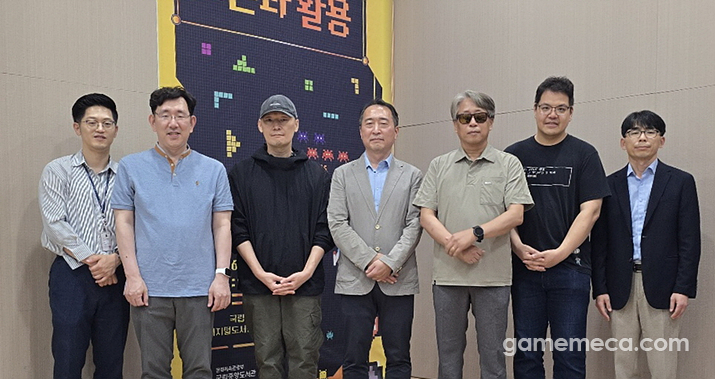
Sony’s recent announcement that it will discontinue PlayStation physical discs starting in 2028 has become a hot topic. It is not just consumers who are concerned; the academic community, which preserves and studies games, is also voicing its alarm. As game development in South Korea began in the 1990s, efforts and research for title preservation are finally emerging. Since the 14th, the National Library of Korea has been hosting a small exhibition titled 'Turning Back on Discontinued Korean Games', and on the 22nd, a seminar on the preservation and utilization of discontinued games was held. Domestic researchers and game preservation experts gathered to discuss research achievements, the current status, and the necessity of preserving game titles.
First, Professor Lee Jeong-yeop of Soonchunhyang University presented the realistic progress of a foundational project for collecting and preserving discontinued software. Professor Lee Jeong-yeop noted that when the initial discontinued software preservation project began, they faced difficulties in database collection due to many online games being difficult to restore and many developers having disappeared. Therefore, they started by creating a database of which games actually existed. For the console sector, they utilized books such as the 'Perfect Catalog'.
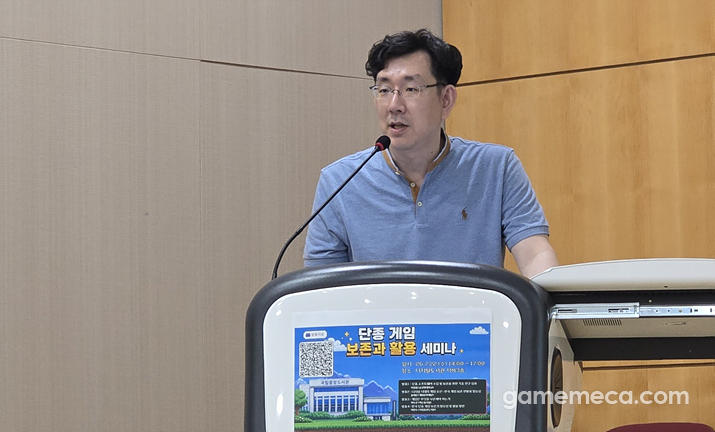
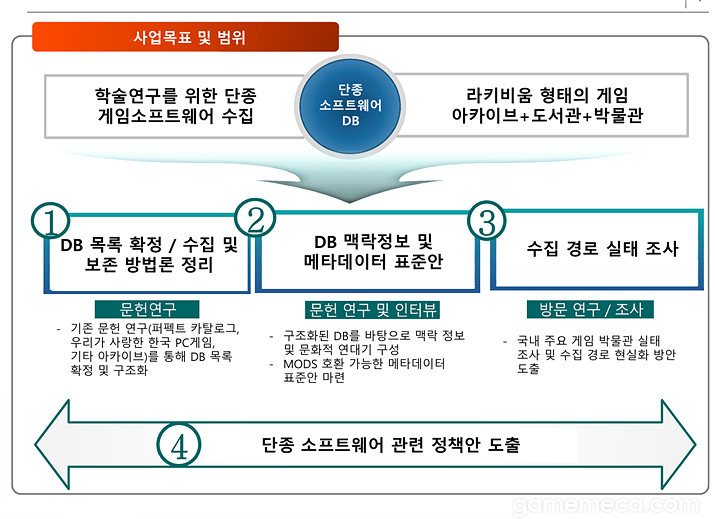
Since many domestic games do not appear in books, they chose to organize approximately 65,000 titles based on internet materials and review data from the Motion Picture Rating Committee, which existed before the Game Rating and Administration Committee was established. Professor Lee Jeong-yeop stated, "Even the Game Rating and Administration Committee had old game lists stored on old servers that were difficult to operate," adding, "We collected and organized as much as we could." Based on this database, they created 12 metadata standards to enable the classification of domestic games, designing the foundation for game preservation.
Next, Yoon Dae-jin, Team Leader at the Game Culture Foundation, spoke about the current status and necessity of preserving domestic game records. Games can be seen as a mirror of the era and a heritage containing the lives and philosophies of modern people from humanistic, aesthetic, socio-cultural, and media perspectives. In South Korea, the game industry began in the 1990s, went through the development period of online games, and reached the present through the history of MMORPGs and domestic regulations. Yoon Dae-jin pointed out that while the history of domestic games is spectacular, the heritage is not being preserved.
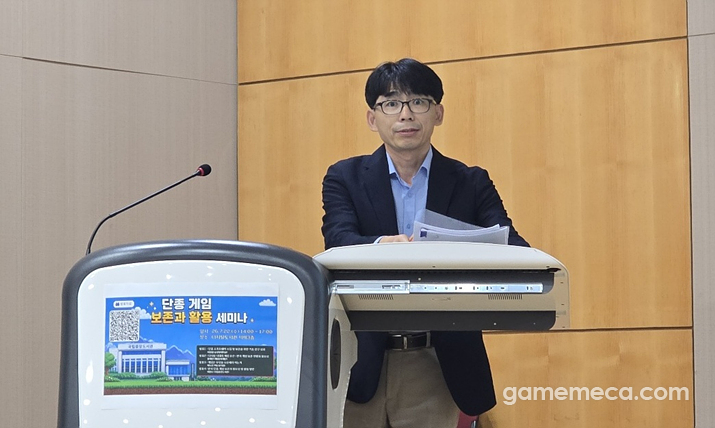
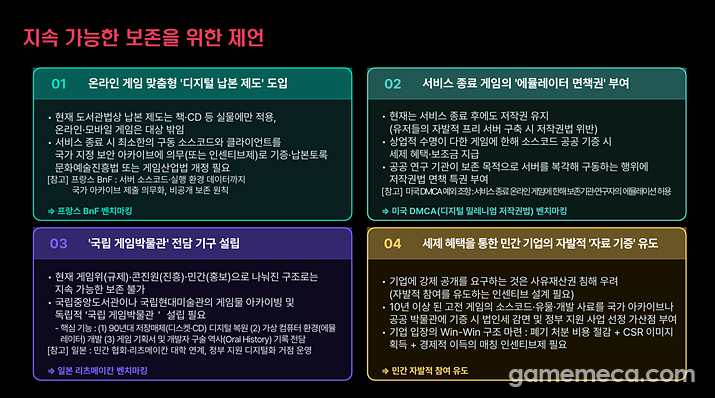
Companies face difficulties due to trade secrets, copyright, and cost burdens, as well as technical challenges such as changes in computing environments and server dependency. Currently, efforts in South Korea are centered on private companies like Nexon and Netmarble, and in the public sector, the most data remains with the Game Rating and Administration Committee, which is in charge of rating classification and regulatory administration. Yoon Dae-jin emphasized, "Preservation of domestic games is urgent for cultural, industrial, and technical value," and added, "Complementary national and institutional methods such as a digital deposit system and exemption rights for emulators of service-terminated games are necessary."
Third, Nexon Museum Director Park Doo-san presented on the methods and direction of game preservation. First, he explained game archiving by dividing it into objects, interactions, and social relationships. First, game objects refer to the devices used for playing. Material and technical targets change depending on the platform. Through arcades, consoles, PC, digital downloads, and streaming, material elements effectively disappear. The ComputerSpieleMuseum, which opened in 1997, aims not only to exhibit vast amounts of original hardware but also to recreate the usage environment (home, attic, etc.).
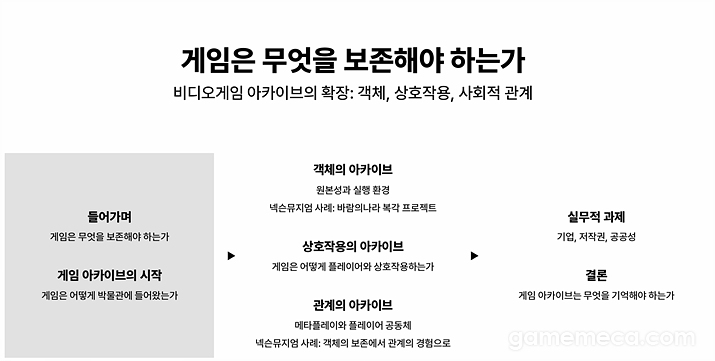
The archive of interaction focuses mainly on the play aspect. The Museum of Modern Art in New York is a representative example, using 'good interaction' as a standard for games like Pac-Man, Tetris, and Myst. If early games set the ending as the goal, later games elicited gamer reactions based on various experiences such as ethical decision-making and a spirit of challenge. Such interactions also become subjects of preservation. The archive of social relationships deals with the economy, war, and diplomacy as these interactions intertwine. Director Park Doo-san said, "We must think about how to preserve the relationship between games, society, and culture at the time, such as the guild culture of World of Warcraft, the wars of EVE Online, and the emergent server maintenance of Minecraft."
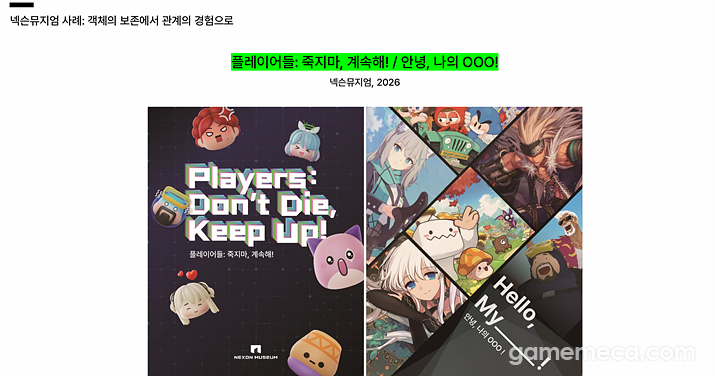
Nexon initially focused on physical preservation, centering on the history of computing technology development. However, the new exhibition started from the point of what traces games left on people's lifestyles and relationships. The second floor exhibited PC packages where games moved beyond individual hobbies to collective interests, while the third floor focused on individual narratives, introducing methods such as game characters encountered in the past based on Nexon IDs.
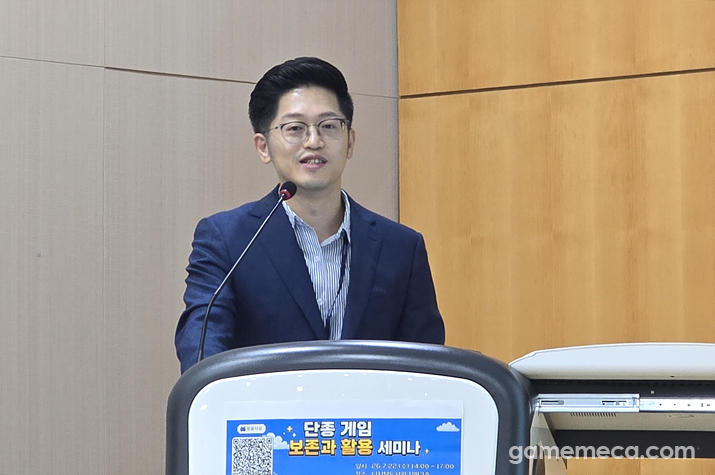
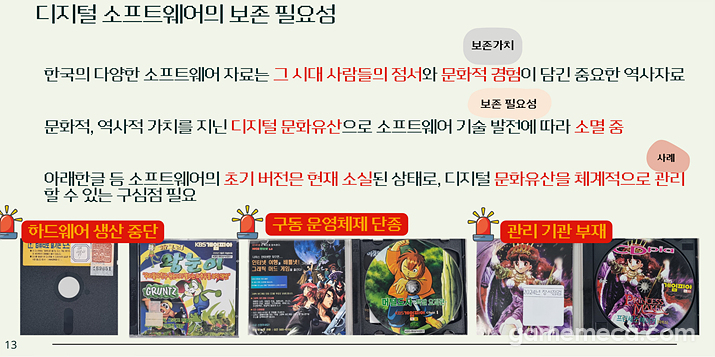
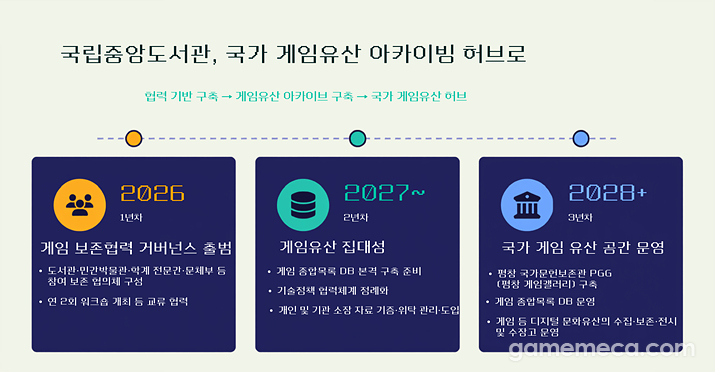
Finally, Curator Lee Yeon-soo of the National Library of Korea's Conservation Research Center spoke about the planning of the discontinued game preservation exhibition and the necessity of game preservation. First, the National Library of Korea is a research and preservation institution that originally focused on preserving audio-visual media such as videos, electronic media, and online media. Curator Lee Yeon-soo, who originally enjoyed games, felt the need to preserve games as well, which led to the planning of the exhibition. In particular, some books include games and programs in the appendix, and preserving all of these led to the exhibition.
Each piece of software is an important historical document containing the experiences, memories, and records of the Korean people. In particular, games are digital complex cultural heritage that are popular records but disappear when servers are closed or are placed in a situation where game ownership changes to usage rights. Curator Lee Yeon-soo said, "We are in a preservation crisis, with Sony announcing the discontinuation of optical media production," and added, "There is no game deposit collection system in Korea, so I wanted to remind people of the importance of preservation through this exhibition." She also announced plans to make the National Library of Korea a hub for national game heritage archiving, launch a preservation cooperation governance, and build a National Library of Korea repository in Pyeongchang after 2028.
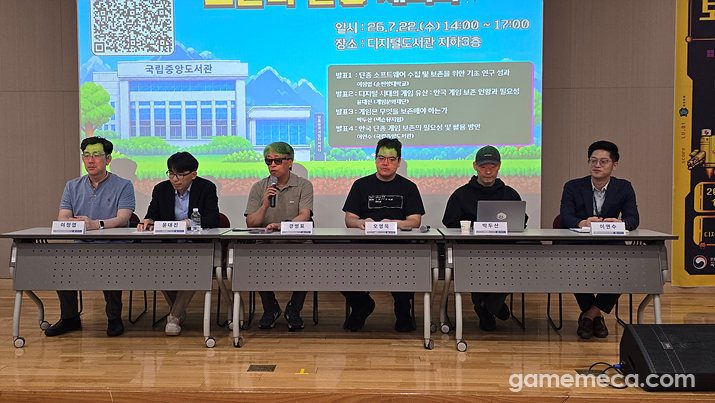
최근 소니가 플레이스테이션 디스크 매체를 2028년부터 단종한다고 발표해 화제다. 소비자뿐만 아니라 게임을 보존하고 연구하는 학계에서도 우려의 목소리가 나오는 상황이다. 국내에서도 1990년대부터 게임 개발이 시작된 가운데, 타이틀 보존을 위한 노력과 연구가 태동하고 있다. 지난 14일부터 국립중앙도서관에서는 '단종 한국 게임 다시 켜다'라는 주제로 작은 전시가 시작됐으며, 22일에는 단종게임 보존과 활용을 주제로 한 세미나도 개최됐다. 국내 연구자 및 게임 보존 전문가들이 한대 모여 게임 타이틀 보존을 위한 연구 성과, 현황, 필요성 등에 대해 논의했다.
첫 순서로는 순천향대학교 이정엽 교수가 단종 소프트웨어 수집 및 보존을 위한 기초 프로젝트 진행의 현실적인 경과를 발표했다. 초기 단종 소프트웨어 보존 프로젝트를 시작했을 때 데이터베이스 수집은 복원이 어려운 온라인게임과 사라진 개발사가 많아 어려움을 겪었다고 이정엽 교수는 전했다. 이에 우선 어떤 게임이 존재했는지를 데이터베이스화하는 것에서 출발했다. 콘솔 부문은 '퍼펙트 카탈로그'와 같은 책을 활용했다.
국산게임은 책에 나오지 않는 경우도 많아 인터넷 자료와 게임물관리위원회가 없었던 당시 영화등급위원회 심의 자료 등을 토대로 약 6만 5,000종을 정리하는 방식을 택했다. 이정엽 교수는 "게임위조차 옛날 게임 목록은 옛 서버에 저장돼 가동이 어려웠다"라며 "최대한 다 받아 정리했다"고 전했다. 이런 데이터베이스를 토대로 국산 게임 분류가 가능하도록 12개 메타데이터 표준안을 만들어 게임 보존의 토대를 설계했다.
다음으로는 윤대진 게임문화재단 게임문화진흥팀장이 국산 게임 기록 보존 현황과 필요성에 대해 전했다. 게임은 인문학적, 미학적, 사회·문화적, 미디어적 관점에서 현대인의 삶과 철학이 담긴 시대의 거울이자 유산으로 볼 수 있다. 국내에서는 1990년대 게임산업 태동기를 시작으로 온라인게임의 발전기를 거쳤고, MMORPG와 국산 규제의 역사를 거쳐 현재에 이르렀다. 국산게임의 역사는 화려하지만, 유산은 보존되지 못하고 있다고 윤대진 팀장은 지적했다.
기업은 영업비밀과 저작권 및 비용 부담 때문에, 기술적으로는 컴퓨팅 환경의 변화나 서버 종속성 등으로 어려움을 겪는다. 현재 국내에서는 넥슨, 넷마블 등 민간기업 기반의 노력이 중심이 되고 있으며, 공적 영역에서는 등급 분류 및 규제 행정을 담당하는 게임위에 가장 많은 자료가 남아있다. 윤대진 팀장은 "문화적, 산업적, 기술적 가치를 위해서라도 국산게임 보존이 시급하다"라며, "디지털 납본 제도, 서비스 종료 게임의 에뮬레이터 면책권 등 국가, 제도적 방식의 보완이 필요하다"라고 강조했다.
세 번째 순서로는 넥슨뮤지엄 박두산 관장이 게임 보존의 방법과 방향성에 대해 발표했다. 우선 게임 아카이빙을 객체, 상호작용, 사회적 관계 면에서 나누어 설명했다. 우선 게임 객체는 플레이하는 기기를 뜻한다. 플랫폼에 따라 물질적, 기술적 대상이 변화한다. 아케이드, 콘솔, PC, 디지털 다운로드, 스트리밍을 거쳐 물질적인 요소는 사실상 사라진다. 1997년 개장한 컴퓨터슈필레뮤지엄은 원본 하드웨어를 방대하게 전시할 뿐만 아니라, 사용 환경(가정, 다락방 등)까지 재현하는 것을 목표로 한다.
상호작용의 아카이브는 주로 플레이적인 측면에 중심을 둔다. 미국 뉴욕현대박물관이 대표적인 예시로, 팩맨, 테트리스, 미스트 등 '좋은 상호작용'을 기준으로 한다. 초기 게임은 엔딩을 목표로 지정한다면, 이후에는 윤리적 의사결정, 도전정신 등 다양한 경험을 토대로 게이머의 반응을 이끌어냈다. 이런 상호작용 역시 보존의 대상이 된다. 사회적 관계의 아카이브는 이런 상호작용이 얽히며 경제, 전쟁, 외교 등을 대상으로 한다. 박두산 관장은 "월드 오브 워크래프트의 길드 문화, 이브 온라인의 전쟁, 마인크래프트의 창발적인 서버 유지 등 당시 게임과 사회, 문화적 관계를 과연 어떻게 보존할 수 있을지 고민해야 한다"고 전했다.
넥슨은 초기에는 컴퓨팅 기술의 발전사를 중심으로, 물리적 보존에 초점을 맞췄다. 하지만 새로운 전시는 게임이 사람들의 생활 방식과 관계에 어떤 흔적을 남겼는지를 출발점으로 삼았다. 2층은 게임이 개인의 취미를 벗어나 집단의 관심사로 나아갔던 PC 패키지 전시를 진행했으며, 3층은 반대로 개인의 서사에 집중해 넥슨 ID를 토대로 과거에 플레이했던 게임 캐릭터가 맞이하는 등의 방식을 도입했다.
마지막 순서로는 국립중앙도서관 자료보존연구센터 이연수 학예연구사가 단종 게임 보존 전시 기획과 게임 보존의 필요성을 전했다. 우선 국립중앙도서관은 연구 보존 기관으로, 본래 비디오 등 시청각 매체와 전자 매체, 온라인 매체 등을 보존하는 것에 힘썼다. 본래 게임을 즐겼던 이연수 학예연구사는 게임 역시도 보존해야 한다는 필요성을 느껴 전시를 기획하게 됐다. 특히 일부 서적에는 부록에 게임, 프로그램을 수록하는데, 이를 모두 보존하는 것이 전시로 이어졌다.
각 소프트웨어는 한국 국민의 경험, 추억, 기록이 모두 담겨 있어 중요한 역사 자료다. 특히 게임은 대중적인 기록이지만 서버가 닫히면 소멸하거나, 게임 소유가 사용권으로 변화하는 현장에 놓인 디지털복합문화유산이다. 이연수 학예연구사는 "향후 소니에서도 광매체 생산 중단을 발표하는 등 보존 위기에 놓였다"라며, "국내에서는 게임 납본 수집 체계가 없어 이번 전시를 통해 보존의 중요성을 상기시키고 싶었다"라고 전했다. 또 국립중앙도서관을 국가 게임유산 아카이빙 허브로 삼아 보존협력 거버넌스를 출범하고, 2028년 이후에는 평창에 국가문헌보존관을 구축하겠다는 계획도 발표했다.
This news was translated by AI.

I will always love games. skyanze@gamemeca.com
READ MORE
-
 K-Fantasy Emphasizing Freedom, 'World of Dokkaebi' Opens on October 8
-
 Expanded to 11 eSports disciplines, the e-Festival for students with disabilities is held
-
 New World Season 2, Arthdal Chronicles: Three Factions 'Legendary Mount' 100% Gift
-
 [Today's steam] Dead by Daylight-style new game Halloween receives 'Mostly Positive' reviews
RECOMMENDED NEWS
MOST POPULAR NEWS
- Up to 75% Off, Epic Games Store Late Summer Sale Begins
- NVIDIA reveals local AI technology at IFA, RTX Spark to launch in October
- [Today's steam] Diablo-style new release 'Crimson Moon' becomes a hot topic
- Nikke detects numerous illegal program users in Solo Raid
- Release of 'Unity 6.6', the Last Non-LTS Version Laying the Foundation for Unity 7
- Official Korean live broadcast of BlizzCon 2026 confirmed, including Drops rewards
- A Remake That Snipes Newbie Nostalgia, Trails in the Sky the 2nd
- First Applied to NBA 2K27, NVIDIA 'DLSS 5' Released on September 4
- [gamescom 26] Korea Pavilion Achieves 120 Billion KRW in Consultation Value
- [Today's steam] Large-scale FPS Wardogs records 160k concurrent players on the first day of testing
MEDIA PARTNERSHIPS



GAMEMECA SNS