
K-Content Industry Council Gathers 11 Associations: What is the Gaming Industry's Goal?
11개 협단체 모인 K-콘텐츠산업협의회, 게임업계의 목표는?
2026.09.15 16:13 UTC+9

AI Summary
Eleven South Korean content associations launched the K-Content Industry Council. They aim to hit 220 trillion won in revenue by 2030. The gaming sector is pushing for full amendment of the Game Act.
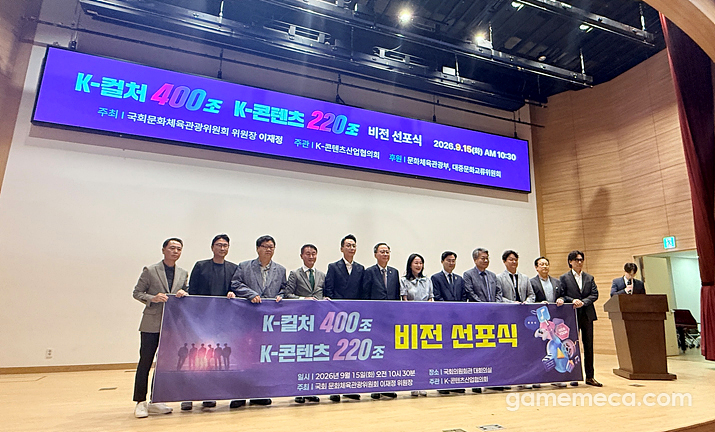
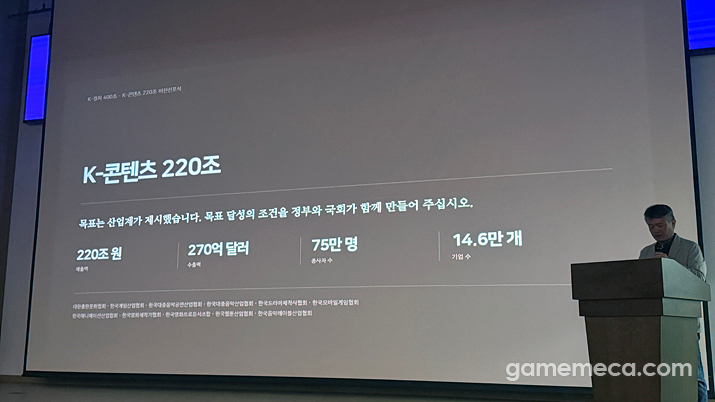
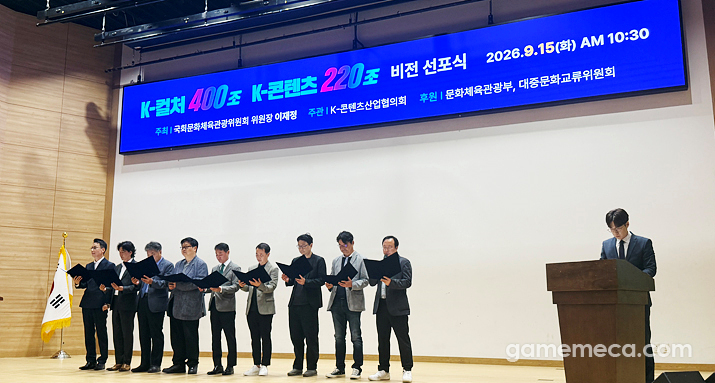
With 11 associations and organizations across the content industry in South Korea, including gaming, coming together tightly. On September 15, they officially launched the 'K-Content Industry Council', announcing ambitious goals to achieve 220 trillion won in revenue, $27 billion in exports, 750,000 workers, and 146,000 companies by 2030. These figures are calculated by integrating individual projections that factor in the growth rates and export structures of each content sector, including gaming.
Six common tasks were announced during the vision proclamation ceremony. These include the full expansion of tax credits for content production costs, the enhancement of policy financing such as the Mother Fund, the improvement of flexible working hours reflecting the characteristics of the content industry, the support for AI transition and the establishment of a copyright framework, the reinforcement of policies to boost content demand, and the establishment of an integrated governance and strategic export support system.
There are also sector-specific goals and tasks. For the gaming sector, the targets for 2030 are set at 36.7 trillion won in revenue, $14.88 billion in exports, 107,000 workers, and 12,600 companies. Individual core tasks include urging the passage of the fully amended Promotion of the Game Industry Act (hereinafter referred to as the Game Act), improving regulations on prizes, and exempting all-ages games from mandatory identity verification and legal representative consent requirements.
In the past, content industry associations have attempted to speak with one voice, but yielded little practical results. How are the representative organizations of the gaming industry preparing to ensure history does not repeat itself? Gamemeca sat down for detailed interviews with Kim Hyun-gyu, Senior Vice President of the Korea Mobile Game Association, and Choi Seung-hoon, Policy Director of the Korea Games Industry Association, to find out.
We want to expand beyond just hitting goals and build an 'IP Committee'
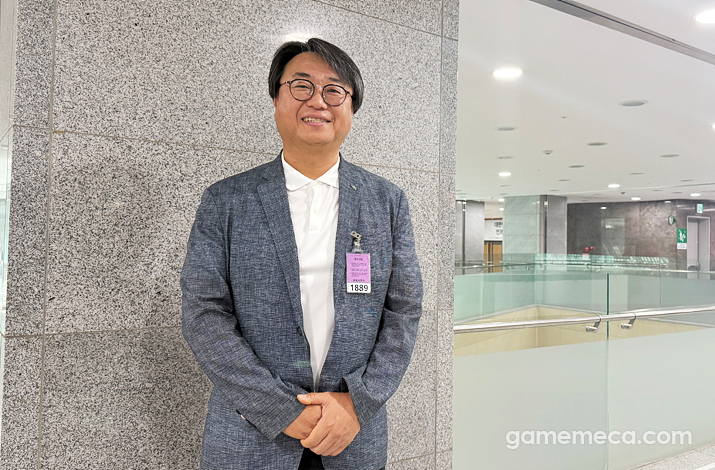
Kim Hyun-gyu, Senior Vice President of the Korea Mobile Game Association, drew attention to the fact that lobbying efforts aimed at the government and the National Assembly could gain significantly more leverage. Having engaged in government relations for nearly 20 years, Kim Hyun-gyu pointed out that when individual organizations operated separately, their focus tended to be scattered. Expressing high expectations, Kim Hyun-gyu noted that the coalition of 11 associations would allow for a much stronger, unified voice to be delivered to the government and the National Assembly.
The absolute top priority is passing the full amendment to the Game Act. Among other things, Kim Hyun-gyu stated, "With the Korea Creative Content Agency spinning off a separate Game Promotion Agency and the Game Rating and Administration Committee being phased out, it is high time the gaming industry focused on promotion rather than regulation," adding that, "A dedicated gaming account must be created within the Korea Culture and Arts Foundation's Mother Fund, and reforming production cost taxes goes without saying."
Aside from these points, issues were raised regarding the Game White Paper, which is based on data from two years ago and proves difficult to use when establishing practical strategies in the field, as well as the Ministry of Culture, Sports and Tourism's disappointing '6.0 billion won blockbuster game production support fund,' which has garnered little sympathy from the industry. Kim Hyun-gyu remarked, "When the government announced plans to support a 6.0 billion won blockbuster, harsh criticism ran rampant across the industry. You can never build a blockbuster with 6.0 billion won, and funding the whole thing with taxpayer money makes no sense either," emphasizing that production cost tax credits are a far more realistic support measure.
When multiple sector associations gather, there is always a risk that individual competing agendas will cause the coalition to dissolve or lose direction due to a lack of a central hub. Kim Hyun-gyu noted, "We previously had the Culture Industry Policy Consultative Body, but things simply did not align back then. This time, the vibe is entirely different, and there is a genuine sense of desperation among the associations. Externally, the impact of AI is also immense. Other associations share a deep sense of crisis that AI might wipe out all their jobs. The gaming sector cannot take this lightly either, and we must strike a proper balance between management efficiency and employment issues."
Furthermore, Cho Young-ki, Chairman of the Korea Games Industry Association, has taken on the role of co-representative for the council, with Choi Seung-hoon serving as secretary. Kim Hyun-gyu added that Kim Hyun-gyu personally puts forward many policy proposals. In short, the voice of the gaming sector will not be marginalized or reduced to a minor fraction within the coalition. Regular monthly meetings are planned to discuss concrete execution plans and materialize effective cooperative models, such as exchange meetings with the Chinese market.
Expanding into something resembling an 'IP Committee' is also under consideration. Kim Hyun-gyu stated, "The phrase 'one source, multi-use' has been thrown around endlessly, and there was a strong consensus that a single IP can spawn various types of content. Today (September 15), we even discussed initiating an MOU between the Mobile Game Association and the Korea Animation Industry Association," adding, "Personally, I would love to expand this into a format akin to Japan's IP Committee. South Korea has yet to see a case where a single IP achieved massive success across multiple content formats. I believe we need to create that very first stepping stone." An integrated white paper encompassing all content was also proposed as a future idea.
Bringing broader in-game challenges onto the policy stage through the council
Choi Seung-hoon, Policy Director of the Korea Games Industry Association, also explained that the association chose to join the council to find solutions against the eroding foundation of the content industry, making it clear that they intend to carry out common tasks without losing gaming at the core. Choi Seung-hoon stated, "Since the erosion of our common foundation is the root of the problem, the solution must also start from redesigning it. When the Korea Games Industry Association speaks alone versus when every content genre speaks together, the weight behind it is fundamentally different."
Taking production tax support as an example, Choi Seung-hoon noted, "If gaming acts alone, it is merely a long-cherished project of the gaming industry, but when gaming, music, and publishing unite, it becomes a matter of 'tax equity.' Across-the-board surveys of all associations showed that tax credits and policy financing consistently ranked as the top two common priorities." Choi Seung-hoon added, "The effect of learning from each other's experiences is far from negligible. The video and webtoon sectors already receive production tax credits and know the pitfalls of the operational process. When that experience expands to gaming, music, and publishing, it becomes an immediate asset."
When opinions are gathered to encompass the entire content sector, the arenas and perspectives addressing core issues shift as well. Choi Seung-hoon emphasized, "The overseeing ministries and standing committees expand. Tax credits fall under the Ministry of Economy and Finance, while flexible working hours fall under the Ministry of Employment and Labor. Asking alone as the gaming industry versus requesting together as every content genre creates a completely different approach." Choi Seung-hoon continued, "The framing changes too. Even when gaming talks about promotion, discussions always regress into gambling and youth protection debates. However, in forums discussing the growth stagnation of the industry as a whole, gaming is recognized first and foremost as a key foundational industry responsible for 57.7% of exports." Additionally, the council is calling for the establishment of a regular consultative channel with the National Assembly's Culture, Sports and Tourism Committee to ensure policy continuity.
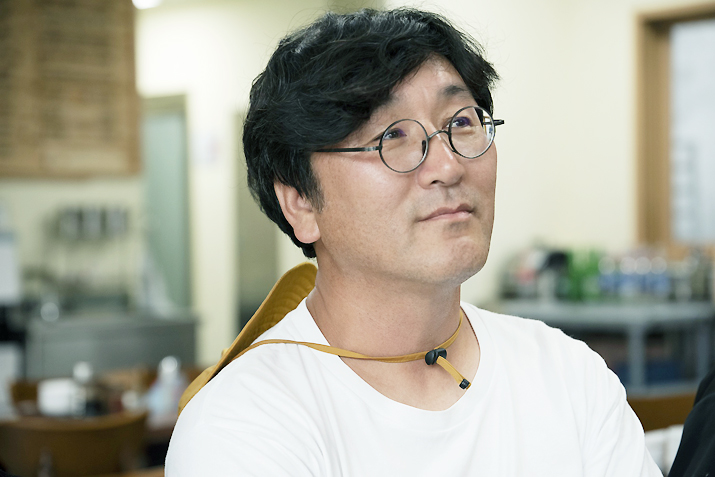
Passing the full amendment to the Game Act remains the responsibility of the association. Choi Seung-hoon stated, "While the industry has reorganized around mobile, console, and cloud platforms, the law has undergone over thirty amendments that merely pile on regulations while keeping promotion at a purely declarative level. We must redesign the 20-year-old regulatory framework centering on promotion, with the goal of processing it within the year." Choi Seung-hoon added, "Pending issues like the full amendment of the Game Act or the ratings classification system will be negotiated directly with the Ministry of Culture, Sports and Tourism and the Game Rating and Administration Committee, bypassing the council. Our fundamental policy is to separate the tasks handled by the council from those handled directly by the association and pursue them in parallel."
Ultimately, the shared goal is to shift the policy perspective toward the content industry. Choi Seung-hoon explained, "Current systems still treat content through a manufacturing framework. The unique characteristics of the industry—such as having no factories or inventory to use as collateral, and generating zero revenue for years prior to launch despite heavy investments—are not reflected in current regulations." Choi Seung-hoon answered, "Simply increasing the budget is not enough. There must be a transformation in policy combinations covering taxes, finance, regulations, and legislation. This is why the council is presenting target figures and policy tools together this time."
Specifically, this entails transitioning tax reforms toward universal deductions that recognize failures as a cost from the perspective of sharing production risks rather than supporting R&D, shifting financial support away from risk-averse operations into a continuum of subsidies, guarantees, loans, and investments, and completely redesigning the legal system from regulation to promotion. Choi Seung-hoon explained, "If current policy and budget levels are maintained, revenue in 2030 will stall at 205.9 trillion won, and even with a 10% annual budget increase, we will still fall short of the 220 trillion won target."
게임을 포함한 국내 콘텐츠업계 11개 협단체가 똘똘 뭉쳤다. 9월 15일 ‘K-콘텐츠산업협의회’를 출범시켰고, 2030년까지 매출 220조 원, 수출 270억 달러, 종사자 수 75만 명, 기업 수 14.6만 개라는 목표를 달성하겠다고 밝혔다. 게임을 포함해 각 콘텐츠의 성장률, 수출 구조 등을 고려해 각각 계산한 수치를 통합한 것이다.
비전선포식에서 발표된 공통과제는 6개다. 콘텐츠 제작비 세액공제 전면 확대, 모태펀드 고도화 등 정책금융 확충, 콘텐츠산업 특성을 반영한 유연근로제 개선, AI 전환 지원 및 저작권 프레임워크 구축, 콘텐츠 수요 진작 정책 강화, 통합 거버넌스 및 전략적 수출지원체계 구축이다.
분야별 목표 및 과제도 있다. 게임은 2030년까지 매출 36.7조 원, 수출 148.8억 달러, 종사자 10만 7,000명, 기업 수 1만 2,600개를 목표로 삼았다. 개별 핵심 과제는 게임산업진흥에 관한 법률(이하 게임법) 전부개정안 통과 촉구, 경품 규제 개선, 전체이용가 게임 본인인증 및 법정대리인 동의 의무 면제다.
기존에도 콘텐츠업계 협단체가 한목소리를 내고자 모인 적이 있었지만 실질적인 결과는 없었다. 이번에는 그렇게 되지 않도록 게임업계 대표 협단체에서 어떻게 대비하고 있을까? 게임메카는 한국모바일게임협회 김현규 수석부회장, 한국게임산업협회 최승훈 정책국장과의 인터뷰를 통해 이에 대해 자세히 들어봤다.
목표 이루고 끝이 아니라 ‘IP 위원회’로 확장하고 싶다
한국모바일게임협회 김현규 수석부회장은 정부와 국회를 향한 대관 활동에 더 큰 힘이 실릴 수 있다는 점에 주목했다. 그는 20년 가까이 대관 활동을 해왔고, 본인을 포함해 각 단체가 개별로 활동할 경우 집중력이 분산되는 느낌을 받아왔다고 어필했다. 11개 협단체가 모인 협의체를 바탕으로 정부와 국회에 더 강하게 통합된 목소리를 전달할 수 있다는 점에 기대감을 표했다.
최우선과제는 게임법 전부개정안 통과다. 그중에도 김현규 수석부회장은 “한국콘텐츠진흥원(이하 콘진원)에서 게임진흥원을 별도로 뽑아내고 게임물관리위원회(이하 게임위)를 없애는 등으로 게임산업에는 규제보다는 진흥이 필요한 시점이다”라며 “문화콘텐츠 모태펀드에 게임계정을 별도로 만들어야 하고, 제작비 세제개편은 더 말할 것도 없이 중요하다”라고 밝혔다.
이 외에도 2년 전 자료여서 실무에서 전략을 세우는 데는 쓰기 어려운 게임백서 문제, 업계에서 공감하기 어려운 문화체육관광부(이하 문체부)의 ‘60억 원 대작 게임 제작지원에 대한 아쉬움이 언급됐다. 김현규 수석부회장은 “정부에서 60억 원 대작을 지원하기로 했다고 보도됐을 때 업계에서는 쓴소리가 파다했다. 60억 원으로는 결코 대작을 만들 수 없고, 이를 전부 세금으로 지원하는 것도 말도 안 된다”라며 제작비 세액공제가 좀 더 현실성 있는 지원책이라 강조했다.
여러 분야 협단체가 모일 경우 제각각 주장만 강해지며 와해되거나, 구심점이 없어 흐려질 우려도 있다. 김현규 수석부회장은 “기존에도 문화산업정책협의회가 있었는데 그때는 뭔가 맞지 않았다. 지금은 느낌이 다르고, 협단체에서도 절실함이 있다. 대외적으로는 AI 영향도 큰 것 같다. 다른 협단체에서도 AI로 인해 일자리가 다 없어지는 것 아니냐는 위기감이 있다. 게임도 만만하게 볼 상황이 아니며 경영 효율화와 일자리 문제에 대해 균형을 잘 맞춰야 한다”라고 전했다.
여기에 한국게임산업협회 조영기 협회장이 협의회 공동대표를 맡았고, 최승훈 정책국장이 간사로 참여하고 있다. 김현규 수석부회장 본인도 정책제안을 많이 한다고 덧붙였다. 즉, 게임업계 목소리가 협의체에서 작은 비중을 차지하거나, 소외되지 않으리라는 것이다. 한 달에 한 번씩 정례 회의를 열어 구체적인 실행 방안을 논의하고, 중국 시장 교류회 등 실효성 있는 협력 모델을 구체화할 방침이다.
일종의 ‘IP 위원회’와 같은 형태로 확장하는 것도 고려 중이다. 그는 “원소스 멀티유즈라는 말은 굉장히 많았는데 하나의 IP로 다양한 콘텐츠를 만들 수 있다는 것에 큰 공감대를 갖고 있었다. 오늘(9월 15일)도 모바일게임협회와 한국애니메이션산업협회부터 MOU를 맺어보자는 이야기도 나눴다”라며 “개인적으로는 일본의 IP 위원회와 같은 형태로 확장해보고 싶다. 우리나라는 IP 하나로 여러 콘텐츠에서 크게 성공했던 케이스는 없는 것 같다. 그 첫 단추를 만들어내야 되지 않나 하는 생각이다”라고 말했다. 콘텐츠 전체를 아우르는 통합백서도 향후 아이디어로 제시됐다.
협의체 통해 게임 내 과제를 더 넓은 정책 무대에 올린다
한국게임산업협회 최승훈 정책국장 역시 콘텐츠업계 공동의 기반이 무너지는 것에 대한 해답을 찾기 위해 협의회에 함께하기로 했고, 게임이라는 중심을 잃지 않으면서 공통의 과제를 수행해나가겠다는 입장을 명확히 했다. 그는 “공통 기반이 무너진 것이 문제의 본질이니 해법도 다시 설계하는 데서 출발해야 한다. 게임산업협회 한 곳이 목소리를 내는 것과, 콘텐츠 전 장르가 함께 같은 이야기를 하는 것은 무게가 다를 수밖에 없다”라고 전했다.
최승훈 정책국장은 제작비 세제지원을 예로 들어 “게임 혼자면 게임업계 숙원사업이지만 게임, 음악, 출판이 함께하면 ‘조세 형평성’ 문제가 된다. 단체 전수조사에서도 세액공제와 정책금융이 공통 1, 2순위였다”라며 “서로의 경험에서 배우는 효과도 작지 않다. 영상, 웹툰 분야는 이미 제작비 세액공제를 받고 있어 운영 과정에서 무엇이 문제였는지 알고 있다. 그 경험이 게임, 음악, 출판으로 확대될 때 그대로 자산이 된다”라고 말했다.
전체 콘텐츠를 아우르는 형태로 의견을 모으면 핵심 과제가 거론되는 자리와 시각도 달라진다. 최 정책국장은 “소관 부처와 상임위가 넓어진다. 세액공제는 기재부, 유연근로제는 고용노동부 소관이다. 게임업계 혼자 요구하는 것과 콘텐츠 전 장르가 함께 요청하는 것은 접근이 다르다”라며 “프레임도 바뀐다. 게임은 진흥을 말해도 사행성, 청소년 보호 논의로 되돌아가지만, 산업 전체의 성장 정체를 논하는 자리에서는 수출의 57.7%를 담당하는 기간산업으로 먼저 인식된다”라고 강조했다. 여기에 협의체로 인해 정책 추진에 지속성도 생기고, 이를 위해 국회 문체위와의 정례 협의 채널도 요청하고 있다.
게임법 전부개정은 협회가 감당해야 할 몫이다. 최 국장은 “산업은 모바일·콘솔·클라우드로 재편됐지만 법은 서른 차례 넘는 개정으로 규제만 늘고 진흥은 선언적 수준이다. 20년 된 규제 프레임을 진흥 중심으로 다시 짜야 하며, 연내 처리를 목표로 한다”라며 “게임법 전부개정이나 등급분류 제도와 같은 현안은 협의회를 거치지 않고 직접 문체부, 게임위와 협의해 나간다. 협의회에서 다룰 과제와 협회가 직접 할 일을 구분해 병행하는 것이 기본 방침이다”라고 밝혔다.
공통적으로는 콘텐츠산업을 바라보는 정책 관점을 바꾸는 것이 목표다. 최승훈 국장은 “지금의 제도는 콘텐츠를 제조업 틀에 맞춰 다루고 있다. 담보로 잡을 공장이나 재고도 없고, 몇 년을 투자해도 출시 전까지 매출이 ‘0’인 산업 특성이 제도에 반영되어 있지 않다”라며 “예산을 증액해 달라는 것만으로는 안 된다. 세제, 금융, 규제, 법제를 바꾸는 정책 조합의 전환이 있어야 한다. 협의회가 이번에 목표 수치와 정책 수단을 함께 제시하는 이유도 이 때문이다”라고 답변했다.
구체적으로는 기술 개발 지원이 아니라 제작 리스크 분담의 관점으로 실패도 비용으로 인정하는 보편적 공제로의 세제개편, 리스크 회피형 운용에서 벗어나 보조금, 보증, 융자, 투자로 이어지는 금융 지원, 규제에서 진흥 중심으로 법체계 전면 재설계가 있다. 최승훈 국장은 “현재 수준의 정책과 예산이 유지될 경우 2030년 매출은 205.9조 원에 그치고, 예산을 매년 10% 늘린다고 해도 목표(220조 원)에 미치지 못한다”라고 설명했다.
This news was translated by AI.

Let's not lose our initial resolve. Meticulously, one by one. risell@gamemeca.com
READ MORE
-
 Level up the stronger class quickly, MU Online 'Speed Server' opens
-
 Monster Guild, The Seven Deadly Sins, and StoneAge secure 3 crowns for Netmarble as 'Game of the Year'
-
 Stone Age Idle PD appears as a dungeon boss
-
 [Today's steam] PC version of The War of Genesis Raising achieves 30,000 Concurrent Players
RECOMMENDED NEWS
MOST POPULAR NEWS
- Which Team is the Strongest This Year? LCK 2026 Finals to Be Held on the 12th and 13th
- Already the third time, Overwatch x LE SSERAFIM detailed look revealed
- XLGAMES Decides to Sell ArcheAge IP for 39.2 Billion Won
- Unity Launches Official Plugin for 'Claude Code'
- Lim Yo-hwan vs Kang Min Match, SOOP Official Live Broadcast for BlizzCon 2026
- Popup events to be held in Dongdaemun and Yongsan to celebrate the release of Liftbound
- [Today's steam] FPS Wardogs released... 340,000 Concurrent Players, 340,000 in queue
- Doomfist's Companion, Overwatch Vampire New Hero 'Doctrine'
- Marvel Rivals Welcomes 'Gorr the God Butcher' on the 11th
- Legendary Rapper 'Lil Wayne' Arrives in Fortnite Along with Three Representative Songs
MEDIA PARTNERSHIPS



GAMEMECA SNS