
[Reporter's Notebook] The Ban on 'Janggi' and 'Baduk' at Tapgol Park Reminds Me of Gamers
[기자수첩] 탑골공원 '장기' 금지, 게이머들이 겹쳐 보인다
2025.08.29 18:24 UTC+9

AI Summary
Banning games at Tapgol Park mirrors the industry's history of unfair regulation. Blaming the medium for human misconduct is a logical fallacy that solves nothing. We must address the root causes of behaviour rather than punishing the games themselves.
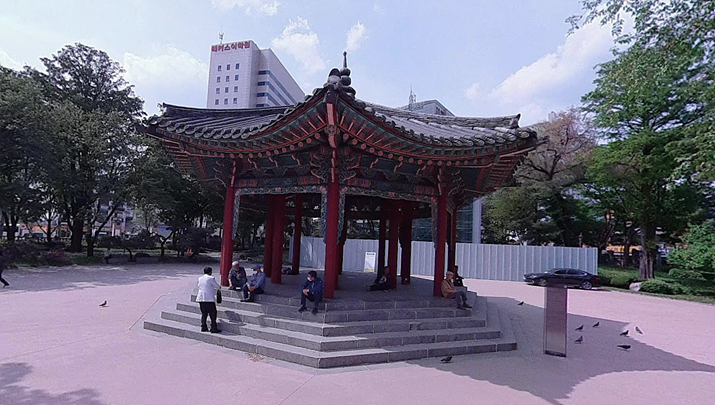
I recently read the news that playing Janggi (Korean chess) and Baduk (Go) has been banned at Tapgol Park in Jongno-gu, Seoul. Apparently, this decision was made to address persistent issues like public intoxication, gambling, smoking, public urination, foul odours, shouting, and the general slum-like atmosphere caused by some of the elderly patrons who gathered there. On one hand, the idea of cleaning up a place with such a notorious reputation makes sense. Yet, on the other, I felt a strange sense of déjà vu and unease—despite the fact that I never visit the park, nor do I have any personal connection to the behaviour of these specific individuals.
The reason for my discomfort? It’s because the regulation targets the 'play' itself—the games of Baduk and Janggi—rather than the 'misconduct' of the players. Our society’s view of the game industry has historically been identical. Whenever the industry grew and minor hiccups emerged—be it over-immersion, sexualised content, or violence—the focus of the debate always landed squarely on the game 'itself.' Each time, society slapped a 'regulation' badge on the medium, hoping for a quick-fix solution.
This ban on Janggi and Baduk is officially justified as 'protecting cultural assets,' aiming to remove elements that might damage the historical significance of Tapgol Park. Those who have long complained about the park’s environment are, unsurprisingly, in heated agreement. I get it. It is an undeniable fact that some of the elderly players have engaged in unethical behaviour, including smoking, drinking, and public nuisance. But these acts are not inherent to the games themselves. There are plenty of exemplary people who enjoy a quiet game of Janggi or Baduk in the open air without bothering a soul. Concluding that the games must be banned to solve the disorderly conduct of a few is a textbook case of administrative laziness and logical fallacy.
To use an analogy, it’s like claiming that a restaurant is the root cause of jaywalking just because a few customers happened to cross the street illegally after eating there. In logic, this is known as a 'Straw Man Fallacy' or a 'Hasty Generalization.' The director of such policy distorts the root cause to attack an easy target, painting the entire group with the brush of a few outliers.
The game industry has been subjected to this exact type of flawed logic for years. Proponents of regulation targeted the gaming habits of teenagers to introduce the 'Shutdown Law,' lobbied for classifying gaming as a psychiatric disorder, and used pre-censorship to block releases over concerns about violence or sexual content. Every one of these attempts took the cases of problematic individuals to treat all gamers as potential delinquents, making 'the game' the primary target of regulation. They consistently overlook the fact that the problem isn't the game, but the ethical lapses of users and the systemic social or environmental issues left unaddressed.
When proposing solutions to any issue, understanding the root cause must take precedence over blunt regulatory control. Perhaps this is why the Tapgol Park ban feels so reminiscent of the recurring calls for game regulation. The solution for Tapgol Park isn't to ban Janggi—it’s to enforce better order and management within the park. Likewise, the answer to gaming issues isn't to strangle the industry, but to foster a healthy gaming culture and support users. The issue is never the Janggi, the Baduk, or the game—it has always been the people.
얼마 전, 뉴스를 통해 서울 종로구에 위치한 탑골공원에서 장기·바둑 금지 조치가 시행되었다는 소식을 접했다. 장기를 두러 모인 일부 노인들의 무질서한 음주, 도박행위, 흡연, 노상방뇨, 악취, 고성방가, 슬럼화 등의 문제가 끊이지 않자 내려진 결정이었다고 한다. 악명(?) 높았던 공원 환경이 정비될 것이라는 생각에 수긍이 갔다. 그러나 다른 한편으로는 묘한 기시감과 불편함이 느껴졌다. 평소 본 기자는 탑골공원 근처에 갈 일도 없거니와, 거기서 벌어지는 일은 일부 노년층의 이야기이므로 개인적으로 엮일 일도 없는데 말이다.
불편함의 이유를 생각해 보니, 규제 대상이 '비매너 행위'가 아니라 '바둑과 장기'라는 놀이 자체에 맞춰져 있기 때문이었다. 과거 우리 사회가 게임산업을 바라보던 시선 역시 이와 다르지 않았다. 게임산업이 발전하며 그 과정에서 생기는 크고 작은 문제들, 예컨대 과몰입이나 선정성, 폭력성 문제가 대두될 때마다 논의의 초점은 언제나 게임 ‘자체’에 맞춰져 왔다. 그때마다 이 사회는 게임에 ‘규제’라는 명찰을 붙여 문제를 일거에 해결하려 들었다.
이번 장기·바둑 금지 조치는 ‘문화재 보호’를 위해서 시행됐다. 역사적으로 의미가 있는 탑골공원을 훼손할 수 있는 요소를 차단한다는 것이다. 일찍이 공원 환경에 불만을 표하던 사람들은 이 명분에 격히 동의하고 있다. 이해는 간다. 탑골공원에서 바둑과 장기를 두는 노인 중 일부가 흡연, 음주, 노상방뇨, 주취 행위 등 윤리적 해이를 보여온 것은 분명 사실이니까. 하지만 이런 행위가 바둑과 장기의 문제는 아니다. 주변에 폐를 끼치지 않고 조용히 사람들과 만나 야외에서 조용히 장기와 바둑을 즐기는 모범적인 이들도 분명히 있다. 즉, 노년층 일부의 무질서한 행위가 '바둑과 장기'라는 게임을 막아야 해결된다고 결론 내리는 것은 행정편의주의에서 나온 논리적 오류다.
다르게 비유하자면, 마치 특정 음식점에서 식사를 한 몇몇 손님들이 가게 앞 횡단보도에서 무단횡단을 했다고 해서, 그 음식점이 무단횡단의 원인이라고 주장하는 것과도 같다. 이러한 결론을 논리학에서는 '허수아비 공격의 오류(Straw Man Fallacy)', '성급한 일반화의 오류(Hasty Generalization)'라 부른다. 문제의 원인을 왜곡하여 공격하기 쉬운 대상으로 삼고, 소수의 사례를 전체의 특성으로 단정 짓는 것이다.
게임산업 역시 이와 유사한 오류가 끊임없이 적용되어 왔다. 규체 찬성론자들은 청소년의 게임 이용 시간을 문제 삼아 셧다운제 등을 도입했고, 정신과 질병의 원인이 된다며 규제 움직임을 만들었으며, 일부 게임 콘텐츠(선정성, 폭력성 등)가 사회에 악영향을 미친다며 사전 규제를 통해 출시를 금지시켰다. 이 모든 시도는 게임 중독자나 문제적 이용자의 사례를 들어 모든 게임 이용자를 잠재적 일탈자로 간주하고, '게임' 자체를 규제의 대상으로 삼는 것이었다. 문제는 게임 자체가 아니라, 이용자들의 윤리적 해이와 이를 방치하는 사회적, 환경적 문제에 있다는 점을 간과하는 행위였다.
문제에 대한 해법을 제시할 때는, 규제를 통한 통제가 아니라 문제의 근본 원인을 이해하고 해결하는 방식이 우선 되어야 한다. 탑골공원 장기 금지조치와, 수많은 사회적 문제가 생길 때마다 나오던 게임에 대한 규제 여론이 겹쳐 보이는 것은 이런 이유에서일 것이다. 탑골공원 문제의 해법은 ‘장기 금지’가 아니라 공원 내 질서 관리 강화이며, 게임 관련 문제의 해법은 게임 자체를 옥죄는 것이 아니라 게임 문화를 건강하게 만들고 이용자들의 문제를 보듬는 것이다. 문제는 장기나 바둑, 게임이 아니라 사람에게 있다.
This news was translated by AI.

I am the head of the GameMeca editorial team. jong31@gamemeca.com




MOST POPULAR NEWS
- Golden Joystick Awards Nominees Revealed, Crimson Desert Rises in Two Categories
- [G-STAR 26] CDPR Joins, Full Outline of Participating Companies Revealed
- Cats and Soup Festival to Open at Starfield Hanam for its 10th Anniversary
- KRAFTON Suspends Development of Extraction Shooter [PUBG: Black Budget]
- Minecraft reveals 'Ice Cave' featuring frozen zombies and crystals
- Celebrating 30th Anniversary, McDonald's Happy Meal 'Pokemon Card' Coming Soon
- [Today's steam] Ace Combat 8 hits No. 1 in popularity from early play
- Asian Games South Korean Esports Delegation Secures One Gold and One Silver in Fighting Games and Puyo Puyo
- Bungie, which resumed Destiny development, also revives Marathon
- Today's steam: 'Dressmaker', which even received a user Korean patch, is becoming a hot topic day after day
MEDIA PARTNERSHIPS



GAMEMECA SNS


 GAMEMECA GLOBAL SITE