Bloodborne The Board Game successfully translates the soulslike experience into a cooperative tabletop format. Despite high costs and complex rules, it captures Yharnam's grim atmosphere perfectly. It is a must-play for fans who want to experience the hunt with friends, provided they can overcome translation hurdles.
Gamemeca is launching a new column, [Board Game], where we team up with Woochi, the CEO of board game developer Popuri, once a month to spotlight some top-tier tabletop experiences.
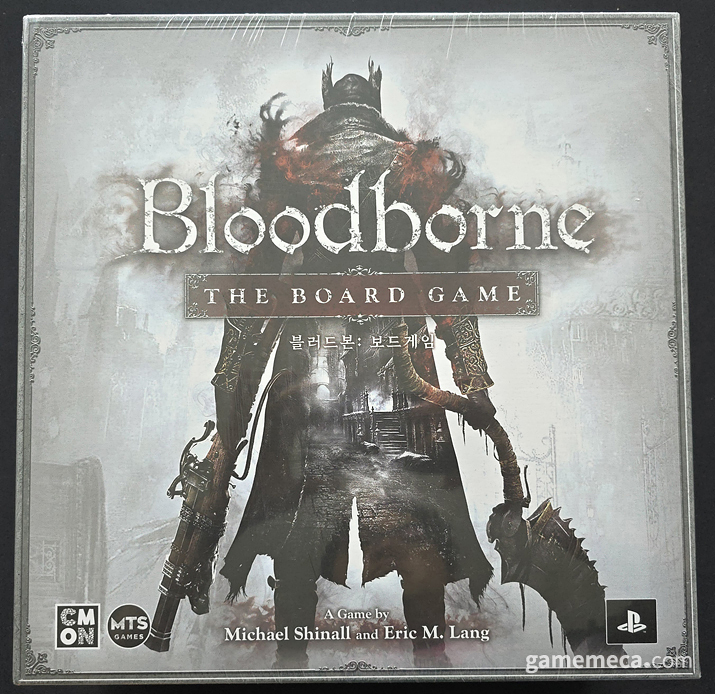
▲ Bloodborne: The Board Game (Image courtesy: Gamemeca)
Look, let's be honest: FromSoftware has cultivated a fan base so die-hard they’ve earned the moniker 'the hollowed.' Bloodborne, in particular, remains a masterclass in atmosphere that people still obsess over today. Naturally, when I heard it was being adapted into a board game, I was skeptical—how could you possibly capture that specific FromSoftware magic on a tabletop? As someone who only recently dipped their toes into the 'Souls' genre via Elden Ring, my curiosity was piqued.
The fact that people were willing to back this project despite a price tag hitting 600,000 won for the set speaks volumes about those same expectations. However, as a newcomer to the source material—partly because Bloodborne remains a PlayStation exclusive—I did feel a slight disconnect diving into the board game without the digital pedigree.
Yharnam’s atmosphere, perfectly preserved in an overwhelming package
My first impression of Bloodborne: The Board Game? It’s simply 'overwhelming.' The sheer size of the box screams presence, and that’s before you even account for the expansions and the meticulously crafted miniatures.
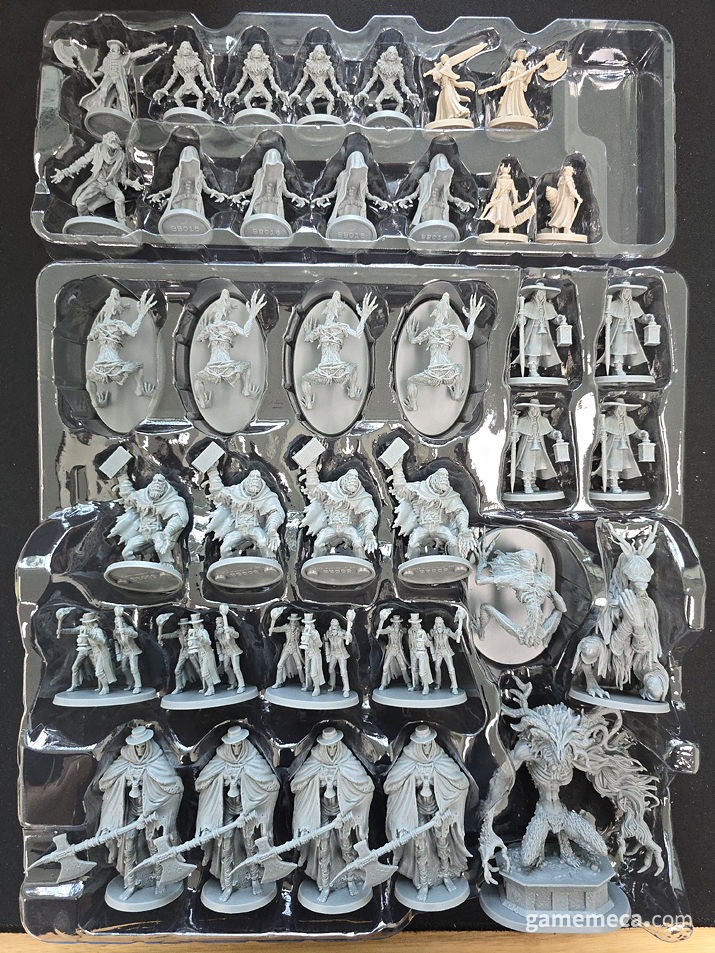
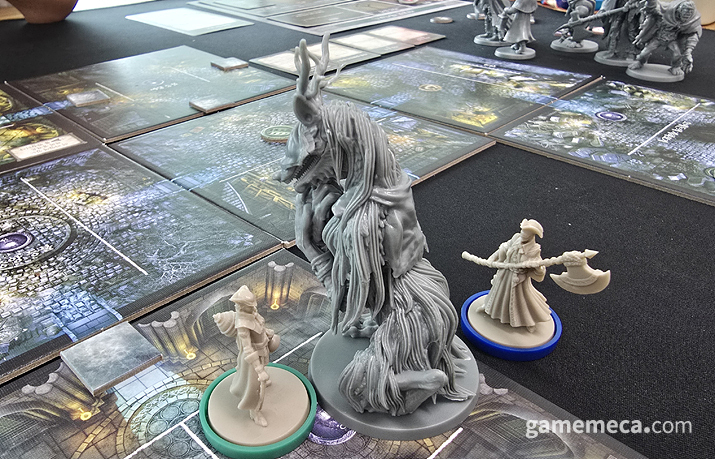
The standouts are undoubtedly the hunter and beast figures. These grotesque horrors from the game have been brought to life in plastic, and they aren't just mere tokens—the detail on the boss miniatures makes them genuine collectibles in their own right.
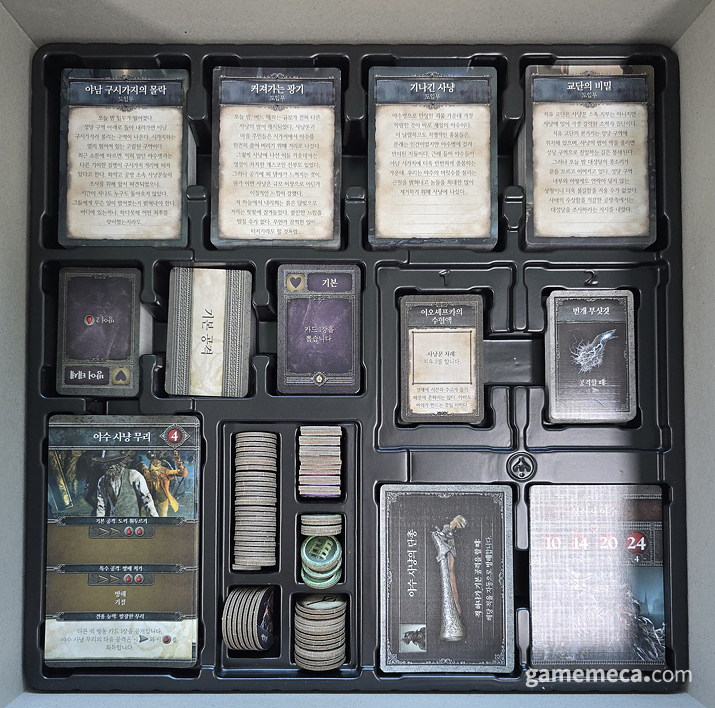
▲ Various cards used during gameplay (Image courtesy: Gamemeca)
▲ Monster miniatures featured in the game (Image courtesy: Gamemeca)
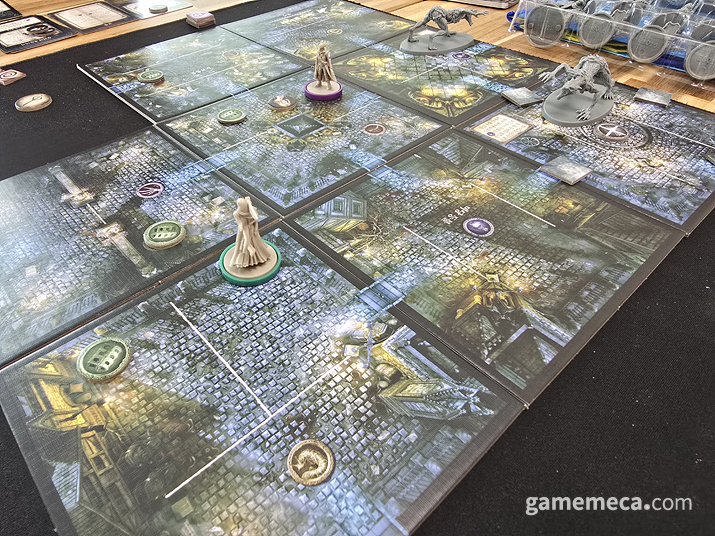
The board and card artwork perfectly capture the grim, gothic aesthetic of Yharnam. The architecture and the flickers of light in the dark are recreated so effectively that you feel as though you are standing on the streets of Yharnam the moment you lay the board out.
Diving into the components, it’s surprisingly manageable. You have your cards, the modular board, miniatures, and a few tokens to track status effects. It’s not a logistical nightmare to set up, and each component is dripping with lore that makes digging through the box a treat.
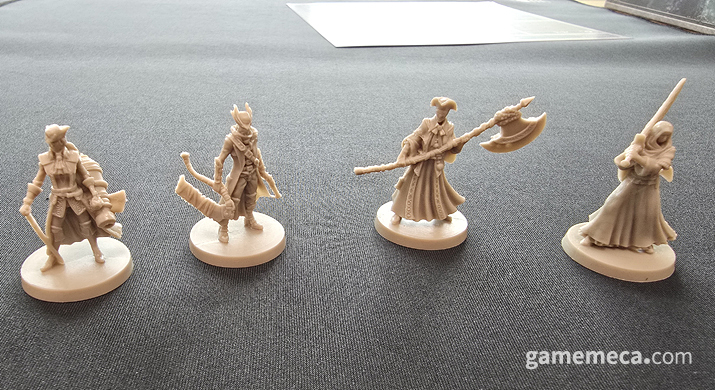
▲ The 'Hunter' miniature (Image courtesy: Gamemeca)
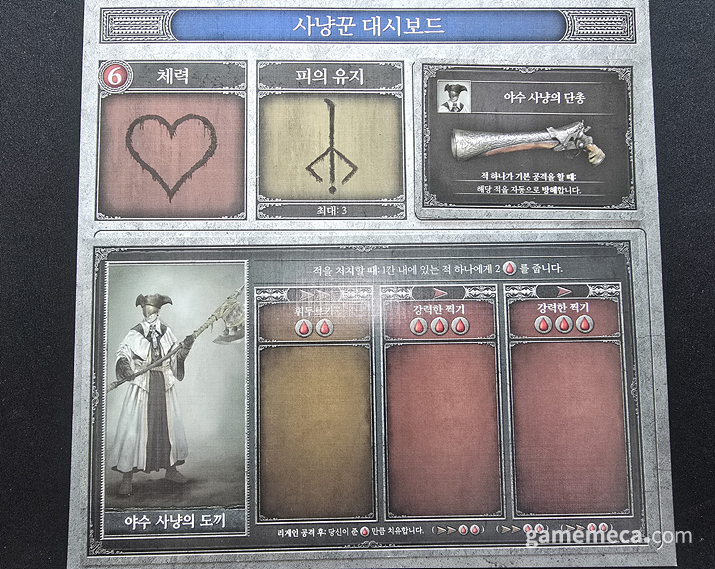
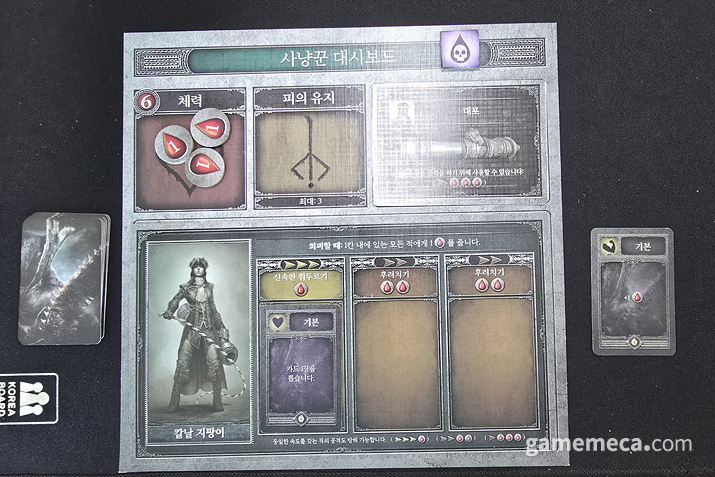
▲ A clean player board (Image courtesy: Gamemeca)
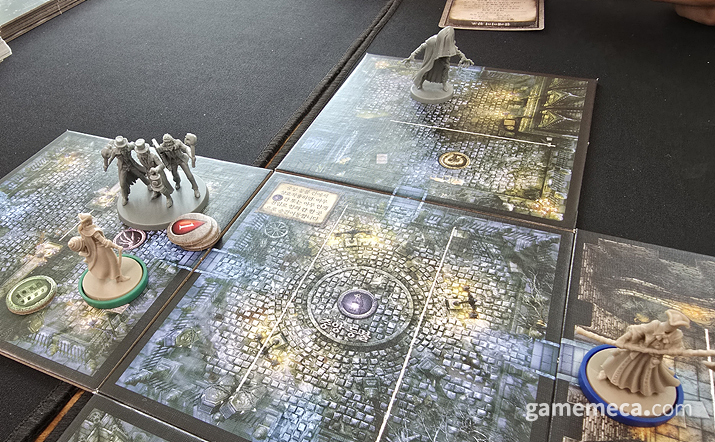
▲ Yharnam is represented on a massive scale via modular board tiles (Image courtesy: Gamemeca)
Just like the stamina mechanic, managing your 'Rounds' is the key to survival
The million-dollar question for me was how they’d translate the game’s core tension into a tabletop format.
Combat relies on a system where you lay out three action cards. You place them on your personal board, and combat unfolds based on the attack speed printed on your cards—it’s all about priority management.
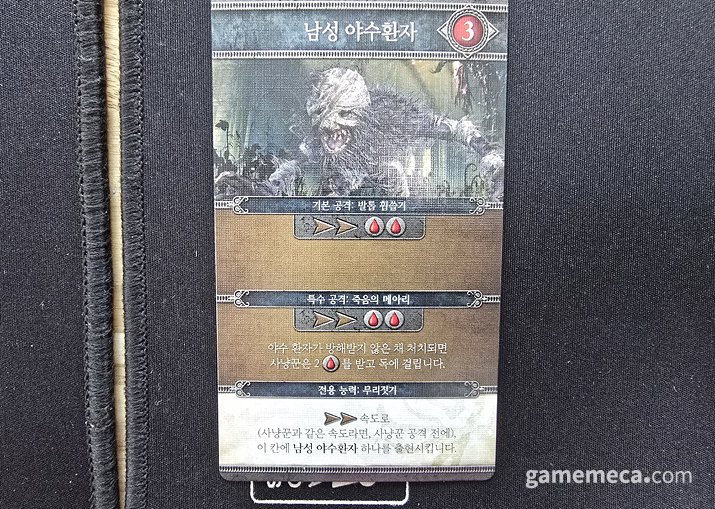
▲ Monster cards display enemy behavior and speed when revealed (Image courtesy: Gamemeca)
▲ Players decide their combat strategy by placing cards in attack slots (Image courtesy: Gamemeca)
At times, it feels a bit like a game of rock-paper-scissors, which is a tad odd, I’ll admit. But since your attack slots are limited and you have cards for dodging or interrupting, it quickly becomes a tactical puzzle that forces you to weigh your options carefully.
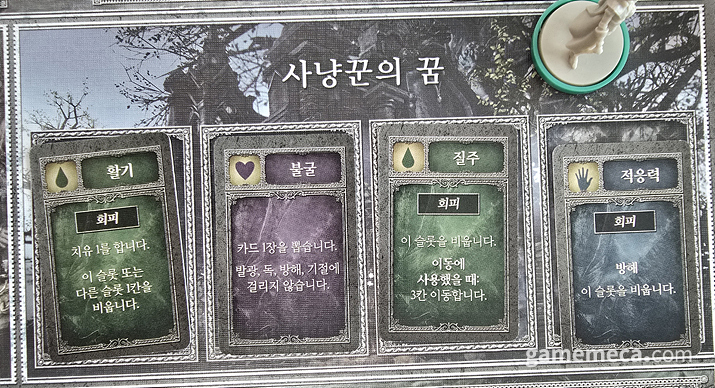
The 'Hunter's Dream' mechanic is handled quite cleverly. By sacrificing one action card, you can retreat to the Dream at any time to upgrade your deck using the echoes you've collected. Naturally, you end up there if you die, too.
▲ Retreating to the Hunter's Dream after death or card usage allows you to upgrade your deck (Image courtesy: Gamemeca)
What really caught my attention was the round management. There’s a strict round limit, and failing to finish the hunt in time is a death sentence. Every trip to the Hunter's Dream burns a precious round, so you can't just grind endlessly. If you try to clear every single monster on the map, you’ll find yourself running out of time—efficiency is the name of the game here, just like in the original.
During our first two-player session, we spent way too many rounds hunting for the objective. We thought we could just muscle our way through the boss, but the clock ran out. We learned the hard way: you don't have time to kill everything; you have to strike fast and hit the objective.
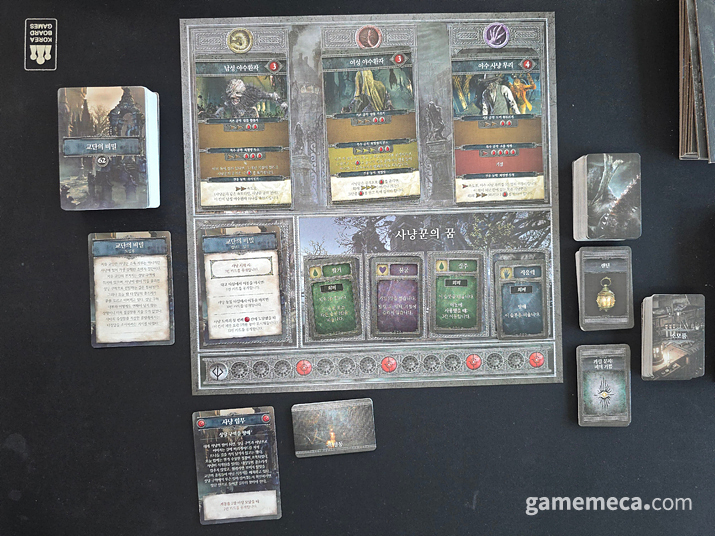
We also realized that once you hit the red round marker—representing the Blood Moon—most standard monsters vanish. Using this to your advantage is crucial for navigating the map without wasting precious time on fodder.
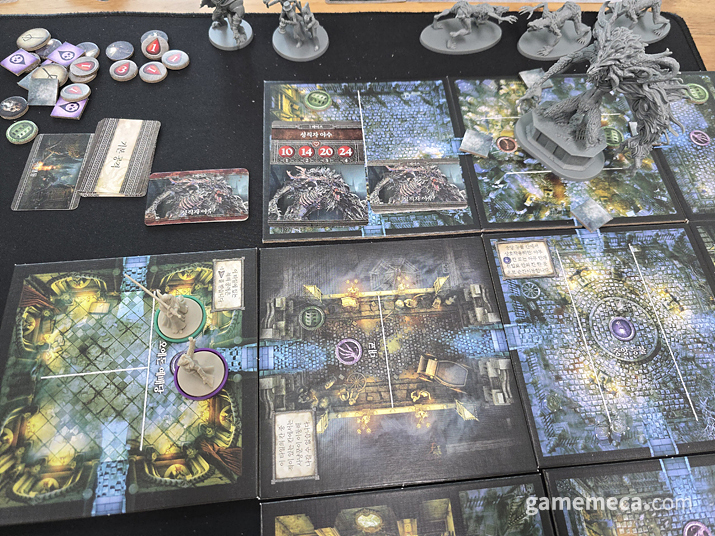
▲ During setup, the track at the bottom shows the round progression; reaching the red zone clears most monsters (Image courtesy: Gamemeca)
Boss fights are just as punishing as you’d expect
At its heart, this is a cooperative experience. The rules even allow you to reveal your action cards to one another, which is a blessing given the tight round limits and the way the map unspools as you explore.
You really feel like a team. You’re trading items and debating every move, especially when the game forces you to make narrative choices. It’s a far cry from the solitary, lonely experience of the video game, offering a social, collaborative thrill that only a board game can provide.
The boss fights are the true highlight. Each boss has two phases with distinct attack patterns that you won't crack on your first attempt. It captures that specific 'die-and-learn' mentality that defined the Soulslike genre.
▲ Sometimes you need to split up to uncover the map (Image courtesy: Gamemeca)
▲ Boss raids are best handled together (Image courtesy: Gamemeca)
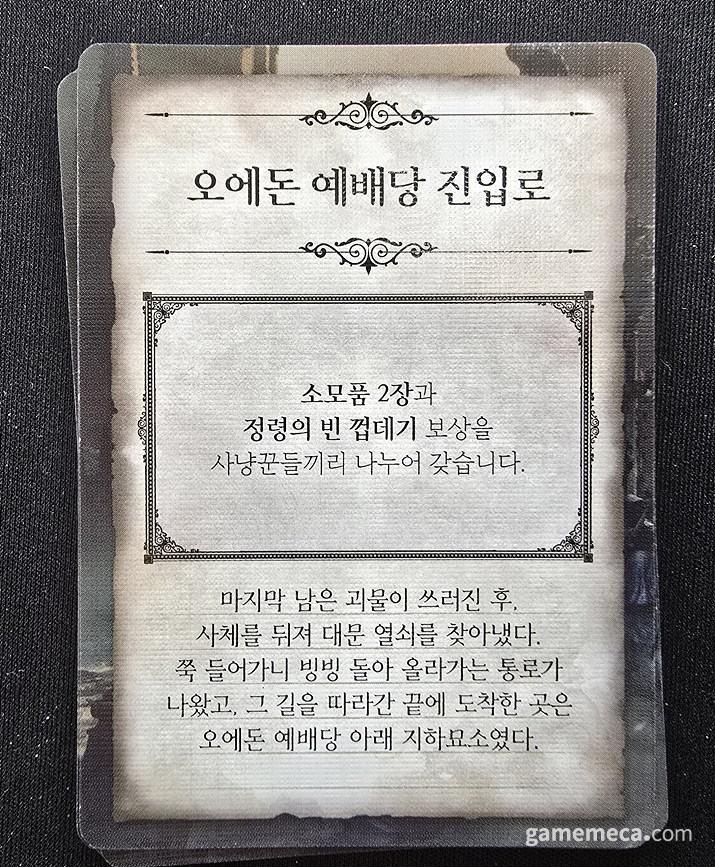
▲ Rewards are shared after completing missions (Image courtesy: Gamemeca)
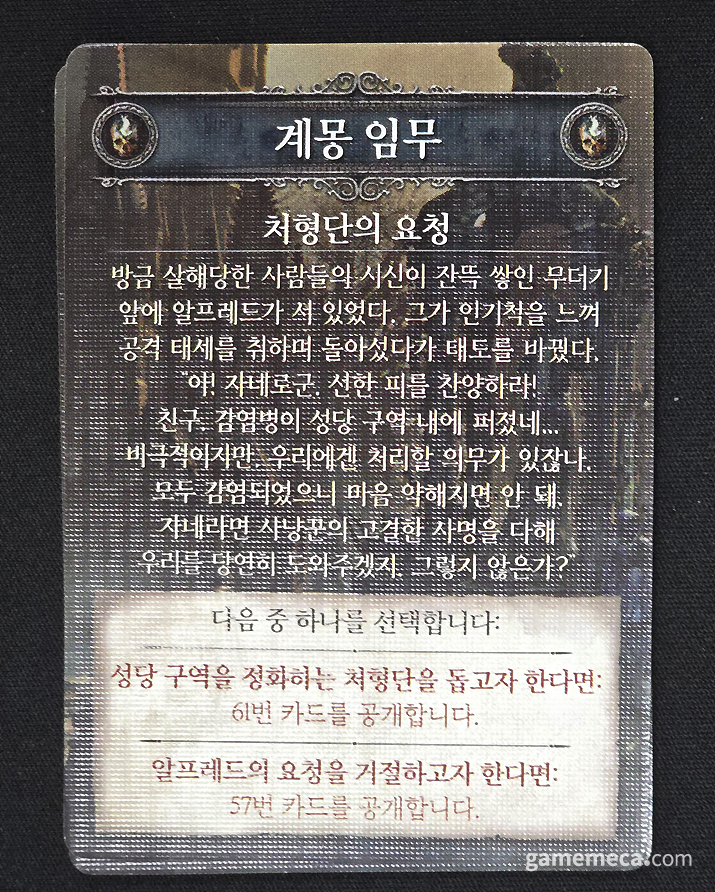
▲ Occasionally, the game presents scenarios requiring group choices (Image courtesy: Gamemeca)
A solid, well-crafted cooperative experience
Even as someone who hasn't played the video game, I found this board game compelling. The mechanics are intuitive enough for veteran board gamers, and the cooperative depth makes for a genuinely satisfying team experience.
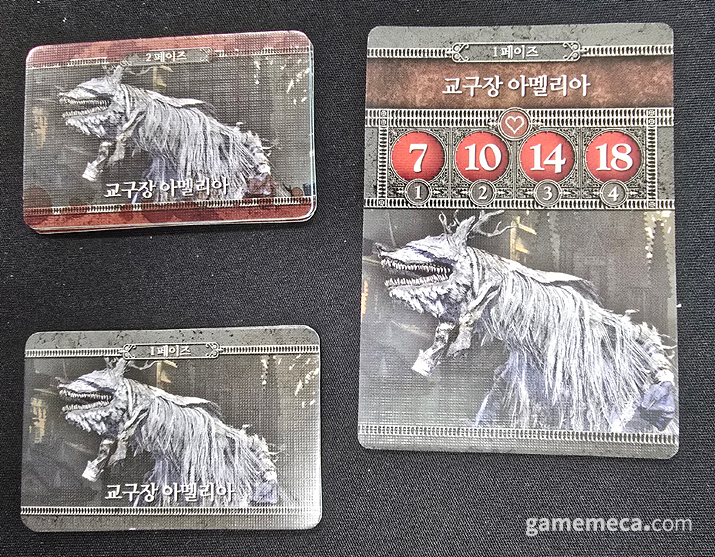
▲ Boss HP scales with player count, and their behavior shifts between phases (Image courtesy: Gamemeca)
▲ Hunting beasts is fun, but... (Image courtesy: Gamemeca)
▲ Get too distracted, and you’ll run out of time to finish the boss (Image courtesy: Gamemeca)
▲ After some intense teamwork, we finally took down Vicar Amelia (Image courtesy: Gamemeca)
It’s a fantastic recreation of the source material's atmosphere, and the varied chapters ensure plenty of replayability. The high-quality components are a collector’s dream. Still, I suspect those who have played the original will get much more out of the lore and narrative depth than I did, as I often felt like I was missing the context behind some of the card stories.
▲ The story often leaves you wanting more (Image courtesy: Gamemeca)
▲ I felt like there was deeper lore, but it was hard to grasp the full picture within a single chapter (Image courtesy: Gamemeca)
The rules might be a bit steep for a complete beginner, but if you have an experienced player at the table, it’s manageable. Do keep in mind that each chapter takes about two to three hours and demands total focus. The sheer volume of the Wave 1 and Wave 2 packages is also a heavy investment for both your wallet and your shelf space. Most importantly, persistent translation errors remain a significant hurdle for domestic players.
▲ The core set with Wave 1 (right) and Wave 2 (left) expansions (Image courtesy: Gamemeca)
Discovering the joy of cooperation in the streets of Yharnam
I’d highly recommend Bloodborne: The Board Game to fans of the original, lovers of thematic board games, and anyone hunting for a challenging cooperative experience. It’s a brilliant new way to interact with Yharnam, and if you want to brave the hunt with your fellow 'hollowed' friends, there really is no better way to do it on your tabletop.
▲ If you're a fan of Bloodborne, it’s time to head to Yharnam with your friends (Image courtesy: Gamemeca)
Woochi
A regular board game developer.
Currently the CEO of the board game company 'Popuri'.
게임메카는 한 달에 한 번 보드게임 개발사 포푸리의 우치 대표와 함께 좋은 보드게임을 소개하는 새로운 코너 [보드게임]을 연재합니다.
▲ 블러드본 보드게임 (사진: 게임메카 촬영)
'망자'라는 두터운 팬층을 지닌 프롬소프트웨어, 그중에서도 독특한 분위기로 지금까지도 회자되는 블러드본이 보드게임으로 나왔습니다. 관련 소식을 들었을 때 프롬소프트웨어 게임이 어떻게 보드게임으로 구현될지 궁금했습니다. 특히 최근 엘든 링으로 소울에 입문한 필자로서 기대감과 호기심이 꽤 높았습니다.
세트 기준으로 60만 원이라는 높은 가격에도 많은 사람이 펀딩에 참여한 이유도 저와 비슷한 기대감 때문일 것입니다. 다만 블러드본이 플레이스테이션 독점작이라, 원작을 실제로 플레이해보지 못하고 보드게임을 먼저 접하게 된 부분은 다소 아쉬웠습니다.
야남의 분위기를 그대로, 압도적인 구성
블러드본 보드게임의 첫인상은 '압도적'이었습니다. 대형 보드게임 특유의 존재감을 드러내는 박스 크기부터 시작해, 다양한 확장, 잘 만들어진 피규어가 인상적이었습니다.
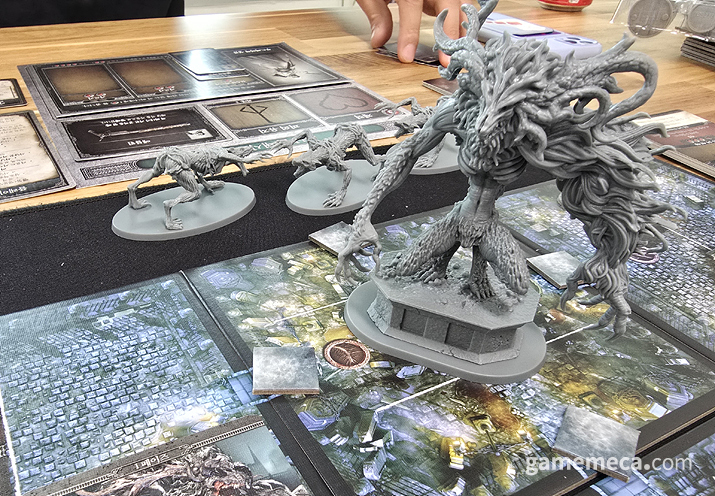
가장 눈에 띄는 것은 정교하게 제작된 헌터와 야수들의 피규어입니다. 게임에 등장했던 괴기스러운 야수들이 손에 잡히는 실물로 구현되어 원작 분위기를 생생하게 전해줍니다. 특히 보스 피규어들의 세부적인 부분은 단순한 게임 말을 넘어 하나의 수집품으로서도 가치가 있다고 느껴졌습니다.
▲ 게임 진행에 사용하는 다양한 카드 (사진; 게임메카 촬영)
▲ 게임에 등장하는 몬스터 피규어 (사진: 게임메카 촬영)
야남의 음산하고 고딕스러운 분위기를 담은 보드판과 카드 아트워크도 인상적입니다. 원작에서 보던 독특한 건축물과 어둠 속에서 번뜩이는 불빛들이 보드 위에서도 그대로 재현되어 게임을 펼치는 순간부터 야남의 거리에 서 있는 듯한 몰입감을 맛볼 수 있습니다.
구성품을 자세히 살펴보면 생각보다 복잡하지 않습니다. 카드와 지역을 보여주는 보드판, 피규어, 여러 상태를 표현하는 토큰으로 구성되어 있어 정리가 부담스럽지 않죠. 구성품마다 원작 스토리가 녹아있어 하나하나 살펴보는 재미도 쏠쏠합니다.
▲ 주인공인 '헌터' 피규어 (사진: 게임메카 촬영)
▲ 깔끔한 플레이어 보드판 (사진: 게임메카 촬영)
▲ 야남은 모듈형 보드판으로 거대한 규모를 표현했다 (사진: 게임메카 촬영)
원작의 스태미너처럼, 한정된 ‘라운드’ 관리가 핵심
블러드본 보드게임에서 가장 궁금했던 부분은 원작 핵심 요소를 보드게임으로 어떻게 바꿨느냐는 점이었습니다.
우선 전투 시스템은 행동카드 3장을 펼쳐 놓고 이를 사용하는 방식으로 진행됩니다. 행동 카드를 개인 보드판에 내려놓으면서 전투가 전개되는데, 개인 보드판 위에 표시된 공격 속도를 통해 우선순위를 체크한 후 공격과 방어를 실행합니다.
▲ 몬스터 카드에는 적 행동 카드를 뒤집었을 때 나올 행동이 속도와 함께 표시된다 (사진: 게임메카 촬영)
▲ 플레이어는 공격 슬롯에 카드를 내려놓으면서 공격 행동을 결정한다 (사진: 게임메카 촬영)
때로는 몬스터와 가위바위보 같은 느낌이 들기도 해서 이게 뭔가 싶긴 합니다. 하지만 공격 슬롯이 가득 차 있으면 행동을 할 수 없고, 회피나 방해 등 몬스터 공격을 방어하는 카드도 있기 때문에 실제 진행해보면 어떤 것을 선택할 지 꽤 고민하게 됩니다.
원작에서 독특한 요소인 '사냥꾼의 꿈'도 흥미롭게 구현됐습니다. 행동 카드 1장을 소비하면 언제든지 사냥꾼의 꿈 공간으로 이동할 수 있고, 지금까지 모은 꿈의 유지를 사용해 행동 카드를 업그레이드할 수 있습니다. 사망했을 때도 물론 사냥꾼의 꿈으로 이동합니다.
▲ 플레이 중 사망하거나 행동 카드를 사용하면 사냥꾼의 꿈으로 이동한다, 모았던 유지를 소비해 카드를 바꿀 수 있다 (사진: 게임메카 촬영)
특히 인상적이었던 부분은 라운드를 관리였습니다. 게임에는 제한된 라운드가 있으며, 끝에 다다르기 전에 사냥을 완수해야만 합니다. 사냥꾼의 꿈에 다녀오면 바로 한 라운드가 소모되기 때문에 내심 조급해집니다. 그래서 레벨업을 위해 맵에 있는 몬스터를 전부 잡는 방향으로 전개하면 자칫 라운드가 모자라 게임에서 패배할 수 있습니다. 원작처럼 효율적인 진행이 필수입니다.
실제로 2인으로 플레이한 첫날에는 목표 완수를 위해 필요한 장소를 찾는데 너무 많은 라운드를 소비했습니다. 보스를 만나 잡을 수 있을 줄 알았으나, 라운드가 모자라 패배하고 말았죠. 이에 다음날 플레이에서는 몬스터를 모두 물리치기에는 시간이 부족하고, 빠르게 목표를 향해 달려야 한다는 점을 깨달았습니다.
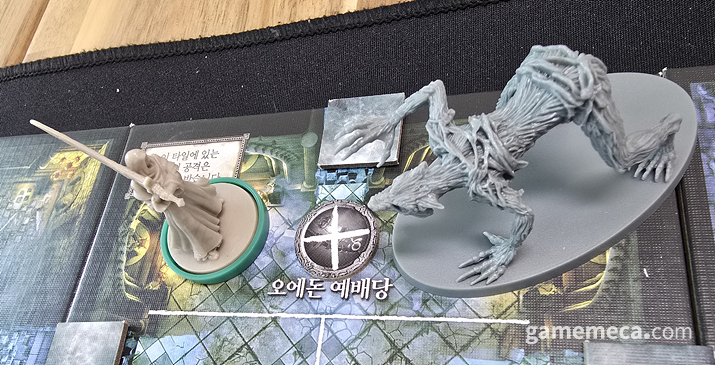
특히 붉은 달을 형상화한 것으로 보이는 붉은 라운드 칸에 진입하면 보스와 몇몇 몬스터를 제외하고는 사라진다는 점을 깨달았습니다. 이를 잘 활용하면 많은 적을 상대하지 않으면서도 맵을 더 수월하게 탐색할 수 있죠.
▲ 세팅 중 한 장면, 하단에 보이는 칸이 라운드 진행을 표시하는 것으로 붉은색에 다다르면 보스 및 특수 몬스터를 제외한 몬스터가 사라진다 (사진: 게임메카 촬영)
보드게임에서도 보스전은 만만치 않았다
블러드본 보드게임은 기본적으로 협력 게임입니다. 행동 카드를 공개한 상태로 진행해도 괜찮은 룰이며, 전체 라운드에 제한이 있고 모든 맵이 한 번에 열리지 않는 구조라서 플레이어끼리 부지런히 탐색하고 협력해야 합니다.
함께 미션을 돌파한다는 느낌이 강하게 듭니다. 미션을 해결하고 얻은 아이템을 서로 나누면서 향후 진행에 대해 적극적으로 논의해야 하죠. 플레이 중 나오는 선택지에 따라 게임이 변화할 때도 있기에 함께 고민해야 할 부분도 많습니다. 이런 부분에서는 1인 게임에 가까운 원작과는 다른, 여럿이 모여 하는 보드게임다운 매력을 느낄 수 있습니다.
보스전은 이 게임의 하이라이트입니다. 각 보스는 1페이즈와 2페이즈로 나뉘며, 독특한 공격 패턴을 보입니다. 이를 파훼하는 것은 한 번의 플레이로는 쉽지 않을 수 있습니다. 소울라이크에서 보던 사망을 통한 학습과 도전 정신을 생각나게 합니다.
▲ 때로는 흩어져서 맵을 열어야 한다 (사진: 게임메카 촬영)
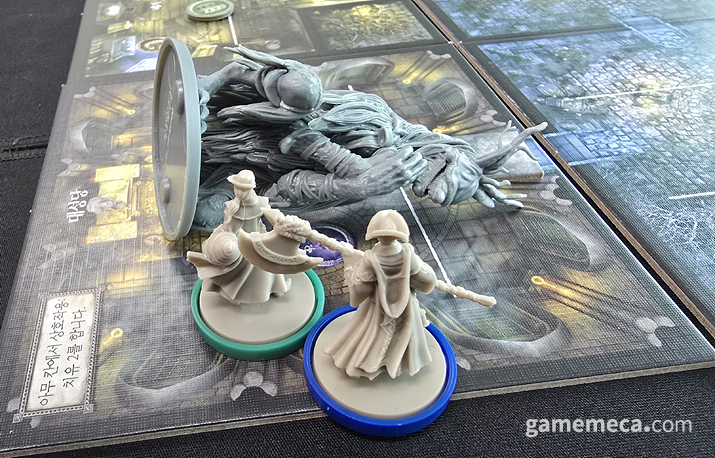
▲ 보스 레이드 때는 역시 함께 해야 한다 (사진: 게임메카 촬영)
▲ 임무를 완료하면 보상은 나눠 갖는다 (사진: 게임메카 촬영)
▲ 가끔 선택이 요구되는 시나리오가 나온다 (사진: 게임메카 촬영)
협동 보드게임으로서 준수한 완성도를 갖췄다
원작을 경험하지 못한 입장에서도 블러드본 보드게임은 충분히 매력적이었습니다. 보드게이머에게 익숙한 메커니즘으로 구성되어 접근하기 어렵지 않았고, 협력 게임으로서의 완성도도 높아 팀워크의 재미를 충분히 느낄 수 있었죠.
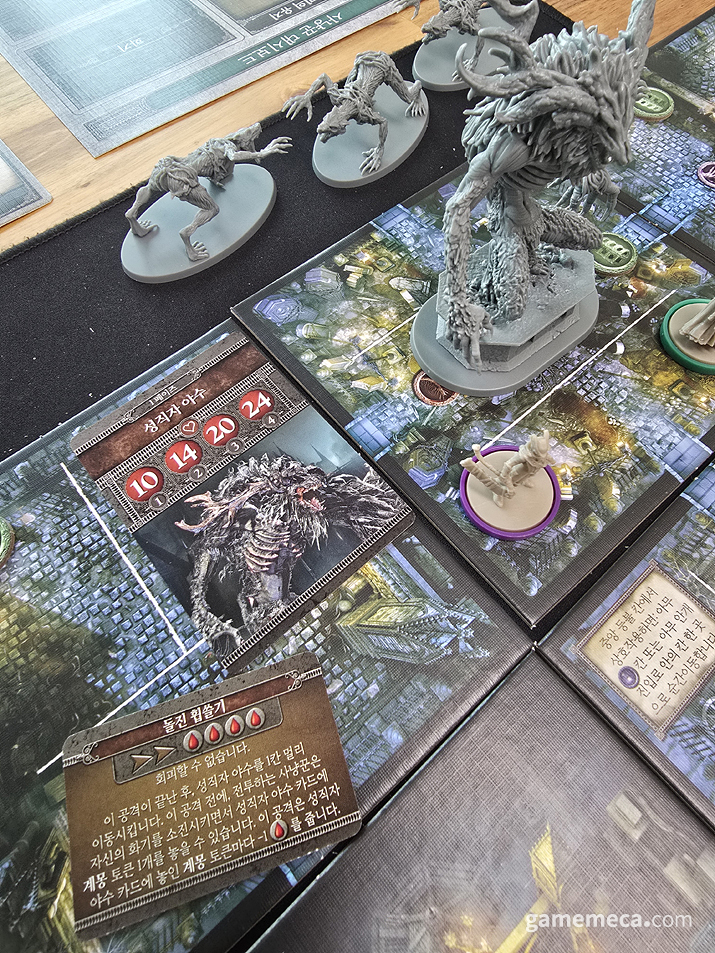
▲ 보스는 플레이어 수에 따라 체력이 달라진다, 페이즈에 따라 체력과 사용 기술도 다르다 (사진: 게임메카 촬영)
▲ 맵을 돌며 야수를 사냥하는 것은 즐겁지만 (사진: 게임메카 촬영)
▲ 정신 없이 사냥하다보면 보스를 잡기 위한 라운드가 모자라진다 (사진: 게임메카 촬영)
▲ 힘을 합쳐 겨우 '교구장 아멜리아'를 쓰러뜨렸다 (사진: 게임메카 촬영)
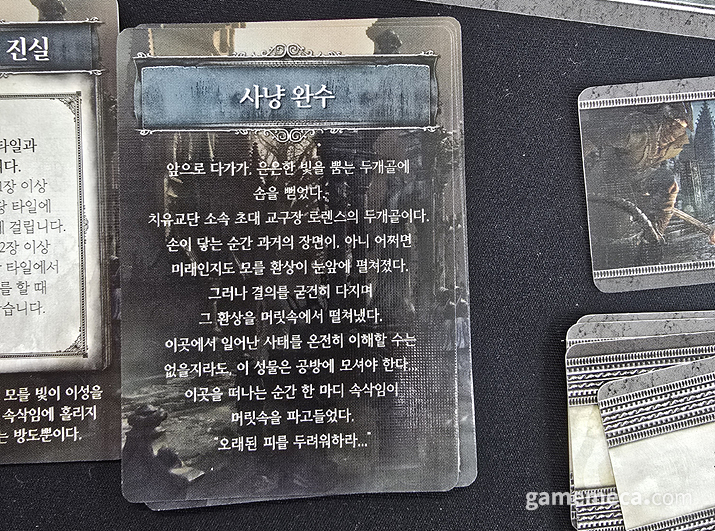
여기에 원작 분위기와 스토리를 훌륭하게 재현했고, 챕터마다 다른 스토리와 보스로 긴 플레이 시간을 보장합니다. 구성품의 높은 완성도는 소장 가치를 높여줍니다. 원작을 직접 플레이했다면, 더 깊이 있는 재미를 느낄 수 있었으리라는 생각도 들었습니다. 카드에 실린 스토리나 캐릭터 배경을 온전히 이해하지 못한 상태에서 보드게임을 먼저 플레이했기 때문에, 게임이 전달하려는 서사적 깊이를 완전히 체감하지는 못해 아쉬웠습니다.
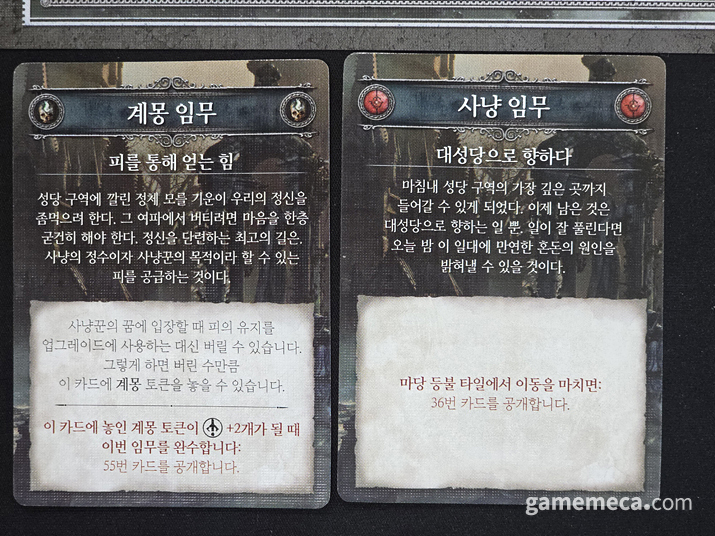
▲ 스토리가 때때로 궁금해진다 (사진: 게임메카 촬영)
▲ 뭔가 있는 것 같은데 현재 챕터만으로는 내용을 완벽히 파악하긴 힘들었다 (사진: 게임메카 촬영)
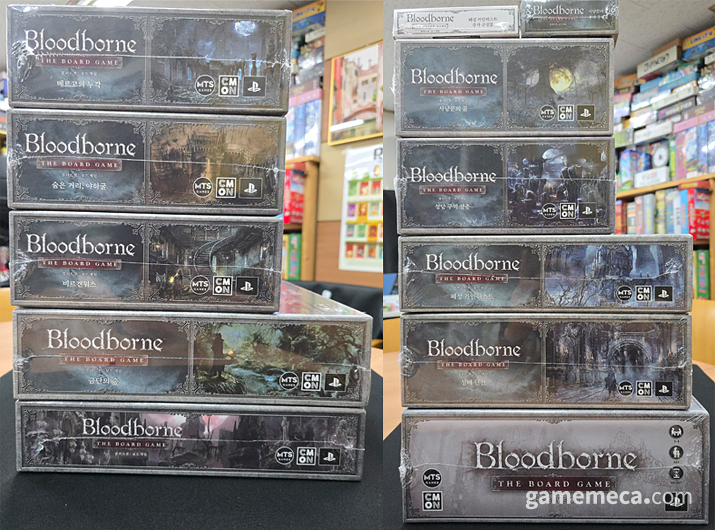
보드게임 입문자에게는 다소 복잡할 수 있는 룰이지만, 협력 게임의 특성상 경험자가 함께한다면 충분히 즐길 수 있는 수준입니다. 다만 챕터당 2-3시간이라는 다소 긴 플레이 타임과 상당한 집중력을 요구한다는 점은 미리 고려해야 할 부분입니다. 웨이브 1, 웨이브 2로 구성된 패키지 구성 역시 가격이나 패키지 자체 크기로도 부담이 되는 건 사실입니다. 무엇보다 아직 해결되지 않은 번역 오류는 국내 플레이어에게 가장 큰 걸림돌이 될 것 같습니다.
▲ 본편과 웨이브 1 확장(우)와 웨이브 2 확장(좌) (사진: 게임메카 촬영)
야남을 함께 탐험하는 협력의 재미를 발견하다
블러드본 보드게임은 원작 팬, 테마가 강한 보드게임을 좋아하는 플레이어, 도전적인 협력게임을 찾는 게이머에게 추천합니다. 블러드본 특유의 매력을 새로운 방식으로 경험할 수 있는 기회를 제공하며, 야남의 비밀을 파헤쳐나가는 과정에서 원작에서 느끼기 어려웠던 협력의 재미를 발견할 수 있습니다. 게임 속 야남을 테이블 위에서 다른 망자와 함께 탐험하고 싶다면, 이보다 좋은 선택은 없다고 생각합니다.



 Is it okay to start Warframe now, which is in its 13th year?
 [+9 Enhanced] RedMagic Astra 2, 'Tier 0' in both performance and heat control
 [precedent.zip] Does deriding the appearance of a character modeled after a real person constitute the crime of insult?
 [Board Game] There is no story, but the sense of command remains, Nikke





 GAMEMECA GLOBAL SITE