
[precedent.zip] Insulting an internet broadcaster via whisper can constitute insult charges
[판례.zip] 인터넷 방송인에 귓말로 욕해도 모욕죄 성립 가능
2026.05.15 10:00 UTC+9

AI Summary
Online game players sometimes experience intense emotions. Many users spew harsh words in the chat window without holding back their momentary anger. As it's widely known that using profanity in public chat can lead to sanctions or lawsuits, there's an increase in users employing tactics like directing profanity only through one-on-one whispers or private messages to avoid the attention of other users. Is the thought, "Since whispers are only seen by the two of us, I can't be sued no matter what I say," actually true? In this precedent.zip, we will delve into the legal issues surrounding in-game whispers, specifically analyzing whether insulting an internet broadcaster (BJ/streamer) via whisper, while numerous viewers are watching, can lead to punishment for insult charges, based on actual court precedents.
Moments of intense emotion are not uncommon when playing online games. Many users, unable to contain their brief anger, lash out with harsh words in the chat window. As it's widely known that using profanity in public chat can lead to penalties or lawsuits, there's a rise in 'clever' tactics where individuals, to avoid the scrutiny of other players, resort to hurling abuse solely through private whispers or direct messages.
"Whispers are just between us, so I can't be sued no matter what I say, right?" Is that really true? In this precedent.zip, we will conduct an in-depth analysis through actual court rulings on the legal issues surrounding in-game whispers, specifically whether an individual can be punished for defamation by sending abusive private messages to an internet broadcaster (BJ/streamer) who is being watched by numerous viewers.
The difference between 'transmitting obscene material via communication media' (Tongma-eum) and defamation/insult is 'publicity'
First, let's examine the legal standards for one-on-one whispers between general users. To get straight to the point, the applicable laws vary entirely depending on the content of the chat.
What if you exchange sexually explicit insults or make statements that cause shame via whisper? In such cases, 'transmitting obscene material via communication media,' commonly known as Tongma-eum, applies, and even in a one-on-one chat room with only two people present, you will be subject to punishment without exception. This is because Tongma-eum does not require 'publicity' (a state where it can be perceived by an unspecified or large number of people) as a condition for establishing the crime from the outset.
On the other hand, simple insults, 'pad-rip' (insulting parents), or spreading false information that does not involve sexual content presents a slightly different situation. In these cases, the crimes of insult or defamation, which are typically the issues, unlike Tongma-eum, require 'publicity' to be met for the crime to be recognised. A one-on-one whisper is a private space where only you and the other party are present, and an unspecified number of people cannot see its content. Therefore, as a general rule, publicity is denied, making it very difficult to lead to punishment. This is precisely why cunning malicious commenters actively use whispers as a legal shield.

Publicity is difficult to establish in one-on-one chats or whispers
As we've seen, publicity must be proven for crimes of insult or defamation to be established. Publicity, as defined by law, means a state where it can be perceived by an unspecified or large number of people. According to our courts' consistent principle, when an offender sends abusive messages via one-on-one whispers or private messages to a victim, publicity is denied if there is no possibility of it spreading to a third party.
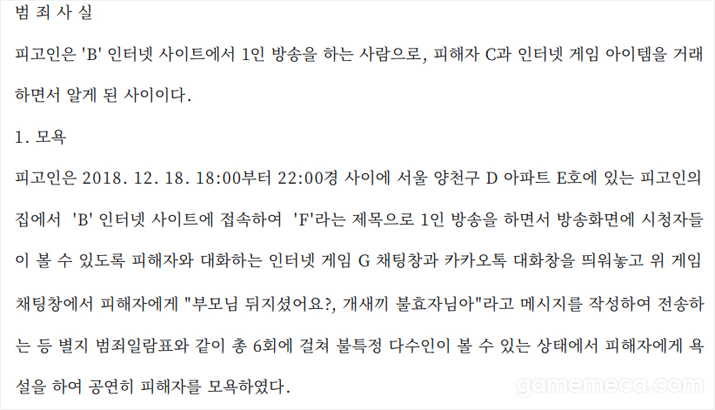
A recent court ruling has clarified this. A recent appellate court decision (2024No3678) by the Seoul Central District Court involved a defendant who sent insulting messages about a third party during an impromptu, temporary one-on-one conversation with an acquaintance online. Although the prosecution charged the defendant with insult, the court acquitted the defendant.
The court pointed out, "The fact that the statement was made only to a specific few can be a strong indication that publicity is denied, and therefore, strict proof by the prosecution regarding the possibility of dissemination under such circumstances is essential."
Furthermore, it was acknowledged that in this case, it was difficult to anticipate that the recipient of the problematic abusive message would directly convey it to the victim. Ultimately, the court ruled that it was difficult to consider that the message had the potential to spread to an unspecified number of people, or that the defendant had the inner intention to tolerate such a risk, and thus confirmed the acquittal.
What if a BJ insults someone via whisper during a broadcast?
However, if this one-on-one chat is being broadcast live on the internet, the situation changes 180 degrees. Even if the system technically operates as a whisper between two people, the moment it is exposed on the broadcast screen, the court views the communication as taking place in a public space.
Let's look at a ruling from the Seoul Southern District Court (2020GoJeong90) that clearly illustrates this. This case involved a BJ who was punished for sending abusive messages in a one-on-one chat to another person while broadcasting.
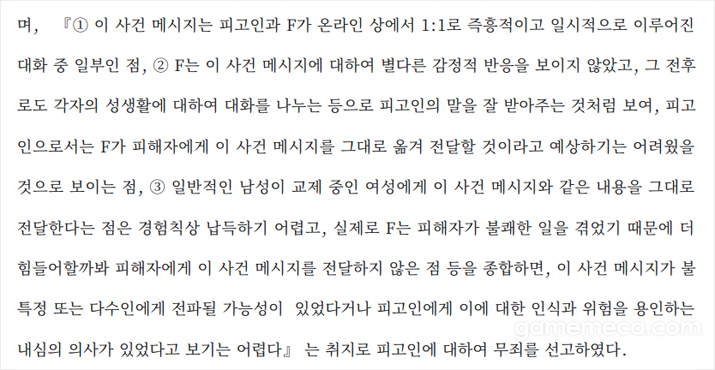
The defendant, identified as Mr. A, who was running a solo broadcast on an internet site, got into an emotional dispute with the victim, Mr. C, whom he met during an item trade. Unable to contain his anger, the defendant turned on his broadcast from his home and, while viewers watched in real-time, streamed the game chat window and KakaoTalk conversation window with the victim directly onto the broadcast screen.
Subsequently, the defendant sent a total of six extremely harsh insults through the game chat window, including "Did your parents die?" and "You f***ing unfilial son." When the victim did not answer his calls, he even resorted to threats, saying, "Answer before I expose your wife and kids and leak your phone number," and "I'm coming with a knife, so you better arm yourself."
In response, the court did not consider the defendant's act of sending messages through a one-on-one chat window as a mere private conversation. The court clearly ruled that the defendant's act of broadcasting the chat window to expose its content to viewers constituted "publicly insulting the victim by sending abusive messages in a state where an unspecified number of people could see it."
Ultimately, the court recognised both insult and threat charges in the defendant's actions and imposed a fine of 2 million won.
What if you send a whisper to a BJ?
The precedent we just examined involved a BJ who insulted someone by displaying a one-on-one chat on their broadcast. What if, conversely, a general user sends abusive whispers to a BJ who is broadcasting? This also falls under the same legal principles, as the key element for establishing a crime, 'publicity,' can be recognised.
The crucial key to injecting publicity into a one-on-one chat is 'potential for dissemination' and 'intent.' If the offender was watching the other person's broadcast, or if they sent the abusive whisper with full awareness that it was a live broadcast, the court's judgment becomes significantly stricter. This is because the offender is seen not merely as attempting a private one-on-one conversation, but as having a clear intention to use the BJ's broadcast screen as a 'megaphone' to spread their insults to numerous viewers.
This is perfectly in line with the Southern District Court's ruling, which recognised publicity by deeming one-on-one chats exposed on a broadcast screen as being in a 'state where an unspecified number of people could see it.' Even if it appears to be a one-on-one whisper, if the person knew it could be disseminated to an unspecified number of people through the broadcast (intent) and proceeded to do so, they will ultimately find it difficult to escape the severe penalties of insult or defamation charges.

The idea that whispers are always safe is a misconception.
In conclusion, the thought that 'it's always safe because I used the whisper function' is a gravely dangerous misconception.
In today's era where internet broadcasting is commonplace, a single one-on-one message, sent carelessly, can be live-streamed to tens of thousands of monitors simultaneously, ensnaring you in the 'publicity' trap without you even realising it. This is because courts do not merely look at the superficial 'whisper system' being used. They delve into whether the chat had the potential to be exposed to an unspecified number of people through the actual broadcast screen, and whether the offender intended this.
This means that a stone thrown under the assumption of being in a private room could, in reality, be interpreted as being fired into the middle of a town square, aimed at an unspecified crowd. Harsh words spoken from behind the flimsy shields of anonymity and one-on-one chat can ultimately lead to severe consequences such as criminal punishment and a criminal record. Before hitting the Enter key in a fit of rage during a game, you should remember that countless viewers' eyes might be watching from beyond your monitor.

온라인게임을 즐기다 보면 감정이 격해지는 순간이 찾아옵니다. 찰나의 분노를 참지 못하고 채팅창에 험한 말을 쏟아내는 유저도 적지 않은데요. 공개된 채팅으로 욕설을 하면 제재를 받거나 고소당할 수 있다는 사실이 널리 알려지면서, 다른 유저들의 시선을 피해 상대방에게 1 대 1 귓속말이나 개인 메시지로만 욕설을 퍼붓는 꼼수도 늘고 있습니다.
"귓속말은 단둘이 보는 거니까 무슨 말을 해도 고소 못 하잖아?"라는 생각, 과연 그럴까요? 이번 판례.zip에서는 게임 내 귓속말을 둘러싼 법적 쟁점, 특히 수많은 시청자가 지켜보는 인터넷 방송인(BJ·스트리머)에게 귓속말로 욕설을 할 경우 모욕죄로 처벌될 수 있는지 실제 판례를 통해 심층 분석해 보겠습니다.
통매음과 모욕죄·명예훼손죄의 차이는 '공연성'
먼저 일반적인 유저 간의 1 대 1 귓속말에 대한 법적 기준을 살펴보겠습니다. 결론부터 말씀드리면, 채팅의 내용이 무엇이냐에 따라 적용되는 법리가 완전히 달라집니다.
만약 귓속말로 성적인 욕설을 하거나 수치심을 일으키는 발언을 쏟아냈다면 어떨까요? 이때는 '통신매체이용음란죄', 이른바 통매음이 적용되어 단둘이 있는 1 대 1 채팅방이라도 가차 없이 처벌 대상이 됩니다. 통매음은 다른 사람도 지켜보고 있어야 한다는 '공연성(불특정 또는 다수인이 인식할 수 있는 상태)'을 애초에 범죄 성립 요건으로 요구하지 않기 때문입니다.
반면, 성적인 내용이 쏙 빠진 단순 욕설이나 패드립, 허위사실 유포라면 상황이 조금 다릅니다. 이때 주로 문제가 되는 모욕죄나 명예훼손죄는 통매음과 달리 반드시 '공연성'이 충족되어야만 범죄로 인정됩니다. 1 대 1 귓속말은 나와 상대방 단둘만 있고, 불특정 다수는 그 내용을 볼 수 없는 은밀한 공간입니다. 따라서 원칙적으로 공연성이 부정되어 처벌로 이어지기 매우 어렵습니다. 교묘한 악플러들이 귓속말을 법적 방패막이로 적극 활용하는 이유가 바로 여기에 있습니다.
1 대 1 채팅이나 귓속말로는 공연성이 인정되기 어렵다
앞서 살펴봤듯이 모욕죄나 명예훼손죄가 성립하기 위해서는 공연성이 입증되어야 합니다. 법에서 말하는 공연성이란 불특정 또는 다수인이 인식할 수 있는 상태를 의미하는데요. 우리 법원의 일관된 원칙에 따르면, 가해자가 피해자에게 1 대 1 귓속말이나 개인 메시지로 욕설을 보낸 경우, 제3자에 대한 전파 가능성이 없다면 공연성이 부정됩니다.
최근 이를 명확히 확인해 준 판례가 있는데요. 서울중앙지방법원에서 선고된 항소심 판결(2024노3678)입니다. 이 사건에서 피고인은 온라인상에서 지인과 1 대 1로 즉흥적이고 일시적인 대화를 나누던 중 타인에 대한 모욕적인 메시지를 전송했습니다. 이에 대해 검찰은 모욕죄로 기소했지만, 재판부는 피고인에게 무죄를 선고했습니다.
법원은 "특정한 소수에게만 발언하였다는 점은 공연성이 부정되는 유력한 사정이 될 수 있으므로, 그와 같은 사정하에서의 전파 가능성에 관하여는 검사의 엄격한 증명이 필수적"이라고 짚었습니다.
아울러 해당 사건은 대화 상대방이 문제의 욕설 메시지를 피해자에게 그대로 옮겨 전달할 것이라고 예상하기 어려웠다는 점이 인정됐습니다. 결국 법원은 해당 메시지가 불특정 다수인에게 전파될 가능성이 있었다거나, 피고인에게 그러한 위험을 용인하는 내심의 의사가 있었다고 보기 어렵다고 판단해 무죄를 확정했습니다.
BJ가 방송 중 귓속말로 욕설을 한다면?
그런데 이 1 대 1 채팅이 실시간 인터넷 방송에서 방영되고 있었다면 이야기는 180도 달라집니다. 시스템상으로는 단둘이 대화하는 귓속말 형태를 띠고 있더라도, 그것이 방송 화면에 노출되는 순간 법원은 대화 장소가 공개적인 곳으로 탈바꿈된 것으로 봅니다.
이를 명확히 보여주는 서울남부지방법원의 판결(2020고정90)을 살펴보겠습니다. 1인 방송을 진행하던 BJ가 상대방에게 1 대 1 채팅으로 욕설을 했다가 처벌받은 사례입니다.
인터넷 사이트에서 1인 방송을 하던 피고인 A씨는 아이템 거래 과정에서 알게 된 피해자 C씨와 감정적인 시비가 붙었습니다. 분을 참지 못한 피고인은 본인의 집에서 방송을 켜고, 시청자들이 실시간으로 지켜보는 가운데 피해자와의 게임 채팅창과 카카오톡 대화창을 방송 화면에 그대로 송출했습니다.
이어 피고인은 게임 채팅창을 통해 "부모님 X지셨어요?", "개XX 불효자님아" 등 입에 담기 힘든 심한 욕설을 총 6차례에 걸쳐 전송했습니다. 여기에 피해자가 자신의 전화를 받지 않자 "니 와이프랑 애기 건들기 전에 사진 다 까고 전화번호 뿌리기 전에 받아라", "나 칼 들고 가니까 너도 무장하고 와라"라며 서슴없는 협박까지 내뱉었죠.
이에 대해 법원은 피고인이 비록 1 대 1 채팅창이라는 형식을 빌려 메시지를 보냈을지라도, 이를 단순한 사적 대화로 간주하지 않았습니다. 재판부는 피고인이 방송 화면에 대화창을 띄워 시청자에게 그 내용을 노출한 상태에서 메시지를 전송한 행위는 "불특정 다수인이 볼 수 있는 상태에서 피해자에게 욕설을 하여 공연히 피해자를 모욕한 것"이라고 명확히 판시했습니다.
결국 재판부는 피고인의 행위에서 모욕죄와 협박죄를 모두 인정하며, 벌금 200만 원을 선고했습니다.
BJ에게 귓속말로 욕설을 보낸다면?
앞서 살펴본 판례는 BJ가 1 대 1 채팅창을 방송에 띄워 타인을 모욕한 사건이었죠. 그렇다면 반대로 일반 유저가 방송 중인 BJ를 향해 귓속말로 욕설을 던진 경우라면 어떨까요? 이 역시 앞서 살펴본 범죄 성립의 핵심 요건인 '공연성'이 인정될 수 있어 동일한 법리의 사정권에 놓이게 됩니다.
1 대 1 채팅에 공연성을 불어넣는 결정적 열쇠가 바로 '전파 가능성'과 '고의성'입니다. 만약 가해자가 상대방의 방송을 시청하고 있었거나, 실시간 방송 중이라는 사실을 충분히 인지한 상태에서 귓속말로 욕설을 보냈다면 법원의 잣대는 한층 엄격해집니다. 가해자가 단순히 은밀한 1 대 1 대화를 시도한 것이 아니라, BJ의 방송 화면을 일종의 '확성기'로 악용해 수많은 시청자에게 자신의 욕설을 전파할 의도가 다분했다고 보기 때문입니다.
이는 남부지법 판례가 방송 화면에 노출된 1 대 1 채팅을 '불특정 다수가 볼 수 있는 상태'로 판단해 공연성을 인정한 것과 완벽히 같은 이치입니다. 겉보기에는 단둘만의 1 대 1 귓속말이라는 껍데기를 썼더라도, 방송을 통해 불특정 다수에게 전파될 수 있음을 알면서도(고의성) 이를 실행했다면 결국 공연성이 성립되어 모욕죄나 명예훼손죄의 철퇴를 피하기 어렵습니다.
귓속말은 무조건 안전하다는 것은 착각이다
결론적으로 "귓속말 기능을 썼으니 무조건 안전하다"는 생각은 대단히 위험한 착각입니다.
인터넷 방송이 일상이 된 요즘, 무심코 던진 1 대 1 메시지 하나가 실시간으로 수만 명의 모니터에 생중계되며 나도 모르는 사이 '공연성'의 덫에 걸릴 수 있습니다. 법원은 단순히 '귓속말 시스템을 썼느냐'라는 껍데기만 보지 않기 때문입니다. 그 채팅이 실제 방송 화면을 통해 불특정 다수에게 노출될 가능성이 있었는지, 가해자가 이를 의도했는지를 꿰뚫어 봅니다.
단둘이 있는 방이라고 생각하고 던진 돌이, 사실은 광장 한복판에서 불특정 다수를 향해 발사되고 있다고 볼 수도 있다는 뜻입니다. 익명성과 1 대 1 채팅이라는 얄팍한 방패 뒤에 숨어 던진 독설은, 결국 형사 처벌과 전과 기록이라는 무거운 대가로 돌아올 수 있습니다. 게임 중 화가 치밀어 올라 엔터 키를 누르기 전 모니터 너머에 수많은 시청자의 눈이 지켜보고 있을지도 모른다는 사실을 떠올려야 합니다.
This news was translated by AI.
READ MORE
-
 [Board Game] The Magnificent Majesty of Gandalf, The Lord of the Rings: The Card Game
-
 [precedent.zip] Are Macros Always a Permanent Ban? The Environment Has Changed
-
 Is it okay to start Warframe now, which is in its 13th year?
-
 [+9 Enhanced] RedMagic Astra 2, 'Tier 0' in both performance and heat control
RECOMMENDED NEWS

MOST POPULAR NEWS
- K/DA Returns After 6 Years, League of Legends Releases 'Firestarter' Music Video
- Severe Copying of Games via AI Reverse Engineering Destroys the Development Ecosystem
- [Today's steam] Wardogs announces early termination of new season just 3 days after launch
- [Today's steam] Modern Warfare 4 receives the highest user acclaim in the series
- "I will create and distribute cloned games using AI" Indie developer threatened
- 'Uma Musume' US LA Tour Suddenly Canceled Due to Visa Issues for Voice Actors and Singers
- Picking up weapons and Spikes from afar, VALORANT reveals agent 'Waylay'
- South Korea vs. China Showdown, LCK Opponent for the 2026 World Championship Decided
- PvP and New Dungeons Revealed in ArcheAge Chronicles Steam Playtest
- Save Storage Space, PS5 Cloud Streaming Launches in South Korea on the 28th
MEDIA PARTNERSHIPS



GAMEMECA SNS


 GAMEMECA GLOBAL SITE