
Ascend to ZERO Blends Roguelike, Time Stop, and RPG Elements Harmoniously
로그라이크·시간 정지·RPG 조화롭게 녹여낸 ‘어센드투제로’
2026.05.14 09:00 UTC+9

AI Summary
A unique Korean indie game announced its release date during the Xbox Partner Preview in March. This is 'Ascend to ZERO,' a time-manipulation action roguelike game from Flyway Games, a subsidiary of Krafton. It will be officially released on July 13th for PC and Xbox Series X/S, and it has also been included in Xbox Game Pass Day One.
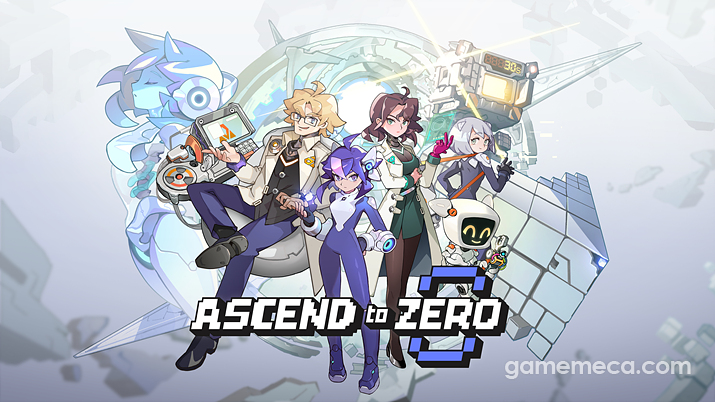
A rather unique-looking domestic indie title announced its release date during the Xbox Partner Preview this past March. That game is 'Ascend to ZERO,' a time-manipulation action roguelike from Flyway Games, a subsidiary of Krafton. It's slated for a full release on PC and Xbox Series X/S on July 13th and will also be available on Xbox Game Pass on day one. Flyway Games prides itself on showcasing unique gameplay elements that its development team has personally discovered. This strength has primarily manifested in action roguelike titles such as 'Trinity Survivors' and 'Commander Quest,' a formula that's carried over into their new roguelike, Ascend to ZERO.
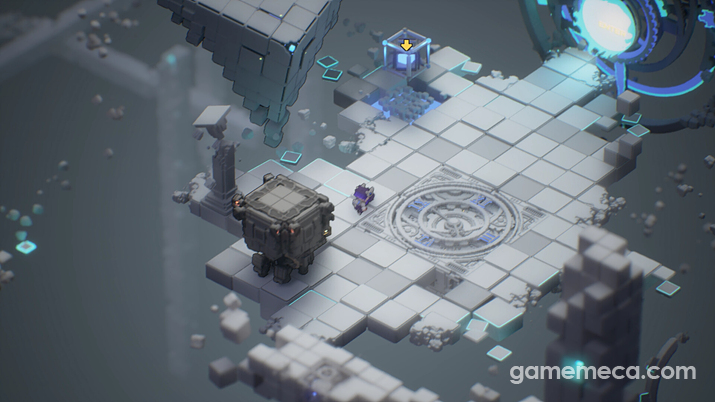
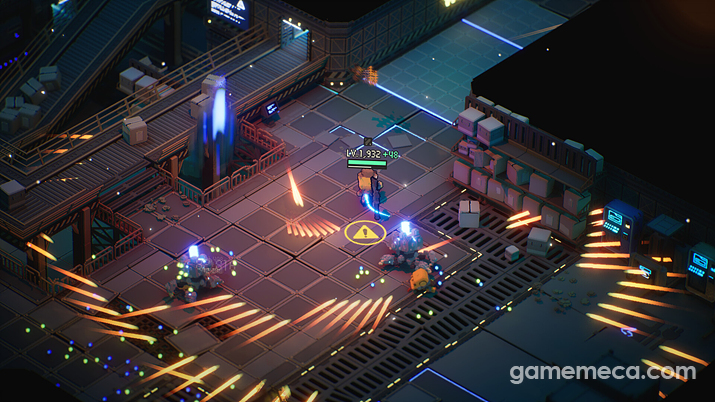
Ascend to ZERO is set against the backdrop of a Earth devastated by an alien invasion. Players take on the role of humanity's last survivor, tasked with travelling back in time to rescue scattered comrades and restore the world to its former state. The game centres around a core mechanic of a strict 30-second time limit and a unique system to halt it. Players engage enemies via an auto-battle system and confront powerful bosses at each stage. Using the time-stopping ability freezes everything except the player. While direct attacks on enemies are impossible during this period, it allows for strategic manoeuvres such as safely collecting experience orbs and preemptively positioning for counter-attacks.
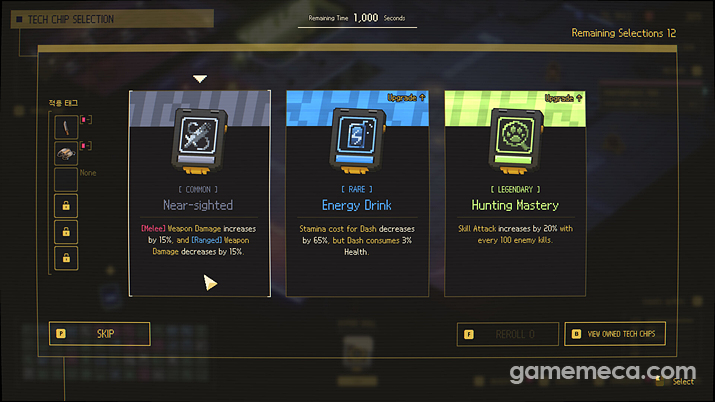
The game also incorporates RPG elements, with a focus on diverse equipment combinations and character progression. Upon game over, collected currency and weapons are retained. Players can choose and enhance one of six avatars to adjust their stats, and even alter combat styles by utilising skill chips obtained from defeating enemies. This allows for new strategies, such as sacrificing time-control abilities for overwhelming mobility or increasing attack power at the cost of a rapidly decreasing timer.
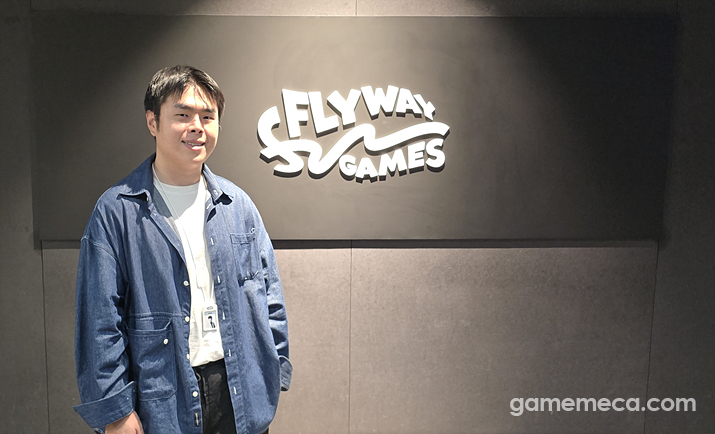
In essence, Ascend to ZERO is a confluence of various distinct elements: time manipulation, RPG mechanics, roguelike structure, and voxel graphics. The pertinent question, then, is how these complex components are harmoniously integrated. GameMeca had the opportunity to sit down with Tae-wook Heo, the PD for Ascend to ZERO, at Flyway Games' headquarters on the 13th to delve into the unique concept, combat features, and the synergy between the various systems.
Q. Could you please provide a brief introduction to the game 'Ascend to ZERO'?
Ascend to ZERO is an action roguelike game that centres around time as its core theme. The world has already been destroyed, and the protagonist travels back to the past via a time machine to restore it to its normal state. Since players must clear stages under significant constraints within a limited time, the game features the powerful ability to stop time. Players navigate challenges by freely toggling time-stop on and off within the time limit.
Q. How did you conceive the world setting where the world is set to be destroyed in 30 seconds?
I drew inspiration from a game called 'Hero 30'. The difference from Hero 30 is that the time limit to save a world that has already been destroyed is 30 seconds. In the early prototype of Ascend to ZERO, the protagonist was living a life with a limited time left. However, with the shift to an SF world setting, the concept of time travel between the past and future was added, and the duration of stay in the past was fixed at 30 seconds. The reason for the difficulty in staying for more than 30 seconds is that, within the game's lore, time travel itself is an action with significant limitations.
Q. While dash and auto-attack are typical of action roguelikes, time-stopping is added. We're curious about the rationale behind the combat design.
I played 'Vampire Survivors,' a previous roguelike game. When surrounded by enemies and unable to do anything, I had the thought of stopping time, repositioning, and reassessing. Real-time action games prioritise manipulation skills and quick decision-making, but by adding time-stopping, we've enhanced the strategic depth. Time-stopping acts as a way to segment time, similar to turn-based combat, allowing players to consider repositioning or evaluating the situation.However, for the sake of balance, attacking during time-stop was prevented from the initial concept because the ability itself is quite powerful. Instead, we designed it so that avatar skills are activated upon releasing time-stop. Each avatar has diverse abilities, such as attacking nearby enemies up close or attacking over a wide area with adjusted range. This forces strategic choices: whether to attack enemies from a safe position or to evade.
Q. Enemy levels gradually increase, but areas aren't blocked off, allowing players to stop time and freely explore further. What's the reason behind this design for free progression?
I took some inspiration from the mobile indie game 'Inflation RPG'. We wanted to provide the strategic fun of assigning levels to each enemy and planning routes based on that. Within a limited number of battles, players can decide which level of enemy to fight, choosing between efficiently levelling up or taking risks for higher rewards. We particularly encourage players to gauge their own strength against the enemies' and challenge higher-level foes.
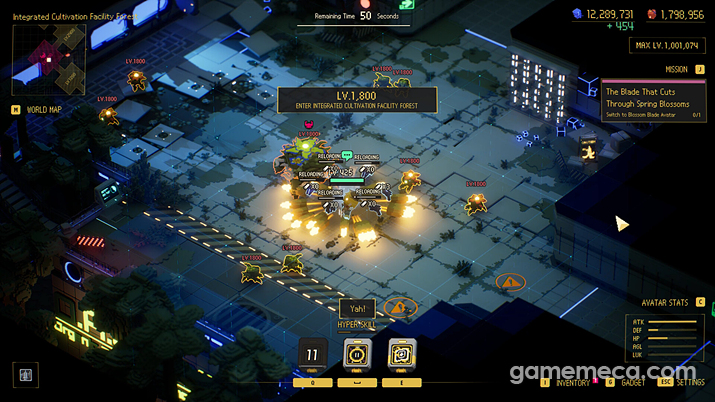
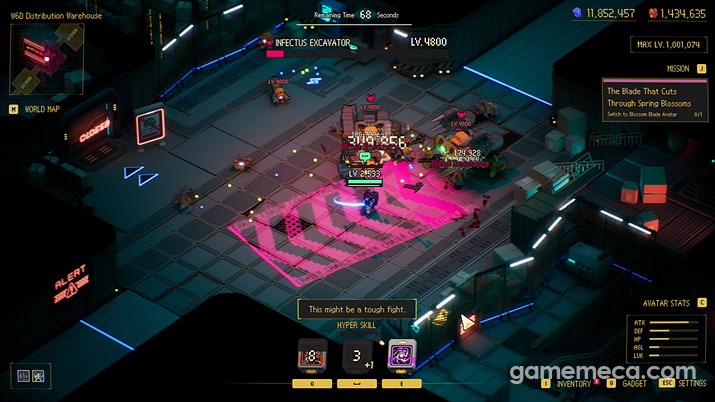
Q. The character sprites and designs are dot-graphical with a subculture aesthetic, while the in-game combat and maps use voxel graphics. Could you tell us about the chosen background for this?
It wasn't originally voxel graphics; it was heavily influenced by the art director. We didn't have an art director initially and were in the process of finding one when we enlisted an art director from Krafton's Challengers Lab. They were skilled at implementing voxel art beautifully and were highly productive due to their speed. It fit the game well, so we adopted that style. It also aligned with the indie game aesthetic, allowing the sensibilities of pixel art to be extended into 3D. Furthermore, voxel art makes it difficult to express tall characters, so we opted for characters with large heads, essentially 2-head-tall.
Q. Compared to other roguelikes, the 'growth' elements of RPGs, such as equipment enhancement and farming, are prominent. What's the reason behind this design?
Ascend to ZERO has a significant number of growth elements for a roguelike. While there are many avenues for progression like avatars, gadgets, and skills, the core lies in items. Players can farm and enhance weapons, devices, and armour, or reset their options, with set items also available.Ascend to ZERO is a game where players strategically determine and adjust 'how far they can go'. We've designed a loop where players venture further to acquire better items and defeat higher-level enemies. We also aimed to capture the enjoyment of acquiring items, drawing inspiration from ARPGs like 'Diablo'. A system is also being prepared to convert non-permanent items obtained in-game into permanently usable ones.
Q. You've linked the skills used after time-stopping to the character's appearance, the 'avatar'. What are the available avatars, and what are their skills and appearances?
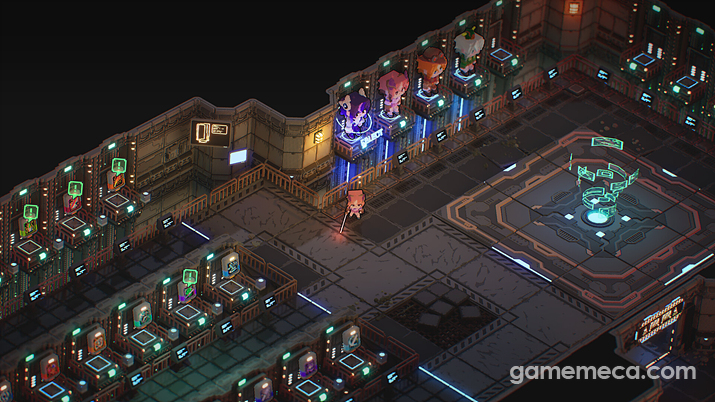
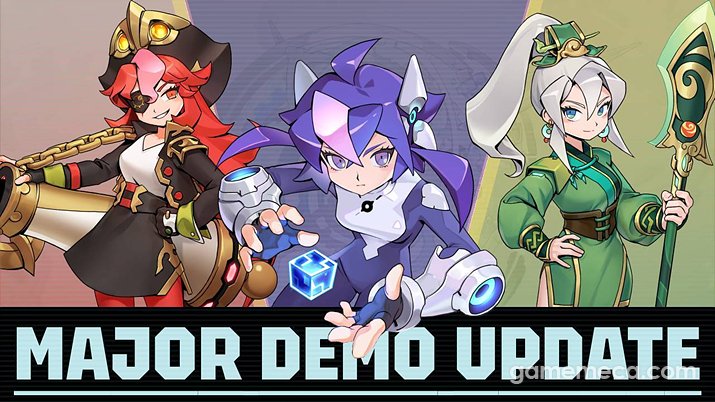
At launch, there will be six avatars implemented, with the possibility of more being added later. The protagonist's basic form has a suit-like design and handles a cube imbued with the power of time. You can think of the avatars as parallel world versions of the protagonist. There's the 'Golden Gunner' with a golden appearance wielding dual pistols, the 'Sakura Warrior' with a pink aesthetic performing iaijutsu, and the 'Wind God's Spear Master' with a green look and a Chinese wuxia feel. Additionally, a pirate using a cannon and a hacker with purple tones controlling drones will appear. Each avatar has a suitable weapon, and specific weapons come with passive effects like increased attack speed or range.
Q. If there were 'deck-building' elements in the overall game design, which aspects would they be?
Due to the nature of roguelike games, we aimed to provide a different build and experience each time. For instance, builds utilising slow but multi-hitting projectiles, or builds that unleash a barrage of projectiles, can emerge each playthrough, altering the strategy accordingly. Furthermore, the process of deciding which skill to use during time-stop can be likened to deck-building. We've created a structure where the strategy changes with each playthrough, blending real-time and turn-based elements.
Q. What are the differentiating factors of Ascend to ZERO compared to other action roguelike games?
It's the harmony of various elements. There are many emphasised aspects, such as time constraints, progression, and deck-building systems. It was crucial to ensure these systems didn't clash but rather interlocked. For example, roguelikes and RPGs clearly have aspects that don't align. Roguelikes should offer a different experience each run, and a poorly crafted strategy might lead to failure. RPGs, on the other hand, are about accumulation. Harmoniously integrating these conflicting elements is Ascend to ZERO's strength.We aimed for a difficulty level that would be familiar to a wide range of players. Of course, it won't be easy for everyone. While it was quite challenging in the early stages, we've now made it more accessible to a broader audience. This is complemented by the RPG progression system. When facing a difficult boss, players can also consider the alternative of progression.
Q. What were the key considerations in the overall design and visual style of the bosses?
We felt they needed to be visually imposing and considered thematic consistency. For instance, a desert stage should feature a boss related to the desert. We also designed them to provide a dramatic sense of accomplishment upon defeat. To offer an interesting challenge to players wielding the powerful time-stop ability, we configured them with heavy and slow attack patterns. We judged that their immense size and deliberate patterns would create an engaging experience when combined with the time-stop mechanic.
Q. At the time of release, what is the approximate stage count and overall playtime?
There are a total of four chapters and end-game content. Themes include the Time Research Lab, Desert Zone, and Underground Waterway. On normal difficulty, clearing the main content is estimated to take around 13 hours. Engaging with the end-game content could extend playtime to 30 hours, and aiming for full completion, including all item collection and achievements, targets over 50 hours. The end-game features a hard mode where enemies become stronger, penalties are introduced, and strategies must adapt as the difficulty escalates.
Q. The release is scheduled for July 13th. Do you have any post-release update plans or a development roadmap?
We plan to conduct continuous updates based on user feedback post-launch. The updates will focus on two main areas: consistently improving any shortcomings and adding content that enhances the core fun of action and strategy. While DLC hasn't been concretised, we are internally considering new playable characters or modes that could fundamentally alter the overall gameplay experience.
Q. Lastly, could you offer a final message to the users who have been eagerly awaiting the game?
We believe that games exist because of their players. We are truly grateful to everyone who has been waiting. We will put in a great deal of effort to refine the game based on your feedback and deliver a high-quality product.
지난 3월 Xbox 파트너 프리뷰에 독특한 국산 인디게임이 출시일을 발표했다. 바로 크래프톤 자회사 플라이웨이 게임즈의 시간 조작 액션 로그라이크게임 '어센드투제로(Ascend to ZERO)'로, 오는 7월 13일 PC와 Xbox 시리즈 X/S로 정식 출시되며, Xbox 게임패스 데이원에도 이름을 올렸다. 플라이웨이 게임즈는 개발팀이 직접 발굴한 독특한 재미 요소를 선보이는 것을 강조하는 개발사다. 이런 강점은 주로 ‘트리니티 서바이버즈’, ‘커맨더 퀘스트 등’ 액션 로그라이크 장르로 구현됐으며, 이는 로그라이크 신작 어센드투제로에도 그대로 이어졌다.
어센드투제로는 외계 생명체의 공격으로 멸망한 지구를 배경으로 한다. 플레이어는 인류의 마지막 생존자가 되어 과거로 이동해 흩어진 동료들을 구출하며 세상을 원래대로 되돌리는 임무를 맡는다. 게임은 30초라는 제한된 시간과 이를 멈출 수 있는 독특한 체계를 핵심으로 내세운다. 플레이어는 자동 전투 방식을 통해 적에 맞서고, 스테이지별로 강력한 보스들과도 마주한다. 시간 정지 기술을 사용하면 플레이어를 제외한 모든 것이 멈춘다. 이때는 적을 직접 공격할 수 없지만, 경험치 구슬을 안전하게 회수하고 반격 위치를 선점하는 전략적 전투가 가능하다.
다양한 장비 조합과 성장을 토대로 한 RPG 요소도 갖췄다. 게임 오버가 되어도 수집한 화폐와 무기 등은 그대로 유지된다. 6종의 아바타 중 하나를 선택하고 강화해 능력치를 보정 받고, 적을 처치해 얻는 기술 칩을 활용해 전투 방식을 바꿀 수도 있다. 시간 제어 능력을 포기하는 대신 압도적인 기동성을 얻거나, 제한 시간이 빠르게 줄어드는 대신 공격력을 올리는 등 새로운 전략을 짤 수 있다.
요약하면 어센드투제로는 시간 정지, RPG, 로그라이크, 복셀 그래픽 등 여러 독특한 요소들이 모두 결합된 게임이다. 이런 복잡한 요소들을 어떻게 조화롭게 녹여냈을까? 게임메카는 13일 플라이웨이 게임즈 본사에서 어센드투제로 허태욱 PD와 만나 독특한 콘셉트, 전투 요소, 각 시스템의 시너지 등에 대해 들어볼 기회를 얻었다.
Q. 게임 '어센드투제로'에 대한 간단한 소개 부탁드린다.
어센드투제로는 시간을 핵심 테마로 잡은 액션로그라이크게임이다. 세상은 이미 멸망했고, 주인공은 세계를 구하기 위해 타임머신을 타고 과거로 가 세상을 정상으로 돌려놓는 이야기다. 제한된 시간 내에 강한 제약 속에서 스테이지를 클리어해야 하기에 시간 정지라는 강력한 능력을 지니고 있다. 유저는 시간이라는 제약 속에서 자유롭게 시간 정지를 오가며 문제를 풀어나가는 방식이다.
Q. 세계가 30초 후 멸망한다는 세계관은 어떻게 구상했나?
'용사 30'이라는 게임에서 영감을 받았다. 용사 30과 다른 점은 이미 멸망한 세계를 구할 시간이 30초라는 점 정도다. 어센드투제로 초기 프로토타입에서는 시한부 인생을 사는 주인공이었으나 SF 세계관으로 변경되며 과거와 미래를 오가는 시간 여행 콘셉트가 추가됐고 과거 체류 시간이 30초로 정해졌다. 30초 이상 머무르기 힘든 이유는 세계관 설정상 시간을 오가는 것 자체가 제약이 큰 행동이기 때문이다.
Q. 대시, 자동 공격은 일반적인 액션 로그라이크가 연상되지만, 여기에 시간 정지가 더해진다. 전투 설계의 이유가 궁금하다.
이전 로그라이크게임 '뱀파이어 서바이버'를 플레이했다. 적에게 둘러싸여 아무것도 하지 못할 때, 시간을 멈추고 위치를 다시 잡고 싶다는 생각이 들었다. 실시간 액션게임은 조작 능력과 빠른 판단력이 중요하지만, 여기에 시간 정지를 더함으로써 전략성을 높였다. 시간 정지는 턴제처럼 시간을 쪼개는 역할을 하고, 이를 통해 위치를 바꾸거나 상황을 판단하는 등을 고민할 수 있다.다만 밸런스를 위해 시간 정지 중 공격은 초기 구상부터 불가능하도록 막았는데, 그 자체로 강력한 기능이기 때문이다. 대신 시간 정지를 해제할 때 아바타 스킬이 발동되도록 설계했다. 아바타마다 근접에서 적들을 공격하거나, 넓은 범위를 공격하는 대신 사거리를 조절하는 등 다양하다. 이를 통해 안전한 위치를 잡고 적을 공격할지, 혹은 피할지 전략적인 선택을 요구한다.
Q. 적들의 레벨이 점점 높아지되, 구역이 막혀 있지 않아 플레이어는 시간을 멈추고 자유롭게 더 먼 곳을 돌아다닐 수 있다. 자유로운 진행 설계의 이유는?
모바일 인디게임 '인플레이션 RPG'에서 일부 영감을 얻었다. 각 적에게 레벨을 부여하고, 이를 토대로 동선을 짜는 전략의 재미를 주고 싶었다. 제한된 전투 횟수 안에서 어느 레벨의 적과 싸울지 판단하며, 효율적으로 레벨을 올리거나 위험을 감수하고 높은 보상을 노리는 방식 중 고를 수 있다. 특히 유저가 자신의 강함과 적의 강함을 측정하고, 더 높은 레벨의 적에게 도전하는 것도 권장한다.
Q. 캐릭터 스프라이트와 디자인은 서브컬처 감성의 도트 그래픽인 반면, 인게임 전투와 맵은 복셀 그래픽이다. 선택한 배경이 궁금하다.
초기에는 복셀 그래픽이 아니었으며, 아트 디렉터의 영향을 많이 받았다. 초기에는 아트 디렉터가 없었고 구하는 상황이었는데, 크래프톤 챌린저스실 아트 디렉터분을 섭외했다. 복셀 아트를 미려하게 구현하시고, 속도도 빨라 생산성이 뛰어난 분이었다. 게임에도 잘 어울려 해당 스타일을 게임에 적용했다. 픽셀 아트의 감성을 3D로 확장할 수 있어 인디게임 감성에도 잘 맞았다. 또 복셀 아트는 장신 캐릭터 표현이 어려워 머리가 큰 2등신 캐릭터를 채택했다.
Q. 여타 로그라이크 대비 장비 강화, 파밍 등 RPG의 ‘성장’ 요소가 돋보인다. 설계의 이유가 궁금하다.
어센드투제로는 로그라이크 장르 중에서도 성장 요소가 많은 편이다. 아바타, 가젯, 스킬 등 성장 요소가 많지만, 핵심은 아이템이다. 무기, 디바이스, 방어구 등을 파밍하고 강화하거나 옵션을 재설정할 수 있으며, 세트 아이템도 마련됐다.어센드투제로는 플레이어가 스스로 “어디까지 갈 수 있을까”를 전략적으로 판단하고 수정하는 게임이다. 즉 멀리 가서 좋은 아이템을 얻고, 더 높은 레벨 적을 처치하는 루프를 설계했다. 특히 '디아블로' 등 핵 앤 슬래시에서도 영감을 받아 아이템을 얻는 재미를 구현하고자 했다. 게임 내에서 얻은 비영구적 아이템을 영구적으로 사용할 수 있게 변환하는 시스템도 준비했다.
Q. 시간 정지 사용 후 사용되는 스킬을 캐릭터 외형인 '아바타'와 연계했다. 어떤 아바타들이 있고, 이들의 스킬과 외형은 무엇인가?
출시 시점에는 6개의 아바타가 구현되며, 추후 추가될 수 있다. 주인공의 기본 형태는 슈트 형태의 디자인을 가졌고, 시간의 힘이 담긴 큐브를 다룬다. 아바타들은 주인공의 평행 세계 모습으로 봐주시면 되겠다. 황금색 외형에 쌍권총을 쓰는 ‘골든 거너’, 핑크색 외형에 발도술을 쓰는 ‘벚꽃 무사’, 초록색 외형에 중국 무협 느낌을 주는 ‘풍신의 창술사’ 외에도 대포를 사용하는 해적이나 보라색 톤에 드론을 다루는 해커 등이 등장한다. 각 아바타마다 어울리는 무기가 있으며, 특정 무기에 공격 속도나 범위 증가 등의 패시브 효과가 더해진다.
Q. 전반적인 게임 설계에 ‘덱 빌딩’ 요소가 있다면 어떤 부분일까?
로그라이크게임 특성상 매번 다른 빌드와 경험을 제공하려 했다. 예를 들어 느리지만 다단 히트를 주는 투사체를 활용한 빌드, 다수의 투사체를 쏟아내는 빌드 등 매 판 다른 빌드가 나올 수 있고, 이에 따라 전략도 변한다. 또 시간 정지 시 어떤 스킬을 사용할지 고민하는 과정 역시 덱 빌딩에 비유할 수 있다. 실시간과 턴제를 혼합해 플레이할 때마다 전략이 변하는 구조를 만들었다.
Q. 어센드투제로가 지닌 여타 액션 로그라이크게임과 다른 차별점은 무엇인가?
여러 요소의 조화다. 시간 제약, 성장, 덱 빌딩 시스템 등 강조되는 요소들이 많다. 이런 시스템이 서로 충돌하지 않고 맞물리게 만드는 것이 중요했다. 예를 들어 로그라이크와 RPG는 서로 맞물리지 않는 부분이 분명 존재한다. 로그라이크는 매 판 다른 경험을 줘야하고, 전략을 잘못 짠다면 깨지 못할 수도 있다. 반면 RPG는 쌓아 올리는 방식이다. 이런 상충되는 요소를 조화롭게 녹여내는 것이 어센드투제로의 강점이다.난이도 역시 여러 유저에게 친숙한 정도를 목표로 했다. 물론 모든 사람에게 쉽지는 않다. 초기 단계에는 다소 어려웠지만, 현재는 더 많은 유저에게 다가갈 수 있도록 했다. 여기에 RPG 성장 시스템이 어우러진다. 보스를 잡기 어려울 때, 성장이라는 다른 축의 고민도 가능하다.
Q. 보스의 전반적인 특징과 디자인 시 중점을 둔 부분은 무엇인가?
외형이 거대해야 한다고 생각했고, 테마에 어울리는 구성을 고민했다. 예를 들어 사막에서는 사막 과 관련된 보스가 등장해야 한다. 또 보스를 처치했을 때 성취감이 극적으로 다가올 수 있도록 설계했다. 시간 정지라는 강력한 스킬을 가진 플레이어에게 재미있는 패턴을 주기 위해 육중하고 느린 패턴으로 구성했다. 거대한 크기와 육중한 패턴이 시간 정지 환경과 맞물려 재미를 줄 수 있다고 판단했다.
Q. 출시 시점에서 스테이지 분량과 전반적인 플레이타임은 어느 정도인가?
총 4개 챕터와 엔드 게임 콘텐츠를 가지고 있다. 시간 연구소, 사막지대, 지하수로 등의 테마가 있다. 메인 콘텐츠를 보통 난이도로 클리어한다면 예상 시간은 13시간 정도다. 엔드 게임 콘텐츠까지 즐긴다면 30시간, 모든 아이템 수집과 도전 과제를 끝내는 컴플리션 리스트 기준으로는 50시간 이상 분량을 목표로 하고 있다. 엔드 게임은 난이도가 올라갈 때마다 적이 강해지고 페널티가 생기며 전략이 변하는 하드 모드 구조다.
Q. 오는 7월 13일 출시 예정이다. 출시 이후 업데이트 계획이나 개발 로드맵이 있다면?
출시 이후에도 유저 피드백 기반으로 지속적인 업데이트를 진행할 생각이다. 업데이트 방향은 크게 두 가지로, 부족한 부분을 지속적으로 개선해 나가는 것과 액션성 및 전략성이라는 핵심 재미를 강화하는 콘텐츠 추가다. DLC는 구체화되지 않았지만, 새로운 플레이어블 캐릭터나 전체적인 플레이 경험을 바꿀 수 있는 모드를 내부적으로 고민 중이다.
Q. 게임을 기다려주신 유저분들께 마지막으로 한마디 부탁드린다.
유저분들이 있어야 게임이 존재할 수 있다고 생각한다. 기다려주시는 모든 분들께 정말 감사드린다. 앞으로도 많은 피드백을 보내주시면, 그 의견들을 바탕으로 게임에 잘 다듬어서 좋은 작품으로 만나 뵐 수 있도록 많은 노력을 하겠다.
This news was translated by AI.

I will always love games. skyanze@gamemeca.com


RECOMMENDED NEWS
MOST POPULAR NEWS
- Animo Prepares to Open Special No Brand Burger Store Ahead of Launch
- Popup events to be held in Dongdaemun and Yongsan to celebrate the release of Liftbound
- GTA 6 Online to support up to 32 players, confirmed through lawsuit documents
- Deepening Crisis in Snezhnaya, Genshin Impact Version 7.1 Starts on the 23rd
- [Today's steam] Animorphs officially released, recording 100,000 Concurrent Players
- [Today's steam] Normalized new FPS Wardogs surpasses 420,000 Concurrent Players
- Restart of the Storm of the Void, Xal'atath comes to Heroes of the Storm
- Gathering Cheonhwi and Slowly Falling for the Charm of 'Animo'
- An Ensemble Drama with Four Heroes, Fire Emblem Mazachanhong
- A Magnificent Two-Consecutive-Championship Feat, The Protagonist of 2026 LCK is Gen.G
MEDIA PARTNERSHIPS



GAMEMECA SNS