
[NDC 26] The era of 'Time-Efficiency', finding the future of games in entertainment culture
[NDC 26] '시성비' 시대, 엔터 문화에서 찾는 게임의 미래시
2026.06.18 18:19 UTC+9

AI Summary
The gaming industry must shift from chasing cost-efficiency to prioritizing time-effectiveness for players. Success now depends on fostering genuine emotional relationships and transparent communication with communities. Future growth relies on treating fans as equal partners rather than just passive consumers.
In an era saturated with endless media, the buzzword for survival has shifted from mere 'cost-effectiveness' to 'time-effectiveness'. Both the entertainment and gaming industries are now locked in a fierce battle for the same finite resource: the consumer. With the deluge of content brought on by AI, short-form media, and rapid technological advancement, it is high time these two sectors stop working in silos and start sharing their playbooks to build a symbiotic future.
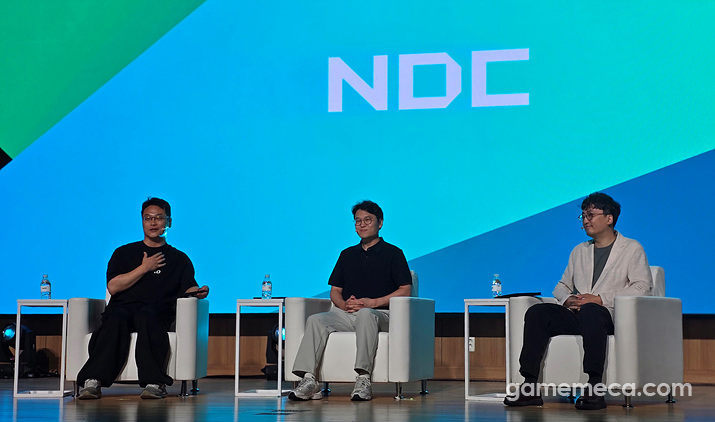
On the 18th, the third day of the NEXON Developers Conference 2026 (NDC26), an insightful panel discussion titled 'The Era of Connection: Where is Gaming Heading? - Plugging into the Gamer's Daily Life' was held at the International Conference Hall in the Gyeonggi Content Agency. The session featured Woo-jin Cha, head of the Cha Woo-jin Entertainment Culture Research Institute, as moderator, joined by NEXON Korea's Jung-won Chae representing the developer's perspective, and YouTuber Sung-hoe Kim of G-Sik Baekgwa representing the creator's view.
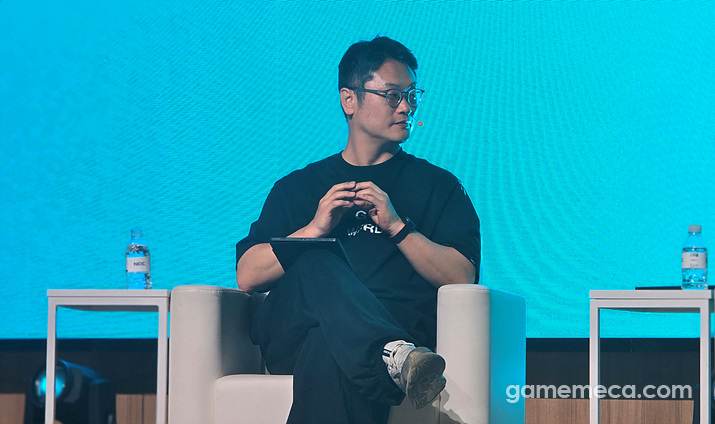
Moderator Cha set the stage: "It seems the entertainment industry as a whole, globally, is grappling with the same questions. We used to worry about how to make content; now, we worry about how to nurture it. In the past, you could just craft a decent product and toss it into the market. Now, you have to consider everything that happens once it’s out there."
The panel analysed the structural similarities between K-POP idol fandoms and gaming communities, highlighting the triangular relationship between agencies/studios, artists/developers, and fans/users. Their takeaway? The trial-and-error lessons the music industry learned during the digital music revolution two decades ago could serve as a vital roadmap for the gaming sector.
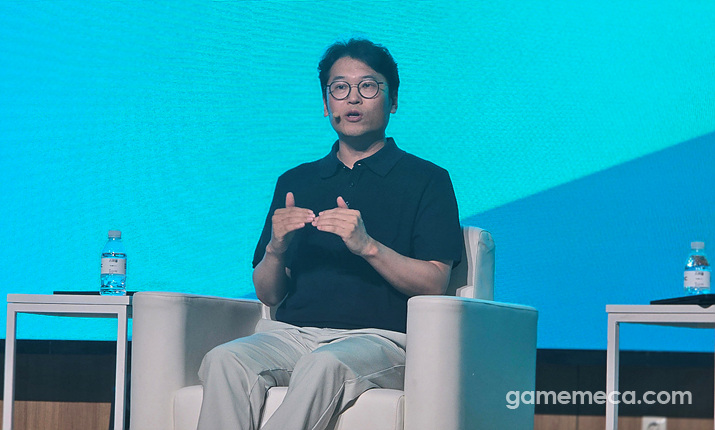
Chae emphasized that the core of modern live service gaming lies in 'community' and 'communication'—giving players a genuine sense of belonging. The longevity of stalwarts like MapleStory or FC Online hinges on the developer's ability to be transparent about their roadmap. By clearly articulating the direction of updates and creating a space where players feel heard, studios can win over the 'time-effectiveness' of savvy modern gamers.
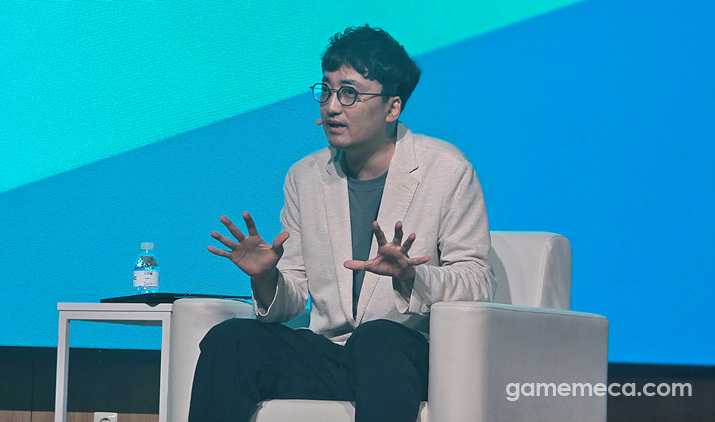
The conversation naturally shifted to the looming giant: Generative AI. Kim described this as the 'Era of the Click,' where tens of thousands of songs and casual app games are churned out daily, leading to severe curation fatigue. Even industry giants like Activision are adopting AI for efficiency, yet ironically, as the barrier to entry lowers and the market floods, the public is increasingly gravitating toward human-led creations that offer emotional resonance and unique, intentional creative direction.
To this, Moderator Cha offered a critic’s insight: "No matter how smooth an AI result is, or how quickly it’s generated, consumers ultimately open their wallets for relationships, not just technology. Amidst a sea of homogenized content, it is the creator’s own life and narrative that capture the public's eye."
The trio agreed that the future of business shouldn't rely on technical escalation alone, but on emotional interaction—the 'handmade touch' of someone you trust and admire. This sentiment aligns perfectly with the keynote delivered by CEO Dae-hyun Kang on the first day of NDC26.
However, there are risks to this horizontal exchange. Moderator Cha warned: "A fandom-based business only works if you view your fans as colleagues. Once you recognise them as equals in the culture we’ve built together, you can finally define how to communicate with them properly."
Chae added, "Just as there is a time, place, and occasion (TPO) for community interaction, it is crucial to craft content that fits the context." He argued for a branding strategy that aligns with the consumer rather than just pushing a directionless flow.
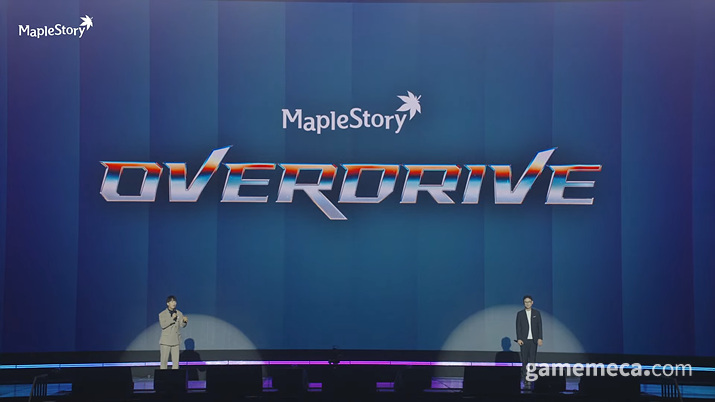
Ultimately, the balance is found when corporate philosophy, the creator's sincerity, and the fans' needs converge. They pointed to the recent MapleStory showcase, where Deputy Head Director Chang-seop Kim presented the update process directly to the players, as a prime example of this alignment.
Kim noted, "Previously, directors were seen like untouchable movie auteurs. Now, they’re like that close friend who explains the game you love in a way you can actually understand. Building that kind of trust is incredibly important."
The key to future success in entertainment and gaming is a shift in perspective: defining fans not as a mere consumer market, but as equal partners and colleagues. When the triangle of users, creators, and corporations functions on equal footing, an IP can survive as a sustainable cultural asset that transcends its time.
수많은 미디어가 범람하는 시대에서 이제 가성비(가격 대비 성능)가 아닌 '시성비(시간 대비 성능)'가 콘텐츠 시장의 생존 키워드로 부각되며, 엔터테인먼트 산업과 게임 업계는 '소비자'라는 하나의 자원을 두고 경쟁하는 시대를 맞이했다. AI, 숏폼, 미디어 발전으로 과잉 공급이 당연해진 현 시대에 두 산업은 서로의 노하우를 공유하며 새로운 상생 전략을 모색해야 하는 시점을 맞이했다.
넥슨 개발자 콘퍼런스 2026(이하 NDC26) 3일 차인 18일, 경기창조혁신센터 지하 2층 국제회의장에서 '연결의 시대, 게임은 어디로 가는가 - 게이머의 일상에 접속하다'를 주제로 한 대담 세션이 진행됐다. 이번 세션에는 차우진의 엔터문화연구소 소장 차우진 대표가 모더레이터로 참가했으며, 넥슨코리아 채정원 본부장이 개발자의 입장에서, G식백과 유튜버 김성회가 크리에이터의 입장에서 담론을 나누었다.
차 모더레이터는 "이제 엔터테인먼트 콘텐츠가 전반적으로, 또 국제적으로 모두 비슷한 고민을 하는 것 같다. 이전까지는 콘텐츠를 만드는 고민을 했다면 지금은 콘텐츠를 키우는 고민을 한다. 예전에는 잘 만들어서 시장에 던지면 됐지만, 이제는 이 다음에 어떤 일이 벌어질지도 함께 고민해야 한다"며 현 문화 산업이 마주한 현황을 요약했다.
참석자들은 한국 대중음악(K-POP), 즉 아이돌 팬덤과 게임 팬덤 체제가 본질적으로 유사한 구조를 갖췄다고 분석하며, 기획사-게임사, 아티스트-개발자, 팬-이용자(유저)가 맺은 삼각관계에 주목했다. 이 관계성을 통해 음악 업계가 20년 전 디지털 음원 전환기부터 겪어온 시행착오와 팬덤 관리 노하우가 현재 게임 업계의 미래시가 될 수 있다는 분석이다.
이 맥락에서 채 본부장은 최근 라이브 게임 서비스의 핵심이 이용자들에게 소속감을 주는 '커뮤니티화'와 '소통'에 있음을 짚었다. 메이플스토리나 FC 온라인 같은 오랜 프랜차이즈 IP의 지속 가능성은 게임사가 어떤 의도를 가지고 로드맵을 짜는지 이용자들과 공유하는 소통 능력에서 나온다고 언급했다. 업데이트의 방향성을 명확히 설명하고 이용자가 만족감을 느낄 수 있는 환경을 조성해야만, 기회비용과 시성비를 따지는 영리한 이용자들의 시간을 성공적으로 확보할 수 있다는 설명이다. 이와 같은 커뮤니티화는 일종의 팬덤으로 작용하며, 이 결속을 통해 시성비에서 경쟁력을 얻을 수 있다.
두 산업이 마주한 가장 거대한 기술적 파도인 생성형 인공지능(AI)의 도입 트렌드에 대한 대화도 함께 이루어졌다. 하루에만 수십만 곡의 음원과 수많은 캐주얼 앱 게임이 쏟아지는, 김 대표의 비유에 따른 '대 딸깍의 시대'가 열리면서 시장은 심각한 큐레이션 피로도에 직면했다. 액티비전 같은 글로벌 거대 게임사들조차 효율성을 위해 AI 생성물을 공식 채택하고, 개발 장벽이 낮아지며 수많은 콘텐츠가 플랫폼에 범람하자 역설적으로 대중은 인간 창작자만이 줄 수 있는 정서적 교감과 고유한 개성을 가진, 방향성 있는 창작물에 집중하기 시작했다.
이에 대해 차 모더레이터는 "AI가 아무리 매끄러운 결과물을 1초 만에 뽑아내더라도, 소비자는 결국 기술이 아닌 관계에 지갑을 열게 된다"는 평론가적 통찰을 제시했다. 상향 평준화된 공산품 같은 콘텐츠 사이에서 대중의 눈을 사로잡는 것은 결국 창작자의 고유한 삶과 메시지가 묻어나는 서사라는 것이다.
세 사람은 하나의 팬덤이 공유하는 '내가 신뢰하고 좋아하는 사람이 직접 깎아 만든 수제 제품'이라는 맥락을 통해, 미래의 비즈니스 구조를 기술적 고도화보다 정서적 상호작용에 중심을 두어야 한다고 분석했다. 이 맥락의 서사는 NDC26 첫날 공개된 강대현 대표의 키노트와도 그 흐름을 같이 한다.
그러나 이처럼 엔터테인먼트와 게임 산업이 수평적으로 교류하며 영역을 확장할 때 반드시 주의해야 할 리스크와 문화적 한계선도 존재한다. 차 모더레이터는 "팬덤을 기반으로 하는 비즈니스는 팬을 동료라고 생각해야 성립한다고 본다. 우리가 만든 문화에서 동등한 위치에 있는 존재라 생각할 때 이들과 어떤 식으로 이야기할 수 있을지를 정의한다"고 말했다.
채 본부장 또한 "커뮤니티에 어울리는 시간·장소·상황(TPO)이라는 것이 있듯, 맥락에 맞는 콘텐츠를 잘 만드는 것이 중요하다"라면서 방향성 없는 흐름보다 소비자와 동등한 선상에서 시선을 맞추는 브랜딩 제어가 필요함을 강조했다.
결국 이 삼각관계를 게임 업계에 적용하자면 기업의 철학과 제작자의 진정성, 그리고 이 진정성을 원하는 팬들의 맥락이 합치할 때 비로소 균형을 맞추게 된다. 세 참가자는 지난 13일 메이플스토리 쇼케이스에서 직접 업데이트 콘텐츠와 제작 과정을 소개한 메이플스토리 디렉터 김창섭 부본부장의 사례를 예시로 짚었다.
김 대표는 "이전에는 유명 게임 개발자나 디렉터를 마치 대가 같은 영화감독 같은 느낌으로 바라봤는데, 이제는 친한 형이고 내가 좋아하는 게임을 직접 알기 쉽게 설명해 주는 사람이 됐다. 그렇게 신뢰를 준다는 것이 대단히 중요하다고 본다"며 동등한 위치에서 주는 신뢰의 중요성을 요약했다.
궁극적으로 수평적 융합을 지향하는 미래 엔터테인먼트·게임 비즈니스의 성공 열쇠는 팬을 단순한 소비 시장이 아닌 '동등한 파트너이자 동료'로 정의하고 함께 문화를 만들어 나가는 동반자로 생각해야 한다는 관점의 전환이다. AI를 통한 효율이나 소비자에 대한 요소보다 이용자와 크리에이터, 기업이라는 삼각관계가 동등한 선상에서 서로를 보완할 때 그 IP가 시대를 관통하는 지속 가능한 문화 자산으로 살아남을 수 있다는 것이다.
This news was translated by AI.

I am dedicated to games and writing. viina@gamemeca.com
READ MORE
-
 PvE Matchmaking Begins, Arc Raiders Teases 'Frozen Mountain Path'
-
 First cash dividend since listing, ActozSoft announces 5 billion won dividend plan
-
 Today's steam: 'Dressmaker', which even received a user Korean patch, is becoming a hot topic day after day
-
 [Dead Game Spotlight] 'MindsEye', which was confident it would be the new GTA
MOST POPULAR NEWS
- Recommended for the holidays, what is the trend in gaming tablets?
- South Korean National Team Set to Compete, PUBG MOBILE Asian Games Finals Imminent
- Into the Deeper Depths of Snezhnaya, Exploring Genshin Impact Version 7.1
- Enjoy Cute Adventures One-Handed, Animo Mobile Version Released
- [Today's steam] Factory-style graveyard management, Graveyard Keeper 2 released
- Nivalis Nights, Running a Restaurant in a Cyberpunk City
- Optimization Issues Lead to 'Mostly Positive' Steam Reception for Silent Hill: Townfall
- [Game Rank Analysis] "This is the real classic," WOW draws back veterans in droves
- [Today's steam] A game to make your own dress is released, followed by favorable reviews
- Com2uS to Host SWC2026 European Cup in Hamburg, Germany
MEDIA PARTNERSHIPS



GAMEMECA SNS


 GAMEMECA GLOBAL SITE