
[gamescom 26] Project Zeta, the Core is "High-Density and Sustained Combat"
[gamescom 26] 프로젝트 제타, 핵심은 “밀도 높고 지속되는 교전”
2026.08.27 16:00 UTC+9

AI Summary
Project ZETA prepares for its second test at Gamescom 2026. Developers share insights on combat systems and balance. The third-person multiplayer game focuses on fast-paced team fights.
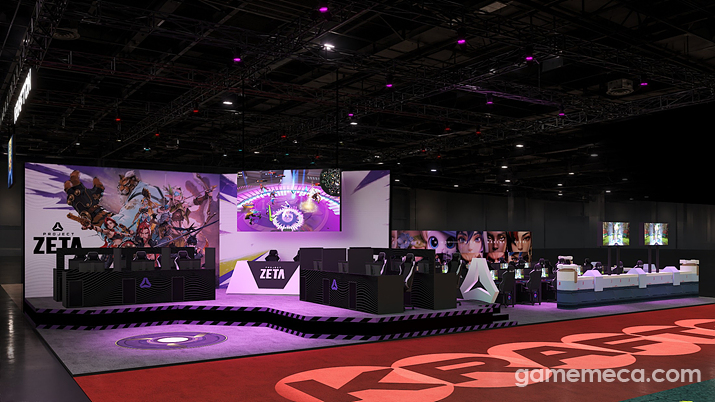
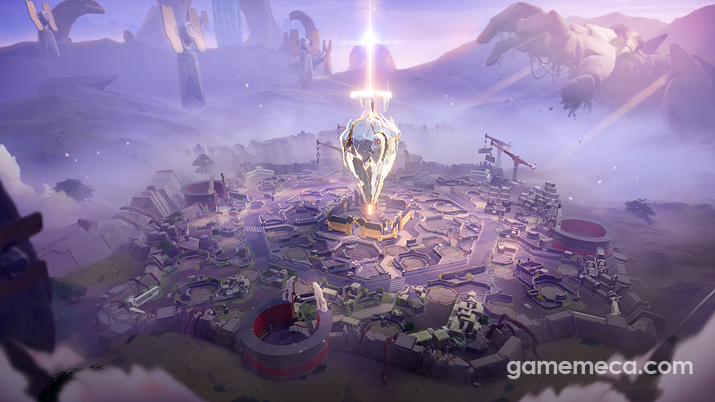
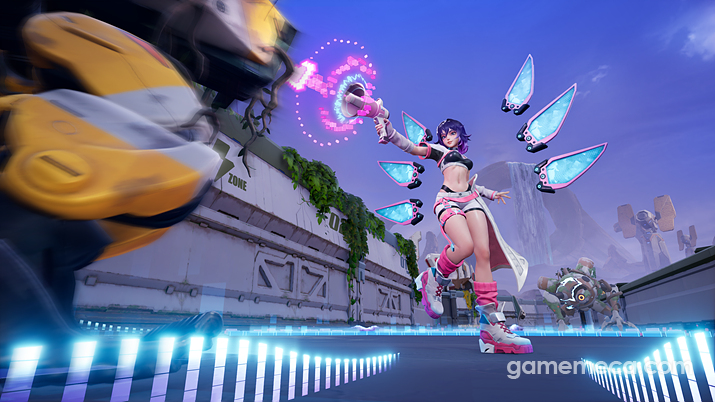
Published by Krafton and developed by Nabanana, the third-person multiplayer game 'Project ZETA' has announced its second playtest at Gamescom 2026 this coming September. Set against the backdrop of the dimensional waterfall located on the Aran Plateau, Project ZETA portrays the fierce competition among heroes, each carrying distinct backgrounds and motivations.
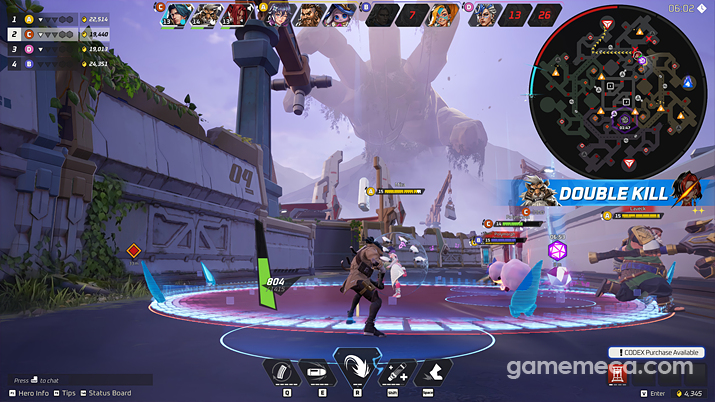
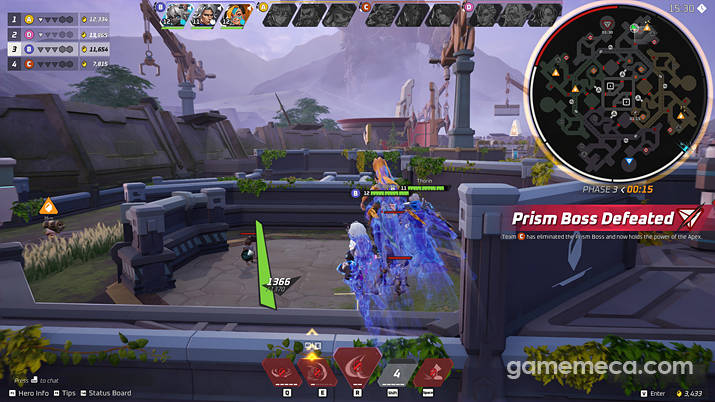
The total match duration is 20 minutes, where 12 players divided into four teams of three clash in real-time on a single battlefield. The victory condition is to score a total of 5 points by depositing an orb called a 'prism' into the stabilizer situated at the center of the map. Notably, the first two points can be secured simply by depositing the prism, but the remaining three points require the prism to be powered up by completely wiping out an opposing team.
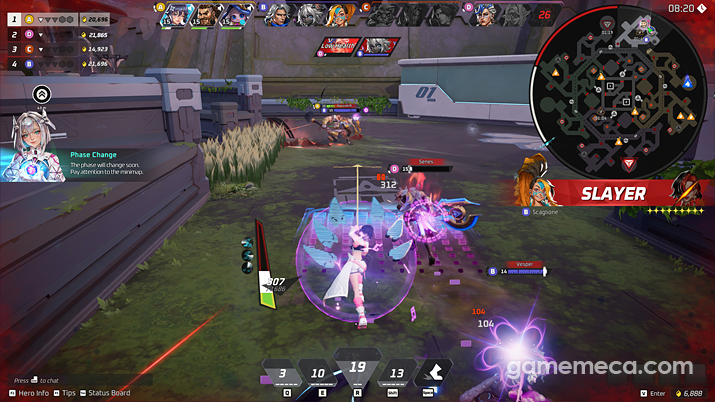
The overall gameplay design sets itself apart from traditional AOS and battle royale titles. There are no laning phases or base structures, and players establish their pathing right from the early minutes to kick off engagements at a rapid pace. Furthermore, the developers adopted a point-based competition system with unlimited respawns to prevent the passive style of play that typically plagues limited-life modes. It ditches the screen-center crosshair, introduces a back-view perspective where the camera and character directions are separated, and guarantees that basic attacks always hit.
According to statistics from the previous global test, a maximum of 11 consecutive kills was recorded in a standard match, with matches featuring 10 or more consecutive kills accounting for 1.1% of the total. The average multi-kills stood at 4.4, team fights at 18.3, the highest team fights in a single match at 34, and the team fight frequency per minute hit 0.85. In short, the combat frequency is noticeably higher than in other AOS games. The second test is scheduled from September 4 to September 6, introducing the giant robot 'Nova Crash' and the inquisitor 'Azrakel'.
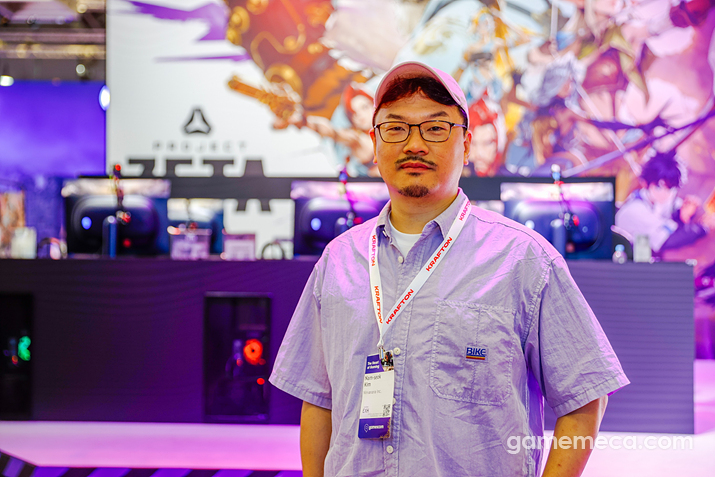
Gamemeca sat down with CEO Nam-seok Kim and Creative Director Joon-sung Kwon of Nabanana at Gamescom 2026 to discuss their unique new title that aims to swim against the tide of the AOS genre flood.
Q. Previously, the structure featured five competing teams, but it has been reduced to four. What is the reason behind this? And are there any plans to return to a five-team competitive format in the future?
CEO Nam-seok Kim: It is not a matter of simply swapping from five teams to four; we completely overhauled the entire map to better highlight the identity of ZETA. We made the change to enhance the density and pacing of team fights, and to design calculable pathing that makes reading the map a bit easier. Since we noticed that players could strategize much more accurately based on solid information derived from map reading when there were four teams, we likely won't revert to five teams.
Q. Prisms are the core element that decides the match, but is it also a viable strategy to ignore gathering prisms and instead target only the opposing team carrying them?
Creative Director Joon-sung Kwon: Targeting the prism-carrying team purely through player kills is theoretically possible and remains a partially valid strategy. However, we grant quite powerful buffs or progression elements to the team that secures the final kill during the process of acquiring prisms or fighting over major objectives. If you only focus on hunting down the team transporting the prism, your combat power will eventually fall behind due to the objective reward gap. While the first two prisms can be easily deposited, the remaining three ultimately require strengthening through kills. Without gaining objective advantages, securing the final three points becomes an uphill battle. We are designing it so players can adopt different strategies depending on the situation.
Q. Heroes will continue to be added. Roughly how many will there be at launch, and how do you plan to handle balancing?
CEO Nam-seok Kim: We tested with 14 heroes in the first test, added 2 more for this second test bringing the total to 16, and we expect around 17 heroes at launch. Given our past experience of updating a character every two weeks in our previous work, we plan to handle hero updates as agilely as possible.
Creative Director Joon-sung Kwon: It is true that balancing becomes tricky when a diverse roster of heroes exists, but there are various strategies you can pull off depending on hero compositions. Naturally, matchups have their own rock-paper-scissors dynamics, and since there are four teams, we believe they will ultimately keep each other in check. We plan to fine-tune the balance while keeping the intricate dynamics of multiple teams in mind.
Q. You are heading to Gamescom right after wrapping up the first test. What has been improved?
CEO Nam-seok Kim: The one thing that plagued players the most during the first test was the desire for a fair match experience. When an early resource gap widened, many complained about suffering as it snowballed until the very end. To address this, we separated solo queue and party queues as much as possible, implemented skill-bracket matchmaking, and introduced early safe zones to ease the learning curve so players can experience the true flavor of ZETA more intensely. Additionally, we added mechanics where the leading team slides down faster—meaning if the team in the lead holds the prism, it dissipates quicker to give the trailing teams a better chance as the match progresses.
Q. You emphasized a system called 'Fighting Spirit'. Could you elaborate on that?
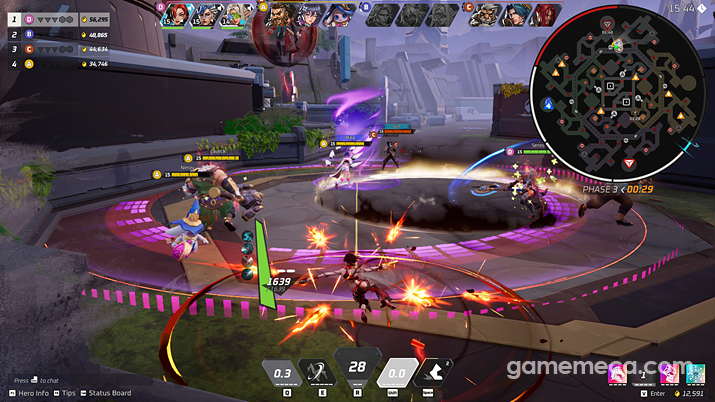
Creative Director Joon-sung Kwon: It is a system where instantly wiping out all three members of an opposing team revives the fallen players right on the spot, resetting all team members' skill cooldowns and health pools to 100%. Players often tend to play overly cautiously, avoiding combat and hunting for so-called 'backstabbing' opportunities. We introduced Fighting Spirit so they can boldly eliminate opponents and follow up by taking down incoming reinforcements. We implemented it so that intuitive and flashy PvP plays are properly rewarded.
Q. There has been feedback that despite being a third-person perspective, the dash cooldown is long and movement speed is relatively slow, making it less fun to watch. How are you dealing with this in preparation for esports?
CEO Nam-seok Kim: We don't necessarily believe that a third-person view has to be hyper-fast. Project ZETA requires reading the battlefield flow and dodging enemy skills. If the gameplay involves zipping around at blistering speeds while tracing crosshairs, a player's flashy moments depend entirely on raw aim twitching. When you pull the camera back in those fast-moving scenarios, the screen spins too rapidly, which we felt makes it unengaging as an esports spectator sport. If the battle state shifts too fast, nobody can read what is happening. We believe esports works best when you can actually see who used what skill, how they dodged it, and how they landed it.We did receive feedback that the basic attack feel was sluggish, so we plan to adjust the basic attack animations and timing to suit a back-view action game, while also slightly trimming down the dash cooldowns. However, turning it into a hyper-hero shooter would mean losing the true identity of Project ZETA, so we won't go down that road.
Q. The team that scores 5 points first gets an early extraction, leaving the remaining teams to fight it out. It feels like the sense of achievement for the leftover teams might drop. Do you have a countermeasure for this?
Creative Director Joon-sung Kwon: Our ambitious goal is to set the frequency of early extractions for the first-place team very low. Even with a well-polished matchmaking system, skill disparities occasionally slip through, but in well-balanced matches, it doesn't happen even once in ten games. Should it occur, we are working on mitigating the emptiness of an unavoidable early extraction by compressing the remaining phases or introducing a unanimous voting feature. We are creating plenty of stumbling blocks for the leading team so they can keep fighting for the top spot until the very end.
CEO Nam-seok Kim: To ensure second place retains its meaning when an early extraction happens, normal matches reward both 1st and 2nd place with ranking points while deducting them from 3rd and 4th place, ensuring that placing 2nd remains a meaningful outcome.
Q. Globally, many AOS and battle royale games have failed to properly establish themselves in the market. Why do you think that is, and how does Project ZETA plan to break through?
CEO Nam-seok Kim: I cannot say for certain. Since 'League of Legends' has held the number one spot for roughly 15 years, I believe it's about time for something fresh to emerge. Previous attempts to interpret the MOBA genre through a battle royale lens combined limited lives with hero progression, which inevitably forced players into playing passively and strayed from the genre's core fun.Ultimately, the alternative will be a game where players can frequently and densely experience the core thrill of smart progression followed by bold team fights within a short timeframe. Success requires a ton of luck, but the key is simply hanging in there until it clicks. Even with plenty of flaws and shortcomings, we are increasing our success rate by showcasing our progress through open development.
Q. Even with a third-person back-view, the camera angle can be freely moved, which seems like it would raise the entry barrier. What was the development intent behind this?
CEO Nam-seok Kim: If the camera and character directions are strictly locked together, you have to spin the camera while kiting and readjust it when attacking, which I disliked. I wanted the camera to stay fixed while the character moves according to the battle flow, allowing players to focus on enemy attacks and execute evasive maneuvers. It's not standard shooter grammar, but it's a common convention in general action games.
Creative Director Joon-sung Kwon: Following a traditional top-down perspective lowers the ceiling for proactive, flashy plays where you assess the battlefield to target alternative angles. In Project ZETA, players can pull off stunts rarely seen in typical TPS or FPS games—such as pretending to run away, turning to face an enemy assassin, and knocking them back, or hunting down a different target. While the difficulty goes up, the returns are greater, offering a higher ceiling for standout plays which we hope will create a virtuous cycle feeding into a thriving user pool.
Q. Are there any systems in place to help three teammates coordinate when their strategies diverge?
CEO Nam-seok Kim: While we are improving communication tools like pings, voice chat, and UI/UX elements, ultimately the only solution is improving teamwork and individual skill. However, the improved navigation markers displayed on the ground have resolved many of the issues where users used to wander around cluelessly about where to go. Splitting up to farm solo and deciding when to group up is always an option. It's a continuous question of when to group, and there is no single correct answer. Of course, the core gameplay of Project ZETA is built around experiencing the depth of subsequent stages through the sheer fun of combat.
Creative Director Joon-sung Kwon: Our game features many skills and systems used to deduce enemy positions and situations, making a form of information warfare viable. If your opinions clash and a teammate heads off to fight a boss alone, you can farm during the opening, pull that teammate back in using the long-range revival system to force a reunion, and intercept the enemy just as they are about to deposit a prism—utilizing various permutations. While extreme disagreements cannot always be resolved, we strive to guarantee a baseline of fun through strategies that overcome those hurdles.
Q. How do you plan to balance cross-play between consoles and PCs, specifically regarding controllers versus keyboards and mice?
Creative Director Joon-sung Kwon: Bridging the gap between control schemes is crucial. Project ZETA lacks micro-aiming or headshots, making movement and responding to enemy skills paramount. In that regard, controllers—which allow 360-degree stick movement—can actually have an advantage in mobility. We also have an aim-assist system that nudges the reticle toward initial enemy positions, making it more accessible on gamepads. Internal playtests among our staff have confirmed that quite a few heroes are entirely viable on controllers when matched against keyboard and mouse users.
CEO Nam-seok Kim: The Steam (PC) version remains our primary focus, and controller usage sits below 10%. Depending on the player, when pushing to the skill ceiling, I believe melee characters are vastly superior on controllers compared to keyboard and mouse. Even during testing, we received feedback that it fits gamepads remarkably well for a hero shooter.
크래프톤이 퍼블리싱하고 너바나나에서 개발 중인 3인칭 멀티플레이어 게임 '프로젝트 제타(Project ZETA)'가 게임스컴 2026에서 오는 9월 두 번째 테스트를 예고했다. 프로젝트 제타는 아란 고원에 위치한 차원폭포를 무대로 각자 다른 배경과 목적을 지닌 영웅들의 경쟁을 그린다.
전체 경기 시간은 20분이며, 세 명으로 구성된 네 개의 팀 총 12명이 하나의 전장에서 실시간으로 맞붙는다. 승리 조건은 전장 중앙에 위치한 안정기에 '프리즘'이라는 공을 넣어 1점씩 획득해 총 5점을 먼저 달성하는 방식이다. 특히 첫 두 점은 프리즘을 넣기만 해도 얻지만, 남은 3점은 한 팀을 모두 처치하는 등으로 프리즘을 강화해야만 점수가 오른다.
전반적인 게임성은 기존 AOS, 배틀로얄 장르와 구별되는 특징을 지닌다. 공격로 대치 구간이나 본진 건물이 존재하지 않고 경기 초반부터 동선을 구축해 빠르게 교전을 시작한다. 또 한정된 목숨으로 진행할 경우 나타나는 소극적인 플레이를 방지하기 위해 부활 횟수에 제한을 두지 않는 점수 경쟁 방식을 채택했다. 화면 중앙을 가리키는 조준선이 없고, 시점과 캐릭터 방향이 분리된 백 뷰 구조를 도입했으며, 기본 공격이 무조건 적중한다.
앞서 치러진 첫 글로벌 테스트 통계에 따르면 일반 경기 기준 최대 11번의 연속 처치가 기록됐고, 10번 이상 연속 처치가 발생한 경기는 전체의 1.1%로 나타났다. 평균 다중 처치는 4.4회, 한타 발생 횟수는 18.3회, 단일 경기 최고 한타 수는 34회, 분당 한타 발생 횟수는 0.85회로 집계됐다. 즉 여타 AOS와 비교해 전투 빈도가 높은 셈이다. 오는 9월 4일부터 9월 6일까지 2차 테스트가 예고됐으며, 거대 로봇 '노바 크래시'와 이단 심문관 '아즈라켈'이 새롭게 추가된다.
게임메카는 게임스컴 2026에서 AOS 장르의 홍수를 넘어 독특한 신작을 개발 중인 너바나나의 김남석 대표, 권준성 크리에이티브 디렉터와 만나 인터뷰 기회를 얻었다.
Q. 이전에는 5개 팀이 경쟁하는 구조였는데, 4개 팀으로 축소됐다. 그 이유는? 향후 다시 5개 팀 경쟁 방식으로 돌아갈지도 궁금하다.
김남석 대표: 단순히 5팀에서 4팀으로 바꾼 건 아니며, 제타의 정체성이 잘 드러나도록 맵 전체를 다 갈아엎었다. 교전 한타의 밀도와 속도감, 그리고 맵을 파악하기에 조금 더 쉬워지는 계산 가능한 동선 설계를 위해 바꾼 것이다. 네 팀이었을 때 플레이어들이 맵 리딩을 통해 훨씬 더 정확한 정보를 바탕으로 전략을 짜는 것을 확인했기 때문에 다시 5팀으로 가지는 않을 것 같다.
Q. 프리즘이 승패를 결정하는 핵심 요소인데, 프리즘을 직접 줍지 않고 프리즘을 운반하는 상대 팀만 노리는 전략도 가능한가?
권준성 디렉터: 순전히 플레이어 킬 위주로 프리즘을 운반하는 팀을 저격하는 플레이가 이론상 가능하며 부분적으로 유효한 전략이 맞다. 하지만 프리즘을 얻는 과정이나 주요 오브젝트 교전에서 마지막으로 처치하는 팀에 꽤 강력한 버프나 성장 요소들을 주고 있다. 프리즘을 옮기는 팀만 캐치하는 플레이를 하다 보면 결국 오브젝트 보상 차이에 교전력이 부족해진다. 두 번째 프리즘까지는 쉽게 투입할 수 있지만, 나머지 3개는 결국 킬을 통해 강화한 후 투입해야 한다. 오브젝트 이득을 취하지 않으면 뒤의 3점을 얻기가 힘들어진다. 상황에 따라 전략을 다르게 취할 수 있게 설계하고 있다.
Q. 히어로들이 계속 추가될 것이다. 출시 시점에는 몇 명 정도 되는지, 밸런스는 어떻게 가져갈 계획인지 궁금하다.
김남석 대표: 1차 테스트에서는 14명의 히어로로 테스트했고 이번 2차 테스트에는 2명이 추가되어 16명이 되며, 런칭 때는 17명 정도가 예상된다. 전작에서 2주마다 하나씩 캐릭터를 업데이트했던 경험이 있기 때문에 히어로 업데이트는 최대한 기민하게 잘하려고 한다.
권준성 디렉터: 다양한 히어로가 존재하다 보면 밸런싱이 어려운 게 사실이지만, 히어로 조합에 따라 취할 수 있는 전략이 다양하게 있다. 조합 간에 당연히 상성이 있기 마련이고, 네 팀이 있기 때문에 결국 서로 물고 물릴 거라고 생각한다. 다 팀의 묘리까지 고려하며 밸런싱을 잘해볼 예정이다.
Q. 지난 1차 테스트를 마치고 게임스컴에 나섰는데, 개선된 점은 무엇인가?
김남석 대표: 1차 테스트 때 플레이어들이 가장 고통스러워했던 것은 '비등비등한 한 판의 경험이 가능했으면 좋겠다'는 거였다. 초반 성장 격차가 벌어졌을 때 후반까지 스노우볼이 굴러가면서 고통 받는 경험을 많이 호소했다. 이를 위해 솔로 큐와 다인 큐를 최대한 분리하고 실력 구간별로 매칭하며, 초반에 안전 구간을 둬서 적응하기 쉽게 만들어 제타의 맛을 더 강하게 확인하도록 했다. 또 후반부로 갈수록 앞서가는 팀이 더 잘 미끄러지도록 앞서가는 팀이 프리즘을 들었을 때 더 빨리 소멸되게끔 만드는 작업들이 더해졌다.
Q. 투혼이라는 시스템을 강조했는데, 자세한 설명 부탁드린다.
권준성 디렉터: 상대 팀 3명을 모두 처치했을 때 즉시 사망한 사람이 그 위치에서 부활도 되고 모든 인원의 스킬 쿨다운과 체력을 100% 돌려주는 시스템이다. 각 팀에서 눈치를 많이 보고 최대한 교전을 피하며 이른바 '뒤치기' 느낌으로 플레이하려는 경향이 많은데, 우리는 과감하게 상대를 처치하고 후속으로 오는 팀까지 처치할 수 있도록 투혼을 넣었다. 직관적이고 멋있는 PvP 플레이가 존중 받을 수 있도록 구현했다.
Q. 3인칭 시점임에도 대시 쿨타임이 길고 이동 속도가 느린 편이라 보는 맛이 부족하다는 피드백이 있다. e스포츠 등 대비를 위해 어떻게 대처 중인가?
김남석 대표: 3인칭이면 무조건 하이퍼하게 빨라야 한다고 생각하지 않는다. 프로젝트 제타는 전황을 읽어야 되고 상대 스킬을 피해야 한다. 매우 빠르게 움직이면서 에임을 긁어가며 추적하는 방식은 상대 플레이어의 슈퍼 플레이가 에임에 따라 갈린다. 이때 카메라를 당겨서 보면 화면이 빠르게 돌아가는 등의 이유로 e스포츠로서 재미가 없다고 느꼈다. 전황이 너무 빠르게 변하면 상황을 못 읽기 때문에, 누가 어떤 스킬을 써서 피하고 넣었는지 보여야 오히려 e스포츠를 이룰 수 있다고 생각한다.평타 감각이 둔탁하다는 피드백이 있어 평타의 애니메이션과 공격 타이밍을 백뷰의 액션 게임에 맞게 바꾸고 대시 쿨타임도 일부 줄일 예정이다. 다만 하이퍼 히어로 슈터 느낌은 프로젝트 제타의 정체성을 잃는 길이므로 하지 않는다.
Q. 5점을 먼저 낸 팀이 조기 귀환을 하고 남은 팀이 경쟁을 하는 구조다. 남은 팀들은 성취감이 약해질 것 같은데 대비책이 있는가?
권준성 디렉터: 1등 팀이 게임을 이탈하는 조기 귀환 빈도를 굉장히 낮게 세팅하는 것이 욕심이다. 매칭 시스템을 잘 보완해도 실력 차가 안 맞을 때가 있는데, 밸런싱이 잘 된 판에서는 10판 중에 한 판도 나오지 않는다. 만약 나오더라도 남은 페이즈를 압축하거나 만장일치 투표를 통해 어쩔 수 없는 1등 팀의 조기 귀환에 대한 허무감을 완화하려고 노력 중이다. 앞서 나가는 팀이 실수할 수 있는 포인트를 많이 만들어 가급적 최후반까지 1등 결정전을 위해 전투할 수 있도록 하고 있다.
김남석 대표: 조기 귀환이 발생했을 때 2등의 의미를 찾기 위해, 노멀 매치에서는 1, 2등에게 랭킹 포인트가 플러스로 지급되고 3, 4등은 깎이는 형태로 들어가서 2등도 결국 의미 있는 형태의 매치로 가게 된다.
Q. 글로벌에서 AOS, 배틀로얄 게임들이 시장에 잘 안착하지 못한 경우가 많다. 이유가 무엇이라고 생각하나? 또 프로젝트 제타는 이를 어떻게 돌파하려 하는가?
김남석 대표: 잘은 모르겠다. 약 15년간 ‘리그 오브 레전드’가 1등을 유지했기에, (성공할만한) 새로운 것이 나올 타이밍은 됐다고 본다. 그간 배틀로얄을 기반으로 모바 장르를 해석했던 시도들은 목숨 수 제한과 히어로 성장을 합쳤다. 이에 플레이어들이 필연적으로 소극적인 플레이를 하게 되어 장르 핵심 재미에서 빗나갔다.영리하게 성장해서 과감하게 한타를 하는 핵심 재미를 짧은 시간 안에 자주 밀도 높게 경험할 수 있는 게임이 결국 대안이 될 것이라 생각한다. 성공에는 운이 엄청 필요하지만, 핵심은 될 때까지 버티는 것이라 생각한다. 부족하고 부끄러운 게 많아도 오픈 디벨롭먼트를 통해 공개하며 성공률을 높여가고 있다.
Q. 3인칭 백뷰임에도 카메라 시점은 자율적으로 움직일 수 있어서 난도가 높아지는 문제가 있을 것으로 보인다. 개발 의도는 무엇인가?
김남석 대표: 카메라와 캐릭터의 방향이 일치하면 카이팅을 칠 때 카메라를 돌려야 하고, 공격할 때 다시 카메라를 잡아야 하는데 그게 싫었다. 카메라는 고정시켜 놓고 캐릭터는 전황에 맞춰 무빙을 치면서 상대의 공격에 집중한 상태에서 회피를 이루게 하고 싶었다. 슈터 문법은 아니지만 일반적인 액션게임에서는 흔한 문법이다.
권준성 디렉터: 전통적인 탑뷰 시점을 따르면 전황을 파악해 다른 곳을 노리는 능동적 슈퍼 플레이의 고점이 낮았다. 프로젝트 제타에서는 도망치는 척 하면서 적 암살자 캐릭터를 바라보며 넉백으로 받아치거나, 다른 적을 노리는 등 일반적인 TPS나 FPS에서는 나오기 힘든 플레이가 가능하다. 난도는 올라가지만 리턴이 더 높고 슈퍼 플레이의 고점이 확실하고, 이것이 대세감을 형성하며 유저 풀로 이어지는 선순환을 노렸다.
Q. 팀원 3명의 전략이 서로 다를 때 호응할 수 있도록 만들어주는 장치가 있는가?
김남석 대표: 커뮤니케이션 도구인 핑이나 보이스, UI 및 UX 개선도 하겠지만, 결국 팀워크와 개인의 실력을 향상시키는 수밖에 없다. 다만 바닥에 표시되는 내비게이션(초심자용 안내 표시)이 개선되어 유저들이 어디로 갈지 모르고 갈팡질팡하던 문제를 많이 해결했다. 혼자 성장하다 언제 힘을 합칠 것인가, 즉 스플릿도 가능은 하다. 항상 언제 합류할 것이냐의 문제며, 여기에 정답은 없다. 물론 프로젝트 제타는 교전에서의 재미를 통해 다음 단계의 깊이를 느끼게 하는 것이 핵심 게임성이기는 하다.
권준성 디렉터: 우리 게임은 상대편의 위치, 상황 등을 유추하는 스킬이나 시스템이 많아 일종의 정보전이 유효하다. 아군과 의견이 갈려 아군이 혼자 보스 교전을 하러 간다면, 나는 빈틈으로 성장을 도모하다가 원거리 부활 시스템으로 아군을 강제로 합류시킨 후 상대방이 프리즘을 넣기 직전 가로채는 등 여러 경우의 수를 이용할 수 있다. 극단적으로 의견이 갈리면 해결할 수는 없겠지만, 이를 극복할 수 있는 전략을 통해 최소한의 재미는 보장 받도록 노력 중이다.
Q. 콘솔과 PC 크로스 플레이 시 패드와 키보드와 마우스 간의 밸런스는 어떻게 잡을 것인가?
권준성 디렉터: 조작 방식의 간극을 좁히는 것이 중요하다. 프로젝트 제타는 미시적인 조준이나 헤드샷이 없고 무빙으로 상대 스킬에 대응하는 것이 중요한데, 이에 전방위를 스틱으로 움직일 수 있는 패드가 오히려 무빙에 유리한 점도 있다. 최초 상대 위치에 조준계를 맞춰주는 보정 시스템도 있어서 패드에서 활용했을 때 더 접근성 있게 다가갈 수 있다. 내부 직원들끼리 내전을 해봐도 꽤 많은 히어로들이 패드로 충분히 키마 상대로 할 만하다는 걸 확인했다.
김남석 대표: 아직은 스팀(PC) 버전이 중심이며, 컨트롤러 비중은 10% 이하다. 플레이어에 따라 다르지만, 고점으로 따지면 근거리 캐릭터들은 패드가 키보드 마우스보다 훨씬 유리하다고 생각한다. 테스트에서도 히어로 슈터 중 상당히 패드와 어울린다는 평도 받았다.
This news was translated by AI.

I will always love games. skyanze@gamemeca.com
RECOMMENDED NEWS
MOST POPULAR NEWS
- [Today's steam] RimWorld switched to its own engine
- [LOL Meme] "Is it you guys again?" Worlds favorites Hanwha Life Esports, Gen.G, and BLG
- SOOP Opens Event Page for 2026 League of Legends World Championship
- From Restoration, Patching to Porting, AI-Powered 'Game Reverse Engineering' Gains Attention
- Summoners War to Gift Monsters to SWC2026 Participating Players
- [Today's steam] Mod breakage leads to Total War: Shogun 2 getting Overwhelmingly Negative reviews
- Yujiro Hanma Descends into Tekken 8, New Teaser Revealed
- Today's steam: Critics harsh vs. users rave, divided reaction for 'Hellraiser'
- New First-Person Soulslike Title 'Valor Mortis' Receives 'Mostly Positive' Reviews
- Torchlight: Infinite Season 14 'Tartarus' Unveiled, Launching on the 16th
MEDIA PARTNERSHIPS



GAMEMECA SNS


 GAMEMECA GLOBAL SITE