
[Reporter's Notebook] Like TGS and Gamescom, G-Star Should Utilize Reporters
[기자수첩] TGS·게임스컴처럼, 지스타도 기자들을 활용해라
2026.09.21 11:56 UTC+9

AI Summary
TGS and gamescom connect media and devs smoothly while protecting privacy. G-STAR still lacks any matching system for small developers and reporters. It is time for G-STAR to give journalists some sweet hassle.
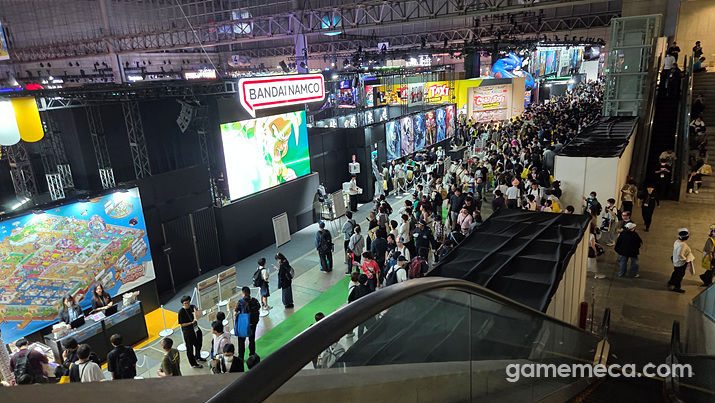
Seven years ago, Gamemeca published a column titled "G-STAR should torment reporters, too." The catalyst was the countless PR emails from overseas game companies that flooded the reporter's inbox ahead of a 2019 E3 business trip.
Back then, registering as media for E3 meant a reporter's email details were shared with all participating companies, resulting in a deluge of emails even before the event kicked off. From developers eager to introduce fresh titles and publishers begging for booth demos, to PR managers angling for developer interviews, the variety was staggering. Even smaller outfits one had never heard of managed to set up on-site meetings with journalists via email, naturally creating opportunities for brand-new games to gain at least an extra splash of press coverage.
At the time, Gamemeca suggested that G-STAR should also actively bridge the gap between media and exhibitors. Big publishers can easily draw reporters in on their own, but smaller developers simply cannot afford that luxury. And so, seven years have flown by. Opening the inbox ahead of this year's Tokyo Game Show brings those memories rushing right back.
Starting in mid-August—roughly a month before the Tokyo Game Show doors open—Tokyo Game Show-related emails began trickling in at two or three a day, eventually piling up to nearly 50 messages. The subject lines uniformly bore '[TGS2026] 出展社プレスリリース', meaning 'Exhibitor Press Release.' The contents varied wildly, featuring creators of pixel-art political simulations, indie and educational games, and overseas outfits whose names had never graced the reporter's screen before.
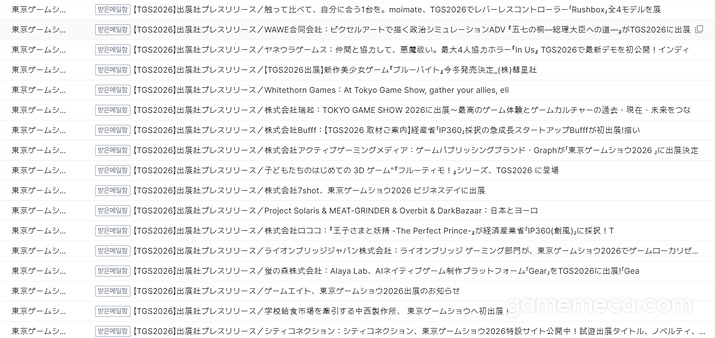
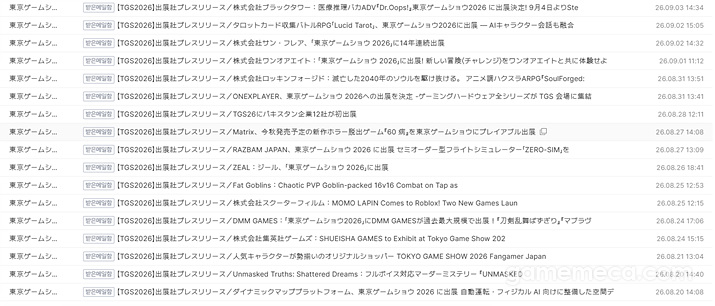
The crucial point here is that these emails do not arrive directly from individual exhibitors. Instead, when exhibitors send in their information, the Tokyo Game Show organizers bundle it up and distribute it on their behalf to registered media outlets. The official TGS 2026 website also explicitly states under its press registration guidelines that it operates a 'press release distribution' service targeting registered media.
The beauty of this system is that there is no need to hand over reporters' personal contact details to gaming companies. Only the Tokyo Game Show secretariat holds the journalists' email addresses. Exhibitors send their game descriptions and press releases to the secretariat, which then acts as a PR agency relaying the material to the press. The emails include developer and game info, booth exhibition schedules, and relevant URLs, allowing reporters to reach out directly to the relevant company representatives only if genuine interest sparks. It is a far cleaner approach regarding data privacy.
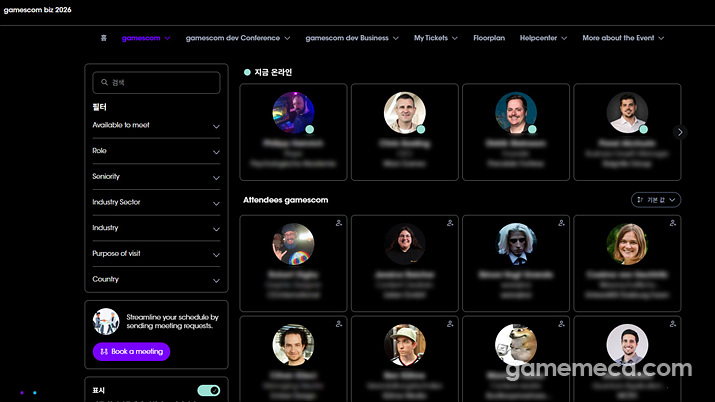
gamescom takes things a step further. It features a separate online networking space called 'gamescom biz.' Logging in reveals registered event participants organized much like a massive directory, allowing users to search for peers based on job titles, industry sectors, visit purposes, and countries. After checking out profiles, firing off a direct message is entirely possible.
A look at gamescom's official privacy policy makes the architecture even clearer. While networking participants' names, profile pictures, job titles, and company names are visible to others, actual contact information remains locked away until the recipient approves a connection request. Internal platform chat is, of course, supported at all times. Those who prefer to avoid networking can simply toggle the feature off altogether. In short, rather than spraying reporters' email addresses to game companies, gamescom constructs a space where individuals who actually want to meet can connect directly.
While the approaches of the Tokyo Game Show and gamescom differ, the common thread is undeniable: the organizers actively help exhibitors and the media discover one another. Yet, this connective tissue remains conspicuously absent at G-STAR. When asked about sharing reporter contact details with exhibitors in the past, a G-STAR representative cited privacy concerns. Whether a reporter's publicly accessible work email truly qualifies as protected personal data is certainly debatable, but if that is their stance, so be it.
Nevertheless, looking at examples like the Tokyo Game Show and gamescom, there are plenty of ways to connect media and exhibitors while fully safeguarding personal data. Organizers could intermediate by forwarding press releases like the Tokyo Game Show does, or build a networking platform where reporters and exhibitors mutually approve connections, akin to gamescom's model. More simply, during the media registration phase, they could acquire optional consent such as "Do you agree to receive editorial and PR contact from exhibitors?" or "Consent to provide email privacy to third parties (exhibiting companies)," sharing only the contact info of journalists who opt in.
What makes this all the more fascinating is that G-STAR's own privacy policy explicitly lists media registration as one of its data processing purposes and stipulates that personal data can be provided to third parties given the data subject's consent. Despite this, the complete absence of any bridging mechanism between exhibitors and reporters remains baffling.
Such mechanisms are infinitely more desperate for small-scale or indie developers than for industry giants. Major game corporations can easily liaison with reporters through their internal PR teams or external public relations agencies without any extra assistance from G-STAR organizers. From a journalist's perspective, which big companies are bringing which titles is already reasonably clear well before the event kicks off.
Conversely, the story changes entirely for a small developer running a modest one or two-booth setup tucked away in a corner of G-STAR. A foreign indie studio visiting South Korea for the first time or a tiny outfit wedged into a corner of a regional joint pavilion is virtually impossible to notice until you literally stumble past their booth. No matter how brilliantly quirky their game might be, they are left praying it happens to cross a reporter's eyes among hundreds of competing booths.
Game shows are no longer just venues meant to cram already-famous titles under a single roof. Unearthing gems you would never normally encounter is an equally vital role of any gaming exhibition. If that discovery relies entirely on blind luck, there is little reason to keep it that way. When G-STAR opens its doors this year, reporters will once again spend four days sprinting across countless booths in a frantic haze of coverage. Amidst dozens of press releases pouring in from unfamiliar developers and meeting requests arriving from foreign creators you have never heard of, things will undoubtedly get a bit bothersome.
Still, that is precisely how it should be. As a journalist, that kind of nuisance is more than welcome. A single email and meeting request dispatched by a company could drag a hidden masterpiece out from some neglected corner of G-STAR and ignite a massive wave across the industry. So, it is about time G-STAR gave reporters a bit more hassle.
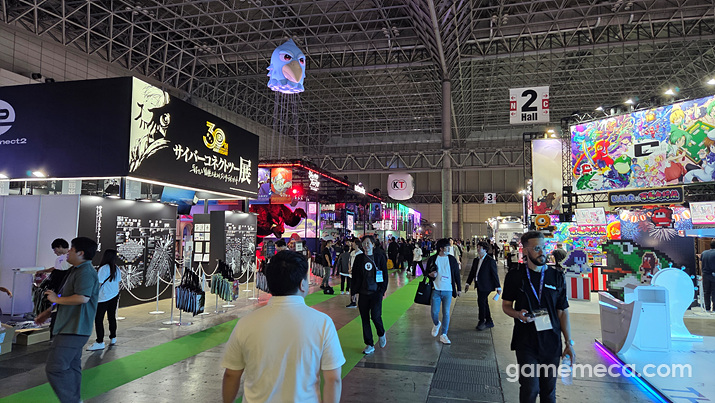
7년 전 게임메카는 ‘지스타도 기자들을 괴롭혀라’라는 칼럼을 게재했다. 2019년 E3 출장을 앞두고 기자의 메일함을 가득 채운 수많은 해외 게임사의 홍보 메일이 계기였다.
당시 E3에 미디어 등록을 하면 기자들의 메일 정보가 출전사 모두에게 공유됐고, 그 결과 행사 전부터 메일이 쏟아졌다. 신작을 소개하고 싶다는 개발사, 부스에서 게임을 시연해달라는 퍼블리셔, 개발자를 인터뷰하지 않겠느냐는 홍보 담당자까지 종류도 다양했다. 평소라면 이름조차 듣지 못했을 작은 업체였더라도 메일을 통해 기자들과 현장 미팅을 진행하기도 하고, 자연스럽게 새로운 게임이 언론에 한 차례라도 더 소개되는 계기가 됐다.
당시 게임메카는 지스타도 미디어와 출전사를 적극적으로 이어줘야 한다고 제안했다. 대형 게임사는 알아서 기자들이 찾아오지만, 작은 게임사는 그렇지 못하기 때문이다. 그리고 7년이 흘렀다. 올해 도쿄게임쇼를 앞두고 메일함을 열어보니 7년 전의 기억이 다시 떠오른다.
도쿄게임쇼가 열리기 약 한 달 전인 8월 중순부터, 메일에는 도쿄게임쇼 관련 메일이 하루에 2~3개씩 도착했고 어느샌가 약 50개에 달하는 메일이 쌓여 있었다. 메일 제목에는 한결같이 '[TGS2026] 出展社プレスリリース', 즉 ‘출전사 프레스 릴리스’가 붙었다. 픽셀아트 정치 시뮬레이션을 만드는 곳, 인디게임과 교육용 게임, 생전 처음 이름을 들어보는 해외 업체까지 내용도 제각각이다.
중요한 점은 이 메일이 개별 출전사에서 직접 날아온 것이 아니라는 것이다. 출전사가 정보를 보내면 도쿄게임쇼 주최 측에서 이를 취합해 등록 언론에 대신 전달하는 형태다. TGS 2026 공식 홈페이지 역시 프레스 등록 안내에서 등록 언론을 대상으로 ‘프레스 릴리스 배포’를 운영한다고 명시하고 있다.
이 방식의 장점은 게임사에 기자 개인정보를 넘겨줄 필요가 없다는 것이다. 기자의 이메일 주소는 도쿄게임쇼 사무국만 가지고 있다. 출전사는 자기 게임 소개나 소식 보도자료를 사무국에 보내고, 사무국이 이를 기자에게 전달하는 홍보대행 역할을 맡는다. 메일에는 개발사 및 게임 정보, 부스 전시 일정, 관련 정보 URL 등이 포함돼 있고, 기자가 관심이 있으면 그때 해당 업체 관계자에게 직접 연락하면 된다. 개인정보 보호 측면에서도 훨씬 깔끔하다.
게임스컴은 한 발 더 나간다. 게임스컴에는 ‘게임스컴 비즈(gamescom biz)’라는 별도의 온라인 네트워킹 공간이 있다. 들어가 보면 등록한 행사 참가자들이 하나의 거대한 인명록처럼 정리돼 있고, 직책과 업종, 방문 목적, 국가 등을 기준으로 상대를 찾을 수 있다. 프로필을 확인한 뒤 메시지를 보내 연락하는 것이 가능하다.
게임스컴 공식 개인정보 안내를 보면 구조가 더욱 명확하다. 네트워킹 참여자의 이름과 프로필 사진, 직책, 회사명 등은 상대가 볼 수 있지만 실제 연락처는 연결 요청을 받은 사람이 이를 승인한 뒤에야 공개된다. 물론 플랫폼 내부 채팅도 언제든 지원한다. 네트워킹을 원치 않는 사람은 해당 기능 자체를 끌 수도 있다. 즉, 게임스컴은 기자 이메일 주소를 게임사에 뿌리는 대신 서로 만나고 싶은 사람이 직접 연결되는 공간을 만들어 놓았다.
도쿄게임쇼와 게임스컴의 방법은 서로 다르지만, 공통점은 분명하다. 주최 측이 출전사와 미디어가 서로를 발견하도록 돕는다는 것이다. 그러나 지스타에서는 이 연결고리가 여전히 없다. 지스타 관계자는 과거 기자 연락처를 출전사와 공유하는 방안에 대해, 개인정보 보호 관련 문제가 있다는 설명을 했다. 사방에 오픈되어 있는 기자의 업무용 메일이 개인정보 보호 대상인지에 대해서는 의문이지만, 어쨌든 그렇게 생각한다면 어쩔 수 없다고 본다.
다만, 도쿄게임쇼와 게임스컴 등의 사례를 보면, 개인정보는 보호하면서 언론과 출전사를 연결해줄 방법은 얼마든지 있다. 도쿄게임쇼처럼 사무국이 중간에서 보도자료를 전달하거나, 게임스컴처럼 네트워킹 플랫폼을 만들고 기자와 출전사가 서로 연결을 승인하도록 해도 된다. 더 단순하게는 미디어 등록 단계에서 ‘출전사의 취재·홍보 연락 수신에 동의하십니까’, '메일 개인정보 제3자(출전업체) 제공' 같은 선택적 동의를 얻고 동의한 기자들의 연락처만 공유하는 방법도 생각할 수 있다.
흥미로운 점은 지스타의 개인정보 처리방침에서는 기자등록을 개인정보 처리 목적 가운데 하나로 명시하고 있으며, 정보주체의 동의 등이 있는 경우 개인정보를 제3자에게 제공할 수 있다고 규정하고 있다는 것이다. 그럼에도 불구하고 출전사와 기자 사이에 아무 연결 장치도 만들지 않고 있다는 점은 납득하기 어렵다.
이런 장치는 큰 게임사보다 중소, 혹은 인디게임사에 훨씬 절실하다. 대형 게임사는 지스타 주최 측이 별도의 도움을 주지 않아도 자체 홍보팀이나 홍보대행사 등을 통해 기자들과 연락할 수 있다. 기자 입장에서도 어느 대형 업체가 어떤 게임을 들고 나오는지는 행사 전부터 어느 정도 파악한다.
반면 지스타 한쪽에 한두 개 부스를 낸 작은 개발사라면 이야기가 다르다. 처음 한국에 온 해외 인디 개발사나 학생팀, 지역 공동관 한구석에 자리 잡은 작은 스튜디오는 부스 앞을 지나가기 전까지 존재 자체를 알기 어렵다. 게임이 아무리 독특해도 수백 개 부스 가운데 기자의 눈에 우연히 들어오기를 기다려야 한다.
게임쇼는 이미 유명한 게임만 한곳에 모아놓는 행사가 아니다. 평소에는 만나지 못할 게임을 발견하게 하는 것도 게임쇼의 중요한 역할이다. 그렇다면 그 ‘발견’을 전적으로 우연에 맡길 이유도 없다. 올해도 지스타가 열리면 기자들은 나흘 동안 수많은 부스를 뛰어다니며 정신없이 취재할 것이다. 그 와중에 처음 듣는 개발사의 보도자료까지 수십 통 날아오고, 모르는 해외 개발자에게 미팅 요청까지 들어온다면 분명 귀찮기는 할 것이다.
하지만 그게 옳다. 기자라면 그런 귀찮음은 얼마든지 대환영이다. 업체에서 기자들에게 보내는 메일 한 통과 미팅 요청 하나가, 지스타 한구석에 숨어 있던 게임 하나를 세상 밖으로 끌어내 커다란 반향을 일으킬 수도 있다. 그러니 지스타도 이제 기자들을 좀 더 괴롭힐 때가 됐다.
This news was translated by AI.

I will greet you with a good article. niro201@gamemeca.com
READ MORE


MOST POPULAR NEWS
- Popup events to be held in Dongdaemun and Yongsan to celebrate the release of Liftbound
- [Today's steam] Animorphs officially released, recording 100,000 Concurrent Players
- GTA 6 Online to support up to 32 players, confirmed through lawsuit documents
- [Today's steam] Normalized new FPS Wardogs surpasses 420,000 Concurrent Players
- An Ensemble Drama with Four Heroes, Fire Emblem Mazachanhong
- Gathering Cheonhwi and Slowly Falling for the Charm of 'Animo'
- [Today's steam] PC version of The War of Genesis Raising achieves 30,000 Concurrent Players
- What is the recently popular indie game genre 'DB Thriller'?
- [Photo] How does Riftbound captured in cards look?
- [TGS 26] A world breathing with the Nexon Games style, Pareidolia
MEDIA PARTNERSHIPS



GAMEMECA SNS