
Hacking Spreading via AI, Gaming Industry Breached One After Another
AI 타고 번지는 해킹, 게임업계도 줄줄이 뚫렸다
2026.11.03 17:48 UTC+9

AI Summary
The gaming industry faces a severe wave of security breaches.
AI tools are drastically accelerating cyber vulnerability scans.
Outsourced vendor networks create major blind spots for firms.
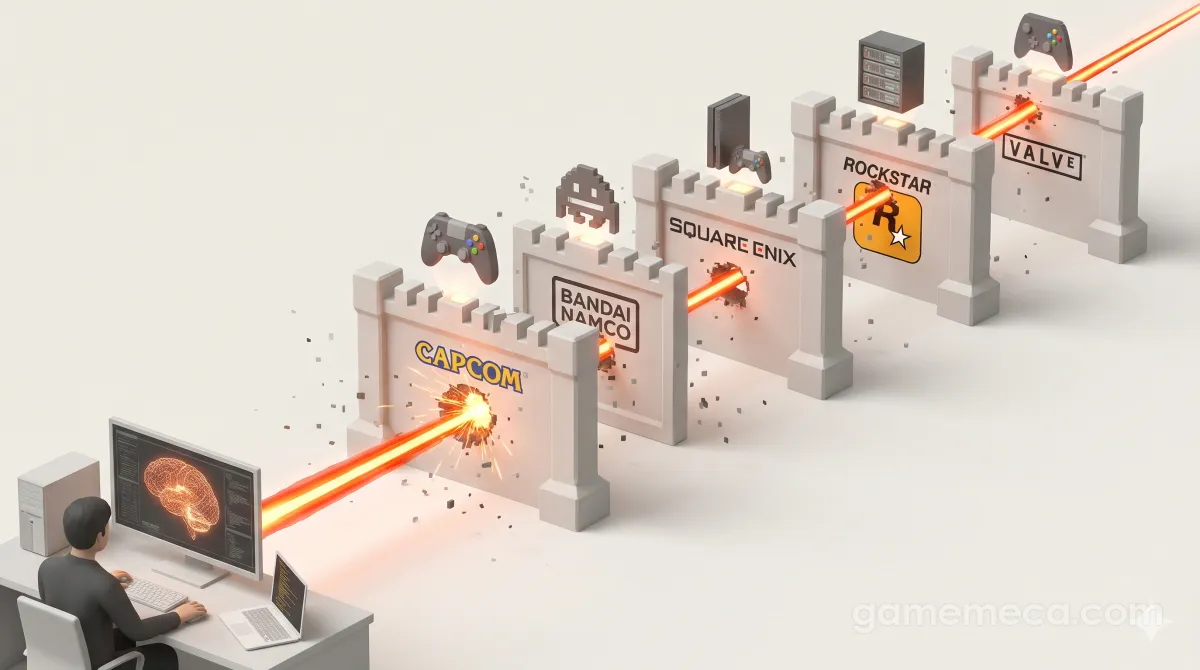
Last October was a rough month for corporate security in Japan, to put it mildly. On October 8th, JPCERT, a non-profit cyber incident response organization in the country, issued an unusual alert regarding a wave of unauthorised access leading to data leaks across domestic organisations. With breaches involving leaks in the tens of millions, Prime Minister Sanae Takaichi stepped in during a cabinet meeting on October 26th, instructing officials to cooperate with overseas authorities and global tech giants to track down the attackers and swiftly patch the vulnerabilities.
Naturally, the bleeding didn't stop outside the gaming sector. Game developers, publishers, merchandise stores, and digital storefronts all admitted to falling victim. And this is hardly just a Japanese phenomenon; throughout 2026, the Western and South Korean gaming industries have been battered by similar breaches.
Capcom leaks hit 11.77 million, while Bandai Namco and Bushiroad fall via third-party vendors
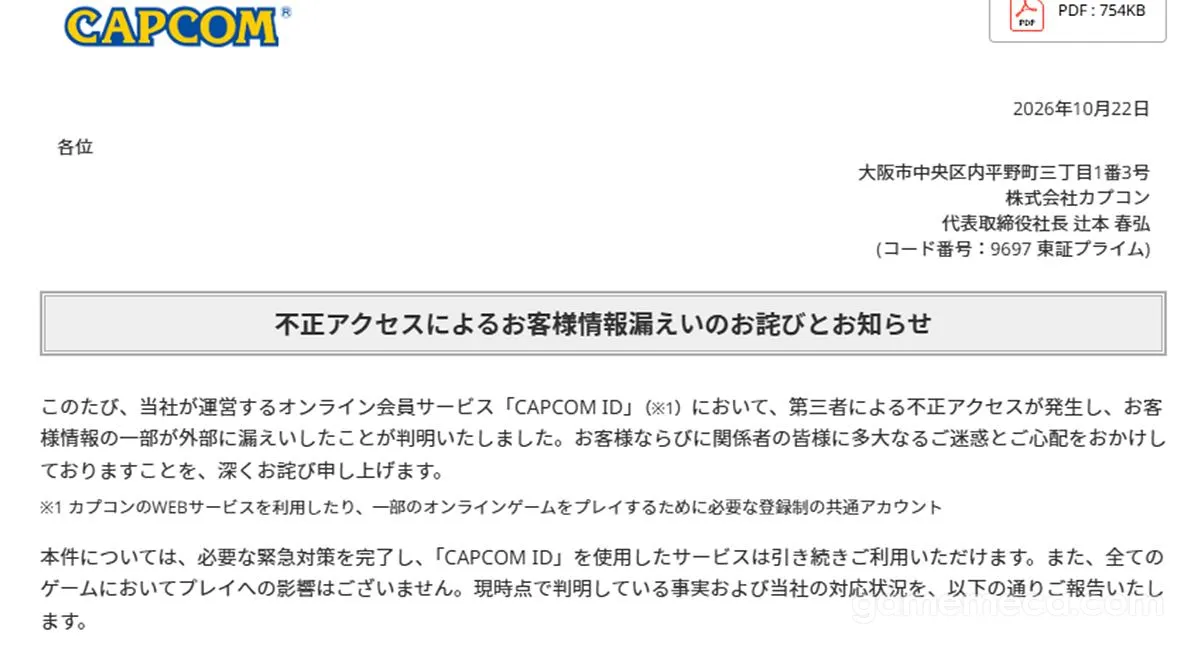
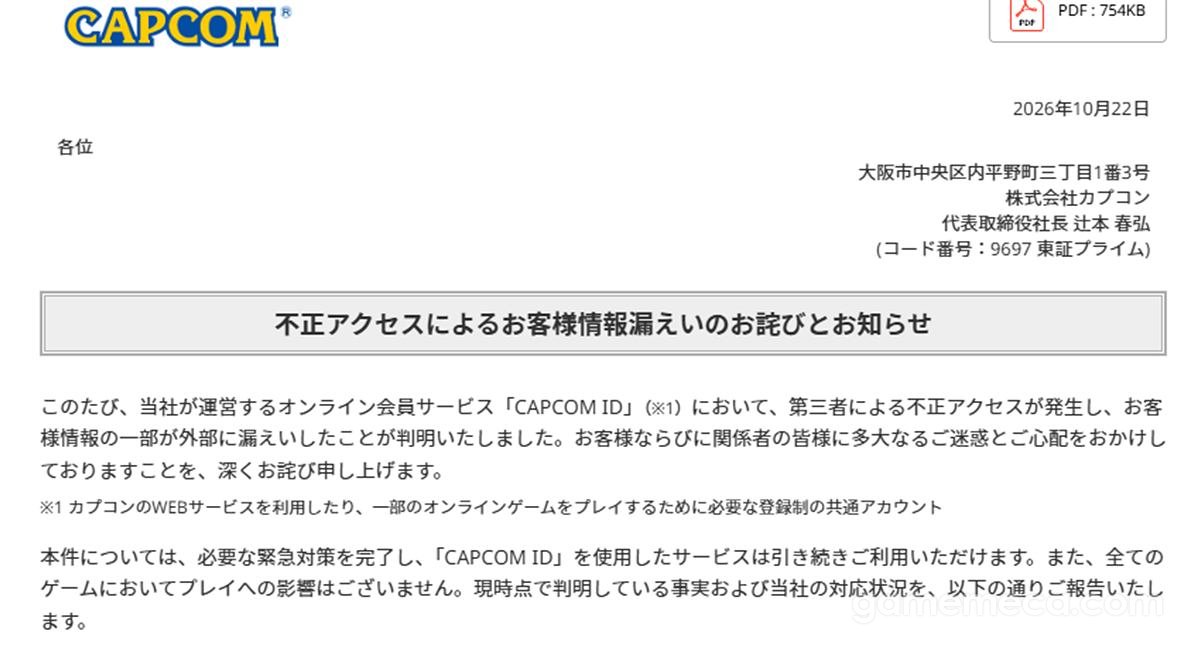
Capcom took the heaviest blow of all. In an official announcement on October 22nd, the company revealed that its unified account service, Capcom ID, had suffered unauthorised third-party access. Identifying info including email addresses, account creation dates, last login timestamps, and connection IPs for 11.77 million users worldwide were compromised. For 43 of those accounts, even birth dates, genders, countries, and nicknames were leaked.
The damage went well beyond mere data exposure. Unauthorised actors managed to change passwords on 196 accounts, and 19 of those intrusions reached deep into the 'e-Capcom' official online store's My Page, exposing names, addresses, and purchase histories. Capcom spotted the intrusion on October 19th and reported it to the police and the Personal Information Protection Commission in Japan on the 21st. It marks their first major security crisis in six years, following the 2020 ransomware incident.
Bandai Namco took hits twice through external partners. On October 27th, the company announced that Yumirink, the vendor handling 'Bandai Namco ID' mail services, was breached, leaking the email addresses of 346,247 members of 'The Gundam Base Members' Gunpla store service. Just a day prior on the 26th, logistics subsidiary Bandai Logipal System suffered unauthorised access, warning that shipping details (names, addresses, phone numbers) for 'Ichiban Kuji Online' may have been compromised.
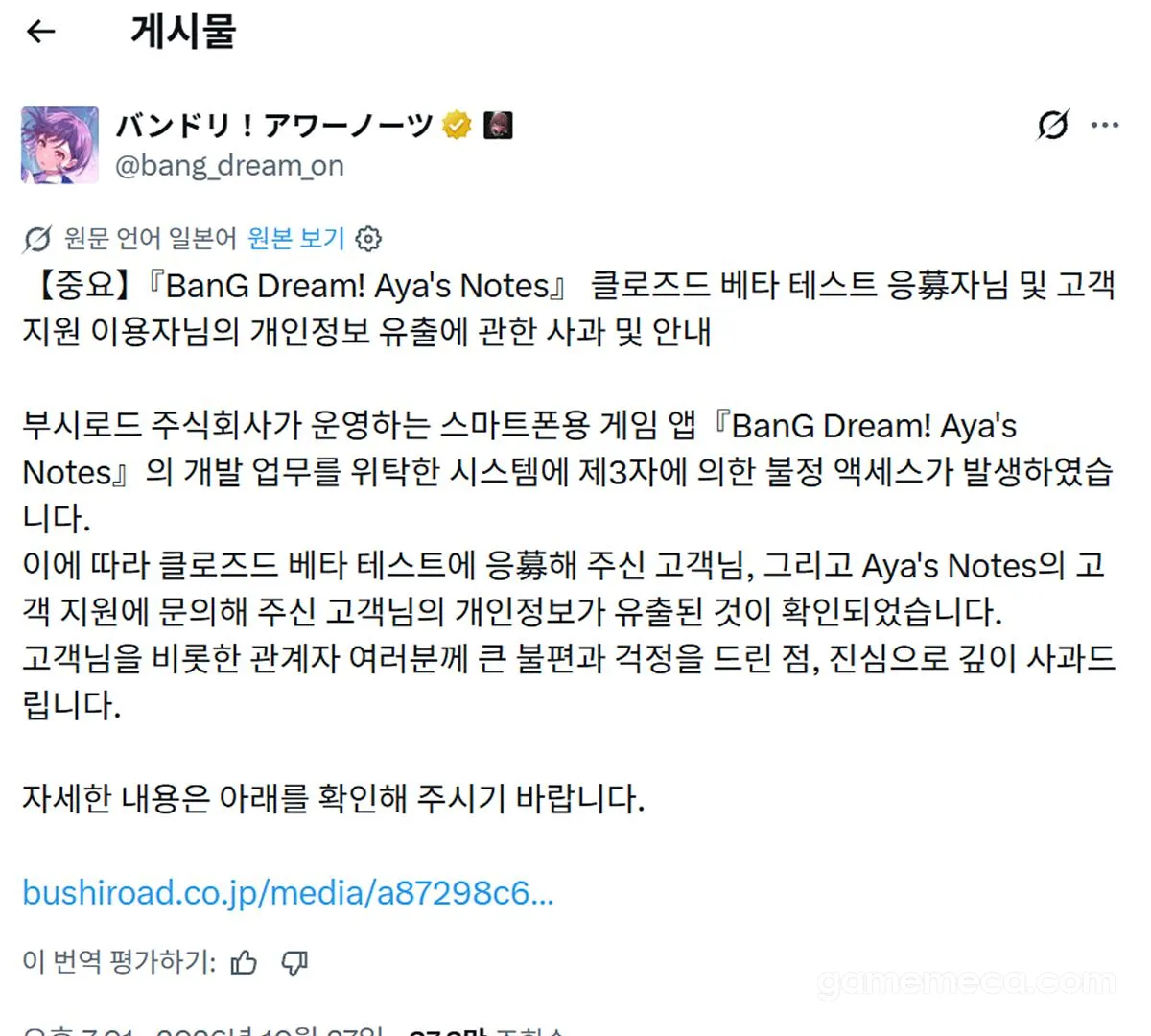
Bushiroad acknowledged a breach on that exact same day. The development partner system for 'BanG Dream! Our Notes' was hit by unauthorised access, leaking personal data such as phone numbers and addresses for roughly 13,000 closed beta applicants and customer support users.
Square Enix dealt with a slightly different flavour of security trouble. On October 19th, the company announced via the 'Final Fantasy 14' official site that it detected unauthorised logins to 'Square Enix accounts' using combinations of IDs and passwords likely leaked from entirely separate platforms. While their own database wasn't breached, credentials leaked elsewhere were weaponised directly against player accounts.
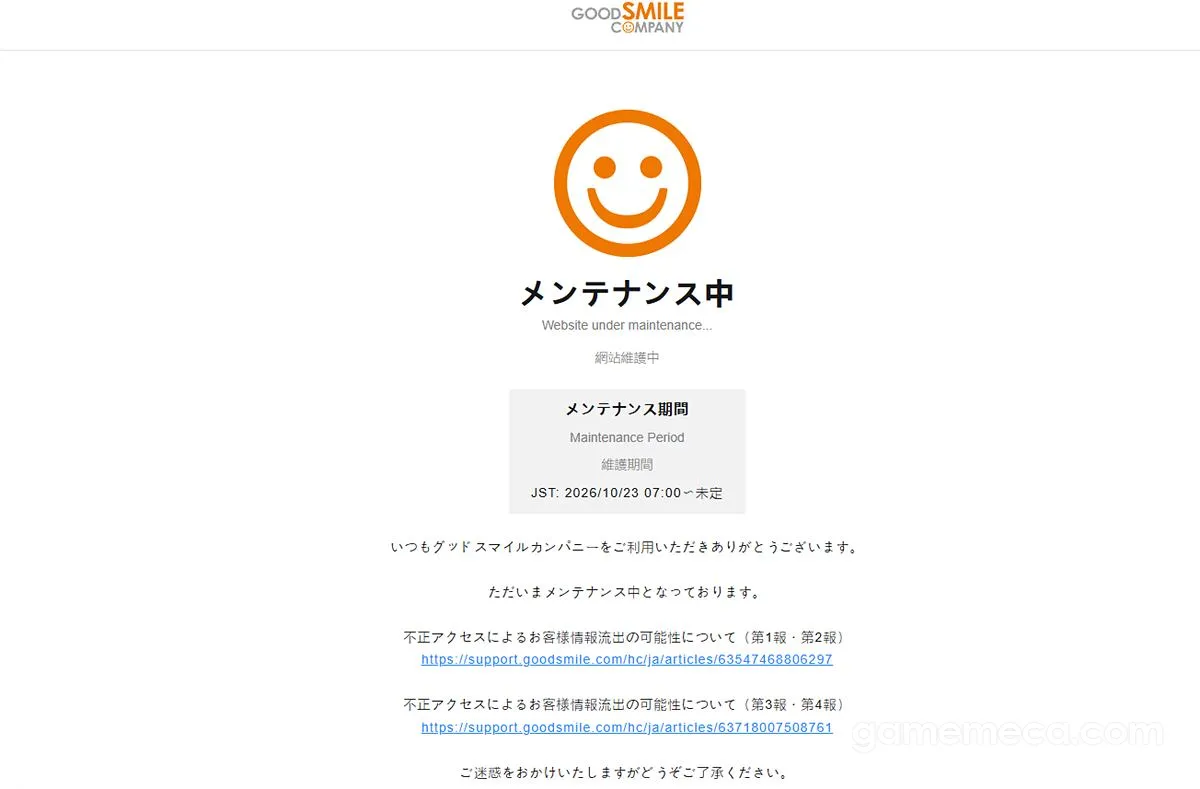
Merchandise retailers couldn't dodge the bullet either. Figure maker Good Smile Company saw its official online shop compromised. Between October 19th and 22nd, third parties repeatedly accessed member info through unauthorised logins. From the afternoon of the 21st until the site was pulled offline on the morning of the 23rd, malicious code was even planted right on the credit card checkout page. The company explained that administrator privileges were hijacked via a system vulnerability. Roughly 2,800 people may have had their 16-digit card numbers and security codes leaked, and the web shop remains shut down since the 23rd.
The West is not exempt: Rockstar, Valve, and Warhorse
Western studios have spent the entire year grappling with security breaches as well. Rockstar Games, gearing up for the launch of 'GTA 6', was targeted by a hacking group back in April. The attackers claimed they breached cloud storage through Anodot, a cloud cost analytics service utilised by Rockstar. Rockstar acknowledged that a limited amount of non-sensitive company data was accessed in connection with a third-party leak. By mid-April, the group dumped roughly 78.6 million lines of analytics data, though player accounts and game source code were reportedly untouched.
Valve reported in August that European Steam hardware buyer data was leaked. CEVA Logistics, handling European deliveries, came under attack in late July, exposing names, addresses, phone numbers, Steam emails, and order histories, though passwords and payment details thankfully remained safe.
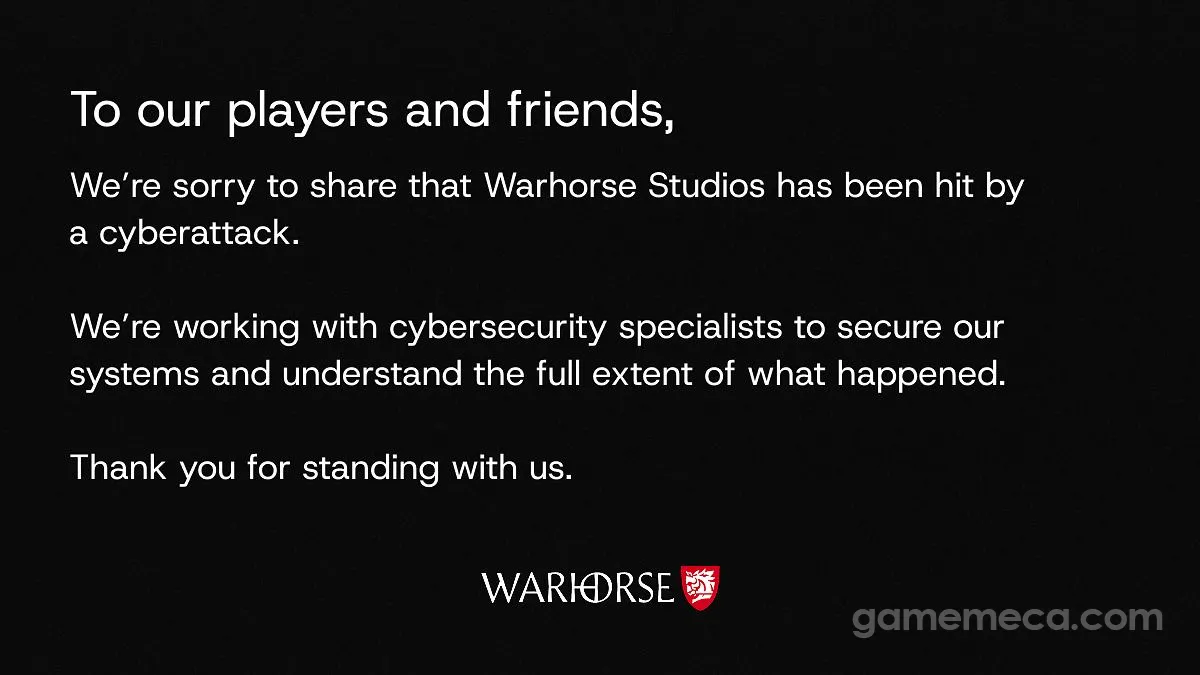
Late October brought bad news for Warhorse Studios, the developer behind 'Kingdom Come: Deliverance'. Warhorse announced on October 27th that there had been unauthorised access to internal systems and company data. CEO Martin Frývaldský stated that this is a serious incident for both the company and everyone affected. The firm is investigating alongside security experts and cooperating closely with authorities. Warhorse is currently developing the next 'Kingdom Come' alongside an open-world Lord of the Rings RPG.
Some hacks even shook up the gameplay experience directly. In late December of last year, Ubisoft's 'Rainbow Six Siege' suffered an intrusion where a hacker broke into game servers and showered players with billions of in-game 'R6 Credits'. Rare items that are normally a pain to unlock were handed out freely, and some accounts were inexplicably banned and then unbanned. Ubisoft acknowledged the security blunder and temporarily took servers offline.
South Korea isn't safe either. Kakao Games announced on September 16th that personal info was leaked after its creator support program 'Partners' and remote play service 'RINK' fell victim to external attacks exploiting system vulnerabilities. Meanwhile, Wemade's Wemix Foundation disclosed on July 26th that roughly 5.22 million 'Wemix Dollars' stablecoins were minted without authorisation. The foundation explained that attacker hijacked admin privileges by exploiting a vulnerability left over from a 2022 upgrade.

Is AI to blame? Spotting vulnerabilities has never been easier
So why the sudden surge in hacks? While no attacker has formally raised their hand to say 'AI did it,' all the circumstantial evidence points squarely in that direction. JPCERT noted in its analysis that an examination of the attack servers presumably used in Japan's wave of leaks revealed that the bad actors used AI to scan known vulnerabilities and launched attacks via APIs. They dissected Android application package (APK) files to locate server-communicating APIs before probing for weaknesses.
Experts point out that AI has effectively lowered the barrier to entry for cyberattacks. Back in the day, finding a single vulnerability required skilled hackers to tear down apps, analyse network traffic, write custom exploit code, and test things one by one. Given the heavy investment of time and manpower, attackers naturally focused on high-value targets, leaving smaller services or those with minor sensitive data relatively unbothered. Now, however, AI handles a massive chunk of that heavy lifting. Deconstructing apps to unearth APIs and automatically scanning for known flaws has become infinitely faster and cheaper.
It is a fundamental shift in the balance of power between attackers and defenders. While defenders have to plug every single hole across countless systems, attackers only need to find one weak spot. AI has vastly expanded the scope and speed at which attackers can sweep for targets, and corporate patch cycles simply cannot keep up with that pace. The Japanese government has asked companies like Anthropic and OpenAI to broaden access to advanced AI models specifically for vulnerability detection—a clear admission that fighting AI-accelerated attacks requires AI defence.

Just how rapidly AI can uncover vulnerabilities was painfully demonstrated during the late October 'PHP' crisis. Two critical vulnerabilities allowing unhandled remote code execution on servers were discovered in PHP, the programming language underpinning countless websites. The real kicker was that this intelligence leaked ahead of the official patch release. While PHP maintainers rushed out a fixed version on the night of October 21st (Korea time) a day ahead of schedule, attack attempts were already underway. Amazon caught wind of exploit attempts four days prior to disclosure, and Cloudflare reported that malicious requests spotted across its network immediately following the reveal skyrocketed into the millions.
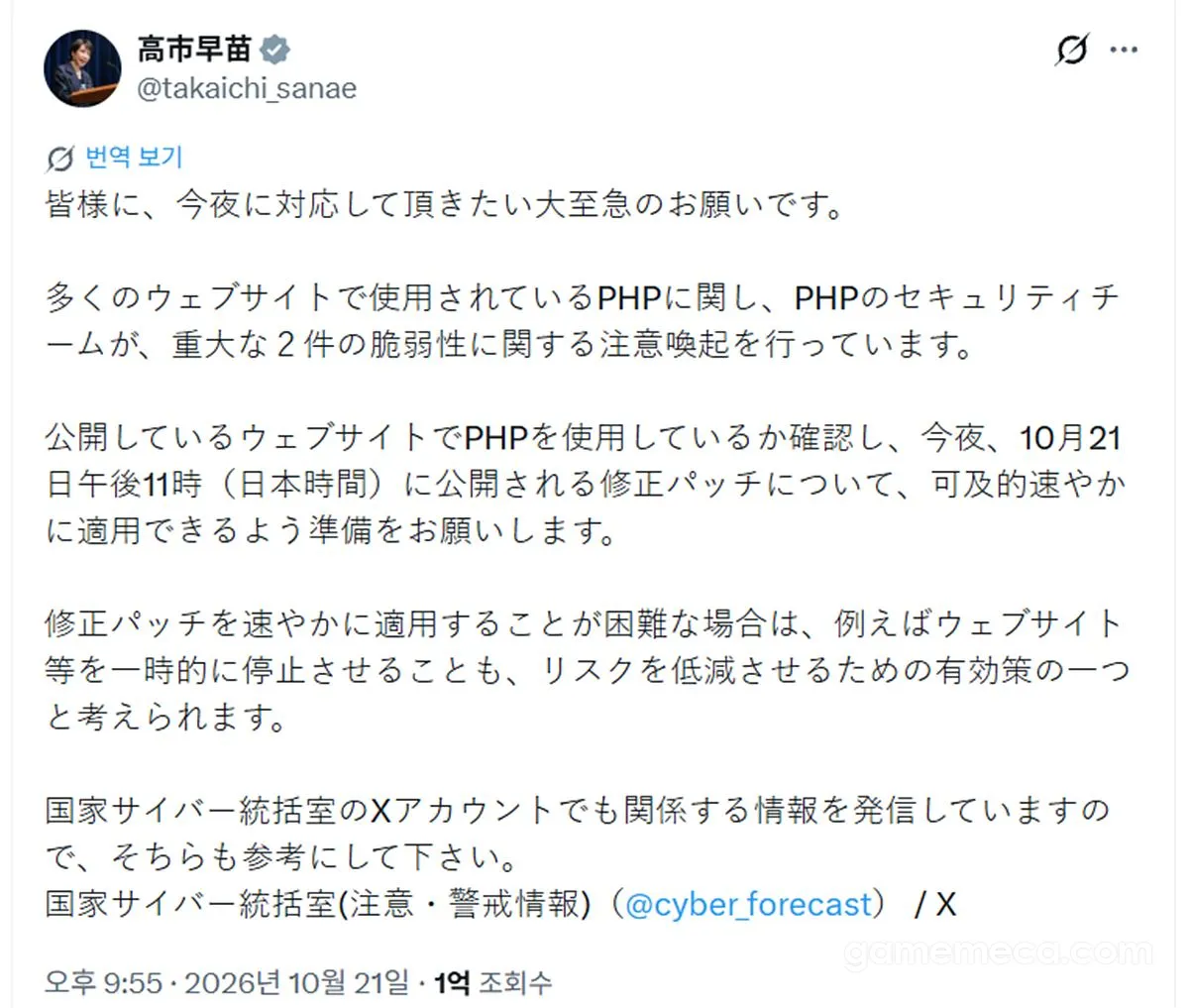
Japan, already battered by ongoing security breaches, went into absolute panic mode over the PHP incident. Prime Minister Takaichi posted an urgent plea on X demanding action by the end of the night, prompting numerous organisations—ranging from banks and local governments to online retailers—to pull the plug on their services as a precautionary measure ahead of the patch. In the gaming space, Cygames temporarily shut down 'Umamusume: Pretty Derby' and 'Granblue Fantasy', while Sega temporarily closed Sega ID and its arcade rhythm game member sites.
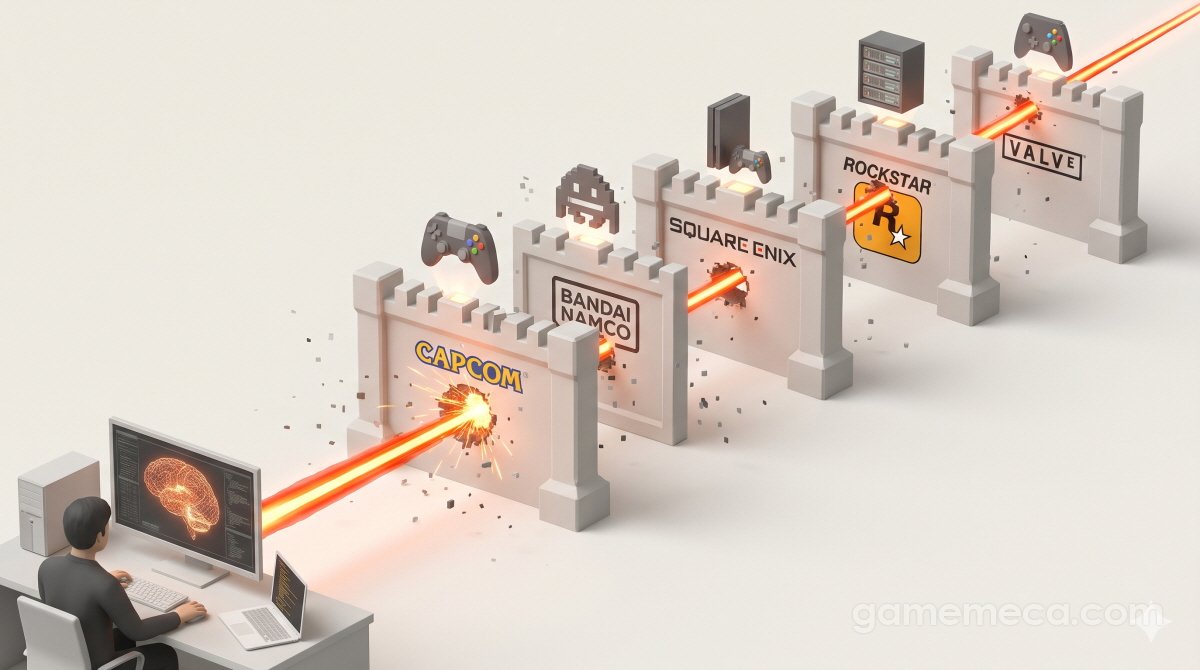
Meanwhile, a glaring common thread running through these gaming industry incidents is the reliance on 'third-party vendors'. Rockstar (Anodot), Valve (CEVA), Bandai Namco (Yumirink), and Bushiroad (development contractor) all saw their outer defences breached through external partners or subsidiaries rather than main headquarters. It ties directly into the rising trend of attackers using AI to rapidly hunt down the weakest links in a supply chain.
Game companies are prime targets for hackers by default, hoarding user profiles, payment details, and unreleased development assets. The core issue is that outsourcing inherently creates blind spots. Companies hand tasks over to external vendors either to tackle workloads they cannot manage internally or to cut costs. Naturally, it is rarely straightforward for a headquarters to directly audit and control a vendor's security posture. As collaborative networks expand, the attack surface expands right along with them. Now that AI has cheapened the cost of vulnerability hunting, experts argue that companies need systems capable of governing external vendors and services just as fiercely as headquarter security—though making that happen is going to be an uphill battle.
지난 10월 일본에서 기업 해킹 피해가 줄을 이었다. 일본 사이버 침해 대응 비영리 기관 JPCERT는 10월 8일, 국내 조직에서 부정 접속에 의한 정보 유출이 잇따르고 있다며 이례적인 주의보를 냈다. 1,000만 건 단위 유출도 포함됐으며, 상황이 심각해지자 다카이치 사나에 일본 총리는 10월 26일 각료회의에서 해외 당국·글로벌 IT 기업과 공조해 공격자를 특정하고 취약점을 신속히 해결하라고 지시했다.
불길은 게임업계로도 번졌다. 게임 개발사와 퍼블리셔는 물론, 관련 상품을 판매하는 쇼핑몰과 게임 판매·거래 사이트까지 줄줄이 피해 사실을 인정했다. 이는 일본뿐만이 아니다. 2026년 한 해 동안 서양과 한국 게임업계에서도 해킹 피해가 잇따랐다.
캡콤 1,177만 건, 반다이남코·부시로드는 위탁사 통해 뚫려
가장 큰 피해를 입은 곳은 캡콤이다. 캡콤은 10월 22일 공식 발표를 통해 통합 계정 서비스 '캡콤 ID'가 제3자의 부정 접속을 당했다고 밝혔다. 전 세계 1,177만 4,247건의 이메일 주소와 계정 생성일, 최종 로그인 일시, 접속 IP 등 식별 정보가 유출됐다. 이 중 43건은 생년월일·성별·국가·닉네임까지 빠져나갔다.
피해는 유출에서 끝나지 않았다. 196개 계정은 제3자가 비밀번호를 무단으로 바꿨다. 이 가운데 19건은 캡콤 공식 통판 'e-캡콤' 마이페이지까지 침입당해 이름, 주소, 구매 이력이 노출됐다. 캡콤은 10월 19일 침입 흔적을 발견했고, 21일 경찰과 일본 개인정보보호위원회에 보고했다. 2020년 랜섬웨어 피해 이후 6년 만의 대형 사고다.
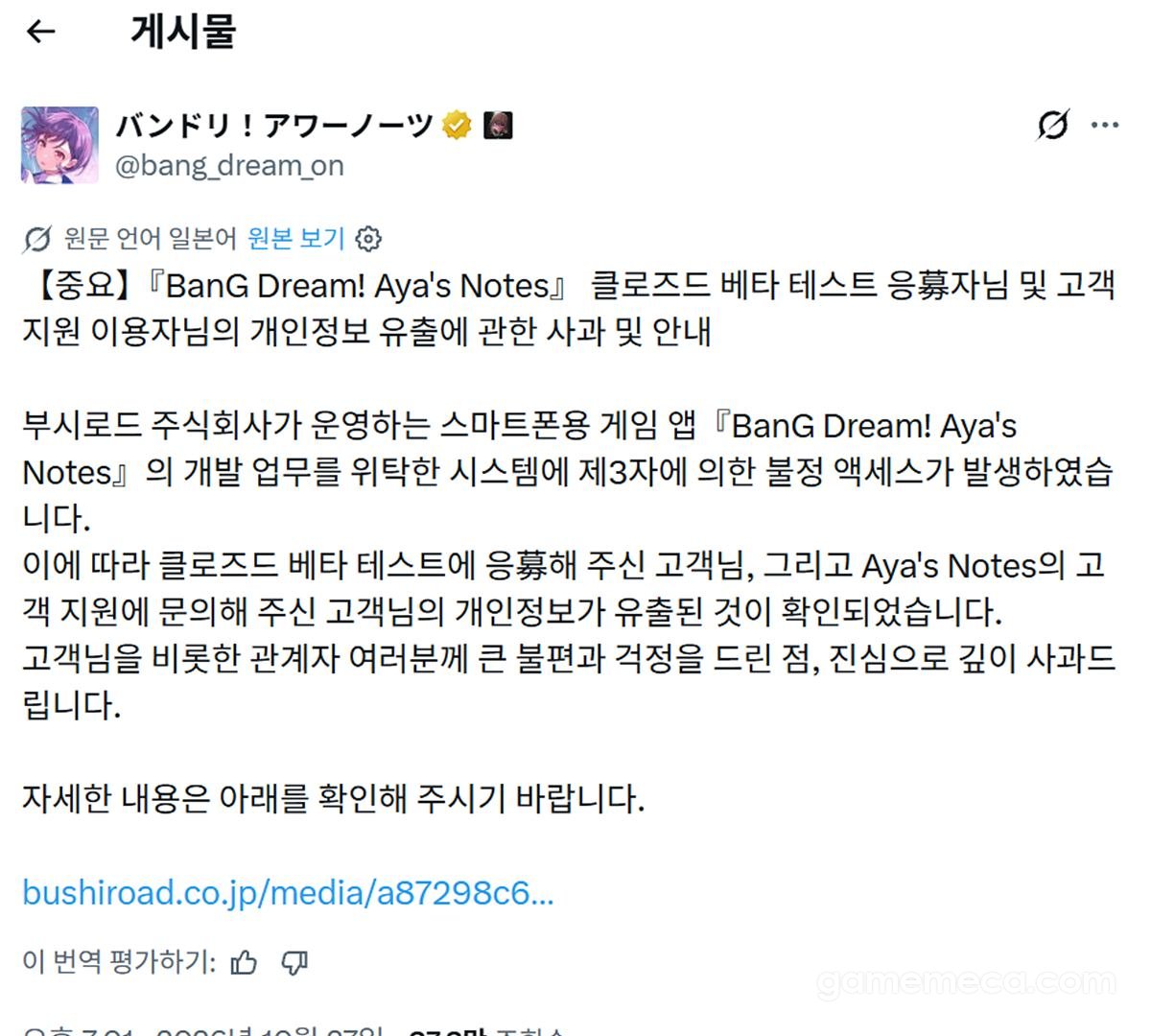
반다이남코는 위탁사를 통해 두 차례 피해를 입었다. 10월 27일에는 '반다이남코 ID' 메일 서비스 위탁사 유미르링크가 해킹당하며, 건프라 매장 회원 서비스 '더 건담 베이스 멤버스' 회원 34만 6,247명의 이메일 주소가 유출됐다고 발표했다. 하루 앞선 26일에는 물류 자회사 반다이 로지팔 시스템이 부정 접속을 당해 '이치방쿠지 온라인' 배송 정보(이름·주소·전화번호)가 유출됐을 가능성이 있다고 밝혔다.
부시로드도 같은 날 피해를 인정했다. '뱅드림! 아워 노츠' 개발 위탁사 시스템이 부정 접속을 당해 비공개 테스트 응모자와 고객지원 이용자 약 1만 3,000명의 전화번호·주소 등 개인정보가 유출됐다.
스퀘어 에닉스의 경우 결이 조금 다르지만 해킹 관련 피해를 입었다. 10월 19일 '파이널 판타지 14' 공식 사이트를 통해, 다른 회사에서 유출된 것으로 보이는 아이디·비밀번호 조합으로 '스퀘어 에닉스 계정'에 부정 로그인한 사례를 확인했다고 밝혔다. 자사 DB가 뚫린 것은 아니지만, 다른 곳에서 새어 나간 정보가 게임 계정 공격으로 이어진 셈이다.
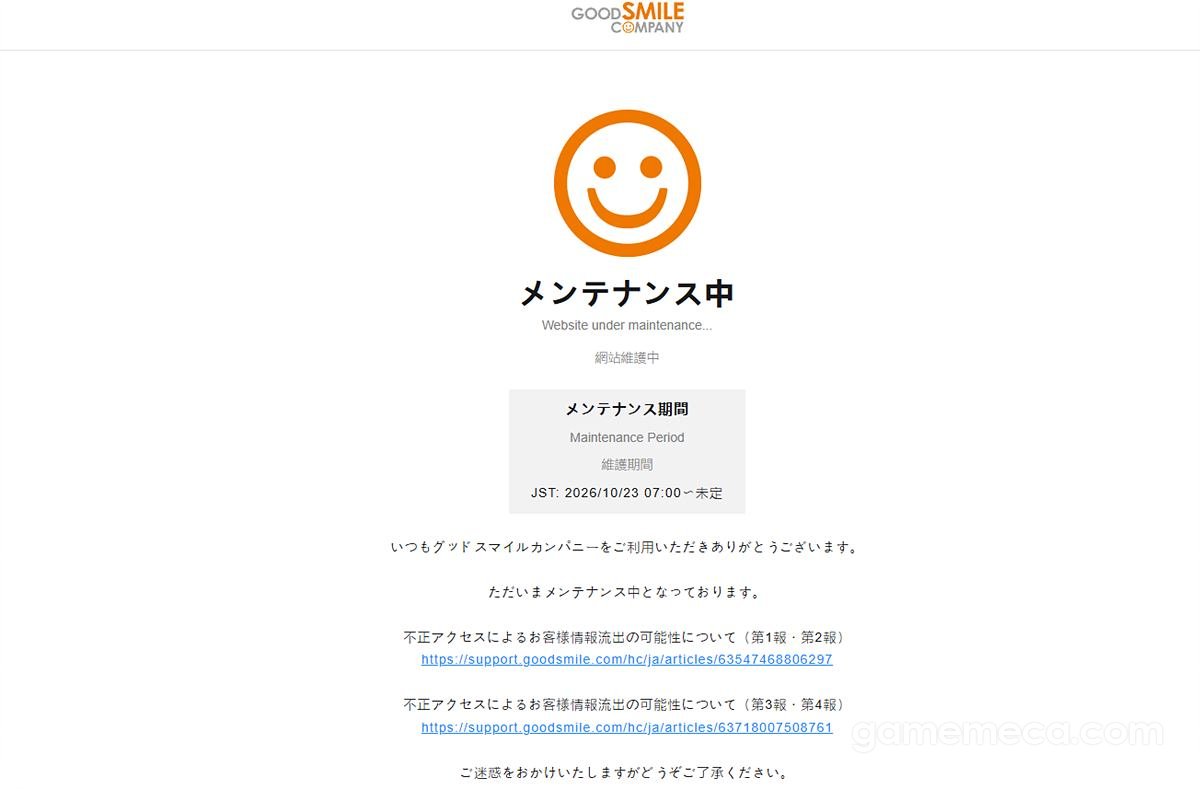
게임 관련 상품을 파는 곳도 피해를 피하지 못했다. 피규어 업체 굿스마일컴퍼니는 공식 쇼핑몰이 뚫렸다. 10월 19일부터 22일까지 제3자가 부정 접속해 회원 정보를 여러 차례 열람했다. 21일 오후부터 사이트를 닫은 23일 아침까지는 카드 결제 페이지에 악성 프로그램까지 심어져 있었다. 회사는 시스템 취약점을 통해 관리자 권한을 탈취당했다고 설명했다. 약 2,800명은 카드 번호 16자리와 보안코드까지 유출됐을 가능성이 있다. 쇼핑몰은 23일부터 폐쇄된 상태다.
서양도 예외 없다, 락스타·밸브·워호스
서양 게임업계도 올해 내내 해킹에 시달렸다. 'GTA 6' 출시를 앞둔 락스타 게임즈는 4월 해커 그룹의 공격을 받았다. 그들은 락스타가 쓰던 클라우드 비용 분석 서비스 아노닷(Anodot)을 통해 클라우드에 침투했다고 주장했다. 락스타는 제3자 유출과 관련해 중요하지 않은 회사 정보 일부에 접근이 있었다고 인정했다. 이후 해커 그룹은 4월 중순 약 7,860만 건의 분석 데이터를 공개했다. 플레이어 계정이나 게임 소스코드는 포함되지 않은 것으로 알려졌다.
밸브는 8월 유럽 스팀 하드웨어 구매자 정보가 유출됐다고 알렸다. 유럽 배송을 맡은 물류사 CEVA 로지스틱스 가 7월 말부터 공격을 받으면서 이름·주소·전화번호·스팀 이메일·주문 내역이 노출됐다. 비밀번호와 결제 정보는 해당되지 않는다.
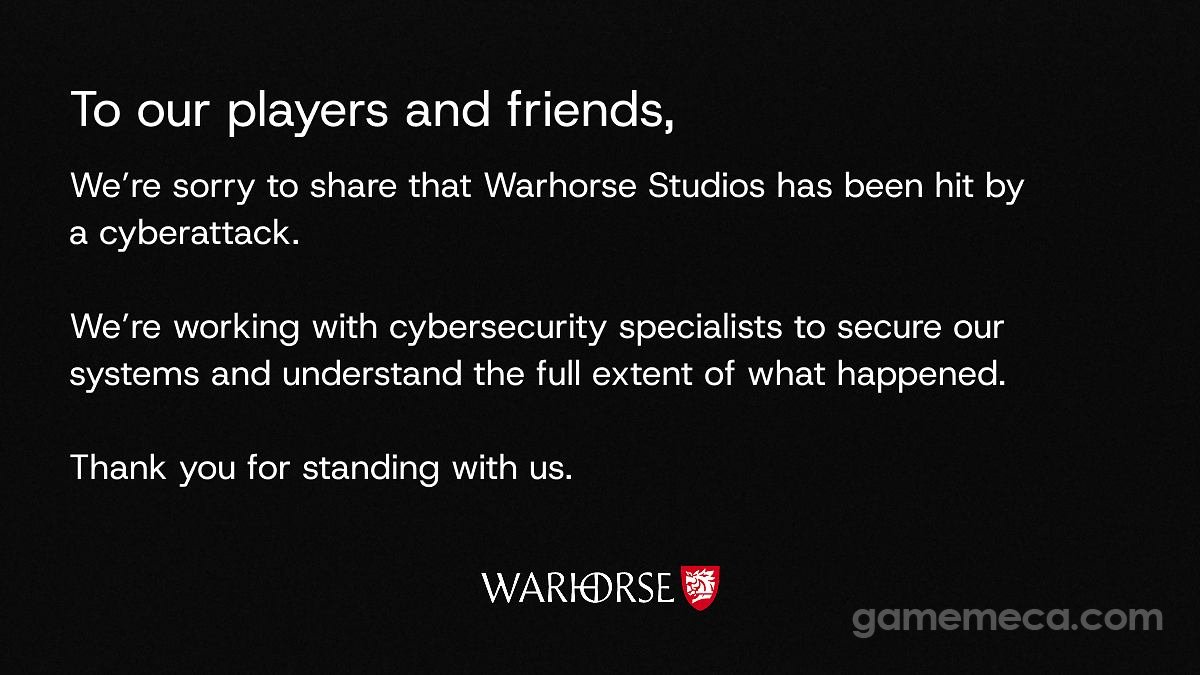
10월 말에는 '킹덤 컴: 딜리버런스' 개발사 워호스 스튜디오가 당했다. 워호스는 10월 27일 사내 시스템과 회사 데이터에 무단 접근이 있었다고 발표했다. 마르틴 프리발드스키 CEO는 회사와 피해를 입은 모든 이에게 심각한 사건이라고 밝혔다. 회사는 보안 전문가와 함께 조사하며 당국과 협력 중이다. 워호스는 차기 ‘킹덤 컴’과 ‘반지의 제왕’ 오픈월드 RPG를 개발하고 있다.
게임 안에서 직접 판을 흔든 해킹도 있었다. 지난해 12월 말 유비소프트 ‘레인보우 식스 시즈’에서는 해커가 게임 서버에 침투해 플레이어들에게 게임 내 재화 ‘R6 크레딧'을 수십억 단위로 뿌렸다. 원래는 얻기 어려운 희귀 아이템이 풀리고, 일부 계정은 이유 없이 정지됐다가 해제되기도 했다. 유비소프트는 이를 보안 사고로 인정하고, 서버를 일시 중단했다.
한국도 안전지대는 아니다. 카카오게임즈는 9월 16일, 크리에이터 지원 프로그램 '파트너스'와 원격 플레이 서비스 ‘RINK’가 시스템 취약점을 노린 외부 공격을 받아 개인정보가 유출됐다고 공지했다. 위메이드 산하 위믹스 재단은 7월 26일 스테이블코인 '위믹스달러' 약 522만 개가 무단 발행되는 피해를 입었다. 재단은 2022년 업그레이드 당시 생긴 취약점으로 관리자 권한을 탈취당했다고 설명했다.
배경엔 AI? 취약점 찾기가 쉬워졌다
그렇다면 해킹이 왜 이렇게 늘었을까? 공격자가 AI를 썼다고 밝힌 곳은 없지만, 정황은 AI를 가리킨다. JPCERT는 분석에서, 일본 내 연쇄 유출에 쓰인 것으로 보이는 공격 서버를 조사한 결과 공격자가 AI로 알려진 취약점을 스캔하고 API를 통해 공격한 사실을 확인했다고 밝혔다. 공격자는 안드로이드 앱 설치 파일(APK)을 분석해 서버와 통신하는 API를 찾아낸 뒤 취약점을 시험했다.
전문가들은 AI가 공격의 문턱을 낮췄다고 분석했다. 예전에는 취약점 하나를 찾으려면 숙련된 해커가 앱을 뜯어보고, 서버와 주고받는 통신을 분석하고, 공격 코드를 직접 짜서 하나하나 시험해야 했다. 시간과 인력이 많이 드는 만큼 공격자는 돈이 되는 큰 표적에 집중했고, 규모가 작거나 민감한 정보가 작은 서비스는 상대적으로 덜 노려졌다. 그러나 이제는 이 과정의 상당 부분을 AI가 대신한다. 앱을 분석해 API를 찾아내고, 알려진 취약점을 자동으로 훑는 작업이 훨씬 빠르고 저렴해졌다.
공격자와 방어자의 힘의 균형이 바뀌었다는 주장도 나온다. 방어하는 쪽은 수많은 시스템의 구멍을 빠짐없이 막아야 하지만, 공격하는 쪽은 하나만 찾으면 된다. AI로 공격자가 훑을 수 있는 범위와 속도가 크게 늘어난 반면, 기업이 취약점을 확인하고 패치하는 속도는 그만큼 빨라질 수 없었다. 일본 정부는 앤스로픽과 오픈AI 등에 취약점 탐지용 첨단 AI 모델 접근을 넓혀 달라고 요청했고, 이는 결국 AI로 빨라진 공격을 AI로 막겠다는 의도다.

AI가 취약점을 얼마나 빨리 찾아내는지는 10월 하순 ‘PHP’ 사태가 잘 보여준다. 웹사이트 설계에서 두루 쓰는 프로그래밍 언어 PHP에서 인증 없이 서버에 원격으로 명령을 실행할 수 있는 치명적 취약점 2건이 발견됐다. 문제는 이 정보가 실제 패치 공개 전에 새어 나갔다는 점이다. PHP 측은 10월 21일 밤(한국 시간) 수정판을 예정보다 하루 앞당겨 내놨지만, 공격 시도는 이미 시작된 뒤였다. 아마존은 공개 나흘 전부터 공격 시도를 포착했고, 클라우드플레어는 공개 직후 자사 네트워크에서 포착한 악용 시도가 수백만 건으로 불어났다고 밝혔다.
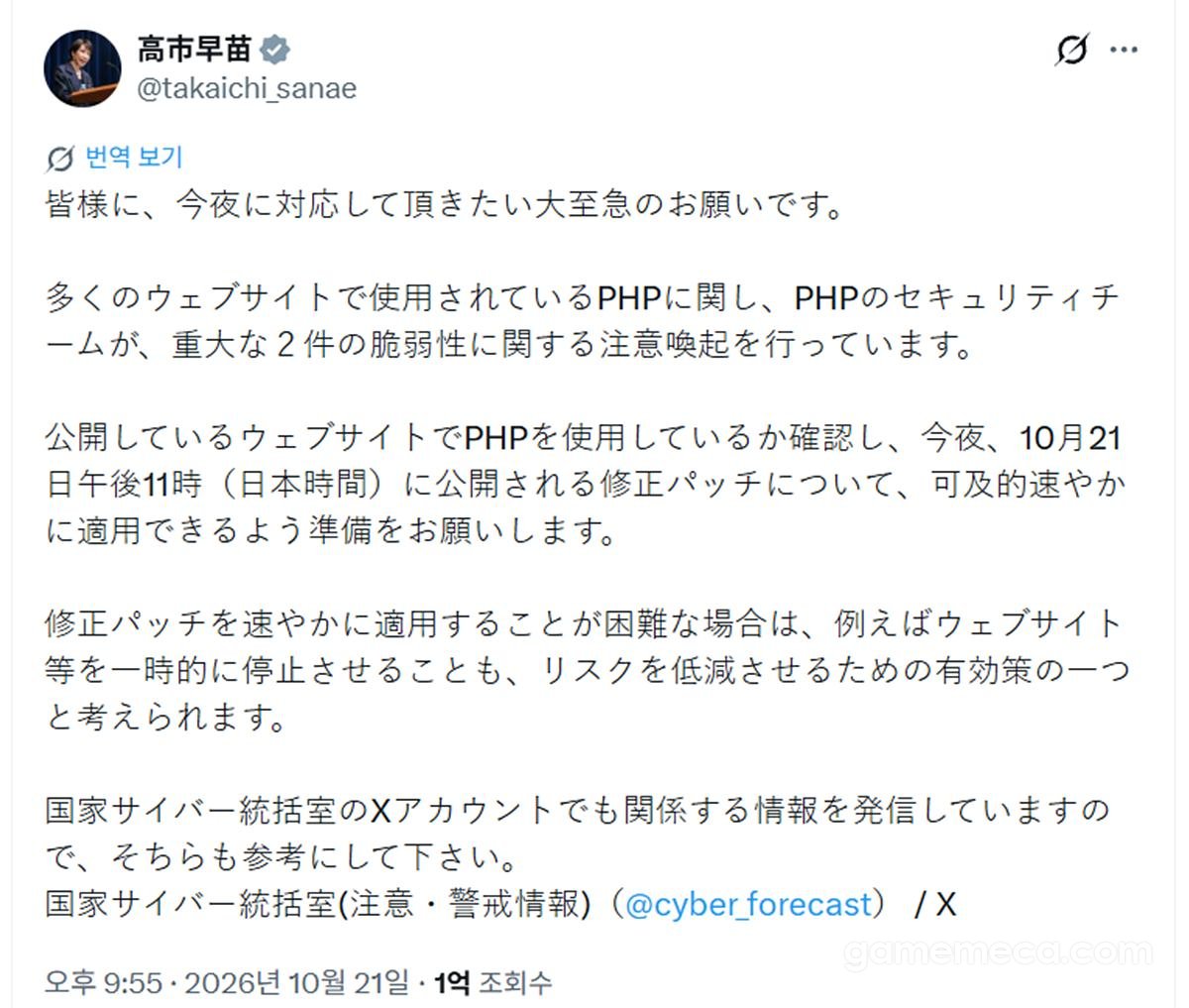
원래도 해킹이 이어졌던 일본은 PHP 사태로 비상이 걸렸다. 다카이치 총리는 직접 X에 오늘 밤 안에 대응해 달라는 긴급 당부를 올렸고, 패치 공개를 앞두고 은행·자치단체·통판 등 수많은 조직이 예방 차원에서 서비스를 멈췄다. 게임업계에서도 사이게임즈는 '우마무스메'와 '그랑블루 판타지'를, 세가는 세가 ID와 아케이드 리듬게임 회원 사이트를 잠시 닫았다.
한편 게임업계 사례에서 두드러지는 공통점은 '위탁사 경유'다. 락스타(Anodot), 밸브(CEVA), 반다이남코(유미르링크), 부시로드(개발 위탁사) 모두 본사가 아닌 외부 협력사나 자회사가 먼저 뚫렸다. 보안이 상대적으로 약한 고리를 AI로 빠르게 훑어 찾아내는 공격이 늘어난 것과 맞물린다.
게임사는 회원 정보와 결제 정보, 미공개 개발 자료까지 쥐고 있어 원래도 해커의 단골 표적이다. 문제는 위탁 구조 자체가 관리 사각지대를 만든다는 점이다. 기업이 외부에 일을 맡기는 건 대개 자체적으로 운영하기 어려운 업무를 넘기거나 비용을 줄이기 위해서다. 그만큼 위탁사의 보안 수준을 본사가 직접 들여다보고 통제하기는 쉽지 않다. 협력사가 여러 곳으로 늘어나면 관리해야 할 범위도 그만큼 넓어진다. 취약점을 찾는 비용이 AI로 떨어진 지금 본사 보안만큼 위탁사와 외부 서비스까지 관리하는 체계가 필요하다는 지적이 나오지만, 큰 어려움이 따를 것으로 전망된다.
This news was translated by AI.

I will always love games. skyanze@gamemeca.com
READ MORE



RECOMMENDED NEWS
MOST POPULAR NEWS
- [Today's steam] Release D-1, Crimson Desert DLC Sales at the Top
- [G-STAR 2026] AI Marketing Company AB180 to Host Networking Event
- Total Prize Pool of 140 Million, PUBG Mobile Esports Tournament Held in India
- WoW: Forever "We hope you enjoy a leisurely adventure rather than rapid growth"
- A Decisive Battle for the Fate of the Ark, Nikke Conducts Massive 4th Anniversary Update
- Nikke players must check, Level Infinite PC launcher hacking report
- Slay the Spire 2 to Update New Mode on November 12
- Aside from GTA 6 and Zelda, There Are Other Anticipated Releases in November
- Following South Korea, IDOLY PRIDE to End Service in March Next Year
- Pokémon 30th Anniversary, McDonald's Happy Meal to Launch Sequentially Starting November
MEDIA PARTNERSHIPS



GAMEMECA SNS


 GAMEMECA GLOBAL SITE