
[Board Game] Cyberpunk art catches the eye, AI brain battle Compile
[보드게임] 사이버펑크 아트로 눈길, AI 두뇌싸움 컴파일
2026.08.10 17:20 UTC+9

AI Summary
Compile is a sharp, two-player strategy card game where players act as AIs mastering fundamental protocols. Its 18-card limit and deep, tactical synergy offer immense replayability for those willing to study the deck. Though it demands a steep learning curve, it rewards repeated sessions with intense, cerebral duels.
[Board Game] Once a month, Gamemeca dives into the world of tabletop with Uchi, the CEO of board game developer Four-Puri, to bring you the best in the hobby.
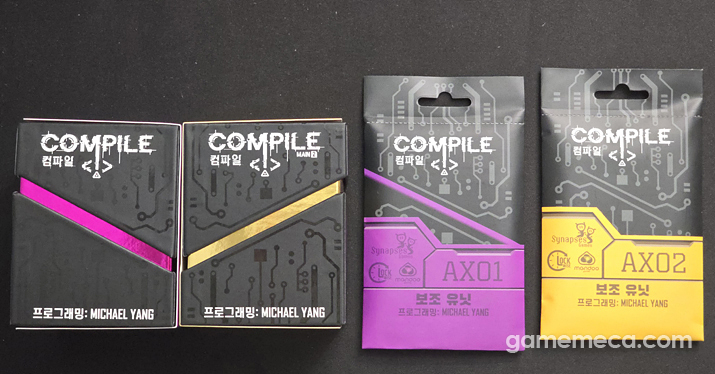
We've grown quite accustomed to AIs writing prose and generating art, but have you ever wondered how an AI that has just gained consciousness perceives the world? The game in question, Compile, is a two-player strategy card game built on exactly that premise. Both players act as AIs competing to master 'Protocols'—the fundamental building blocks of reality. It is a battle of digital wits over concepts like Darkness, Death, Gravity, and Water.
I was intrigued for two reasons. First, the artwork: glitch effects bleed across the cards, and the neon aesthetic screams 'cyberspace'. It reminded me of those sequences in Cyberpunk 2077 where a netrunner tears through the network.
The second reason was the marketing copy, which claimed that each Protocol has a distinct card composition, promising high replayability and strategic depth. I had to know: is there a tangible difference, or is it just a fresh coat of neon paint? Ultimately, the question boiled down to this: how much tactical intensity can you really squeeze out of an 18-card deck?
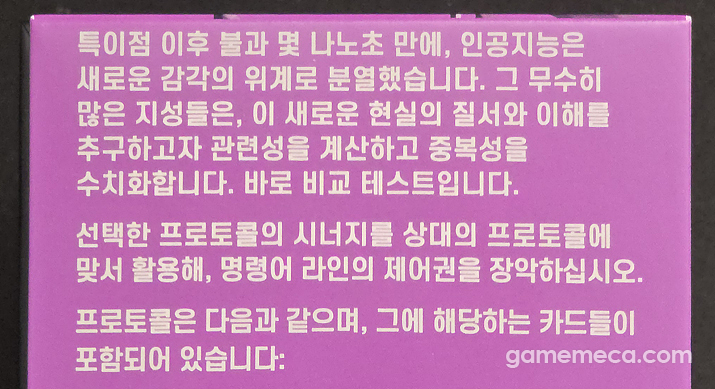
Compile three Protocols first to win.
The title 'Compile' refers to the process of translating source code into machine language—the zeros and ones a computer understands. The game is refreshingly lean; it consists mostly of cards, with no sprawling boards or flashy components. While a separate playmat is available and admittedly looks the part, I skipped it to maintain the game’s primary strength: portability.
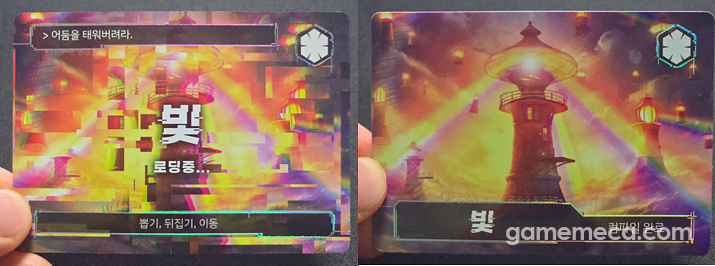
The artwork quality exceeded my expectations. Each Protocol feels distinct in colour and mood, and the foil stamping mixed with those glitch effects is genuinely impressive. Even for a collector like me, it’s a high-quality production—though, frankly, the photos don't quite do the card art justice.
When I first opened the box, I expected something akin to deck-building or a TCG—the usual grind of collecting powerful cards to overwhelm the opponent. I was wrong. Once you pick your three Protocols, your 18-card pool is locked in. The deck doesn't grow or get 'better' during play. It is not about building a deck; it is about mastering the cards you have been dealt.
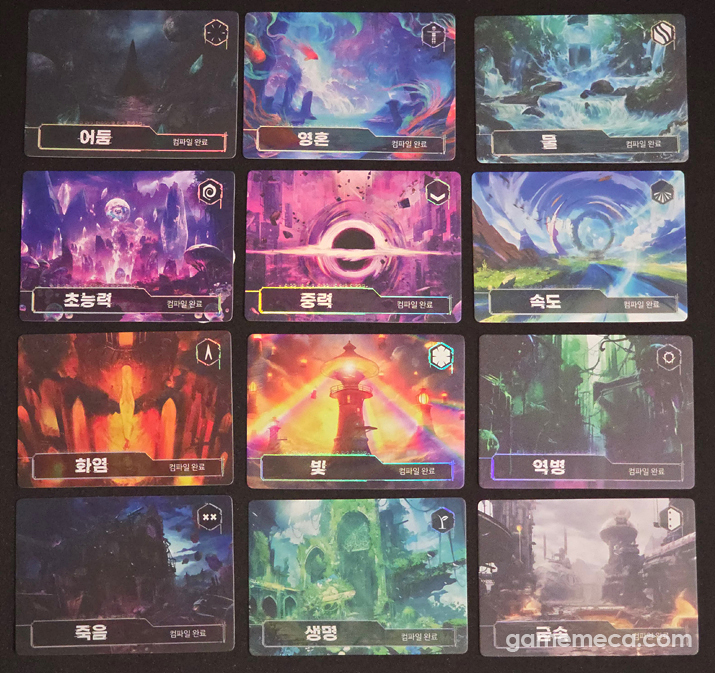
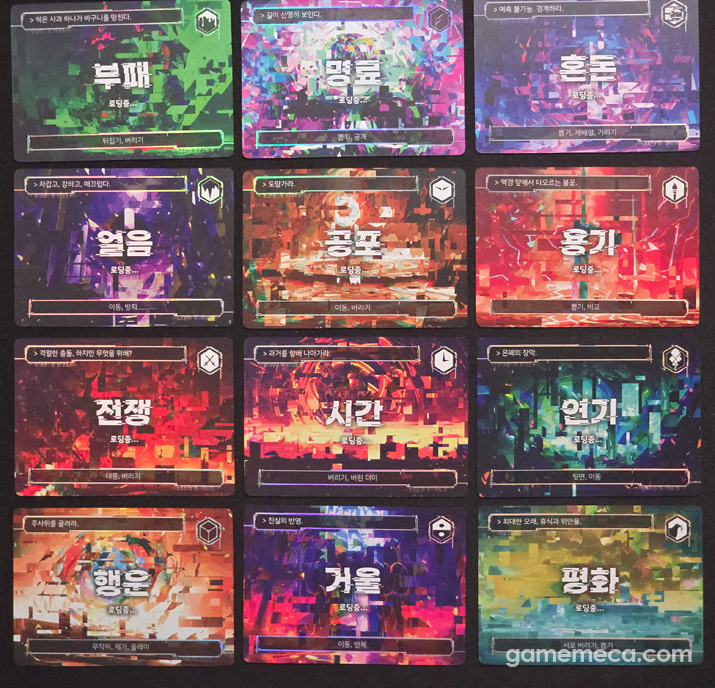
At the start, each player selects three out of 12 available Protocols. Each Protocol contains 6 cards, forming your 18-card arsenal for the session.
You make your choices based on the keywords listed on the Protocol cards. For instance, 'Ice' might be tagged with 'Move, Prevent', while 'War' lists 'Respond, Discard', giving you a rough idea of how each deck functions.
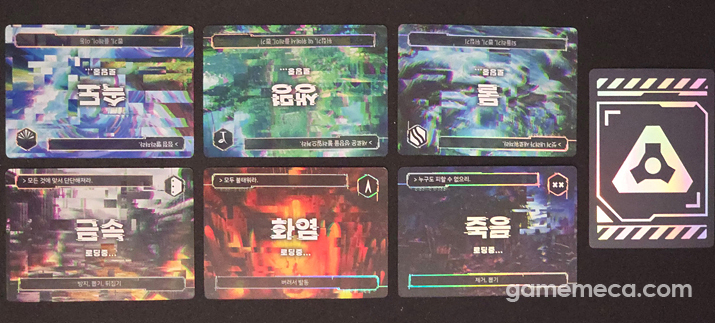
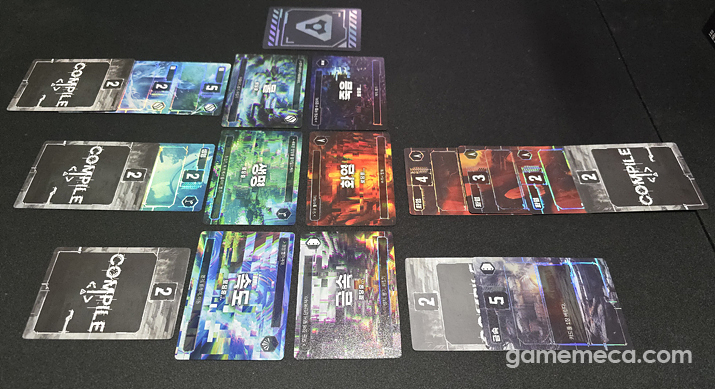
Place your selected Protocol cards in three rows facing your opponent. These rows serve as your board. On your turn, you have only two choices: play a card or draw until you have five in hand.
The crux of the game is card orientation. Play a card face-up to activate its ability, but it must be placed in its corresponding Protocol row. Play it face-down, and it loses its ability but can be placed in any row, counting as a flat '2'. Given that face-up values range from 0 to 6, choosing between an ability and raw power is a constant, agonizing trade-off.
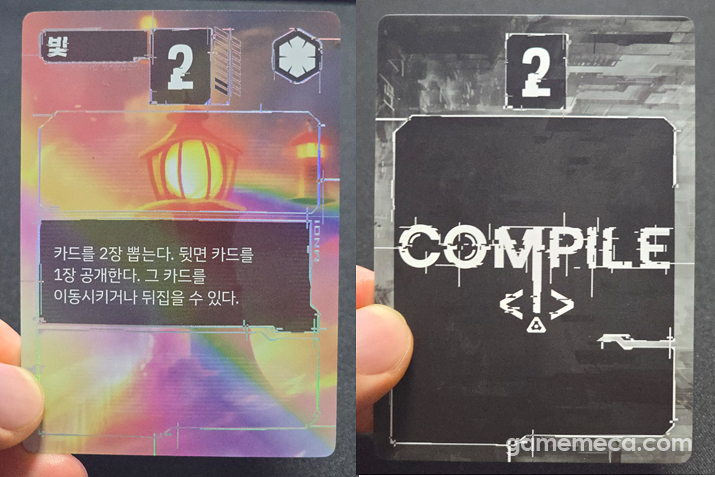
A single card can have up to three command slots. Some trigger immediately upon placement, others provide ongoing effects, and some activate only when covered by another card. You will find yourself obsessively tracking when the abilities of stacked cards are suppressed or re-activated.
Once the sum of a row hits 10 or more, you 'compile' that Protocol at the start of your turn, flipping the card to show 'Compilation Complete'. The first to compile three Protocols wins.
This is where the game reveals its true nature. When a compilation occurs, all cards in that row—yours and the opponent's—are wiped clean. You are literally dismantling the tower you worked so hard to build to progress. Watching your opponent’s row approach 10 forces a constant calculation: do you block them, or do you focus on finishing a different row first?
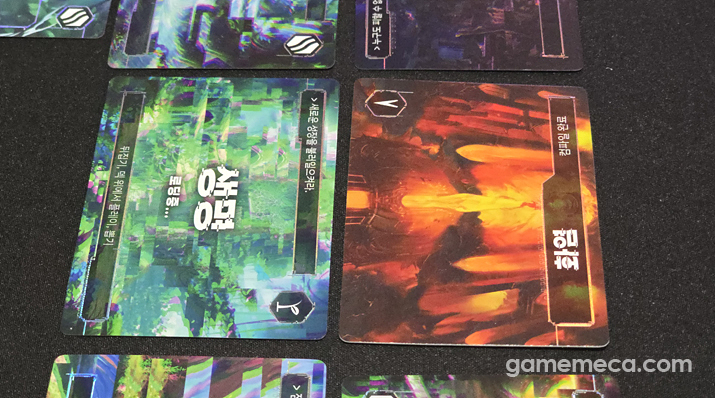
There is more to life than hitting 10.
In my first game, I chose Death, Metal, and Flame. At first, I was obsessed with the numbers, thinking hitting 10 was the only path to victory. I was wrong.
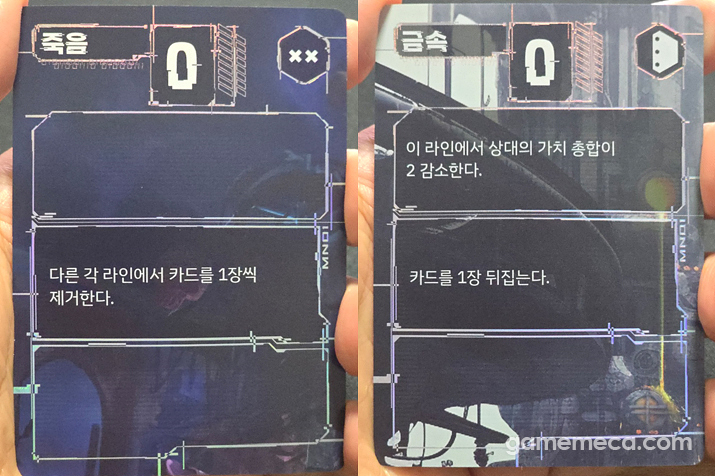
For example, a Death card with a value of 0 allows you to remove a card from each of the other two rows. A Metal card, also worth 0, lets you reduce the opponent's total in that row by 2. These cards don't add to your own score, but they exert massive influence, shifting the board state entirely. I quickly realised that a well-timed ability is far more potent than a high-value card.
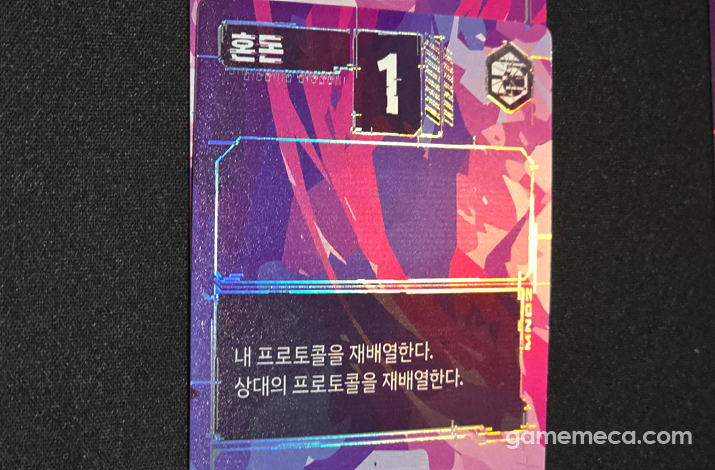
I played a second game immediately with the same opponent, using 'Compile 2'. I took Chaos, War, and Fear, while my opponent chose Ice, Luck, and Time. The game’s flow changed completely. The Luck Protocol allowed me to declare a value, draw three cards, and immediately play a card matching that value. It was a totally different beast from the Death or Metal decks. You really start to feel the distinct strategic direction of every Protocol.
The most memorable moment? My opponent was about to compile, but I used a Chaos card to scramble their row, throwing their entire strategy into disarray. Watching their plans crumble in an instant was thrilling. It wasn't about raw numbers; it was about shaking the board itself.
Looking back, that reversal wasn't just luck. The Chaos Protocol had 'Draw, Rearrange, Cover' keywords right on the card. That potential for chaos was there from the draft phase. It was only then that I truly understood: the game starts the moment you choose your Protocols.
The biggest shift between games was how I viewed the Protocols. At first, I only read the card in front of me. Later, I started predicting what might still be in the opponent's deck. I began to deliberate more over which cards to play and which effects to hold back for the perfect moment.
Short and snappy, but it demands repeated play to find the real fun.
Compile officially runs for 20 to 30 minutes. The rules are simple enough that teaching them is a breeze, and there's no 'heaviness' to a single match. It’s an accessible, 18-card affair that never overstays its welcome.
Its greatest strength is replayability. Between the main box and the expansion, you have 24 Protocols to mix and match. Depending on your selection, the game feels entirely different. Because the sessions are so brief, you can jump into a new combination immediately without hesitation.
However, you won't grasp the depth of its strategy in one or two games. While the keywords give you a hint, you have to experience the card ratios yourself. You need to learn what to save and what to fear through repetition. The fun of exploring new combinations is undeniable, but it requires research and experience.
Consequently, the skill gap can be significant. Someone who knows the card pool well will have a massive edge, and luck isn't enough to bridge that divide. If a veteran plays a newcomer, the result is often predictable.
It is strictly a two-player game. While this tight focus makes the psychological warfare feel razor-sharp, I often found myself wishing I could share the experience with more people. I even found myself imagining how it would work with three or four players—though, of course, that remains a dream.
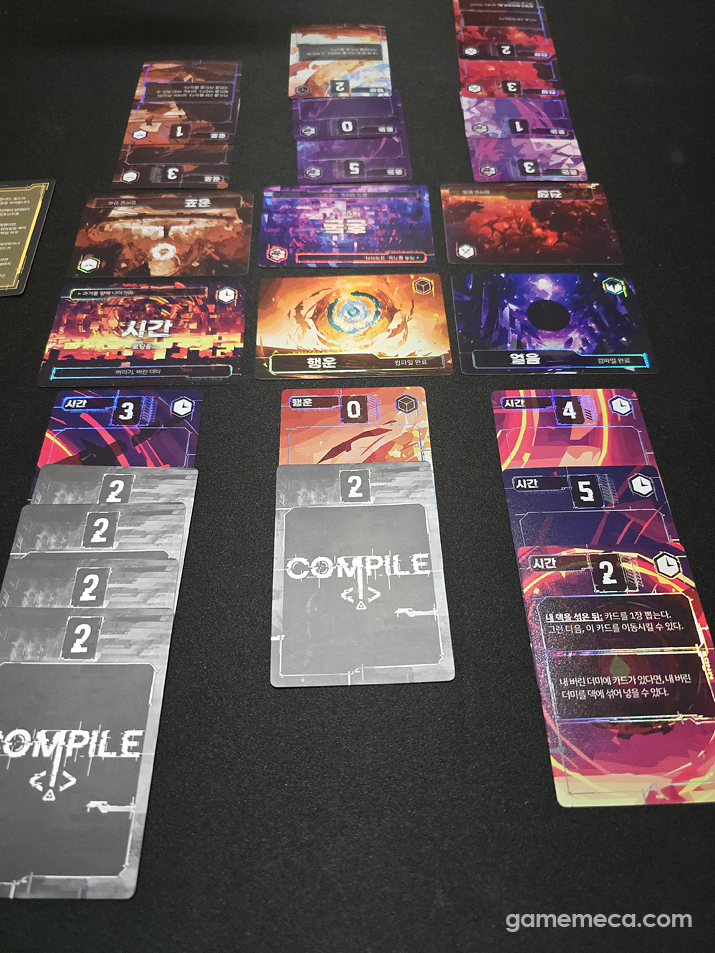
A recommendation for fans of two-player strategy.
In conclusion, Compile isn't a game for everyone. If you're looking for flashy spectacle or an instant dopamine hit on your first turn, you might find it a bit dry.
However, if you enjoy researching card effects and experimenting with combinations, it’s a gem. The fun compounds the more you play with the same person; you learn each other's preferences, and the meta-game of choosing your next deck becomes part of the experience. We finished two games and immediately started discussing which Protocols to try next.
If you are a regular fan of two-player strategy games, enjoy digging into card combos, or want a high-density battle in a short timeframe, give Compile a look. It does a fantastic job of squeezing an impressive amount of brain-burning strategy into such a small package.
UchiA regular board game developer.CEO of the board game company 'Four-Puri'.Check out the board game playlog on Instagram. It is managed by the developer.
게임메카는 한 달에 한 번 보드게임 개발사 포푸리의 우치 대표와 함께 좋은 보드게임을 소개하는 코너 [보드게임]을 연재합니다.
인공지능(AI)이 글을 쓰고 그림을 그리는 모습은 이제 낯설지 않습니다. 그렇다면 이제 막 의식을 갖기 시작한 AI는 세상을 어떻게 이해하게 될까요? 이번에 소개할 컴파일(Compile)은 그 상상에서 출발한 2인 전용 전략 카드게임입니다. 두 플레이어는 각각 AI가 되어 현실을 이루는 개념인 '프로토콜'을 상대보다 먼저 이해하기 위해 경쟁합니다. 어둠, 죽음, 중력, 물처럼 세상을 구성하는 개념을 두고 두 인공지능이 다툰다는 설정이죠.
관심이 갔던 이유는 두 가지였습니다. 하나는 아트워크입니다. 카드 곳곳에 글리치(Glitch) 효과가 흐르고, 네온 색감이 사이버 공간을 연상시킵니다. 개인적으로 사이버펑크 2077에서 넷러너가 네트워크를 헤집고 다니던 장면이 떠올랐습니다.
다른 하나는 홍보 문구였습니다. 프로토콜마다 카드 구성이 전혀 다르기에 반복 플레이 가치와 전략성이 높다고 설명하고 있었습니다. 카드마다 단순히 색깔만 다른 것인지, 뚜렷한 차이가 있는지 궁금해졌습니다. 결국 질문은 하나로 압축됐습니다. 카드 18장짜리 덱 하나로 얼마나 치열한 두뇌 싸움을 만들 수 있을까요?
세 개의 프로토콜을 먼저 '컴파일'하라
게임 제목인 ‘컴파일’은 사람이 작성한 소스 코드를 컴퓨터가 이해하고 실행할 수 있는 기계어(0과 1)로 번역하는 과정을 뜻합니다. 게임 구성은 대단히 간결합니다. 대부분이 카드고, 커다란 보드판이나 화려한 구성품은 없습니다. 별도로 판매되는 플레이 매트가 있는데 아트워크와 잘 어울려 욕심이 나긴 했습니다만, 카드만으로 충분히 굴러갑니다. 어디든 들고 다닐 수 있다는 점이 이 게임의 큰 장점이라 매트까지 챙기면 휴대성이 상쇄될 것 같아 결국 사지 않았습니다.
아트워크 완성도는 기대 이상이었습니다. 프로토콜마다 색감과 분위기가 확연히 다르고, 카드에 새겨진 은박과 글리치 효과도 인상적입니다. 카드게임을 꽤 모아온 필자가 보기에도 놀랄 만한 완성도였습니다. 사진만으로는 몇몇 카드의 아트워크가 잘 드러나지 않는다는 점이 아쉬울 정도입니다.
상자를 열었을 때는 덱빌딩이나 TCG와 비슷하지 않을까 짐작했습니다. 카드로 덱을 만들고 좋은 카드를 모아 상대를 압도하는 익숙한 방식일 거라고 생각했죠. 하지만 프로토콜 세 개를 고르는 순간 운용할 카드 18장이 모두 확정되고, 플레이 도중 덱이 늘어나지도 강해지지도 않습니다. 덱을 키우는 게임이 아니라, 정해진 카드를 얼마나 잘 아는지를 겨루는 게임입니다.
게임을 시작하면 두 사람은 프로토콜 12종 중 3개씩 나눠 가집니다. 프로토콜 하나는 카드 6장으로 이뤄져 있고, 3개를 합치면 18장짜리 덱이 완성됩니다. 이 18장이 이번 판에서 쓸 수 있는 전부입니다.
고를 때 참고할 단서는 프로토콜 카드에서 확인할 수 있습니다. 카드 아래쪽에 해당 프로토콜의 성격을 요약한 키워드가 적혀 있는데요, 얼음이라면 '이동, 방지', 전쟁이라면 '대응, 버리기'라는 식으로 표기되어 대략적인 방향을 가늠하게 됩니다.
선택한 프로토콜 카드는 상대와 마주 보도록 세 줄로 늘어놓습니다. 이 세 줄이 게임판 역할을 하죠. 자기 차례에 할 수 있는 일은 두 가지뿐입니다. 카드를 한 장 내려놓거나, 손패가 다섯 장이 될 때까지 보충하는 것입니다.
핵심은 카드를 어느 방향으로 내려놓느냐에 있습니다. 앞면으로 내면 카드에 적힌 능력을 쓸 수 있지만, 반드시 그 카드가 속한 프로토콜 줄에만 놓아야 합니다. 반대로 뒷면으로 내려놓으면 능력은 사라지는 대신 어느 줄에나 놓을 수 있고, 숫자는 무조건 2로 계산됩니다. 앞면 카드 숫자가 0에서 6까지 제각기인 것을 고려하면, 뒷면은 능력을 포기하는 대신 카드 배치를 자유롭게 하는 선택인 셈입니다.
카드 한 장에는 명령 칸이 최대 세 개까지 들어갑니다. 내려놓는 순간 곧바로 터지기도 하고, 깔려 있는 동안 계속 작동하는 종류도 있습니다. 다른 카드에 가려질 때 발동하는 것도 존재합니다. 따라서 카드를 겹쳐 쌓다 보면 아래에 깔린 능력이 언제 꺼지고 되살아나는지를 신경 쓰게 되죠.
그렇게 쌓아 올린 한 줄의 숫자 합이 10 이상이 되면 자기 차례를 시작할 때 그 프로토콜을 '컴파일'합니다. 프로토콜 카드를 뒤집어 '로딩 중...'을 '컴파일 완료'로 바꾸는 것이죠. 이러한 과정을 거쳐 프로토콜 3개를 모두 컴파일한 쪽이 승리합니다.
여기서 게임의 성격이 드러납니다. 컴파일이 일어나면 그 줄에 쌓여 있던 카드가 나와 상대 것을 가릴 것 없이 전부 사라집니다. 애써 쌓아 올린 탑을 허물면서 한 걸음 나아가는 구조인 셈이죠. 그래서 상대 줄이 10에 가까워지는 것을 보고 있으면, 저 줄을 막을지 아니면 다른 줄에서 먼저 끝낼지를 매 턴 저울질하게 됩니다.
숫자 10을 넘기는 게 전부는 아니다
첫 판은 컴파일 1로 시작해 죽음과 금속과 화염을 골랐습니다. 이때는 숫자에만 눈이 갔습니다. 어떻게든 10을 먼저 넘기는 게 중요하다고 봤기 때문입니다. 그런데 몇 턴 지나지 않아 생각이 바뀌었습니다.
가령 죽음 프로토콜에는 숫자는 0이지만, 다른 두 라인에서 카드를 한 장씩 제거하는 카드가 있습니다. 금속에도 그 라인에서 상대 합계를 2 깎아버리는 0짜리 카드가 있죠. 내 줄에 보태는 숫자는 하나도 없지만, 다른 라인에 영향력을 미치며 판이 크게 흔들립니다. 높은 숫자 카드보다 능력 하나가 훨씬 큰 변수를 만들었죠. 이에 당장의 이득보다 다음 턴을 대비하는 판단이 더 중요하다고 느껴졌습니다.
같은 상대와 곧바로 두 번째 판을 이어갔습니다. 이번에는 컴파일 2를 꺼냈고, 필자는 혼돈과 전쟁과 공포를, 상대는 얼음과 행운과 시간을 가져갔습니다. 박스가 바뀌자 게임이 흘러가는 양상도 크게 달라졌습니다. 상대가 쓴 행운 프로토콜의 카드는 숫자를 하나 선언하고 카드 세 장을 뽑은 뒤, 앞서 선언한 값과 맞는 카드를 원하는 면에 즉시 내려놓는 능력이었습니다. 첫 판에서 필자가 쓰던 죽음이나 금속과는 결이 완전히 달랐죠. 같은 규칙 안에서도 프로토콜마다 노리는 방향이 뚜렷이 다르다는 걸 그제야 체감했습니다.
가장 기억에 남는 장면도 여기서 나왔습니다. 상대 프로토콜 하나가 곧 컴파일될 상황이었는데, 혼돈 카드로 상대 배치를 뒤바꿔 그 줄을 통째로 어긋나게 만들었습니다. 승리를 눈앞에 뒀던 상대의 계산이 한 번에 무너졌고, 그 틈에 흐름을 되찾을 수 있었죠. 카드를 제거하거나 숫자를 높이는 게 아니라 상대가 쌓아온 판 자체를 흔든다는 점이 꽤 짜릿했습니다.
돌이켜보면 그 역전은 우연이 아니었습니다. 혼돈 프로토콜 카드에는 처음부터 '뽑기, 재배열, 가리기'라는 키워드가 적혀 있었으니까요. 판을 뒤집을 수단이 있다는 사실이 드래프트 단계에서 이미 공개되어 있었던 셈입니다. 그걸 뒤늦게 알아차리고 나니, 프로토콜을 고르는 순간부터 게임이 시작된다는 말이 그제야 이해됐습니다.
두 판을 내리 하면서 가장 크게 달라진 건 프로토콜을 바라보는 시선이었습니다. 처음에는 카드 한 장의 능력만 읽었다면, 나중에는 '저 프로토콜이면 이런 카드가 아직 남아 있겠다'고 예측하게 됐습니다. 어떤 카드를 먼저 쓰고, 무슨 효과를 아껴둘지 고민하는 시간이 자연스럽게 늘어났죠.
짧고 가볍지만, 진짜 재미를 위한 반복 플레이가 필요하다
컴파일의 공식 플레이 타임은 20~30분입니다. 규칙도 복잡하지 않아 설명에 오랜 시간이 걸리지 않고, 한 판에 대한 부담도 적습니다. 두 판을 이어서 하는 동안 룰 때문에 막히는 일은 거의 없었습니다. 18장짜리 카드게임이라는 점에서 상대적으로 진입장벽이 낮은 편입니다.
가장 큰 장점은 반복 플레이 가치가 높다는 점입니다. 메인 박스 하나에 프로토콜 12종이 들어 있고, 컴파일 1과 2를 합치면 24종으로 늘어납니다. 어떤 프로토콜을 고르느냐에 따라 쓸 수 있는 카드가 통째로 달라지고, 같은 프로토콜이라도 함께 묶은 나머지 둘에 따라 감각이 달라집니다. 한 판을 끝내고 곧바로 다른 조합으로 다시 시작하기에도 부담이 없을 정도로 플레이 시간도 짧은 편입니다.
다만 이 게임의 전략성을 한두 판으로 맛보기는 어렵습니다. 프로토콜 카드에 적힌 키워드가 방향을 알려주긴 하지만, 그 안에 정확히 어떤 카드가 몇 장 들어 있는지까지는 직접 해봐야 합니다. 무엇을 아껴야 하는지, 무엇을 경계해야 하는지 판단하려면 스스로 풀어가야 하죠. 매판 조합을 고민하는 재미가 분명히 있지만, 그 재미를 맛보려면 카드에 대한 연구와 반복 플레이 경험이 쌓여야 합니다.
그래서 숙련도 차이가 꽤 크게 작용합니다. 카드 정보를 많이 가진 쪽이 유리하고, 운으로 뒤집히는 폭도 생각보다 넓지 않습니다. 처음 접하는 사람과 여러 판 해본 사람이 붙으면 승부가 한쪽으로 기울 가능성이 높습니다.
2인 전용이라는 점도 짚어야 합니다. 두 사람이 마주 앉도록 설계한 덕분에 심리전은 깊어졌지만, 재미있는 게임이기에 좀 더 여러 사람과 함께 즐기고 싶은 마음이 들었습니다. 3인, 혹은 4인이 즐기면 함께 게임을 즐기려면 어떻게 바뀌면 좋을까 상상해보기도 했습니다. 물론 2인 전용이기에 불가능한 상상이지만요.
2인 전략 카드게임을 좋아한다면 추천
결론적으로 컴파일은 누구에게나 권하기 쉬운 게임은 아닙니다. 화려한 전개나, 첫 판부터 도파민이 터지는 재미를 기대한다면 다소 심심할 수 있습니다.
반대로 카드 효과를 연구하고 조합을 실험하는 과정 자체를 즐긴다면 이야기가 달라집니다. 특히 같은 상대와 반복해서 플레이할수록 재미가 커집니다. 서로 어떤 프로토콜을 선호하는지 알게 되고, 지난 판을 근거로 다음 조합을 짜는 과정까지 게임의 일부가 되기 때문입니다. 두 판을 내리 하고 나서 곧바로 “다음엔 저 프로토콜을 써보자”는 이야기가 나온 것도 그래서였습니다.
2인 전략게임을 자주 즐기는 플레이어, 카드 콤보를 파고드는 것을 좋아하는 사람, 짧은 시간 안에 밀도 높은 승부를 원한다면 컴파일을 한 번쯤 경험해볼 만합니다. 간단한 구성으로 이 정도의 두뇌 싸움을 뽑아냈다는 점만으로도, 충분히 제 몫을 해내는 작품이었습니다.
우치평범한 보드게임 개발자.보드게임 회사 '포푸리' 대표를 맡고 있습니다.보드게임 플레이로그로 인스타그램을 운영 중입니다.
This news was translated by AI.
READ MORE
-
 [+9 Enhanced] RedMagic Astra 2, 'Tier 0' in both performance and heat control
-
 [precedent.zip] Does deriding the appearance of a character modeled after a real person constitute the crime of insult?
-
 [Board Game] There is no story, but the sense of command remains, Nikke
-
 [precedent.zip] If KartRider Classic opens, will past data be revived?
MOST POPULAR NEWS
- Recommended for the holidays, what is the trend in gaming tablets?
- Duolingo's 'Duo' Appears as a Boss in Brawl Stars
- [TGS 26] Hyung-tae Kim "AI video was an experiment, I apologize"
- HEARTSTEEL is Back, League of Legends New Song 'Live My Life' Revealed
- [TGS 26] Tokyo Game Show decided to close one day early due to typhoon
- [Photo] How does Riftbound captured in cards look?
- Shape of Dreams Console Launch Alongside 1st Anniversary
- Enjoy Cute Adventures One-Handed, Animo Mobile Version Released
- [Today's steam] Even new users can play, Limbus Company Chapter 10
- [TGS 26] Mads Mikkelsen as a villain, Call of Duty: Modern Warfare 4 footage revealed
MEDIA PARTNERSHIPS



GAMEMECA SNS


 GAMEMECA GLOBAL SITE