
EU Reveals 'Ultra-Strong' Game and SNS Regulations for Youth Protection
EU, 청소년 보호 위한 '초강력' 게임·SNS 규제안 공개
2026.09.29 14:17 UTC+9

AI Summary
The European Commission adopted the EU KIDS Act draft.
Online games face strict bans on daily login rewards.
Violators could face massive fines up to 6 percent.
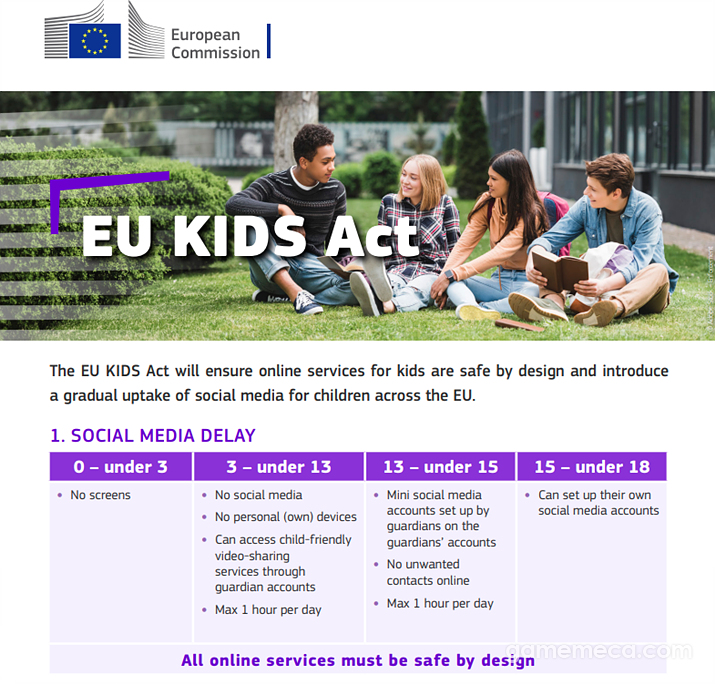
Look, let's be honest: the European Commission officially adopted the draft for a fresh online environment regulation, the EU KIDS Act, back on September 17. The legislation aims to clean up the internet landscape across everything from social networks to video platforms. Naturally, the online gaming sector is caught in the crossfire, facing unprecedented and heavy-handed restrictions that are bound to send shockwaves through the industry.
The bill sets out a tiered approach to social media access based on age groups. Independent account creation is restricted to those aged 15 and above, while direct access for children under 13 is blocked entirely. Teenagers between 13 and 15 can only access age-appropriate platforms via mini accounts linked to a guardian's account. Furthermore, daily screen time is capped at a maximum of one hour for both video services used by children aged 3 to 13 sharing a guardian's device and teen mini accounts.
As for video games, the rules apply to all online games (regardless of platform) sold within the EU region, excluding educational products. Barring purely single-player experiences, the vast majority of live-service titles fall squarely into the regulatory crosshairs. In particular, following the draft's core philosophy of 'curbing engagement tactics,' daily login bonuses that reward players for showing up every day or systems penalising missed logins are highly likely to be banned outright.
The bill also makes mechanisms limiting minor users from interacting with strangers and the implementation of parental control systems mandatory. To comply, developers must establish robust age-verification procedures. Simple self-declaration prompts asking for an age simply will not cut it; studios must employ accurate yet privacy-respecting technologies. Alternatively, games distributed via app stores can securely ingest verified age data at the storefront level with user consent. Moreover, operators must provide intuitive control tools that let minors easily manage content exposure and communication settings.
Provider obligations for age verification are also tightened significantly. Platforms and app stores are expected to adopt compliant privacy-first methods, such as EU age-verification apps that do not store identity documents or biometric data. New sign-ups must undergo rigorous age checks, while existing users will have their age estimated using plausible indicators like payment method details or account creation timestamps.
AI technology, which has recently found its way into countless games, is also facing strict oversight. AI companion features capable of forming emotional bonds or inducing dependency with players are restricted, and if included, must not be automatically enabled or prominently displayed. Interestingly, while transparency regarding loot boxes and virtual currency payments featured prominently at the preamble of the bill, it was omitted from the actual regulatory clauses, setting the stage for a fiery debate in future discussions.
This legislation essentially looks to transform existing voluntary rating systems like PEGI into legally binding obligations. Consequently, concerns have been raised regarding potential jurisdictional conflicts with established national youth protection frameworks, such as Germany's USK. Companies that breach the rules could face catastrophic fines of up to 6% of their total global annual turnover. Therefore, publishers currently servicing or planning to launch games in the EU need to radically rethink not just intentional reward loops, but their entire engagement-driven architecture.
While the EU KIDS Act remains at the draft stage, the European Commission is pushing for its swift passage, backed by the recent 2026 Digital Decade Eurobarometer survey results showing that 92% of European citizens view measures protecting children and teens from cyberbullying, harmful content, and addictive design as a top policy priority. Given how meticulously drafted the clauses are, the bill might move faster than anticipated. The games industry faces a ticking clock: figure out how to gate features by age, or completely overhaul game design from the ground up. Adieu.
유럽연합 집행위원회가 지난 9월 17일 새로운 온라인 환경 규제안인 EU KIDS Act 초안을 공식 채택했다. 이번 법안은 소셜 네트워크부터 비디오 플랫폼까지 아우르는 광범위한 인터넷 환경 정화를 목표로 한다. 특히 온라인게임 분야에도 기존에 볼 수 없었던 강력한 제한 조치가 포함되어 있어 업계 전반에 큰 파장을 일으킬 것으로 전망된다.
해당 법안은 연령대에 맞춘 단계적인 소셜 미디어 접근 기준을 제시한다. 독자적인 계정 개설은 15세 이상부터 허용되며, 13세 미만 아동의 소셜 미디어 직접 접근은 전면 차단된다. 13세 이상 15세 미만 청소년은 보호자 계정과 연동된 미니 계정을 통해서만 연령에 맞는 플랫폼에 접속할 수 있다. 아울러 보호자 기기를 공유하는 3세 이상 13세 미만 아동의 영상 서비스 이용과 청소년 미니 계정 모두 하루 최대 1시간으로 화면 이용 시간이 제한된다.
게임의 경우 교육용 제품을 제외한 EU 지역에서 판매되는 모든 온라인(플랫폼 무관) 게임에 적용된다. 순수 싱글플레이 전용 게임을 제외하면 대부분의 라이브 서비스 타이틀이 규제망에 들어간다. 특히, 이번 초안에서 중요시하는 '접속 유도 제한' 기조에 따르면, 매일 게임에 접속하면 혜택을 주는 출석 보상이나 미접속 시 불이익을 주는 시스템 등이 전면 금지될 확률이 높다.
미성년자 유저가 다른 사람과 접촉하는 것을 제한하는 장치와 부모 통제 시스템의 도입도 의무화된다. 이를 위해 게임사들은 자체적인 연령 확인 절차를 마련해야 한다. 단순히 나이를 묻는 자가 진단 방식은 허용되지 않으며 정확하면서도 사생활을 침해하지 않는 기술을 활용해야 한다. 앱 마켓을 통해 게임이 유통될 경우 상점 단계에서 확인된 연령 데이터를 동의하에 넘겨받는 방식도 가능하다. 아울러 미성년자가 콘텐츠 노출과 소통 방식을 쉽게 조절할 수 있는 직관적인 제어 도구를 반드시 제공해야 한다.
사업자의 연령 확인 의무도 대폭 강화된다. 플랫폼과 앱스토어는 신원 서류나 생체 정보를 저장하지 않는 EU 연령 확인 앱 등 개인정보 보호 기준을 충족하는 수단을 도입해야 한다. 신규 가입자는 엄격한 연령 검증을 거쳐야 하며, 기존 가입자의 경우 결제 수단 세부 정보나 계정 생성 시점 등 타당한 지표를 활용해 연령을 추정하도록 규정했다.
최근 게임에 적극적으로 도입되고 있는 AI 기술 역시 엄격한 관리를 받는다. 플레이어와 정서적 유대감을 형성하거나 의존성을 유발할 수 있는 AI 컴패니언 기능은 제한되며, 게임 내에 포함될 경우 자동 활성화되거나 눈에 띄게 배치해서는 안 된다. 확률형 아이템과 가상 화폐 결제 투명성에 대한 내용은 법안의 도입부에서 비중 있게 다뤄졌으나, 실제 규제 조항에서는 빠져 있어 향후 논의 과정에서 핵심 쟁점이 될 것으로 보인다.
이 법안은 PEGI와 같은 기존 자율 심의 체계를 법적 의무로 강화하려는 성격을 띤다. 이에 따라 독일의 USK 등 기존 국가별 청소년 보호법 체계와 관할권 충돌이 발생할 가능성도 제기된다. 법안을 위반한 기업은 글로벌 연간 총매출의 최대 6%에 이르는 막대한 벌금을 물 수 있다. 따라서 EU 지역에 게임을 서비스 중이거나 출시 예정인 게임사들은 의도적인 보상 체계뿐만 아니라 접속을 유도하는 구조 전체를 재검토해야 할 필요가 있다.
EU KIDS Act는 현재 초안 단계이지만, EU 집행위원회는 최근 실시된 2026년 디지털 10년 유로바로미터 조사 결과 유럽 시민의 92%가 사이버 폭력과 유해 콘텐츠, 중독성 설계로부터 아동과 청소년을 보호하는 조치를 최우선 정책 과제로 꼽았다는 설문 결과를 바탕으로 법안의 조속한 통과를 추진하고 있다. 특히 이번에 공개된 법안 역시 구체적인 조항이 세밀하게 짜여 있어 예상보다 빠르게 법안이 제정될 수 있다. 게임업계 역시 연령에 따라 기능을 차단할 것인지, 게임 구조 자체를 바꿀 것인지에 대해 신속히 결정해야 할 시점이다.
This news was translated by AI.

I am the head of the GameMeca editorial team. jong31@gamemeca.com

MOST POPULAR NEWS
- Recommended for the holidays, what is the trend in gaming tablets?
- Golden Joystick Awards Nominees Revealed, Crimson Desert Rises in Two Categories
- South Korean National Team Set to Compete, PUBG MOBILE Asian Games Finals Imminent
- Into the Deeper Depths of Snezhnaya, Exploring Genshin Impact Version 7.1
- Enjoy Cute Adventures One-Handed, Animo Mobile Version Released
- [Today's steam] Factory-style graveyard management, Graveyard Keeper 2 released
- Nivalis Nights, Running a Restaurant in a Cyberpunk City
- Optimization Issues Lead to 'Mostly Positive' Steam Reception for Silent Hill: Townfall
- [Game Rank Analysis] "This is the real classic," WOW draws back veterans in droves
- Com2uS to Host SWC2026 European Cup in Hamburg, Germany
MEDIA PARTNERSHIPS



GAMEMECA SNS


 GAMEMECA GLOBAL SITE