
[Board Game] The Magnificent Majesty of Gandalf, The Lord of the Rings: The Card Game
[보드게임] 웅장한 간달프의 위용, 반지의 제왕: 카드 게임
2026.10.19 14:54 UTC+9

AI Summary
The Lord of the Rings card game offers deep cooperative play. Managing three heroes brings a more forgiving pace than Arkham. A rules master makes your first session much smoother.
Gamemeca is running a monthly column titled [Board Game] in collaboration with Uchi, the head of the board game development studio Potpourri, to introduce brilliant board games to you.
Back in October of last year, we took a look at the Cthulhu-themed Arkham Horror: The Card GameWhile the deep gameplay was grand, it had us constantly on edge. Managing to scrape together clues, hold off swarms of monsters, and desperately flee with just a single investigator left you completely out of breath.
So, when we unboxed its sibling, The Lord of the Rings: The Card Game, we braced ourselves for a similar ordeal. But stepping into it, the first impression was rather different. To put it bluntly, it felt a fair bit more comfortable than Arkham. Just to be clear, this review is based on a single playthrough of an introductory scenario. The Korean edition opened its Tumblbug crowdfunding campaign last December, but due to delays, it didn't land on doorsteps until after this year's Chuseok holidays, leaving us with less table time than desired. This write-up focuses primarily on the impressions gathered from that very first session.
A cooperative card game where you start with a core set and grow your deck
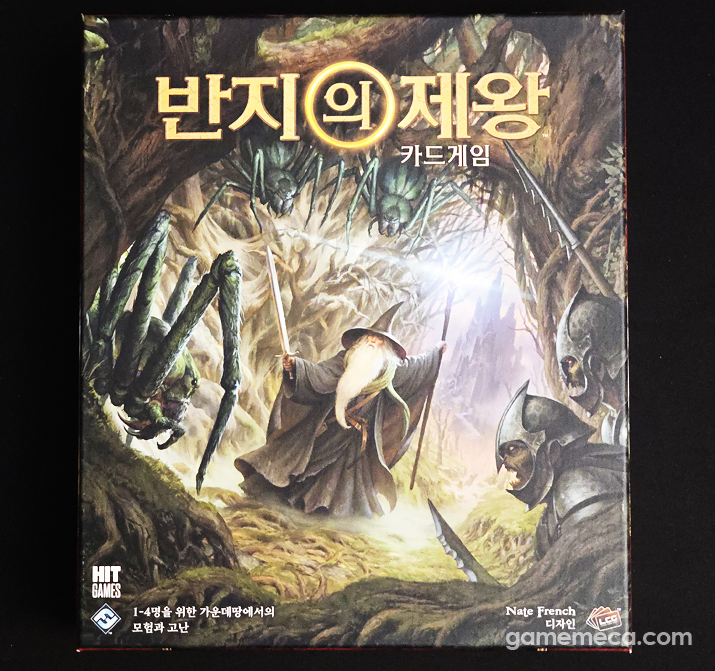
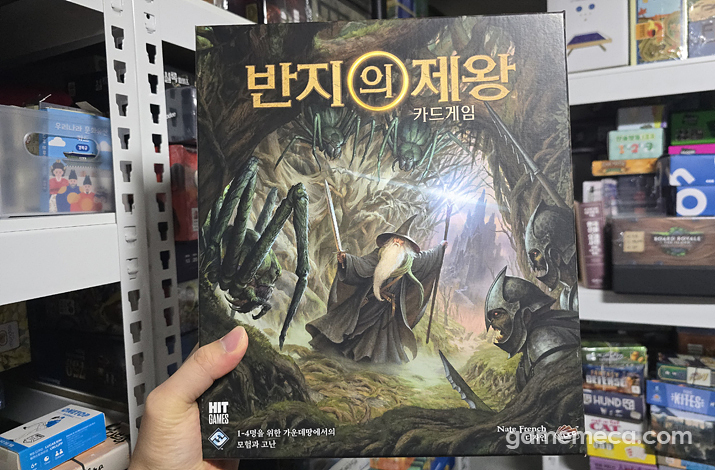
The Lord of the Rings: The Card Game is crafted by Fantasy Flight Games (FFG), with the Korean edition brought to you by Hit Games. Set in the rich universe of J.R.R. Tolkien's legendarium, it is a cooperative experience for one to four players.
The game follows a Living Card Game (LCG) model. Unlike Trading Card Games (TCGs) where you endlessly hunt for randomized booster packs, this approach expands your card pool and quests through fixed-content expansions. You kick things off with the core set, weave in fresh adventures via expansions, and handcraft decks that match your exact tactical taste.
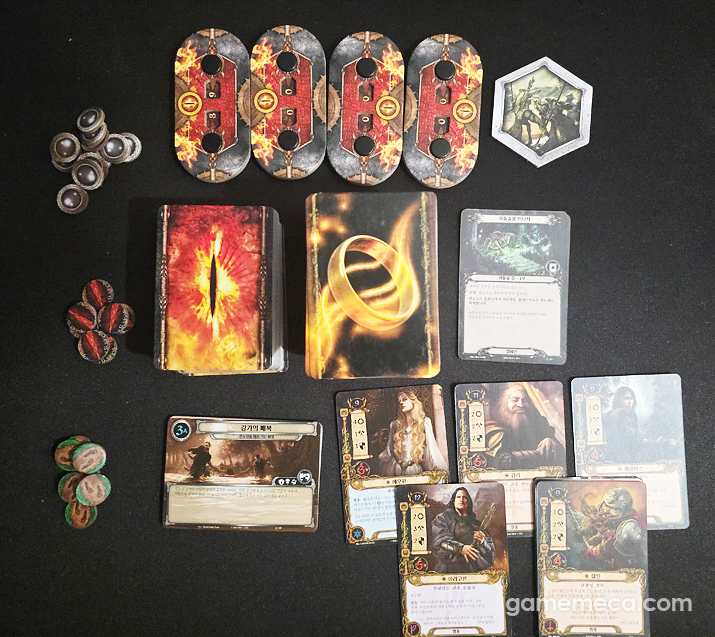
Open up the box, and you will find it crammed almost entirely with cards. The core set features 12 hero cards, 188 player cards, 84 encounter cards, 10 quest cards, 16 blessing and burden cards, and 3 campaign cards. Toss in 57 resource tokens, 66 damage tokens, 66 progress tokens, a first player token, and four threat tracker dials, and you are good to go.
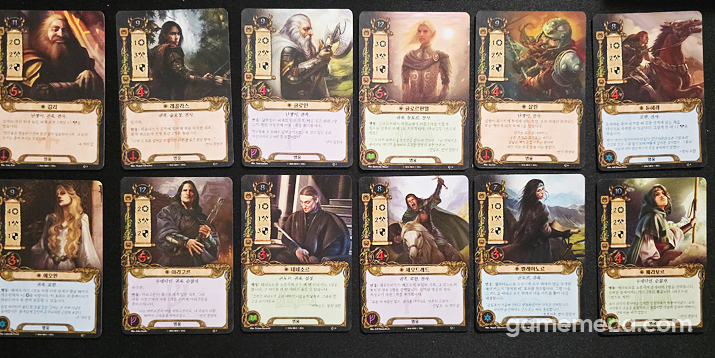
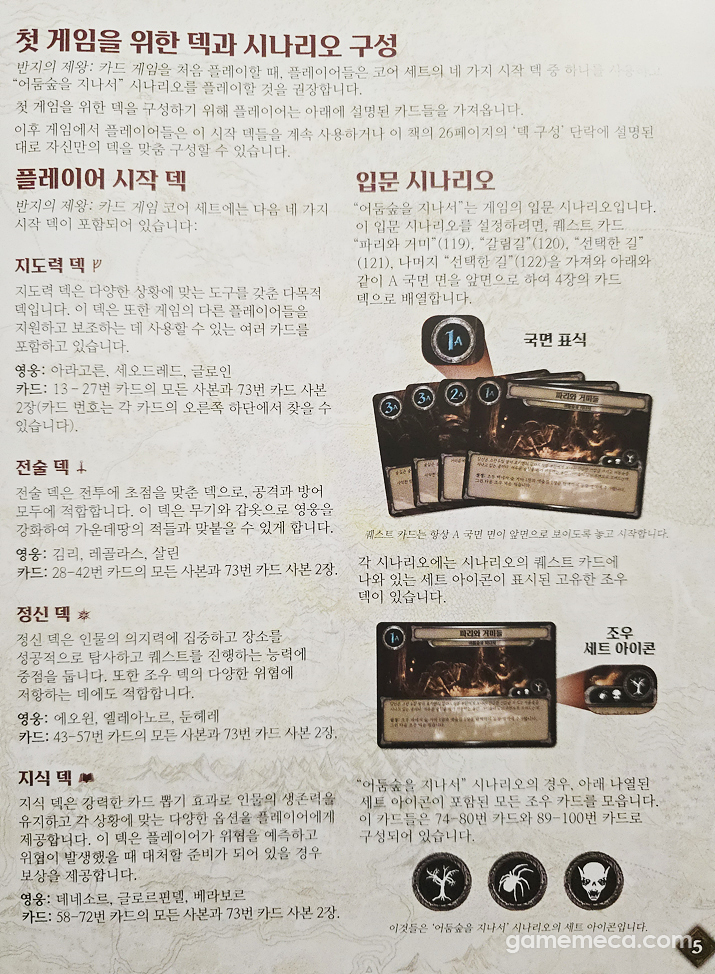
The manual suggests starting your journey with the scenario 'Passage Through Mirkwood' paired with four starter decks. These decks are split across four spheres: Leadership, Tactics, Spirit, and Lore, with each deck locking in three heroes from its respective sphere. Leadership is your versatile utility deck designed to support teammates, Tactics arms your heroes to the teeth for combat, Spirit pushes quests forward through sheer willpower, and Lore prepares for impending threats by drawing cards. Plus, every single one of these starter decks packs a universal wildcard who is just as crucial as any hero: Gandalf.
Accumulate progress tokens and keep your threat in check
A round is broken down into seven distinct phases. While each phase has its own checklist, the flow itself is brilliantly straightforward: collect resources, spend them to deploy cards, send your heroes off to quest, scrap with incoming enemies, and watch your threat tick up as the round draws to a close.
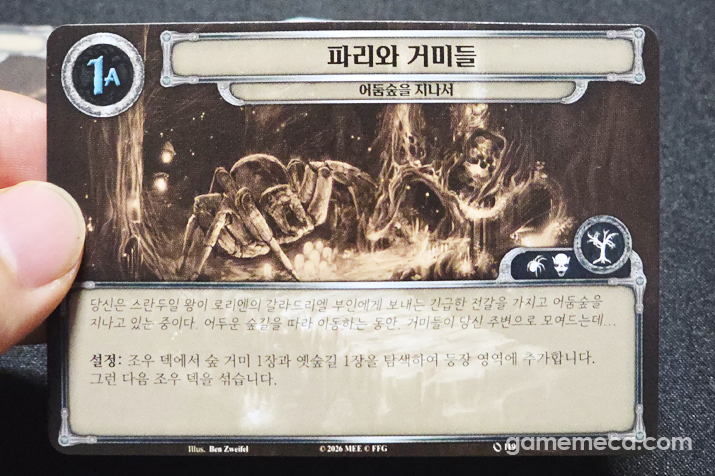
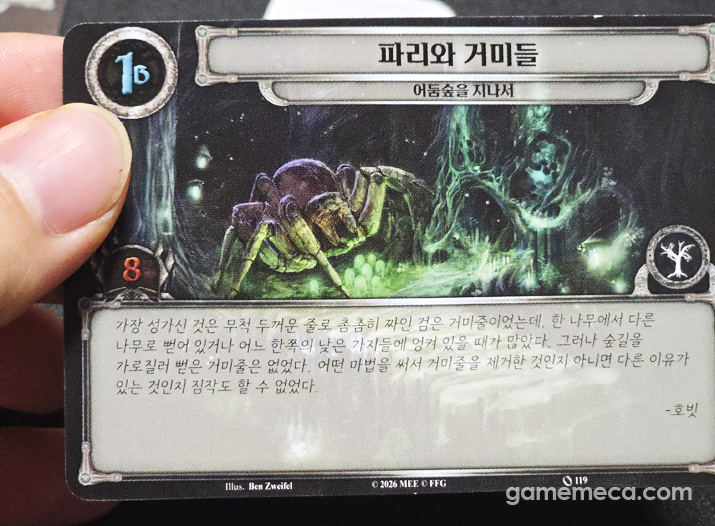
Resources belong exclusively to heroes. Every single round, a resource token is automatically slapped onto each hero card, which you then spend to deploy allies, attachments, and events. Allies themselves do not rake in resources, a little rule we will circle back to shortly.
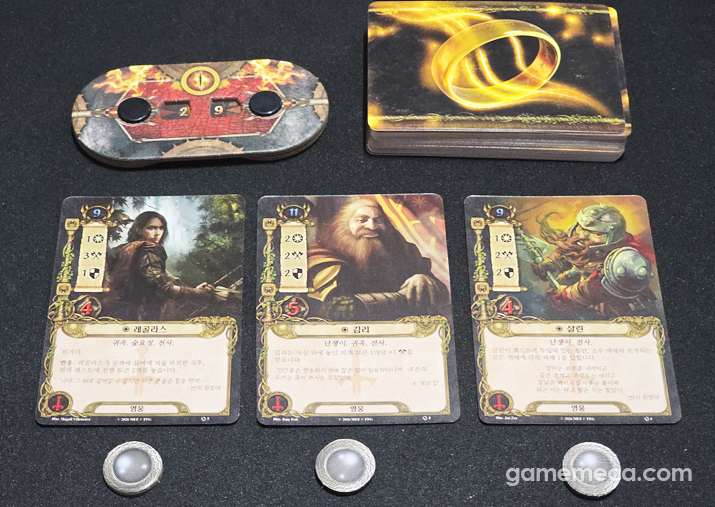
Having survived Arkham Horror: The Card Game, the questing mechanics felt instantly familiar. If the total willpower of the characters you send questing outstrips the threat value of the encounter cards sitting in the staging area, you clear the difference as progress tokens. Should a location card be lurking in the active location slot, tokens land there first before spilling over onto the main quest card. Once the quest card is choked full of tokens, you march on to the next stage. It shares a structural DNA with running around locations to gather clues in Arkham, offering a comforting sense of familiarity while still carving out its own identity.
Your ultimate ticking clock is the threat level, tracked via a physical dial. If that dial hits 50, it is game over. Your threat automatically creeps up by 1 at the end of every round, and spikes even higher whenever your questing willpower falls short of the encounter deck's threat tally during the quest phase. This makes predicting just how much trouble your threat meter will take on each round a vital balancing act. Naturally, the encounter deck loves to throw sudden treachery cards your way that inflate your threat on the spot, ensuring your careful math falls apart every now and then.
Three heroes, three resources, and some breathing room
One of the main reasons this felt noticeably less suffocating than Arkham was the sheer number of heroes at your command. In Arkham, you pilot a single lone investigator—though solo players sometimes double-fist two—whereas here, you juggle three heroes at once. Three heroes naturally mean three fresh resources rolling in every single round.
The absence of a strict hand size limit also gives you plenty of room to stretch. Thanks to the trio of heroes, resources feel much more abundant than in Arkham, leaving you with genuine opportunities to play the cards sitting in your grip. Because dropping cards onto the table feels relatively accessible, you find yourself happily plotting out cheeky synergies between this card and that, dreaming up what kind of devastating combos you can pull off next round.
The way the game handles locations also gives you a lot of breathing room. Location cards revealed from the encounter deck first land in the 'staging area', where their passive threat values actively oppose your party's willpower during the quest phase. During the travel phase, you can choose to ship one location over to the 'active location' slot, but you are never forced to do so. Since you can reasonably gauge the threat brewing in the staging area and what might flip next, you can prep your characters accordingly. As long as your threat meter isn't on the verge of exploding, you can choose to leave locations right where they are and dedicate your crew to combat instead.
Though it shares a family tree with similar systems, the experience leans far more toward careful planning than frantic running for your life. That being said, that comforting breathing room didn't feel quite the same across every single deck.
Gandalf running the entire show in just a single round
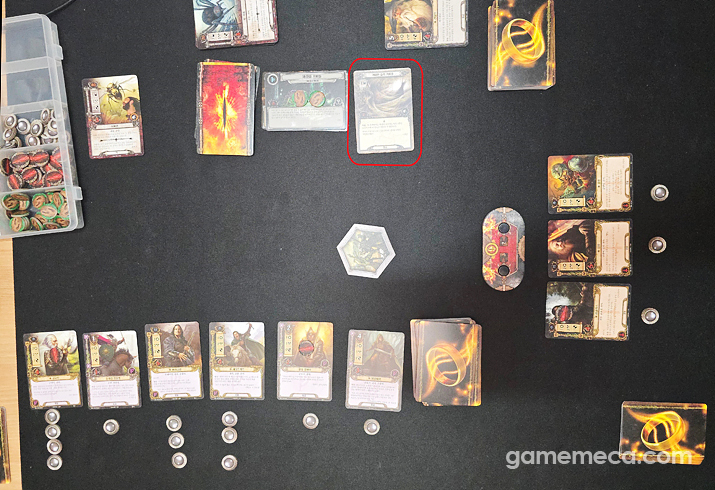
Running a two-player session, Uchi took the helm of a Leadership deck packed with Aragorn, Theodred, and Gloin, while the opponent went with a Tactics deck featuring Gimli, Legolas, and Thalin. The scenario difficulty was set to normal.
Our very first rookie mistake showed up right on cue. Misreading the resource rule mentioned earlier, we played as though allies sitting on the field generated resources just like heroes did. With resources piling up high every round, we were genuinely impressed by how generous the game was being. It didn't take long to spot the blunder and set things right, but in a game this densely packed with phase-by-phase bookkeeping, messing up a rule on your maiden voyage is practically a rite of passage.
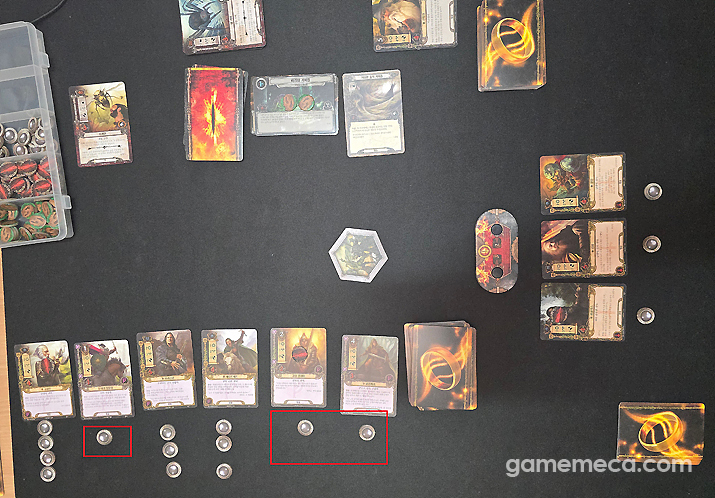
Once the rules were ironed out, the Leadership deck proved to be a reliable backbone. The deck specializes in fielding a small army of allies, which carried the heavy lifting during the questing phases when enemy counts were low. Faramir, in particular, was an absolute superstar among the allies. By exhausting Faramir and targeting a player, every single character controlled by that player gets a +1 bump to their willpower until the phase ends. Naturally, the more bodies you have on the board, the more ridiculous this effect gets, syncing up beautifully with the wide-board nature of the Leadership deck.
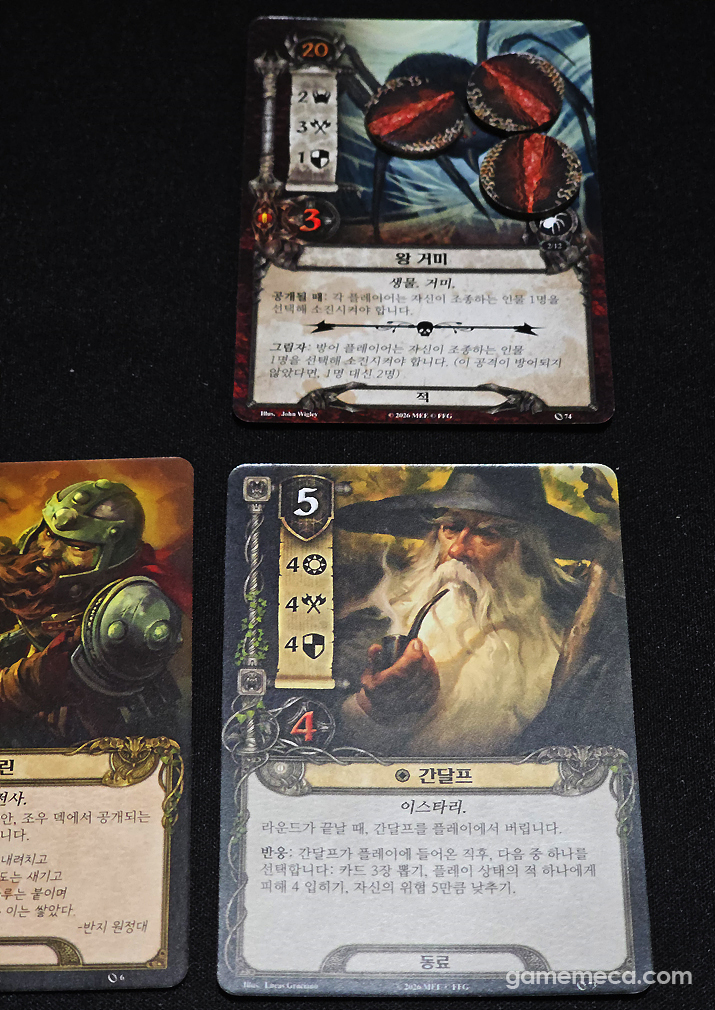
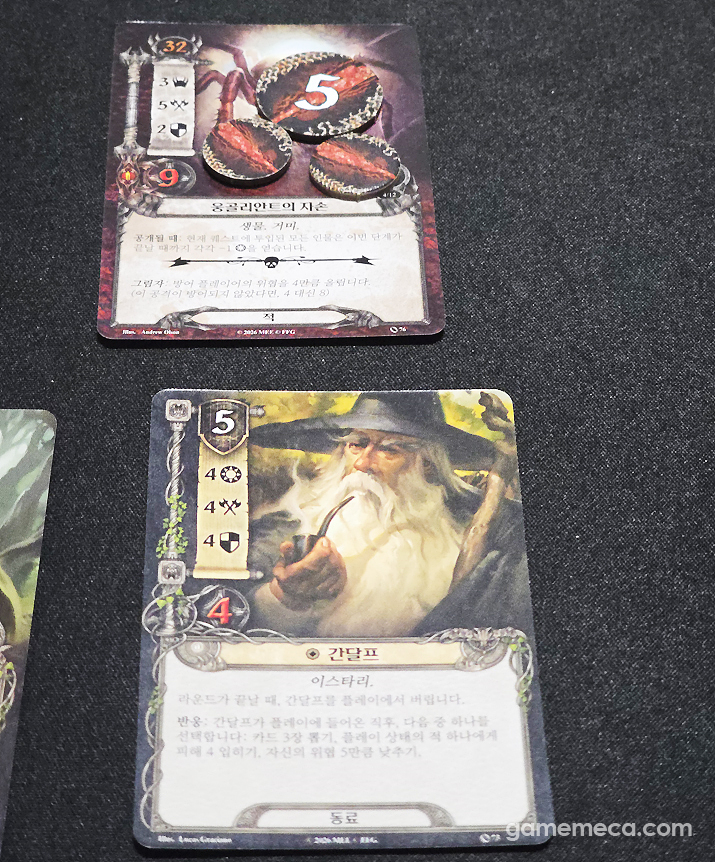
The card that left the deepest impression by far was none other than Gandalf. Each player's deck came packed with two copies of him, and his effects were downright monstrous. He only sticks around for a single round before vanishing back into the shadows, a fleeting appearance that instantly brought to mind Gandalf the Grey arriving just in time to aid Frodo's company before mysteriously slipping away in the films. Anyone familiar with the source material will surely appreciate this charming nod baked right into a single card.
Toward the bitter end, our earlier tactical management of locations paid off in spades. The staging area was practically overflowing with location cards, but we had already squeezed out all the progress tokens we needed on the quest card. So, we simply left the locations sitting pretty and threw all our characters entirely into the combat grinder. That gamble paid off brilliantly.
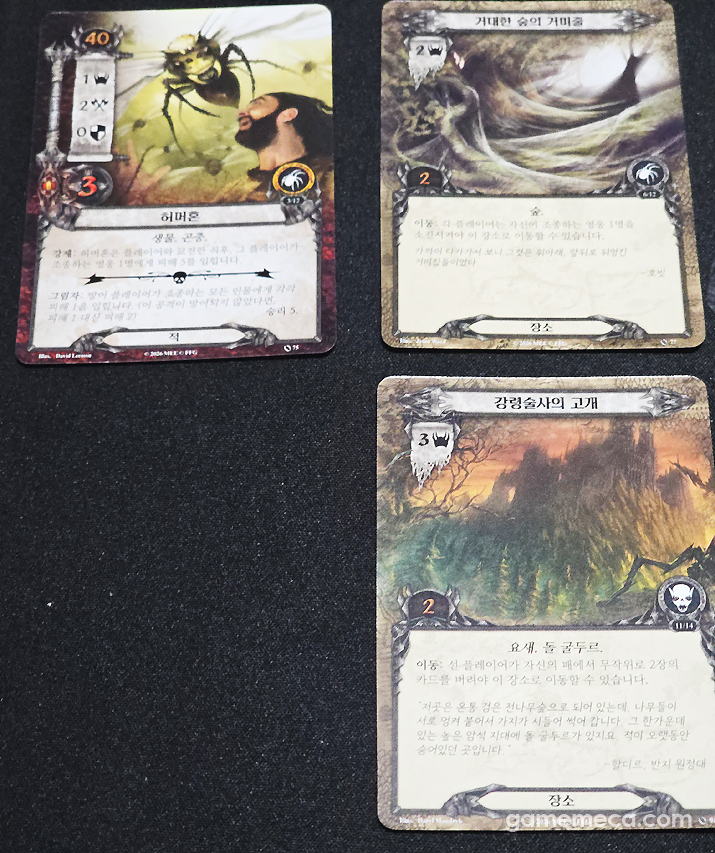
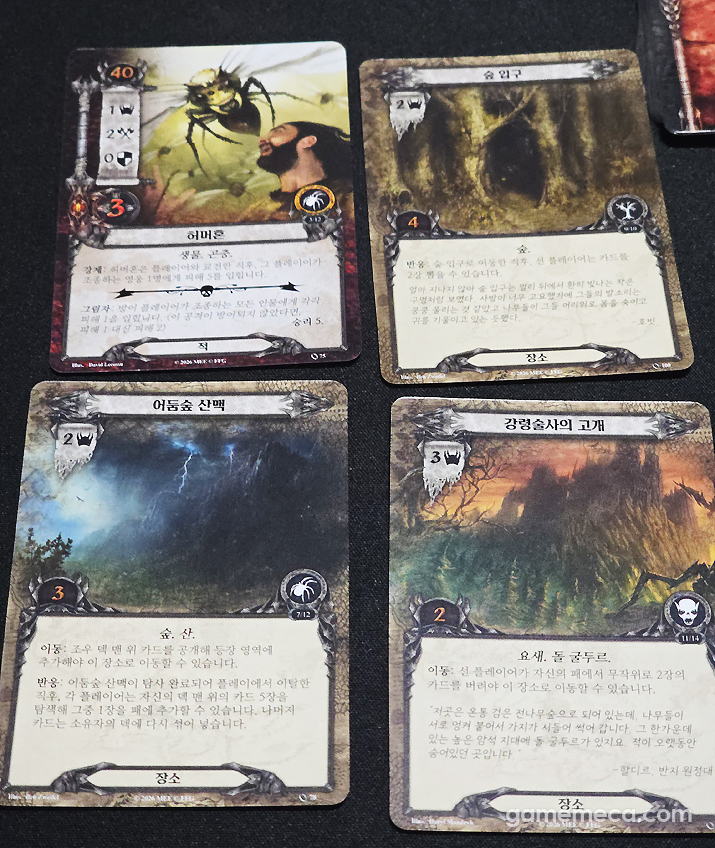
When the final boss, the Spawn of Ungoliant, crawled out of the deck, we made full use of Legolas's 'Ranged' keyword, which lets him snipe enemies even while they are actively engaged with another player. During the combat phase, three characters piled on at once, combining their attack stats for a grand total of 8. Subtracting the spawn's defense of 2 still left a clean 6 points of damage punched straight through in a coordinated team effort.
At that exact second, both of us let out a roar of triumph right across the gaming table. To top it all off, fate smiled upon us the very next round when Gandalf popped right out of Uchi's deck. Gandalf arrived, dealt 4 damage, and closed out the game cleanly. He might only stick around for a fleeting moment, but we had that single round to thank for turning a brutal boss fight into a walk in the park.
Conversely, the opponent experienced a rather frustrating game. The Tactics deck focuses heavily on buffing up heroes with weapons and armor, but the opponent was constantly bottlenecked by card costs, preventing them from deploying the gear they actually wanted. No matter how brilliantly you construct your deck, cards ultimately come off the top at random, meaning the right cards and the necessary resources refuse to line up on command. The sense of breathing room felt on one side of the table directly collided with the utter frustration felt on the other.
The introductory hurdle of diving in blind to your own deck
The main point of friction stemmed right from the starter decks. Grabbing the manual's recommended list made setup an absolute breeze, but it also meant diving headfirst into the game without the foggiest notion of what was actually lurking inside our decks. When you are forced to figure out card effects only after drawing them into your hand, executing multi-turn masterplans or saving resources for a rainy day becomes nearly impossible. The sheer frustration the opponent faced with the Tactics deck most likely originated right here.
Another minor hitch lies in the flavor of cooperation. Because the starter decks are rigidly locked into single spheres, the joy of mixing different playstyles to patch up each other's weaknesses didn't fully shine through in our first outing. The companion at the table noted that it would have been far sweeter to mix up various job roles for a richer cooperative dynamic. The rulebook does include separate deck-building guidelines, meaning once you get your bearings, you can freely cross-pollinate spheres and brew your own decks. Think of the initial awkwardness less as a flaw and more as a rite of passage before the real fun unlocks.
You don't need to be a lore expert, but bring a rules master for your maiden voyage
If you know the source material inside and out, moments like Gandalf's sudden appearance deliver pure, unadulterated immersion. That said, it is fundamentally a well-crafted medieval fantasy game at heart, meaning you won't be penalized if you don't know Middle-earth from a hole in the ground. Approaching it simply as a tightly designed cooperative card game on its own merits works like a charm.
If LCG-style card games are entirely foreign to you, the onboarding process might feel a bit steep. There are seven distinct phases to juggle every round, and drilling them into muscle memory takes time. You might end up misreading resource rules just like Uchi did, stretching a single introductory scenario across a solid two-hour block. Having a seasoned rules master on hand will make that bumpy first flight run infinitely smoother.
To wrap things up, The Lord of the Rings: The Card Game comes highly recommended not just for die-hard fans of the franchise, but for anyone who adores a solid cooperative challenge even if they couldn't care less about the lore. Juggling three heroes while scheming up card synergies and chasing sweet combos offers undeniable satisfaction. For anyone who found the relentless pressure of Arkham Horror: The Card Game a bit too heavy to bear, this makes for a wonderful alternative with plenty of room to catch your breath.
Just do yourself a favor: bring a rules master along for the first game, and if you can, take a quick peek through the starter deck contents beforehand. Knowing precisely when Gandalf might show up and when he plans to leave will let you squeeze every last ounce of value out of that precious single round.
UchiAn ordinary board game developer.Serves as the head of the board game studio 'Potpourri'.Sharing board game play logs on Instagramrunning actively.
게임메카는 한 달에 한 번 보드게임 개발사 포푸리의 우치 대표와 함께 좋은 보드게임을 소개하는 코너 [보드게임]을 연재합니다.
작년 10월에 크툴루 테마의 아컴호러 카드게임을 소개한 바 있습니다. 깊이 있는 플레이는 좋았으나 늘 바짝 긴장했습니다. 조사자 한 명만으로 단서를 모으고, 몰려드는 괴물을 막고, 도망을 다니다 보면 정신이 하나도 없었죠.
그래서 같은 계열의 '반지의 제왕: 카드 게임'을 펼치면서도 비슷한 어려움이 있으리라 각오했습니다. 플레이해 보니 첫인상은 많이 달랐습니다. 결론부터 말하자면 아컴보다 편했습니다. 미리 밝혀두자면, 이번 리뷰는 입문 시나리오 하나를 플레이한 후의 소감입니다. 한국어판은 작년 12월 텀블벅 펀딩이 진행됐으나, 올해 추석 연휴가 지나서야 배송됐기 때문에 생각만큼 많이 플레이 하지 못했습니다. 이번 리뷰는 첫 시나리오에서 느낀 점을 중심으로 정리했습니다.
코어 세트로 시작해 덱을 키워가는 협력 카드게임
반지의 제왕: 카드 게임은 판타지 플라이트 게임즈(FFG)가 만든 카드게임으로, 한국어판은 히트게임즈에서 선보였습니다. 반지의 제왕에 묘사된 세계를 배경으로 한 1~4인의 협력 게임입니다.
이 게임은 LCG(Living Card Game) 방식을 따릅니다. 무작위로 카드가 들어 있는 부스터 팩을 사 모으는 TCG(Trading Card Game)와 달리, 정해진 구성의 확장팩으로 카드와 퀘스트를 늘려가는 방식입니다. 코어 세트로 시작해 확장팩으로 새로운 모험을 추가하고, 모인 카드로 취향에 맞는 덱을 직접 짤 수 있습니다.
상자를 열면 카드가 대부분을 차지합니다. 코어세트 기준 영웅 카드 12장, 플레이어 카드 188장, 조우 카드 84장, 퀘스트 카드 10장, 축복 및 부담 카드 16장, 캠페인 카드 3장이 구성입니다. 여기에 자원 토큰 57개, 피해 토큰 66개, 진행 토큰 66개, 선 플레이어 토큰이 들어 있고, 위협 수치를 표시하는 다이얼이 4개 들어 있습니다.
매뉴얼에서는 첫 게임용으로 '어둠숲을 지나서' 시나리오와 함께 시작 덱 네 종류를 제안합니다. 시작 덱은 지도력, 전술, 정신, 지식의 네 영역으로 나뉘고, 각 덱에 같은 영역 영웅 세 명이 묶여 있습니다. 지도력은 다른 플레이어를 돕는 다목적 덱, 전술은 무기와 갑옷으로 무장하는 전투 덱, 정신은 의지력으로 퀘스트를 밀어붙이는 덱, 지식은 카드 뽑기로 위협에 대비하는 덱입니다. 그리고 네 덱 모두에 공통으로 들어가는 카드가 있는데, 영웅 못지않은 동료, 간달프입니다.
진행 토큰을 쌓고, 위협 수치를 관리하라
한 라운드는 일곱 단계로 나뉩니다. 단계마다 할 일이 정해져 있지만, 흐름으로 정리하면 단순합니다. 자원을 받고, 그 자원으로 카드를 내려놓고, 영웅을 퀘스트에 보내고, 다가온 적과 싸우고, 라운드가 끝나면 위협 수치가 올라갑니다.
자원은 영웅에게만 쌓입니다. 영웅 카드 위에 매 라운드 자원 토큰이 하나씩 올라가고, 이 자원으로 동료, 부착물, 이벤트 카드를 사용합니다. 동료는 자원을 받지 않습니다. 이 규칙은 뒤에서도 다시 한번 이야기하겠습니다.
아컴호러 카드게임을 해봤기에 퀘스트 진행 방식은 익숙했습니다. 퀘스트에 보낸 인물의 의지력이 등장 영역에 놓인 조우 카드의 위협 수치보다 높으면, 그 차이만큼 진행 토큰을 올립니다. 활성 영역에 장소 카드가 있다면 진행 토큰은 그 장소에 먼저 쌓이고, 남는 만큼 퀘스트 카드에 올라갑니다. 퀘스트 카드에 토큰이 다 차면 다음 단계로 넘어갑니다. 아컴에서 장소를 돌며 단서를 모아 목적 카드를 해결하던 것과 닮은 구조라, 비슷한 메커니즘을 공유하면서도 다른 점을 느꼈습니다.
패배 조건은 위협 수치입니다. 다이얼로 표시하는 위협 수치가 50에 닿으면 게임이 끝납니다. 위협은 라운드가 끝날 때마다 1씩 오르고, 퀘스트에서 조우 카드들의 위협 수치와 비교해 의지력이 모자랄 때도 오릅니다. 그래서 퀘스트 단계에서 이번 라운드에 위협이 얼마나 오를지 예상하는 것이 중요합니다. 조우 카드 중에는 공개되는 순간 위협을 추가로 올리는 사건 카드도 있어, 계산이 어긋나는 순간도 발생합니다.
영웅 셋, 자원 셋이 만드는 여유
아컴보다 덜 빡빡하다고 느낀 이유 중 하나는 조종하는 영웅의 수였습니다. 아컴에서는 조사자 한 명을 움직이지만(혼자 할 때는 조사자 둘을 굴리는 경우도 종종 있습니다), 이 게임에서는 영웅 세 명을 한꺼번에 운용합니다. 영웅이 셋이니, 자원도 매 라운드 3개씩 생깁니다.
핸드 제한이 없다는 점도 여유롭습니다. 세 명의 영웅 덕분에 자원도 아컴보다는 여유가 있어, 상대적으로 손에 쥔 카드를 내려놓을 여력이 생깁니다. 카드 사용이 쉬운 편이라 이 카드와 저 카드를 함께 쓰면 어떤 효과가 날지, 다음 라운드에 어떤 콤보를 노릴지 기대하게 되는 것이죠.
장소를 다루는 방식도 숨통을 틔워줍니다. 조우 카드로 공개된 장소는 먼저 '등장 영역'에 놓이는데, 이곳에 쌓인 카드의 위협 수치는 퀘스트 단계에서 플레이어 의지력과 겨루게 됩니다. 이동 단계에서 장소 하나를 골라 '활성 영역'으로 옮길 수 있지만, '반드시' 는 아닙니다. 등장 영역에 깔린 카드와 앞으로 펼쳐질 조우 카드의 위협 수치를 어느 정도 예상할 수 있으니, 그에 맞춰 퀘스트에 보낼 인물을 미리 준비할 수 있습니다. 위협 수치에 여유만 있다면 장소를 굳이 옮기지 않고, 인물을 퀘스트 대신 전투에 집중시키는 선택도 가능합니다.
같은 계열의 시스템에서 출발했지만, 쫓기는 느낌보다 계획하는 느낌이 앞섰습니다. 다만 이 여유가 모든 덱에서 똑같이 느껴지지는 않았습니다.
한 라운드만으로 게임을 지배한 간달프
2인으로 진행한 게임에서 필자는 아라고른, 세오드레드, 글로인으로 구성된 지도력 덱을, 상대는 김리, 레골라스, 살린의 전술 덱을 잡았습니다. 시나리오 난이도는 보통이었습니다.
첫 실수는 금방 나왔습니다. 앞서 이야기한 자원 규칙을 잘못 읽고, 영웅뿐 아니라 필드에 나온 동료도 자원을 받는 줄 알고 플레이한 것입니다. 라운드마다 자원이 수북이 쌓이니 '이 게임은 자원을 꽤 넉넉하게 주는구나' 하고 감탄하기까지 했습니다. 얼마 지나지 않아 잘못을 알아채고 바로잡았지만, 단계마다 처리할 일이 많은 이 게임에서 첫 판에 룰 하나쯤 놓치는 건 자주 발생할 수 있다는 점을 실감했습니다.
규칙을 바로잡은 뒤에도 지도력 덱은 든든했습니다. 지도력 덱은 동료를 여럿 깔아두는 종류였고, 적이 많지 않은 상황에서 퀘스트를 진행하는 데 큰 힘이 됐습니다. 특히 동료 중 파라미르가 빛났습니다. 파라미르를 소진시키고 플레이어 한 명을 고르면, 그 플레이어가 조종하는 모든 인물의 의지력이 그 단계가 끝날 때까지 1씩 오릅니다. 인물이 많을수록 효과가 커지니 동료를 늘어놓는 지도력 덱과 잘 맞아떨어졌습니다.
게임 중 가장 기억에 남는 카드는 간달프입니다. 플레이어마다 간달프가 2장씩 덱에 들어 있었는데, 효과가 무척 강력했습니다. 다만 한 라운드만 머물다 떠나는데, 그 모습을 보고 있으니 영화 속에서 프로도 일행을 잠시 도와주다 홀연히 사라지던 회색의 간달프가 떠올랐습니다. 원작을 아는 사람이라면 카드 한 장에 담긴 이런 연출이 반가울 듯 합니다.
막바지에는 앞서 이야기한 장소 운용이 빛을 발했습니다. 등장 영역에는 이미 장소 카드가 꽤 펼쳐져 있었지만, 더 이상 퀘스트 카드에 진행 토큰을 올릴 필요가 없는 시점이었습니다. 그래서 장소는 그대로 두고 인물을 전투에만 집중시키기로 했습니다. 그 판단은 옳았습니다.
마지막 적인 웅굴리안트의 자손이 등장하자, 레골라스가 다른 플레이어와 교전 중인 적도 공격할 수 있는 '원거리' 능력을 지녔다는 점을 활용했습니다. 공격 단계에서 인물 세 명이 한꺼번에 달려들어 공격력을 모두 합치니 8. 자손의 방어력 2를 빼고도 피해 6이 고스란히 들어간 연계 공격이 가능했습니다.
그 순간 게임을 하던 둘 다 테이블 앞에서 환호성을 질렀습니다. 특히나 다음 라운드에 운이 좋게 필자의 덱에서 간달프가 등장했습니다. 간달프가 등장해 피해 4를 넣으며 게임이 마무리됐죠. 짧게 머물다 떠나는 간달프였지만, 막바지 보스를 편하게 잡을 수 있었던 건 그 한 라운드 덕분이었습니다.
반면 상대는 답답한 판을 보냈습니다. 전술 덱은 무기와 갑옷으로 영웅을 강화하는 방향인데, 정작 쓰고 싶은 카드를 비용에 막혀 제대로 활용하지 못했다고 합니다. 덱을 아무리 잘 짜더라도 결국 카드는 무작위로 덱에서 뽑혀 나오기 때문에, 필요한 카드와 자원이 늘 맞물려 들어오지는 않습니다. 필자가 느낀 여유와 상대가 느낀 답답함이 같은 판에서 엇갈린 셈입니다.
덱 속 카드를 모른 채 시작하는 입문 단계
아쉬웠던 점은 입문 덱에서 비롯됩니다. 매뉴얼이 추천하는 덱을 그대로 가져다 쓰니 준비는 간편했지만, 그만큼 덱에 어떤 카드가 들어 있는지 모른 채 게임을 시작하게 됩니다. 카드를 손에 쥐고 나서야 효과를 파악하니, 몇 라운드 앞을 내다보며 자원을 아껴두는 식의 계획을 세우기 어렵습니다. 상대가 전술 덱에서 겪은 답답함도 여기에서 비롯됐을 것입니다.
또 하나는 협력의 결입니다. 시작 덱이 영역별로 묶여 있다 보니, 서로 다른 성향의 영웅이 섞이며 빈틈을 메워주는 재미는 첫 판에서는 덜 드러났습니다. 함께 플레이한 사람도 다양한 직업군을 섞어 협력하는 재미가 있으면 좋겠다고 평했습니다. 매뉴얼에는 덱 구성 규칙이 따로 실려 있기에, 게임에 익숙해지면 영역을 섞어 덱을 짤 수도 있습니다. 첫 판의 아쉬움은 입문 구성의 특성에 가깝고, 그 다음 판부터 열리는 재미라고 보는 편이 맞겠습니다.
세계관을 몰라도 괜찮지만, 첫 판은 룰마스터와 함께
원작을 알고 있다면 간달프 장면처럼 몰입할 수 있는 순간이 곳곳에 있습니다. 하지만 기본적으로 대중적으로 잘 알려진 중세 판타지 테마 게임이라, 세계관을 모른다고 해서 플레이에 지장이 있지는 않습니다. 원작과 상관없이 잘 만든 협력 게임으로 접근해도 충분히 즐길 만합니다.
LCG 방식의 카드게임이 처음이라면 입문이 쉽지 않을 수 있습니다. 일곱 단계마다 할 일이 정해져 있고, 이를 몸에 익히기까지 시간이 걸립니다. 필자처럼 자원 규칙을 잘못 읽는 일도 생기고, 입문 시나리오 한 판에 2시간이 걸리기도 합니다. 이 게임에 익숙한 룰마스터가 함께한다면 첫 판의 경험이 훨씬 매끄러워질 것입니다.
정리하자면, 반지의 제왕: 카드 게임은 원작 팬은 물론, 세계관은 몰라도 협력 게임을 좋아하는 사람에게 권할 만합니다. 세 명의 영웅을 굴리며 카드 조합을 궁리하고 콤보를 기대하는 재미가 분명하기 때문입니다. 아컴호러 카드게임의 압박이 버거웠던 사람에게도 한결 숨 돌릴 틈이 있는 대안이 될 수 있습니다.
다만 첫 판은 룰마스터와 함께하고, 가능하다면 시작 덱에 어떤 카드가 들어 있는지 한 번쯤 훑어보길 권합니다. 간달프가 언제 나타나 언제 떠날지 알고 있다면, 그 한 라운드를 훨씬 값지게 쓸 수 있을 테니까요.
우치평범한 보드게임 개발자.보드게임 회사 '포푸리' 대표를 맡고 있습니다.보드게임 플레이로그로 인스타그램을 운영 중입니다.
This news was translated by AI.
READ MORE
-
 [precedent.zip] Are Macros Always a Permanent Ban? The Environment Has Changed
-
 Is it okay to start Warframe now, which is in its 13th year?
-
 [+9 Enhanced] RedMagic Astra 2, 'Tier 0' in both performance and heat control
-
 [precedent.zip] Does deriding the appearance of a character modeled after a real person constitute the crime of insult?
RECOMMENDED NEWS
MOST POPULAR NEWS
- [Today's steam] RimWorld switched to its own engine
- SOOP Opens Event Page for 2026 League of Legends World Championship
- From Restoration, Patching to Porting, AI-Powered 'Game Reverse Engineering' Gains Attention
- [Today's steam] Mod breakage leads to Total War: Shogun 2 getting Overwhelmingly Negative reviews
- Summoners War to Gift Monsters to SWC2026 Participating Players
- New First-Person Soulslike Title 'Valor Mortis' Receives 'Mostly Positive' Reviews
- [Today's steam] Fool the AI, Co-op New Title 'Scam With Your Friends'
- The All-Out War on the Korean Peninsula Depicted in Call of Duty: Modern Warfare 4
- Cook, Manage, and Fight: Steam Cooking Game Festival Begins
- Hogwarts Legacy and Where Winds Meet to Sequentially Receive DLSS 5 Support
MEDIA PARTNERSHIPS



GAMEMECA SNS


 GAMEMECA GLOBAL SITE