
[precedent.zip] Are Macros Always a Permanent Ban? The Environment Has Changed
[판례.zip] 매크로는 무조건 영구정지? 환경이 달라졌다
2026.10.15 12:42 UTC+9

AI Summary
Courts historically validated harsh macro bans based on severe game disruptions. Modern hardware features simple shortcuts unlike old 24/7 farming bots. Future legal reviews must weigh actual in-game impact rather than blanket bans.

Veterans of online gaming rarely hold a soft spot for macros. Back in the day, macros typically referred to programs in MMORPGs like Lineage that autonomously hunted monsters and gathered items without human input—the classic "auto-play." Critics argued these programs ruined fairness and sucked the joy out of the experience for honest players, leading to a strong consensus that macro usage deserved a strict ban.
Yet, times have changed, and so have macros. While shady auto-play bots that outright replace human control still exist, modern gaming keyboards and mice often feature built-in functions to assist with repetitive key inputs. The catch? Some publishers fail to make distinctions, slapping a permanent ban under the all-encompassing umbrella of "using unauthorized programs."
Sure, banning macros that rely on unauthorized software is entirely understandable. But in an era where macro-enabled hardware is everywhere, is hitting every single use case with a permanent ban really justified? In this installment of precedent.zip, we revisit past account-suspension cases involving Lineage macros to ponder whether those vintage rulings still hold water in today's gaming landscape.
How did the courts judge users slapped with permanent bans for auto-play?
Let us wind the clock back to 2007. Two Lineage players found themselves staring at permanent account suspensions for allegedly using unauthorized auto-play programs. Both had been enjoying the game since 2002, and NC confirmed their use of auto-play software, dropping the hammer with permanent bans in May 2007.
Naturally, the players fought back by filing a lawsuit, demanding the lifting of their bans along with one million won each in damages for emotional distress. Interestingly, neither player contested the fact that they actually used unauthorized auto-play programs. Instead, they argued that a permanent ban for a single infraction was disproportionately harsh, and that the terms of service lacked clear definitions regarding prohibited programs and the resulting penalties.
On the flip side, the publisher countered that powerful penalties were vital since auto-play programs dismantle the natural order of the game. They specifically highlighted the fact that both users had rented out their accounts to so-called "leveling offices"—enterprises that took cash to grind characters on behalf of others.

In this round, the court ruled in favor of the publisher. The reasoning was that auto-play programs operate twenty-four hours a day without human supervision, thereby destroying the core system of the game, dampening the enthusiasm of other users, and putting unnecessary strain on game servers. Factor in the account rentals to leveling offices, and the permanent bans could hardly be deemed overly harsh.
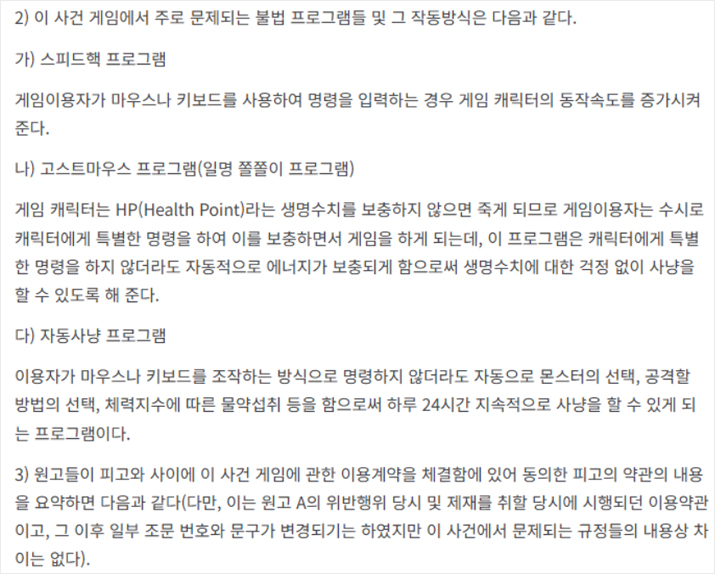
While the plaintiffs' claims were dismissed, the real takeaway lies in why the court deemed the permanent bans justified. The court broke down the unauthorized programs used in the game back then into three distinct categories: ▲ speed hacks that accelerated character action speeds; ▲ ghost mice that automated health recovery without extra inputs; and ▲ auto-play programs that handled everything from monster selection to combat and potion consumption.
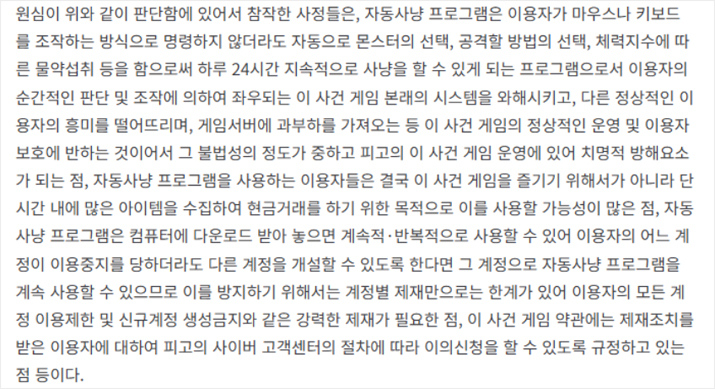
The court did not treat these programs as equals. Crucially, it viewed auto-play programs as a far more grave violation than speed hacks or ghost mice because they fundamentally shattered the core structure of gameplay, which relies on a user's instantaneous judgment and control.
The publisher's operational policies at the time reflected these nuances. According to the ruling, the policy applied to the second user permitted a permanent ban for a first-time offense involving malicious auto-play programs, while stepping down penalties for supportive auto-scripts—such as heals and buffs—to a first-time warning, a ten-day suspension for a second offense, and a permanent ban only on the third. Clearly, not all macros were lumped into the exact same severity tier.
The court similarly weighed the impact each program had on the game and how severe the violation was compared to others before validating the permanent ban. Though it is an eighteen-year-old ruling, it remains well worth pondering when tackling today's macro dilemmas.
Is it fair to ban all accounts linked to a user just for using a macro?
An even more famous ruling regarding macros emerged from the Supreme Court in 2010, stemming from yet another Lineage auto-play dispute. At the time, NC's operational policy mandated a permanent ban for even a single use of an auto-play program. Furthermore, if three or more accounts owned by a single user were permanently banned, the publisher reserved the right to restrict access to all remaining accounts. The user naturally argued that such sweeping penalties were overly harsh and unfair.
Once again, the Supreme Court sided with the publisher. It reasoned that because an auto-play program can run continuously once installed, penalizing just one account would leave the culprit free to fire up another and keep right on botting. The risk of mass item hoarding through auto-play for cash-trading purposes also served as a crucial pillar for the ruling.
In addition, the court factored in that the publisher had individually notified users of the terms and operational policies, and that hitting three accounts was a prerequisite for restricting the rest. Ultimately, the Supreme Court concluded that these clauses were neither unfair nor in violation of the principle of proportionality.
This verdict became a cornerstone precedent backing up robust publisher sanctions against macros. Still, we need to pause and clarify one vital point here: the Supreme Court did not endorse a blanket rule stating that "all kinds of macros deserve permanent bans." Rather, the judgment factored in the specific havoc wreaked by auto-play programs at the time, violations across multiple accounts, and proper notice and consent procedures regarding operational policies. So, can we blindly apply that exact logic to every modern macro function today?
Are auto-play programs and built-in keyboard macros the same thing?
Let us fast forward to the present day. Modern gaming keyboards and mice often come packed with features that let you execute multiple commands with a single keystroke or automate repetitive inputs. Imagine a user keeping their eyes glued to the screen while playing, but bundling repetitive key presses into a single tap. Contrast that with someone who configures a program to roam and hunt monsters independently while stepping away from the keyboard. Both share the common trait of automated input, but claiming they have the exact same impact on the game is a stretch.
Of course, utilizing built-in keyboard features is not a free pass. Depending on the game, simple repetitive inputs might grant unfair advantages over other players or compromise fair play. While publishers have every right to ban such actions in their terms, the real nuance lies in evaluating what the function actually automated and what impact it truly had on the game.
We also need to dissect the phrase "unauthorized program" thrown around by publishers. Just because a publisher disapproves of a program does not mean it constitutes an illegal act under civil or criminal law, as rule violations inside a game are entirely distinct from breaches of statutory law. Above all, deciding that a term of service was breached is one thing; deciding whether slapping a permanent ban for that breach is justified is an entirely different beast. Shouldn't we be looking at the nature and severity of the violation, repetition, actual gains acquired, and the fallout for other players all at once?

There is another layer to consider: the economic value of gaming accounts. These days, sinking years into leveling characters, opening the wallet for hefty microtransactions, and securing rare gear is par for the course. Depending on the game, characters and items can change hands for thousands of dollars. What happens when an account like that gets permanently banned over a single macro instance? Everything the user invested—time, money, and in-game achievements—vanishes in a puff of smoke.
The core hurdle is that under current legal frameworks, gamers struggle to claim standard ownership rights over digital items. Because virtual items reside on servers managed by publishers, the baseline legal structure treats users as mere licensees bound by user agreements.
That does not mean virtual items lack economic value. A Supreme Court ruling from April 13, 2012 (2011Du30281) regarding the repeated buying and selling of Lineage game currency determined that virtual currency counts as "goods" under the Value-Added Tax Act. While acknowledging virtual goods for tax purposes does not automatically translate to granting civil ownership rights to users, it creates a rather odd paradox: the system recognizes enough economic value to tax real-world trades of game currency, yet defaults to standard terms of service when dealing with the catastrophic loss of accounts through permanent bans.
Nobody disputes the necessity of publisher operational rights. Even so, given the heavy economic weight attached to modern gaming accounts, shouldn't we pay closer attention to the immense value users forfeit when hit with a permanent ban?

Moving beyond the simple question of "Did they use a macro?"
Lately, we have seen instances where users actually win lawsuits against publishers over account suspensions. However, those victories typically revolved around proxy play or other distinct disputes rather than macro usage. Because macros directly undermine fair play and infringe upon the rights of fellow users, courts have traditionally taken a hardline stance, making user victories against publishers hard to come by.
The 2008 and 2000-era rulings we looked at earlier also validated harsh publisher penalties. Yet the courts upheld those permanent bans not simply because "a macro was used," but because of concrete aggravating factors: twenty-four hour automated farming, hoarding massive amounts of items for cash trading, and inflicting direct harm on legitimate players. Notably, the 2008 ruling went out of its way to differentiate the severity of auto-play programs from other auxiliary tools.
Can we honestly apply that exact same yardstick to simple repetitive inputs driven by keyboard or mouse macro features? While old precedents do not provide a blanket answer, we must recognize that past macro rulings did not universally justify permanent bans across every conceivable form of automation.

Furthermore, we must separate the right to ban macros from the right to permanently ban accounts. Publishers absolutely need to ban macros to protect honest players and maintain a level playing field. But possessing the right to forbid macros does not automatically mean every single macro infraction warrants a permanent ban. Should a program that completely replaces human presence for round-the-clock farming be treated with the exact same severity as a quality-of-life macro that merely handles repetitive keystrokes while the user sits right there playing?
Furthermore, a modern gaming account is far more than a mere login credential. It represents years of character progression, hard-earned gear, and a cumulative investment of time and money. Permanently banning such an account carries a completely different weight than a temporary suspension. While user violations of terms cannot be hand-waved away just because an account holds economic value, publishers can no longer assume that wielding a permanent ban is always justified the moment a rule break is detected.
What matters most is achieving a fair balance between the substance of a violation and the resulting penalty. The auto-play programs judged by courts eighteen years ago look vastly different from today's diverse macro utilities. When weighing modern disputes, we need to push past the lazy question of "Did they use a macro?" Instead, we must closely inspect the specific features used, their actual impact on the game, and whether a permanent ban represents a proportional response. That is precisely where courts will need to focus their scrutiny in future macro battles.

온라인게임을 오래 즐겨온 유저들은 '매크로'에 좋은 인상을 가지고 있지 않습니다. 과거에 매크로는 리니지와 같은 MMORPG에서 캐릭터가 알아서 몬스터를 찾아 사냥하고, 아이템을 수집하는 프로그램을 의미하는 경우가 많았습니다. 이른바 '자동 사냥'이죠. 이런 프로그램은 게임의 공정성을 해치고 정상적으로 게임을 즐기는 다른 유저의 흥미를 떨어뜨린다고 지적됐습니다. 이에 매크로 사용을 엄격하게 금지해야 한다는 데 상당수 유저가 공감했죠.
그런데 세월이 흐르면서 매크로의 모습도 많이 달라졌습니다. 사람의 컨트롤을 대신하는 불법 자동사냥 프로그램도 존재하지만, 요즘은 게이밍 키보드나 마우스에 내장된 기능으로 반복적인 키 입력을 보조하는 경우도 있습니다. 그런데 게임사 중 일부는 이러한 차이를 구별하지 않고 '비인가 프로그램 사용'이라는 포괄적인 규정을 적용해 계정을 영구정지할 수 있습니다.
게임사가 비인가 프로그램을 활용한 매크로를 금지하는 것은 이해할 수 있습니다. 하지만 매크로기능이 내장된 기기가 많아지는 환경에서 모든 활용에 영구정지라는 제재를 가하는 것도 정당할까요? 이번 ‘판례.zip’에서는 과거 리니지의 매크로 사용으로 인한 계정정지 사건을 살펴보면서, 지금의 게임 환경에도 당시 판결을 그대로 적용할 수 있을지 생각해보는 시간을 마련했습니다.
자동사냥으로 영구정지된 유저에 대한 법원의 판단은?
사건은 2007년으로 거슬러 올라갑니다. 리니지를 플레이하던 유저 2명이 비인가 자동사냥 프로그램을 사용했다는 이유로 계정 영구정지를 당했습니다. 두 사람 모두 2002년부터 게임을 즐겨왔고, 엔씨는 이들이 자동사냥 프로그램을 사용한 사실을 확인해 2007년 5월 계정 영구이용정지 조치를 내렸습니다.
유저들은 이에 반발해 소송을 제기했습니다. 계정 영구정지를 해제하고, 정신적 손해에 대한 위자료로 각각 100만 원을 지급하라는 청구였습니다. 특이한 점은 두 사람 모두 비인가 자동사냥 프로그램을 사용했다는 사실 자체는 인정했다는 것입니다. 다만 단 한 번만 사용했는데도 계정을 영구정지하는 것은 지나치게 가혹하고, 이용약관에 사용이 금지되는 프로그램과 제재 내용이 명확하게 규정되어 있지 않다고 주장했습니다.
반면 게임사는 자동사냥 프로그램이 정상적인 게임 질서를 무너뜨리는 만큼 강력한 제재가 필요하다고 반박했죠. 특히 두 유저가 이른바 '육성사무실'에 계정을 대여한 사실도 문제가 지적했습니다. 육성사무실은 돈을 받고 다른 사람 캐릭터를 대신 키워주는 곳이었습니다.
이번 사건에서 법원은 게임사의 손을 들어주었습니다. 자동사냥 프로그램은 사람이 컨트롤하지 않아도 24시간 사냥할 수 있어 게임 본래의 시스템을 무너뜨리고, 다른 이용자의 흥미를 떨어뜨리며, 게임서버에도 부담을 준다고 보았습니다. 여기에 육성사무실에 계정을 대여한 사정까지 고려하면 영구정지가 지나치게 가혹한 제재라고 보기 어렵다는 것이었습니다.
두 유저의 청구는 기각됐지만, 눈여겨볼 부분은 법원이 영구정지가 정당하다고 판단한 이유에 있습니다. 법원은 당시 게임에서 사용되던 비인가 프로그램을 세 종류로 나누어 설명했습니다. ▲ 캐릭터의 동작속도를 증가시키는 '스피드핵' ▲ 별도 조작 없이 체력을 회복하도록 돕는 '고스트마우스' ▲ 몬스터 선택부터 공격과 물약 사용까지 자동으로 수행하는 '자동사냥 프로그램'이었습니다.
법원은 위 프로그램들을 동일하게 평가하지 않았습니다. 특히 자동사냥 프로그램에 대해서는 유저의 순간적인 판단과 컨트롤에 따라 진행되는 게임의 기본 구조를 무너뜨린다는 점에서 스피드핵이나 고스트마우스보다 위반행위의 중대성이 크다고 보았죠.
당시 게임사의 운영정책에도 이러한 차이가 나타납니다. 판결문에 따르면 두 번째 유저에게 적용된 운영정책은 악성 자동사냥 프로그램을 사용하면 1회 위반으로 영구정지할 수 있도록 규정하면서도, 힐이나 버프 등을 지원하는 자동 프로그램에는 1회 경고, 2회 10일 이용정지, 3회 영구정지라는 단계적인 제재를 두고 있었습니다. 매크로라고 해서 모두 같은 수준의 위반행위로 본 것은 아니었던 겁니다.
법원 역시 프로그램이 게임에 미치는 영향과 다른 프로그램에 비해 얼마나 중대한 위반인지를 살펴 영구정지의 정당성을 판단했습니다. 18년 전 판결이지만, 오늘날의 매크로 문제를 생각할 때도 충분히 주목할 만한 부분입니다.
매크로를 사용했다면 유저의 모든 계정을 정지해도 될까?
매크로와 관련해 더 유명한 판결은 2010년 대법원에서 나왔습니다. 이 사건 역시 리니지의 자동사냥 프로그램과 관련된 분쟁입니다. 당시 엔씨 운영정책은 자동사냥 프로그램 등을 한 번만 사용하더라도 해당 계정을 영구정지할 수 있도록 하고 있었습니다. 여기에 유저가 보유한 3개 이상의 계정이 영구정지되면, 나머지 모든 계정도 이용을 제한할 수 있도록 했는데요. 유저는 이러한 제재가 지나치게 가혹하고 불공정하다고 주장했습니다.
대법원은 이번에도 게임사의 손을 들어주었습니다. 자동사냥 프로그램은 한 번 설치하면 계속해서 사용할 수 있기 때문에 특정 계정을 정지하더라도, 다른 계정으로 다시 자동사냥을 할 수 있다는 점을 고려했습니다. 자동사냥을 통해 대량의 아이템을 확보하고 이를 현금거래에 활용할 우려가 있다는 점도 중요한 판단 근거가 됐습니다.
또한 게임사가 약관과 운영정책을 개별적으로 고지했고, 3개 이상의 계정이 제재를 받아야 전체 계정을 제한할 수 있다는 점도 반영했죠. 결국 대법원은 해당 약관이 불공정하거나 비례의 원칙에 어긋난다고 볼 수 없다고 판단했습니다.
이 판결은 이후 게임사의 강력한 매크로 제재를 뒷받침하는 중요한 판례가 됐습니다. 다만 여기서 한 가지 짚고 넘어갈 필요가 있습니다. 대법원이 인정한 것은 '모든 종류의 매크로는 영구정지해도 된다'는 일반적인 원칙은 아니라는 점입니다. 당시 자동사냥 프로그램이 게임에 미치는 악영향과 여러 계정에서의 위반행위, 운영정책의 고지 및 동의 절차 등을 종합적으로 고려한 판단이었기 때문입니다. 그렇다면 지금의 모든 매크로 기능에도 같은 판단을 적용할 수 있을까요?
자동사냥 프로그램과 키보드에 내장된 매크로 활용은 같은가?
이제 시간을 현재로 돌려보겠습니다. 현재 게이밍 키보드나 마우스에는 여러 명령을 한 번의 입력으로 실행하거나 특정 입력을 반복하는 기능이 탑재되기도 합니다. 유저가 직접 화면을 보면서 게임을 하되, 반복해서 눌러야 하는 키를 하나로 묶었다고 가정해 보죠. 반면 다른 유저는 캐릭터가 스스로 몬스터를 찾아 다니며 사냥하도록 프로그램을 설정하고 자리를 비웠습니다. 두 경우 모두 조작 일부가 자동화됐다는 공통점은 있습니다만, 게임에 미치는 영향까지 같다고 보기는 어렵습니다.
물론 키보드에 내장된 기능을 쓴다고 하여 언제나 문제가 없는 것은 아닙니다. 게임에 따라 반복 입력만으로 다른 유저보다 현저한 이익을 얻거나 게임의 공정성을 해치는 경우가 발생할 수도 있으니까요. 게임사가 이러한 행위를 약관으로 금지하는 것도 가능합니다만, 그 기능이 실제로 무엇을 자동화했고, 게임에 어떤 영향을 미쳤는지를 구별해서 판단할 필요가 있다고 생각합니다.
게임사가 사용하는 '비인가 프로그램'이라는 표현도 생각해 볼 부분입니다. 게임사에서 허용하지 않은 프로그램이라는 사실이, 법률상 불법행위라는 뜻은 아닙니다. 게임사의 이용규칙 위반과 법률 위반은 명확히 구별되기 때문입니다. 무엇보다 약관 위반에 해당한다는 판단과, 그 위반에 영구정지를 부과하는 것이 정당하다는 판단은 별개입니다. 위반행위의 내용과 정도, 반복 여부, 실제로 얻은 이익과 다른 유저에게 미친 영향 등을 함께 살펴야 하지 않을까요?
한 단계 더 생각해 볼 문제가 있습니다. 게임 계정의 가치입니다. 오늘날에는 유저가 몇 년에 걸쳐 캐릭터를 육성하고, 상당한 금액을 결제하며, 희귀한 아이템을 확보하는 것이 낯설지 않습니다. 게임에 따라 캐릭터와 아이템이 수백만 원 또는 수천만 원에 거래되기도 하죠. 이런 계정이 단 한 번의 매크로 사용으로 영구정지된다면 어떨까요? 유저가 투자한 시간, 돈, 게임 속에서 쌓아온 성취가 한 순간에 사실상 사라지게 됩니다.
문제는 현행 법체계에서 게임 유저가 아이템에 대해 일반적인 물건과 같은 소유권을 주장하기 어렵다는 점입니다. 게임 아이템은 게임사가 관리하는 서버에 존재하는 데이터이고, 유저는 게임사와 체결한 이용계약에 따라 이를 사용한다는 구조가 기본이기 때문입니다.
그렇다고 게임 아이템에 재산적 가치가 없다는 뜻은 아닙니다. 대법원 2012. 4. 13. 선고 2011두30281 판결은 리니지 게임머니를 반복적으로 매수·판매한 행위와 관련해 게임머니도 부가가치세법상 '재화'에 해당한다고 판단했습니다. 세법상 재화로 인정된다는 사실이 곧 이용자의 민법상 소유권을 인정한다는 의미는 아닙니다만, 조금 이상한 부분도 있습니다. 현실에서 게임머니를 거래하면 세금을 부과할 만큼 경제적 가치를 인정하면서도, 그 가치를 잃게 되는 계정정지 문제에서는 여전히 이용계약과 약관이 중요한 판단 기준으로 작용한다는 점입니다.
게임사의 운영권한이 중요하다는 데 이견은 없습니다. 그러나 게임 계정에 상당한 경제적 가치가 형성된 현실을 고려한다면, 영구정지라는 제재로 유저가 잃게 되는 가치에도 좀 더 주목할 필요가 있지 않을까요?
‘매크로를 사용헸는가’에서 한 단계 더 나아가야
최근에는 게임 계정정지와 관련해 유저가 승소하는 사례도 등장하고 있습니다. 다만 이는 매크로 사용이 아닌 대리게임 내지는 다른 쟁점에 관한 분쟁이었습니다. 매크로는 게임의 공정성과 다른 이용자의 권리를 직접적으로 침해할 수 있다는 점에서 법원이 엄격하게 판단해 온 영역으로, 아직 유저가 게임사를 상대로 이기는 경우는 쉽게 확인할 수 없습니다.
앞서 살펴본 2008년과 2010년 판결 역시 게임사의 강력한 제재를 정당하다고 인정했죠. 다만 당시 법원이 영구정지를 정당하다고 판단한 이유는 단순히 '매크로를 사용했기 때문'만은 아니었습니다. 24시간 자동 사냥이 가능하고, 대량의 아이템을 획득해 현금거래에 활용할 수 있으며, 정상적인 게임 이용자에게 피해를 줄 수 있다는 구체적인 사정이 중요하게 고려됐습니다. 특히 2008년 판결에서는 자동사냥 프로그램과 다른 보조 프로그램의 위반 정도를 구별해 판단하기도 했죠.
법원이 문제로 삼았던 자동사냥 프로그램과 성격이 키보드나 마우스 내장 기능을 이용한 단순 반복 입력에 동일한 판단을 내릴 수 있을까요? 기존 판결만으로 그 답을 단정하기는 어렵지만, 과거의 매크로 관련 판결이 모든 종류의 자동화 기능에 대한 영구정지를 일률적으로 정당화한 것은 아니라는 점은 분명히 짚어볼 필요가 있습니다.
아울러 매크로를 금지할 권리와 게임 계정을 영구정지할 권리는 구별해야 합니다. 게임사가 매크로를 금지하는 것은 필요합니다. 정상적인 유저를 보호하고 공정한 경쟁 환경을 유지하는 것은 게임사가 해야 할 중요한 역할입니다. 다만 매크로 사용을 금지할 수 있다는 사실이, 모든 매크로 사용에 동일한 영구정지를 적용해도 된다는 의미는 아닐 것입니다. 사람의 컨트롤을 완전히 대신해 하루 종일 사냥하는 프로그램과, 유저가 직접 게임을 진행하되 단순 반복 입력만 매크로가 보조하는 것을 반드시 같은 수준으로 다뤄야 할까요?
더구나 현재의 게임 계정은 단순히 게임에 접속하기 위한 수단만은 아닙니다. 몇 년에 걸쳐 육성한 캐릭터, 어렵게 획득한 아이템, 그 과정에서 투자한 시간과 비용이 축적된 결과물이죠. 이런 계정을 영구정지하는 것은 며칠 동안 게임을 이용하지 못하게 하는 제재와는 무게가 다릅니다. 계정에 상당한 경제적 가치가 있다는 이유만으로 이용자의 약관 위반이 정당화될 수는 없습니다. 다만 게임사가 약관 위반을 확인했다는 사실만 가지고, 그간 유저가 쌓아온 모든 가치를 잃게 하는 제재가 언제나 정당하다고 볼 수도 없는 단계입니다.
중요한 것은 위반행위의 실질과 그에 따른 제재의 균형이라 생각합니다. 18년 전 법원이 판단했던 자동사냥 프로그램과 오늘날의 다양한 매크로 기능은 그 모습과 활용 방식이 상당히 다릅니다. 이러한 환경을 반영해 관련 사건을 판단할 때도 단순히 '매크로를 사용했는가'라는 질문에서 한 걸음 더 나아갈 필요가 있지 않을까요? 어떤 기능을 사용했고, 게임에 어떠한 영향을 미쳤으며, 그에 대한 영구정지가 과연 적절한 제재인지 등을 세밀하게 따져보는 것입니다. 앞으로 매크로 관련 분쟁에서 법원이 보다 구체적으로 살펴봐야 할 부분도 바로 여기에 있을 것입니다.
This news was translated by AI.

Let's not lose our initial resolve. Meticulously, one by one. risell@gamemeca.com
READ MORE
-
 Is it okay to start Warframe now, which is in its 13th year?
-
 [+9 Enhanced] RedMagic Astra 2, 'Tier 0' in both performance and heat control
-
 [precedent.zip] Does deriding the appearance of a character modeled after a real person constitute the crime of insult?
-
 [Board Game] There is no story, but the sense of command remains, Nikke
RECOMMENDED NEWS

MOST POPULAR NEWS
- [LOL Meme] "Is it you guys again?" Worlds favorites Hanwha Life Esports, Gen.G, and BLG
- 2026 Worlds Theme Song Unveiled, Capturing Faker's Sixth Championship Glory
- Wardogs, which became the trend of shooting games, starts its second season on the 15th
- [Today's steam] RimWorld switched to its own engine
- Valve's New Game 'Deadlock' Concurrent Players Surpass Team Fortress 2 Record
- [Cartoon] The arrival of the sharpshooter 'Aion 2'?
- Summoners War to Gift Monsters to SWC2026 Participating Players
- A Meeting of Isaac and Doom, Boomer Shooter 'Paperhead' Released on Steam
- Honkai: Star Rail's Kafka and Robin Are Coming to Zenless Zone Zero
- Yujiro Hanma Descends into Tekken 8, New Teaser Revealed
MEDIA PARTNERSHIPS



GAMEMECA SNS


 GAMEMECA GLOBAL SITE