
Strengthening Ideological Censorship, China Raises the Level of Generative AI Control
이념적 검열 강화, 중국 생성형 AI 통제 수위 높인다
2025.12.31 11:04 UTC+9

AI Summary
China has unveiled strict new draft regulations for AI conversational services. Developers must mandate clear human-machine disclosure and implement strict usage time limits. The rules also enforce heavy ideological censorship and mandatory reporting for large-scale AI platforms.
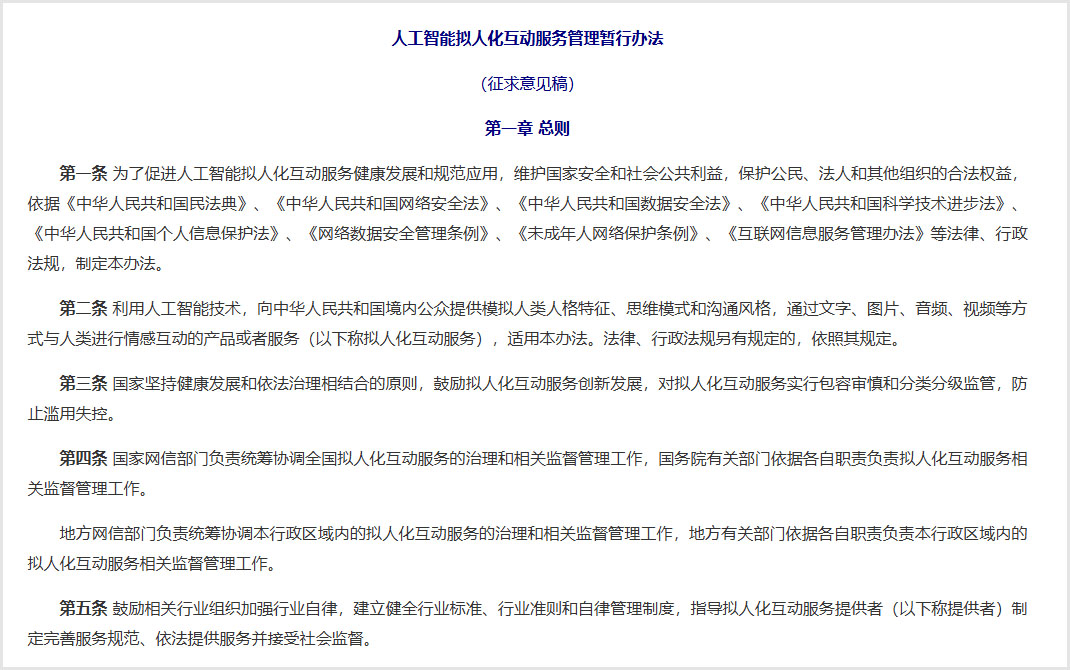
Chinese authorities are implementing strict controls on generative AI technologies that mimic human emotions and conversational patterns.
On the 27th, the Cyberspace Administration of China released a draft of regulations for AI-based conversational services. This mandate applies to all service providers that simulate human-like interaction through text, voice, or video. Public feedback on the draft is being accepted until January 25th.
The core of the draft focuses on preventing excessive user dependency and addiction. AI service providers must clearly inform users that they are interacting with an AI, not a human, at the time of login and during conversations. In particular, if a user utilizes the service for more than two hours continuously, the provider must trigger a pop-up or warning to encourage the user to stop, and the logout process must be designed to be simple.
Ideological censorship standards for content have also been significantly strengthened. Content that threatens national security or undermines the core values of socialism is strictly prohibited. Furthermore, AI must be trained on datasets that reflect Chinese history and traditional culture without compromising regime stability. Generating information related to violence, gambling, pornography, or defamation is also classified as illegal.
Measures for the physical and mental safety of users have also been included. Content that glorifies self-harm or suicide must be blocked, and systems must be in place to notify guardians or relevant authorities if a user shows signs of extreme distress. Additionally, minors are prohibited from using AI technology without parental consent, and large companies with over 1 million registered users must submit regular assessment reports to the authorities.
중국 당국이 인간의 감정과 소통 방식을 모방하는 생성형 AI 기술에 대해 강력한 통제에 나섰다.
중국 사이버공간관리국은 지난 27일, 인공지능 기반 대화형 서비스 관리를 위한 규제 초안을 발표했다. 이번 안은 텍스트, 음성, 영상 등을 통해 인간과 유사한 상호작용을 시뮬레이션하는 모든 서비스 기업을 대상으로 한다. 오는 1월 25일까지 해당 규제안에 대한 의견 수렴이 진행될 예정이다.
초안의 핵심은 이용자의 과도한 의존과 중독 방지다. AI 서비스 제공자는 사용자가 사람이 아닌 인공지능과 대화하고 있다는 사실을 로그인 시점과 대화 도중 명확히 알려야 한다. 특히 사용자가 2시간 이상 연속으로 서비스를 이용할 경우, 팝업창을 띄우거나 경고를 통해 이용 중단을 유도해야 하며 로그아웃 절차도 간편하게 설계해야 한다.
콘텐츠 내용에 대한 이념적 검열 기준도 대폭 강화됐다. 국가 안보를 위협하거나 사회주의 핵심 가치를 훼손하는 내용은 엄격히 금지된다. 또한 중국의 역사와 전통 문화를 반영하고 체제 안정을 해치지 않는 데이터셋으로 인공지능을 학습시켜야 한다. 폭력, 도박, 음란물 및 타인의 명예를 훼손하는 정보 생성 역시 불법으로 규정됐다.
사용자의 신체적, 정신적 안전을 위한 조치도 포함됐다. 자해나 자살을 미화하는 콘텐츠는 차단되며, 사용자가 극단적인 징후를 보일 경우 즉시 보호자나 관련 기관에 통보하는 시스템을 갖춰야 한다. 그 외에 미성년자가 보호자 동의 없이 AI 기술을 사용하는 것도 금지되며, 등록 사용자 100만 명 이상의 대형 업체는 당국에 정기적인 평가 보고서를 제출해야 한다.
This news was translated by AI.

I will greet you with a good article. niro201@gamemeca.com




RECOMMENDED NEWS

MOST POPULAR NEWS
- Will Miami Airport and Downtown Become 'Vice City' to Match the Release of GTA 6?
- On September 18, a Game and eSports Event to be Held at Dongdaemun DDP
- [gamescom 26] CDPR and SEGA Win Three Awards at Gamescom Awards
- [gamescom 26] A Quick Look at the 25-Year History of Xbox
- Which Teams Will Advance to the Finals? 2026 LCK CL Playoffs Begin on the 31st
- [Today's steam] Sword by day, vampire by night 'Dawn Walker' at the top of sales
- From Wolverine to Onimusha and Donwalker, Highly Anticipated September Releases Approaching Like a Tsunami
- [G-Star 26] HoYoverse to Meet Users via HoYoLAND and G-Star
- Up to 75% Off, Epic Games Store Late Summer Sale Begins
- [gamescom 26] Hands-On with the Hot Soulslike 'Waves of Oblivion'
MEDIA PARTNERSHIPS



GAMEMECA SNS