
A Bitter Aftertaste of Mannerism in Deep Narrative Two Shots: 'Coffee Talk Tokyo'
깊은 서사 투 샷에 씁쓸한 매너리즘 뒷맛 '커피 톡 도쿄'
2026.05.26 18:04 UTC+9

AI Summary
Occasionally, when playing a game, you encounter a work that makes you feel the developer is a warm-hearted person. They pour affection into the characters they create and pay great attention to ensuring the dialogue they craft is not overly stimulating or misinterpreted. In this process, most characters are drawn a little too good.
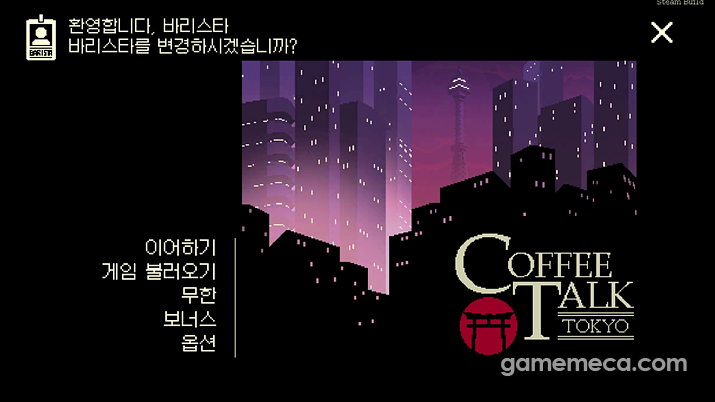
Occasionally, when playing a game, you can feel that the developer is a warm-hearted person. They pour affection into the characters they create, and pay great attention to ensuring the dialogue they craft isn't overly sensational or misinterpreted. In the process, most characters end up being drawn a little too virtuously.
If you were to ask me for the prime example of such games, I'd point to the 'Coffee Talk' series. The dialogue of the characters is written with delicate lyricism, and the overall theme is based on humanism, adding warmth and tranquility. Upon finishing, it left a bittersweet feeling, yet one that warmed the heart. So, when 'Coffee Talk Tokyo' was announced, I was filled with anticipation. Especially since Tokyo, being more familiar than Seattle, felt like it would have more relatable characters.
Beyond Seattle, into Tokyo
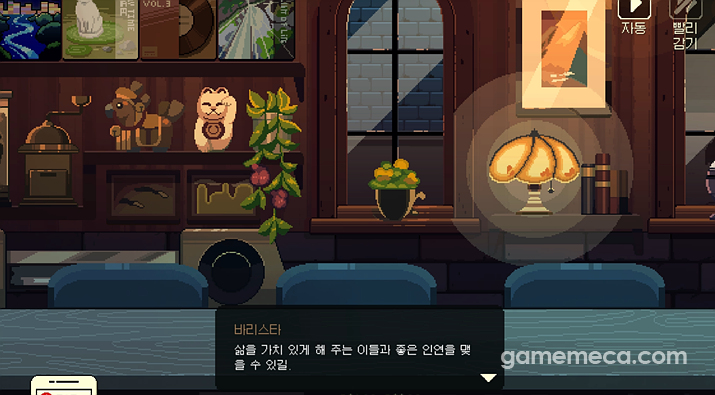
As the title suggests, 'Coffee Talk Tokyo' is set in Japan. It boasts a different atmosphere from Seattle, with neon lights and a wooden café aesthetic. While previous entries built upon a continuous world and characters, this spin-off expands the universe by introducing entirely different settings and characters.
If rain and lightning were the pervasive weather in the second game, the refreshing backdrop for 'Coffee Talk Tokyo' is the summer heat of Japan. Stories related to the heat appear consistently, allowing for the creation of iced drinks and the addition of cold ice cream as an ingredient. The Japanese August holiday, 'Obon,' is utilized as a key event, blending the season's heat, Japanese festivals, traditional attire, and the heightened spiritual energy of ghosts and ancestors.
The music and motifs used, along with the setting, are largely fitting for Tokyo. Elements like children's education issues, cold tea, music that fuses Eastern and Western styles, and a famous singer-songwriter with slightly curly hair obscuring her eyes are more easily relatable in an Eastern context. The charm of the 'Coffee Talk' series lies in its ability to convey the essence of Tokyo even within the confined space of a cafe, through its chosen themes.

Charming Characters Mixing Yokai and Humans
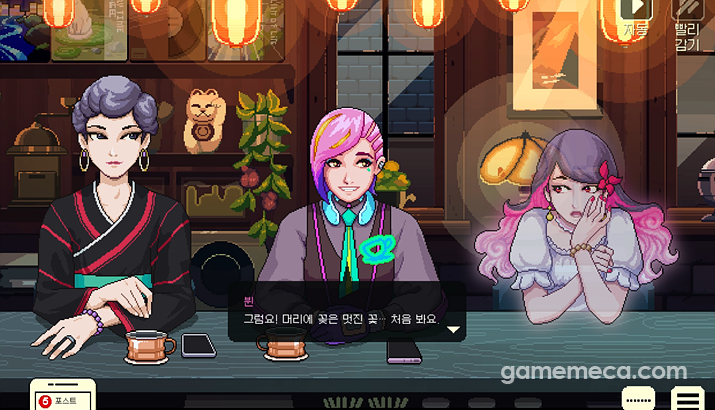
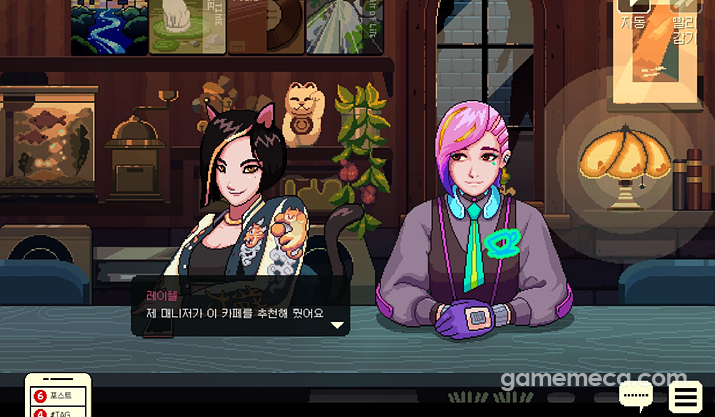
Much like its predecessors, 'Coffee Talk Tokyo' features characters with unique atmospheres. Each character is rendered with more vibrant colours and emphasised charm points to suit the 'Japan' setting, giving the impression of watching anime characters interpreted through the 'Coffee Talk' lens. For this reason, the original characters feel somewhat out of place. While Rachel, who works as an idol, fits in better, Hendry Flong feels like he's from a different art style altogether.
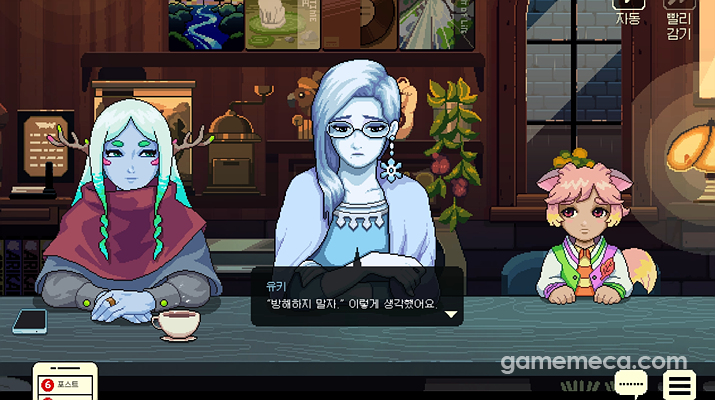
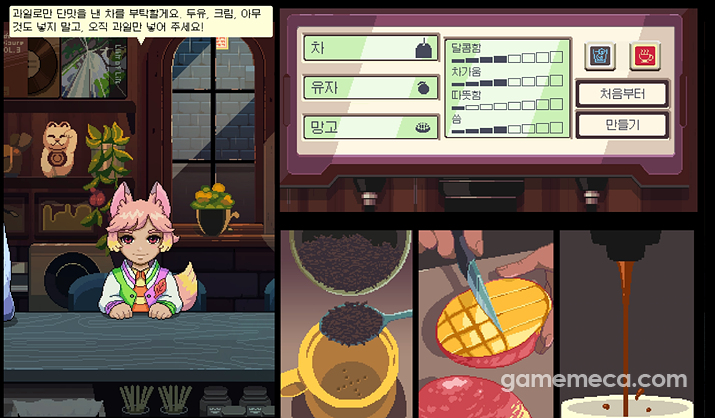
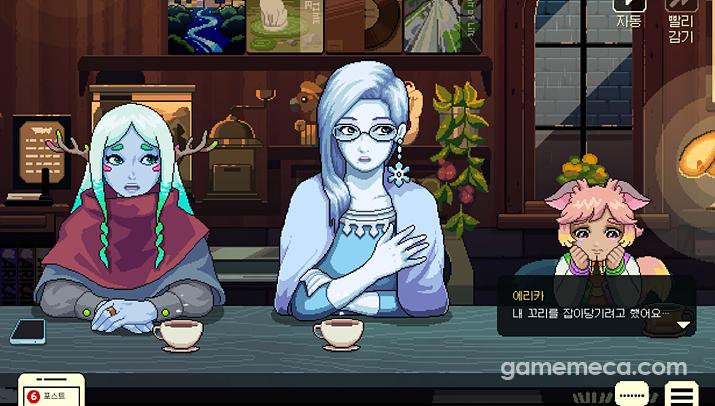
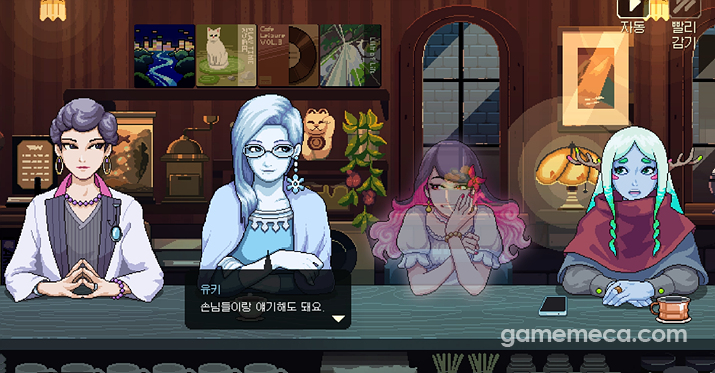
Most characters are inspired by Japanese folklore. 'Kenji,' a retired salaryman, is based on the Kappa. 'Yuki,' the restaurant owner, is inspired by the Yuki-onna (snow woman). 'Ash,' a househusband, is based on a fairy, and 'Makoto,' a cheerful young man, draws inspiration from the Egg Eater ghost. Additionally, 'Erica,' uniquely born between a human and a pixie, is depicted as a Kitsune (nine-tailed fox) and becomes the series' first child customer, likely made possible by the addition of ice cream and iced tea.
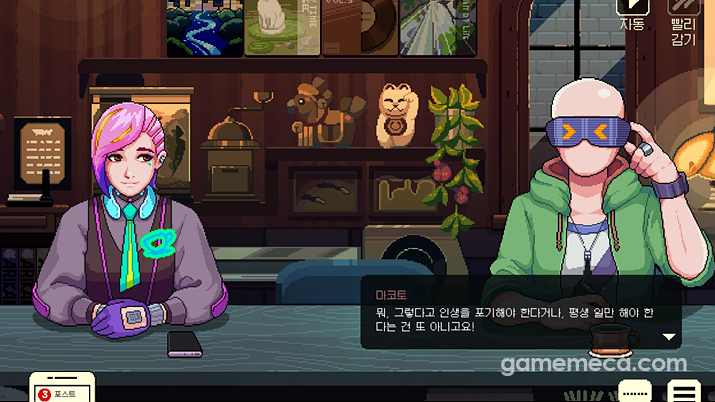
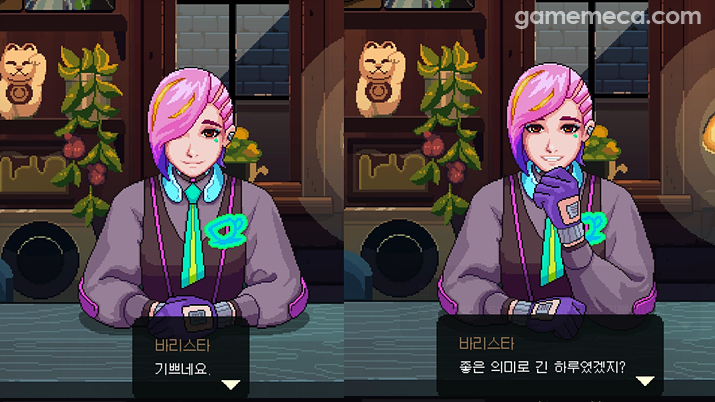
Among them, the most impressive and unique character was 'Brew,' the barista's assistant. Despite being of the most common human race, his limbs have been replaced with mechanical parts due to a major accident, and he features a colour palette reminiscent of neon signs. With a personality that is both gentle and melancholic, calm yet passionate, he seemed to symbolise the game 'Coffee Talk Tokyo' itself. His story deepens further as he becomes entangled with another human woman named 'Blue,' designed to evoke a sense of support for him.
The characters in 'Coffee Talk' are treated with the developer''s characteristic gentle gaze. Despite their differing personalities, they all possess an inner goodness and the ability to empathise, listening to each other's worries. One could critically argue that such virtuous and considerate individuals have improbably gathered in one place, but it could also be countered that the barista is an exceptional figure. Given the change in setting, the barista is presumed to be a different individual, depicted as more talkative than in previous games, prone to lengthy monologues, and worry-prone.
Deepened Narrative with Melancholy and Tension
The 'Coffee Talk' series presents stories where various characters intertwine, following a chiastic structure that links the first and last days. The themes explored are largely relevant to the present day. One characteristic of the 'Coffee Talk' series is that the release year and the in-game setting are almost identical. Set in 2026, 'Coffee Talk Tokyo' is underpinned by a sense of loneliness and tension that resonates with the post-pandemic era. Perhaps for this reason, its playtime is the longest compared to previous titles, and the stories it tackles are more complex.
What was particularly impressive was the clear increase in lingering conflicts and character confrontations compared to the previous games. The 'Coffee Talk' series depicted conflicts between people in a soft, rounded manner. While this conveyed hope, it also felt like it avoided conflict. In contrast, this installment more directly expresses the sadness, conflict, and melancholy of each character. Consequently, while the emotional toll of experiencing the story increased, so did the immersion.
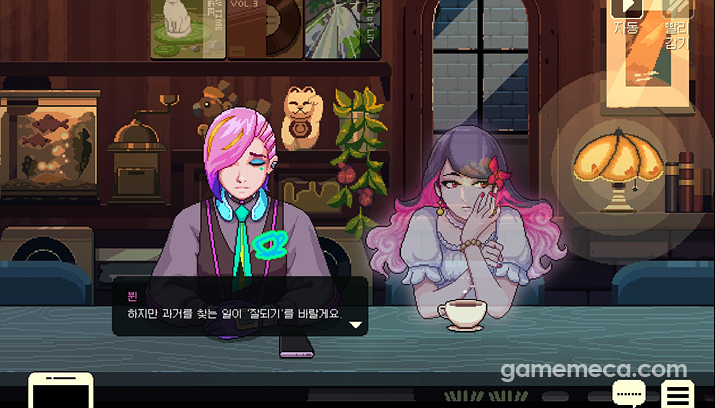
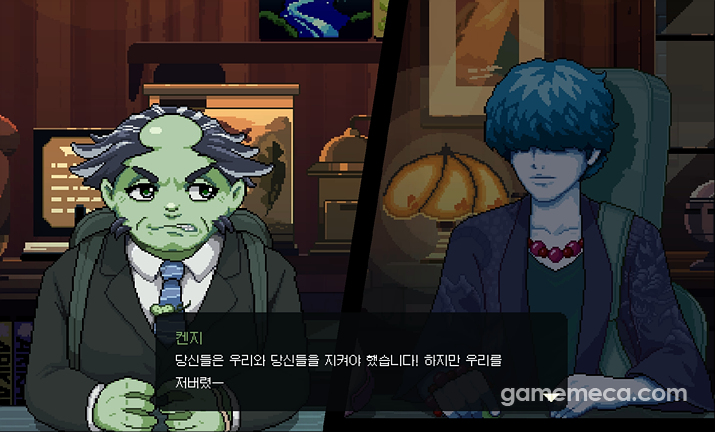
A prime example of conflict involves historical issues between the Kappa 'Kenji' and the singer 'Jun.' Kenji initially appears as a polite, retired salaryman, but when he first meets Jun, he displays an almost hateful aggression that leaves the observer bewildered. This stems from the past surrounding the 'river' that separates their two species, and the grief of the Kappa who lost their homes and Jun who lost strength and his eyes. Mediating between them is, once again, a cup of coffee served by the barista and other characters.
The thematic material is also diverse. Superficially, issues of sustainable development and environmental problems are foundational. 'Jun,' dealing with an artist's slump, and 'Ash,' a male stay-at-home dad, also evoke empathy. Personally, Kenji was the most memorable character. His constant contemplation of how to design his life after retirement and how to relate to his family in a new way was meticulously depicted. The story of him conversing with customers and striving for a better direction each day was relatable.
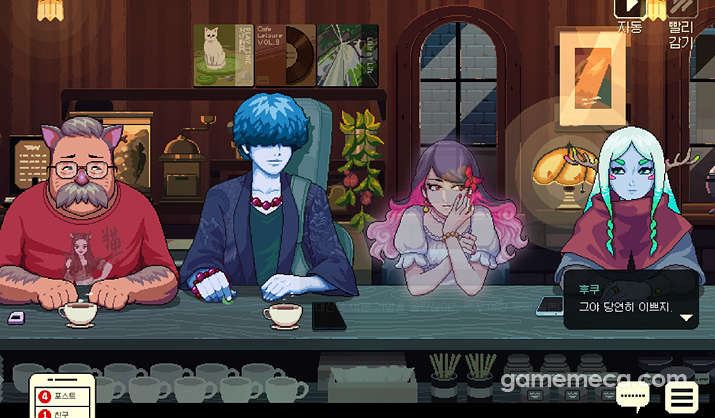
The most delicate and well-crafted story revolves around Ayame's grief over loss and how she overcomes it. In this process, Yuki's struggle to overcome her past entanglements and the story surrounding Ayame's death are depicted with warmth and detail, adding to the emotional impact. Of course, this is all contingent on serving the correct coffee to heal those around her. If the barista's skills are lacking, everyone will struggle to fully overcome their own wounds. This bitterness, too, is part of the flavour that 'Coffee Talk' offers.
However, the translation issues were considerable, contrasting with the nuanced storytelling. Firstly, the barista's speech patterns are inconsistent depending on the situation. They frequently switch between informal and formal speech when addressing their assistant, and song titles or album names are sometimes untranslated or incorrect. Even the fruit 'lychee,' one of the ingredients, is translated as 'litchi,' which, while not significantly impacting gameplay, is quite jarring.
Cozy but Formulaic Coffee Crafting
The overall gameplay remains similar to the previous games: you listen to stories and then prepare coffee or tea according to customer requests. The method of handing over stored items from the previous game was quite difficult, and perhaps due to this, it has been removed in the new installment. Instead, the addition of 'iced drinks' to the tea-making process has increased the difficulty of crafting the desired beverage.
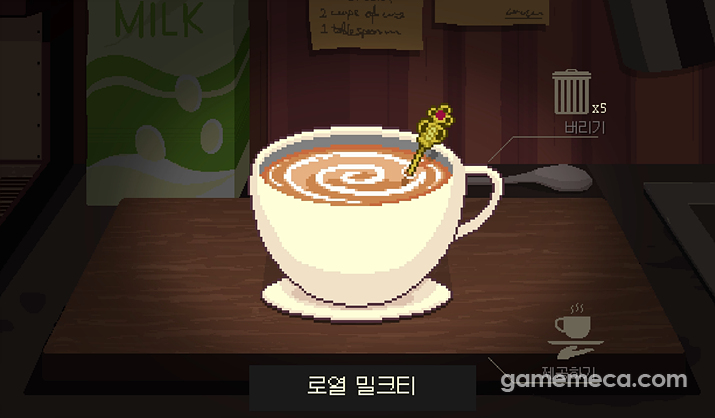
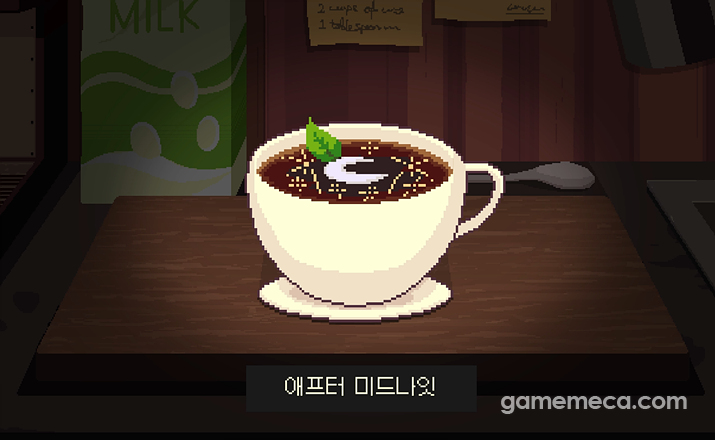
The process of making tea is presented like a quiz, involving setting the temperature of each tea and blending the ingredients. Additionally, the number of 'special teas' with existing recipes has increased compared to the previous games. Teas utilising ice cream, in particular, are visually sophisticated and beautiful, adding to the aesthetic appeal. A stencil decoration element has also been added, but its limited variety of shapes fails to make a significant impression.
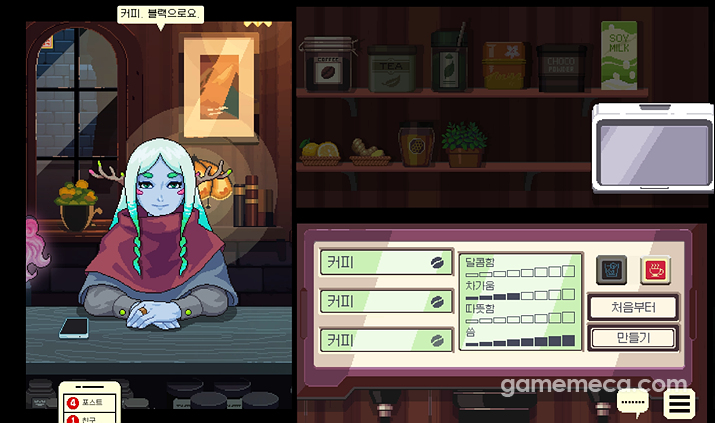

However, the gameplay, which is virtually identical to the previous titles, also brings a sense of routine. The entire process of listening to a story, guessing the customer's desired drink, and then crafting it involves no complex mechanics. In particular, the unique playstyle, which does not directly involve the coffee-making process itself, lends the game more of a quiz-solving characteristic than a tea-making simulation. While it serves to enhance focus during story consumption, it offers little beyond that.
Therefore, while 'Coffee Talk 2' added complexity with 'item delivery,' 'Coffee Talk Tokyo' has reverted to the previous playstyle. The compelling story undoubtedly serves as the driving force for playing the game, but the identical coffee-making process, even extending to a spin-off, evokes the disappointment of repeatedly playing the same game. It feels necessary for future installments to incorporate a structure that builds gameplay on layers beyond coffee crafting, similar to the previous titles.
'Coffee Talk Tokyo' is a narrative game that emphasises its unique brand of humanism and connection. The already solid narrative has been strengthened by the addition of conflict and melancholy, and the Japanese setting is rendered with evocative sensory detail. Beverage crafting, along with new systems, continues to offer its signature warmth, yet simultaneously feels formulaic, and the translation was somewhat disappointing. It comes recommended for players who have enjoyed the series, and is also advised for those seeking solace during trying times.

간혹 게임을 플레이 할 때, 개발자가 마음이 따뜻한 사람이라는 것이 느껴지는 작품이 있다. 자신이 창조한 캐릭터에 애정을 쏟고, 이들이 만들어나가는 대사가 지나치게 자극적이거나 곡해되지 않도록 많은 신경을 쓴다. 그 과정에서 대부분의 캐릭터가 약간은 너무 선하게 그려지기도 한다.
본 기자에게 이런 게임의 대표 주자를 묻는다면 '커피 토크' 시리즈라 하겠다. 등장 인물들의 대사가 섬세하고 서정적으로 쓰였으며, 전반적인 주제 역시 휴머니즘에 기반해 온화함과 평온함을 더한다. 이에 엔딩을 봤을 때 아쉬우면서도 마음 한 편이 따뜻해지는 감각도 전했다. 이에 '커피 톡 도쿄(Coffee Talk Tokyo)'라는 신작이 공개됐을때 기대가 됐다. 특히 시애틀보다 도쿄가 더 익숙한 공간인 만큼, 공감 가는 캐릭터도 더 많을 것처럼 느껴졌다.
시애틀을 벗어나 도쿄로
커피 톡 도쿄의 배경은 제목에서도 쉽게 알 수 있듯 일본이다. 네온사인이 가득하고, 목조 카페를 표방해 시애틀과는 사뭇 다른 정취를 풍긴다. 전작들이 모두 이어지는 세계관과 등장인물로 이야기를 쌓아갔는데, 외전을 통해 전혀 다른 배경과 캐릭터들을 등장시키며 세계관을 확장했다.
2편을 관통하는 날씨가 비와 번개였다면, 커피 톡 도쿄를 환기하는 배경은 여름 일본의 더위다. 더위와 관련된 이야기가 지속적으로 등장하며, 냉차를 제작할 수 있고, 식재료로 차가운 아이스크림이 추가됐다. 일본 8월 명절인 '오봉'이 주요 사건 중 하나로 활용되는데, 계절 특유의 더위, 일본의 축제와 전통 의복, 귀신과 조상의 기운이 강해지는 시기 등이 어우러져 소재로 사용하기 좋다.
배경과 더불어 사용되는 음악이나 소재 역시 도쿄에 어울리는 것들이 다수 등장한다. 자녀 교육의 문제, 차가운 차, 동양과 서양이 융합된 듯한 음악, 약간 곱슬거리는 머리카락으로 눈을 가린 유명 싱어송라이터 등 동양에서 공감하기 더 쉬운 요소들이 많다. 소재를 통해 카페라는 한정된 공간에서도 도쿄의 정취를 전하는 점은 커피 톡 시리즈의 매력이라 할 수 있다.
요괴, 인간이 뒤섞인 매력적인 캐릭터들
커피 톡 도쿄는 전작들과 마찬가지로 독특한 분위기의 캐릭터들이 등장한다. 각 캐릭터는 '일본'이라는 배경에 어울리게 더 선명한 색감과 매력 포인트를 강조해, 커피 톡 방식으로 해석된 애니메이션 캐릭터를 보는 느낌이다. 이런 연유로 전작 캐릭터들이 나올 때는 이질감이 느껴진다. 직업이 아이돌인 레이첼은 덜하지만, 헨드리 플롱이 나올때는 혼자 그림체가 다른 느낌까지 든다.
대부분의 캐릭터들은 일본 요괴에서 영감을 얻었다. 은퇴한 회사원 '켄지'는 갓파, 식당 주인 '유키'는 설녀, 남성 가정주부 '애시'는 요정, 쾌활한 청년 '마코토'는 달걀귀신에서 영감을 얻었다. 또 독특하게 인간과 픽시 사이에서 태어난 '에리카'는 구미호로 묘사되며 시리즈 최초로 등장한 어린이 손님으로 자리했다. 아이스크림과 냉차가 추가되어 가능했던 것으로 보인다.
그중에서도 가장 인상적이고 독특한 캐릭터는 바리스타의 조수인 '뷘'이었다. 가장 평범한 인간 종족이지만, 큰 사고로 사지가 기계로 대체됐으며, 네온사인이 연상되는 색감이 특징이다. 선하면서도 우울한, 차분하면서도 격정적인 성정을 지녀 커피 톡 도쿄라는 게임을 상징하는 듯한 캐릭터였다. 특히 '블루'라는 또 다른 인간 여성과 얽히며 그의 이야기는 한층 더 심화됐고, 그를 응원하는 감정이 피어나게 설계됐다.
커피 톡의 캐릭터들은 개발자 특유의 온화한 시선으로 다뤄진다. 서로 다른 성격을 지녔지만 내면에는 선함을 품고 있으며, 타인의 고민을 함께 들어주는 교감 능력도 지녔다. 이정도로 선하고 사려 깊은 인물들이 용케도 한 곳에 모여있다고 비판적으로 생각할 여지도 있지만, 그만큼 바리스타가 훌륭한 인물이라고 반박할 수도 있겠다. 배경이 바뀐 만큼 바리스타 역시 다른 인물로 추측되며, 전작보다 말이 많고, 혼잣말이 길며, 걱정도 많게 묘사된다.
우울과 긴장감 더하며 심화된 내러티브
커피 톡 시리즈는 여러 캐릭터들이 함께 어우러지는 이야기를 그리며 첫 날과 마지막 날이 연계되는 수미상관의 구조를 따른다. 또 사용되는 소재는 대부분 현시대를 관통한다. 커피 톡 시리즈 특징 중 하나로, 출시 연도와 인게임 배경이 거의 일치한다. 2026년 배경의 커피 톡 도쿄는 팬데믹 이후 시대를 아우르는 쓸쓸함, 긴장감 등이 바탕에 깔린다. 덕분인지 전작들 대비 플레이 타임이 가장 길었고, 다루는 이야기 역시 복잡했다.
특히 인상적이었던 점은 전작들과 비교해 분명 늘어난 묵은 갈등과 인물간의 대립이다. 커피 톡 시리즈는 사람들 사이의 대립을 부드럽고 둥글둥글하게 그려냈다. 이는 희망을 전하지만, 동시에 갈등을 피하는 것처럼 느껴졌다. 반면 이번 작품에서는 캐릭터 하나하나의 슬픔, 갈등, 우울감이 더 직접적으로 표출됐다. 때문에 이야기를 감상함에 있어 감정적 소모가 커졌지만, 그만큼 몰입은 강화됐다.
대표적인 갈등은 갓파 '켄지'와 가수 '준'과 관련된 역사 문제다. 켄지는 첫 만남에서는 정중한 은퇴 샐러리맨으로 등장하지만, 준과 처음 만났을 때는 증오에 가까운 공격성을 보여 보는 이로 하여금 당황스럽게 만든다. 이는 두 종족의 '강'을 둘러싼 과거와 삶의 터전을 잃은 갓파, 힘과 눈을 잃은 준의 슬픔에 기인한다. 이 둘 사이를 중재하는 것 역시 등장하는 여러 캐릭터와 바리스타의 커피 한 잔이다.
소재들 역시 다양하다. 피상적으로는 지속 가능한 발전과 환경 문제는 기본이다. 아티스트의 슬럼프를 다룬 '준', 남성 전업 주부를 다룬 '애시' 등도 공감을 불러오지만, 개인적으로 인상적이었던 캐릭터는 켄지다. 은퇴 후 어떻게 삶을 설계할 것인지, 지금까지와 다른 방식으로 가족과 관계 맺을 것인지 등을 끊임없이 고민하는 모습이 세심하게 그려졌다. 그 과정에서 주변 손님과 대화하고, 매일 더 좋은 방향으로 나아가는 스토리는 공감을 불렀다.
가장 섬세하고 완성도 높은 스토리는 아야메를 둘러싼 상실의 아픔, 그리고 그것을 어떻게 극복하는지에 대한 부분이다. 그 과정에서 '유키'가 얽매여 있던 과거를 극복하는 과정, 아야메의 죽음을 둘러싼 이야기 등이 따뜻하고 세밀하게 그려지며 감동을 더했다. 물론 이는 정확한 커피를 내줘 주변 사람들을 치유했을 때의 이야기다. 바리스타의 실력이 부족하다면, 모두는 스스로의 상처를 온전히 극복하는 것에 어려움을 느낀다. 이 씁쓸함 역시 커피 톡이 주는 맛의 일부다.
다만 이런 섬세한 스토리에 반하는 번역 문제가 상당했다. 우선 바리스타의 말투가 상황에 따라 통일되지 않는다. 조수에게 반말과 존댓말을 섞어서 사용하는 일이 잦고, 노래 제목이나 앨범 이름 등도 번역이 미완성이거나 맞지 않다. 심지어 재료 중 하나인 과일 '리치'가 '라이치'로 번역됐는데, 플레이에 큰 지장은 없지만 상당히 거슬리는 부분이다.
포근하지만 매너리즘 느껴지는 커피 제작
전반적인 플레이는 전작과 마찬가지로 이야기를 감상하다가 고객들의 요청에 따라 커피나 차를 내주는 방식이다. 전작에서 보관된 물건을 건네는 방식이 상당히 어려웠는데, 이 때문인지 신작에서는 제거됐다. 대신 차 제조법에 '냉차'류가 추가되어 원하는 차를 낼 때의 난도는 올랐다.
차를 만드는 과정은 일종의 퀴즈처럼 각 차의 온도를 정하고, 재료를 배합하는 과정으로 진행된다. 또 레시피가 존재하는 '특별한 차' 역시 전작보다 종류가 늘었다. 특히 아이스크림을 활용한 차들은 외형부터 세련되고 아름다워 보는 맛을 더했다. 스텐실로 꾸미는 요소도 추가됐지만, 모양이 다양하지 않아 큰 인상을 더하지는 못했다.
다만 전작들과 사실상 동일한 방식의 플레이가 매너리즘도 가져왔다. 이야기를 듣고, 고객이 원하는 차를 맞추고, 그대로 제작하는 일련의 과정에 복잡한 플레이는 없다. 특히 커피 제작 과정에 직접 관여하지 않는 특유의 플레이 방식은 차 제작 시뮬레이션보다는 퀴즈 풀이에 가까운 게임성을 전한다. 스토리 감상에서 집중력을 높이는 정도로는 기능하지만, 그 이상의 흥미는 주지 못했다.
이에 커피 톡 2는 '물건 건네기'로 복잡도를 더한 반면, 커피 톡 도쿄는 이전 플레이 방식으로 회귀했다. 매력적인 스토리는 분명 게임을 플레이하는 원동력이 됐지만, 외전까지 이어지는 동일한 방식의 커피 제작은 동일한 게임을 반복하는 아쉬움을 줬다. 다음 작품에서는 전작처럼 커피 제작 외의 층위에서 플레이를 쌓는 구조가 더해질 필요성이 느껴진다.
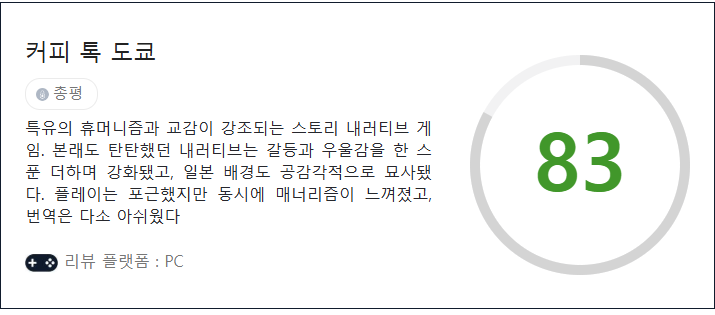
커피 톡 도쿄는 특유의 휴머니즘과 교감이 강조되는 스토리 내러티브 게임이다. 본래도 탄탄했던 내러티브는 갈등과 우울감을 한 스푼 더하며 강화됐고, 일본이라는 배경도 공감각적으로 묘사됐다. 음료 제작은 새로운 시스템과 함께 여전한 포근함을 전했지만 동시에 매너리즘이 느껴졌고, 번역은 다소 아쉬웠다. 시리즈를 즐겼던 플레이어들에게 추천하며, 심신이 고된 이들도 플레이를 권한다.
This news was translated by AI.

I will always love games. skyanze@gamemeca.com


MOST POPULAR NEWS
- Will Miami Airport and Downtown Become 'Vice City' to Match the Release of GTA 6?
- On September 18, a Game and eSports Event to be Held at Dongdaemun DDP
- [gamescom 26] CDPR and SEGA Win Three Awards at Gamescom Awards
- [gamescom 26] Silver Palace: "Experience a Mature Dark Fairy Tale"
- [gamescom 26] A Quick Look at the 25-Year History of Xbox
- [gamescom 26] No new titles, but the Nintendo booth was still burning with passion
- [Today's steam] Sword by day, vampire by night 'Dawn Walker' at the top of sales
- Which Teams Will Advance to the Finals? 2026 LCK CL Playoffs Begin on the 31st
- [gamescom 26] Intoxicated by excitement and nostalgia! Dragon's Dogma 2 DLC
- [G-Star 26] HoYoverse to Meet Users via HoYoLAND and G-Star
MEDIA PARTNERSHIPS



GAMEMECA SNS