60% of Game Companies Violating Probability Disclosure are Overseas, Measures Urged at National Audit
확률공개 어긴 게임사 중 60%가 해외, 국감서 대책 촉구
2025.10.23 14:24 UTC+9

AI Summary
338 gaming companies have failed to disclose loot box odds since March last year. Foreign firms, primarily from China, account for 60 percent of these violations. Lawmakers are now pushing for stricter enforcement through a new local representative system.
The 'Probability Disclosure Act,' which mandates that developers disclose the odds for probability-based items, was implemented in March last year. Despite over a year having passed since its enforcement, 338 domestic and international game companies have failed to comply, with overseas companies—including those from China—accounting for 60% of the total. Consequently, there have been calls for practical measures to ensure compliance from both domestic and international game companies that have not rectified their improper probability disclosures.
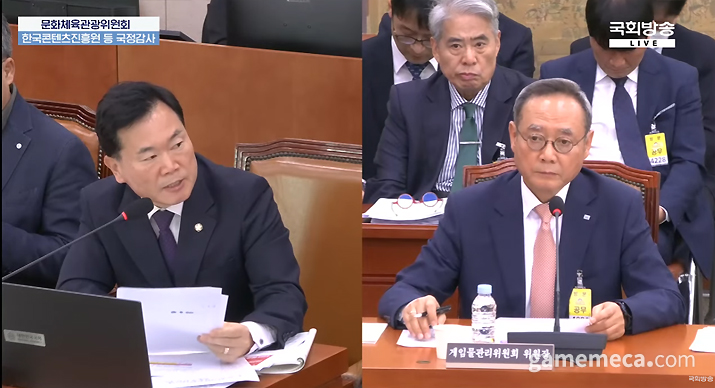
During the Culture, Sports and Tourism Committee's parliamentary audit held on the 23rd, Representative Kim Seung-soo of the People Power Party urged Chairperson Seo Tae-geon of the Game Rating and Administration Committee (GRAC) to take active measures against game companies that do not comply with the mandatory probability disclosure.
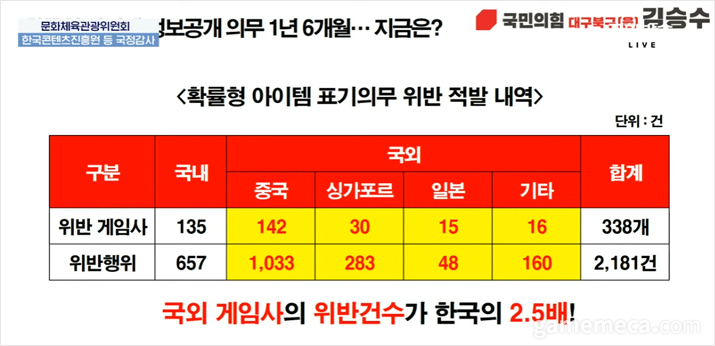
According to data provided to Rep. Kim by the GRAC, 338 domestic and international game companies received requests for correction, warnings, or orders for violating probability information display requirements during the 18-month period from March 22 of last year to September 22 of this year. Of these, 203 were overseas companies, accounting for 60% of the total. By nationality, China had 142 companies, followed by Singapore (30), Japan (15), and the United States (9).
There were 2,181 total instances of violations, with a 30 to 70 ratio between domestic and overseas companies. China accounted for the largest share of violations at 47%. This was followed by South Korea with 657 cases, Singapore with 283, and Japan with 48. The most common forms of violation were the failure to display individual probabilities or total odds (1,043 cases), followed by 932 cases of failing to disclose the presence of probability-based items in advertisements.
It was also pointed out that the correction rate for overseas game companies is lower than that of domestic ones. Regarding this, GRAC Chairperson Seo Tae-geon responded, "We take administrative action if they do not display the odds for probability-based items or if they display them falsely, and most are corrected. If they are not corrected until the end, we take measures to block access in Korea. However, the administrative process for such a block takes about three months."
Starting October 23, the 'Domestic Representative System' will be implemented, requiring foreign game companies that meet certain criteria defined by law to appoint a local representative to ensure compliance with domestic law. Rep. Kim emphasized, "There is a significant difference in correction periods between domestic and overseas game companies. When correction orders are not fulfilled, the system must be operated effectively through the designation of a domestic representative."
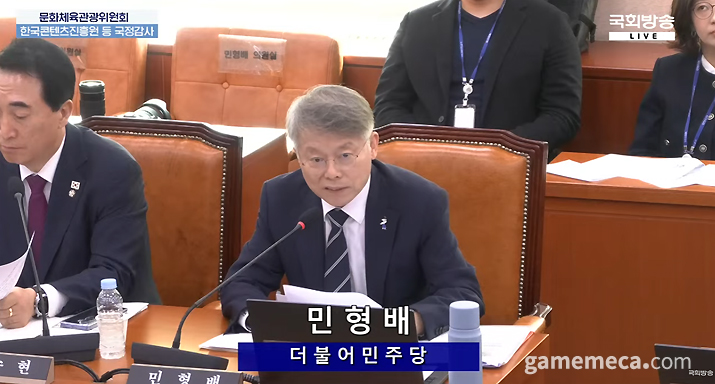
The effectiveness of the domestic representative system was also questioned by other members. Representative Min Hyung-bae of the Democratic Party of Korea requested additional data before his questioning, specifically asking for the list of overseas game companies required to appoint a domestic representative and the list of those that have received correction orders from the GRAC over the past three years.
Rep. Min stated, "The Ministry of Culture, Sports and Tourism reported that about 96 companies need to appoint a domestic representative, but they verbally replied that it is difficult to submit the list because the law had not yet been implemented. The GRAC, which is the subject of today's audit, does not even have concrete information on the 96 companies mentioned by the Ministry. If the domestic representative system does not function properly, protection for game users will remain in a blind spot."
작년 3월에 확률형 아이템 확률 정보를 결과물별로 공개하는 ‘확률공개법’이 시행됐다. 시행 1년이 넘었음에도 국내외 게임사 338곳이 법을 준수하지 않았고, 이중 중국을 비롯한 해외 게임사가 차지하는 비중은 60% 수준이다. 이에 국내는 물론 잘못된 확률 공개를 시정하지 않는 해외 게임사의 법 준수를 촉구하기 위한 실질적인 대책 마련이 요구됐다.
국민의힘 김승수 의원은 23일 문화체육관광위원회 국정감사에서 게임물관리위원회(이하 게임위) 서태건 위원장을 대상으로 확률공개 의무를 준수하지 않는 게임사에 대한 적극적인 대응을 요구했다.
김 의원이 게임위로부터 제출받은 자료에 따르면 법이 시행된 작년 3월 22일부터 올해 9월 22일까지 1년 6개월 간 국내외 게임사 338곳이 확률정보 표시 위반으로 시정요청·권고·명령을 받았다. 이 중 해외는 203곳으로 전체의 60%다. 국적별로 보면 중국 142곳, 싱가포르 30곳, 일본 15곳, 미국 9곳 순이다.
위반행위 건수는 2,181건이며, 국내와 해외 비중은 30 대 70이다. 위반행위 건수 중 가장 많은 비중을 차지한 것은 47%를 기록한 중국이다. 이어서 한국 657건, 싱가포르 283건, 일본 48건 순이다. 위반행위 형태로는 개별확률 미표시와 확률 미표시가 1,043건으로 가장 많았고, 광고에 ‘확률형 아이템이 있다’는 점을 알려주지 않은 광고 미표시가 932건이었다.
아울러 해외 게임사의 경우 국내보다 시정률도 낮다는 점도 지적됐다. 이에 대해 게임위 서태건 위원장은 “확률형 아이템 확률표시를 하지 않거나 거짓으로 표시하면 행정조치를 하며 대부분 시정된다. 끝까지 시정이 되지 않으면 국내에서 차단하는 조치를 한다. 다만 그러한 차단까지 가는 절차가 행정적으로 3개월 정도 소요된다”라고 답변했다.
10월 23일부터 법으로 규정한 조건에 해당하는 해외 게임사는 국내법 준수를 위한 대리인을 둬야 하는 ‘국내대리인제도’가 시행된다. 김승수 의원은 “국내 게임사와 해외 게임사 시정 기간에도 많은 차이가 난다. 시정명령 등을 이행하지 않을 때 국내대리인 지정을 통해 실효성 있게 운영되어야 한다”라고 강조했다.
국내대리인제도 실효성 지적은 다른 의원을 통해서도 제기됐다. 더불어민주당 민형배 의원은 국정감사 질의 전 추가 자료 제출을 요청했다. 국내대리인을 지정해야 하는 해외 게임사 명단, 최근 3년간 게임위로부터 시정명령을 받은 해외 게임사 중 대리인을 둬야 하는 게임사 명단이다.
민형배 의원은 “문체부에서는 96곳 정도가 국내대리인을 지정해야 한다고 보고 있으나 법이 시행되지 않아서 명단을 제출하기 어렵다고 구두로 답변했다. 오늘(23일) 감사대상인 게임위는 문체부가 말하는 96곳에 대한 구체적인 정보도 모르는 상태다. 국내대리인이 제대로 작동하지 않으면 게임 이용자에 대한 보호는 사각지대에 머무르게 된다”라고 밝혔다.
This news was translated by AI.

Let's not lose our initial resolve. Meticulously, one by one. risell@gamemeca.com


RECOMMENDED NEWS
MOST POPULAR NEWS
- [Today's steam] Aion 2 Records 400,000 Concurrent Players Upon Official Launch
- Is something big coming? Nikke 4th Anniversary Special Broadcast to air on the 24th at 7 PM
- "Cannot even log in" Steam blockades intensify in Vietnam
- [Today's steam] Valve's new title 'Deadlock' surpasses 230,000 Concurrent Players
- Representative Cho Seung-rae: "Gamescom's Strength is Strong B2B, Desperately Needed for G-Star"
- Pre-load starts for World of Dokkaebi, releasing on October 8
- 'Dave the Diver' Complete Edition Released with All Expansions
- "Destined to Disappear Anyway" CyberConnect2 CEO Supports Abolishing Physical Discs
- [Cartoon] The arrival of the sharpshooter 'Aion 2'?
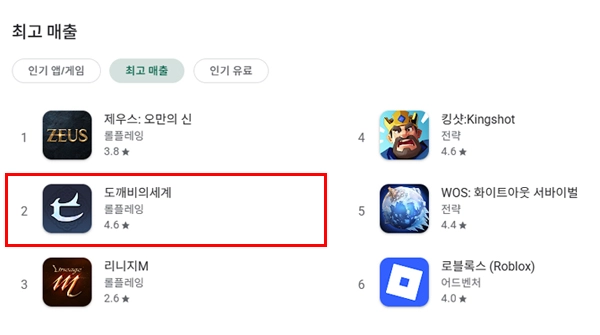
- Dokkaebi World Achieves Number 1 Popularity on Both Major App Markets on Launch Day
MEDIA PARTNERSHIPS



GAMEMECA SNS


 GAMEMECA GLOBAL SITE