
Final Fantasy XIV Producer Yoshida Emphasizes the 'Beauty of Empty Space' in MMORPG Storytelling
파판14 요시다 PD, MMORPG 스토리 속 '여백의 미' 강조
2025.11.15 14:45 UTC+9

AI Summary
Yoshida and Oda discussed how game mechanics must always precede lore. They argue that narrative should serve gameplay, not restrict it. Emptiness in world-building is essential for long-term expansion.
In the realm of traditional aesthetics, the concept of 'emptiness'—or what we might call the beauty of negative space—is paramount. While some might mistake it for mere incompleteness, in a complex, bustling environment, this space acts as a necessary breather for the eye or a void waiting to be filled during future expansions. But can such an aesthetic hold water in the frantic, collaborative world of a live-service MMORPG?
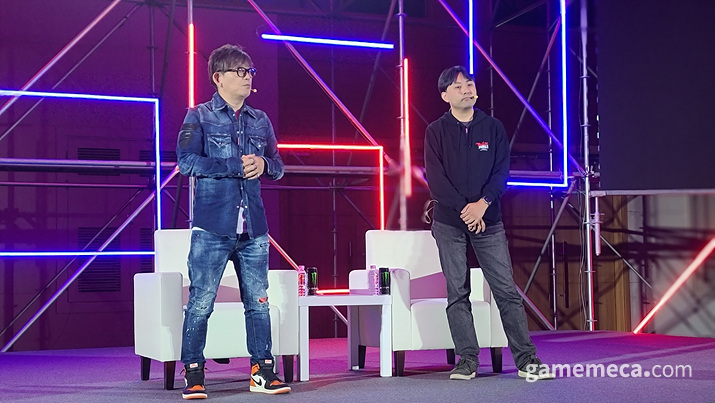
Naoki Yoshida, the Producer and Director of Square Enix's Final Fantasy XIV, joined Senior Story Designer Banri Oda on the GCON stage to discuss narrative design and the vital role of 'emptiness,' using the development of the new 'Pictomancer' job as a case study.

"Which came first, the chicken or the egg?" For Yoshida, the answer is decidedly the 'chicken'.
Final Fantasy XIV is a storied MMORPG, famous for its grand relaunch after an initial stumble. Even in Korea, where the service arrived later, it has celebrated its 10th anniversary. This session offered more than just behind-the-scenes trivia; it provided a masterclass in the philosophy of veteran developers maintaining a long-term service.
Kicking off the talk, the duo posed the chicken-and-egg conundrum: does the mechanic come first, or the story? After a brief pause, Yoshida was blunt: "Game mechanics come first." He doubled down, asserting, "Games are meant to be 'played,' not just 'watched.' Lore is merely a support structure to enhance the player experience." He insisted that rigid lore should never act as a shackle on gameplay or content expansion; the narrative must serve the game, not the other way around.
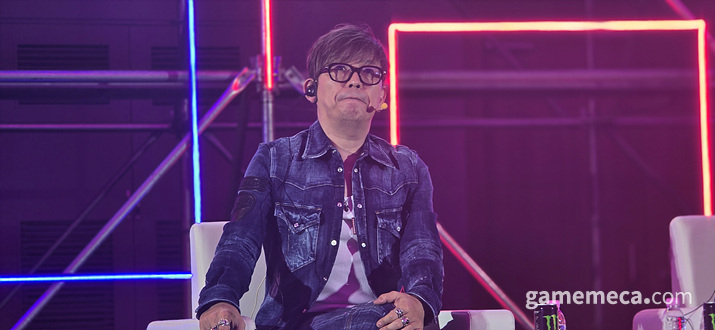
Yoshida explained that job quests exist because they are inextricably linked to the player's identity. Starting with nine jobs, the game has ballooned to over 20. Consequently, the scenario team works tirelessly every expansion to craft stories that guide players through the essence of each class.
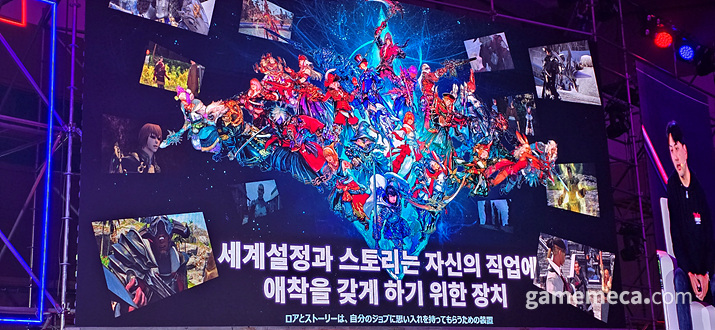
He noted, "In an MMORPG, 'which job you play' is the conversation starter and the core of your identity." Job quests have evolved from simple leveling aids into narrative devices that foster immersion and mechanical understanding.
The backstory for the Pictomancer began with a nursery rhyme.
The design process for a new job is refreshingly straightforward. The weapon dictates the job, so they decide the armament first. Then, they build the combat mechanics, and finally, they drape it in a layer of lore. If it overlaps with existing jobs, they tweak it to ensure uniqueness.
The Pictomancer followed this path. The team settled on a 'brush' as the weapon and the idea of a mage wielding the power of imagination. From there, the color-mixing mechanic was born, and the story team wove in iconic Final Fantasy elements like 'Moogles' and 'Madeen' to build the world-building around it.
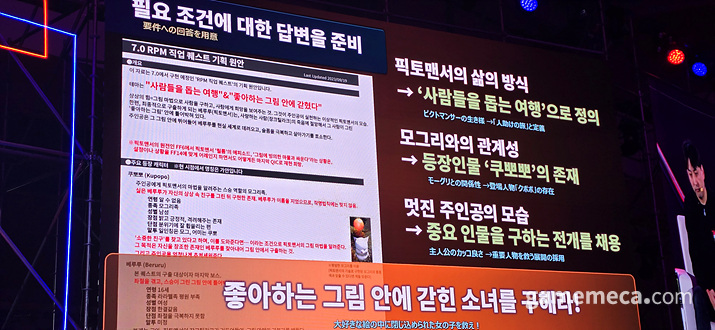
The result was the Pictomancer: a wandering artist who helps others through the power of imagination. Oda revealed he drew inspiration from the Japanese nursery rhyme 'Metropolitan Museum,' where a girl is trapped inside a painting. He naturally grafted this childhood image onto the Pictomancer's conceptual framework.
Thus, the Pictomancer's backstory became a tale of someone caught in their favorite painting. "By connecting this setting to the concept of imagination, we fused the job's identity and mechanics into a single narrative," Oda explained.
Of course, not every player cares for these narrative trimmings. With over 20 jobs, many players skip the text entirely. In a game that has accumulated over a decade of content, some argue that these job stories are redundant for learning mechanics. This has led to inevitable debates about 'inefficiency' in the development cycle.

Yet, the team persists. Oda cited his own experience with Lineage II's Overlord class as the reason. Players constantly ask about servers, races, and jobs—it’s how they form communities and shared experiences. Lore provides the justification for these identities, fostering an emotional attachment to both the game and its community.
The 'beauty of emptiness' bridges the epic narrative.
The takeaway was clear: "More lore isn't always better." If a writer obsesses over unreleased details tucked away in their mind, it can actually stifle new ideas and block future expansions.
The duo argued that "lore not conveyed to the player effectively does not exist." Over-stuffing the world-building makes it rigid; a long-term service game needs 'negative space'—room to breathe and expand.
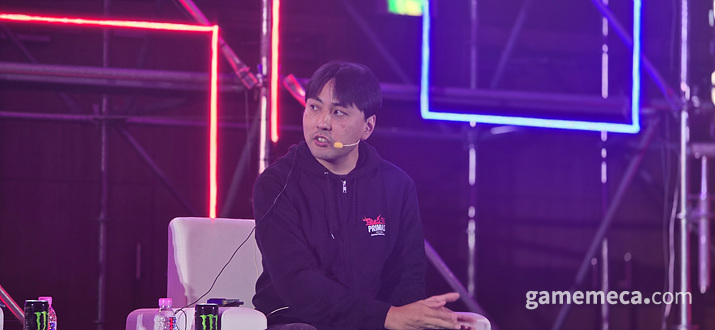
Oda noted, "Story text is the most resource-efficient asset and the easiest to modify." For gameplay-centric content like job quests, one must be flexible enough to change things for the sake of fun. Conversely, the main scenario requires a certain stubbornness to maintain consistency and a sense of closure.
Ultimately, it’s about recognizing the role of the story within the game's broader framework. The secret to Final Fantasy XIV's longevity lies here: lore shouldn't be perfect in a vacuum, but rather function in harmony with the game itself.
한국적인 아름다움에서 빼놓을 수 없는 것이라면 ‘여백의 미’다. 일각에서는 이를 불완전함이나 미완성 등으로 표현하기도 하지만, 복잡하고 조직적인 공간에서 어느 정도의 여백은 시선을 쉬게 만드는 공간이나 확장 단계에서 연결고리를 투입할 자리가 되어주기도 한다. 그렇다면 게임에서도 과연 '여백'이 미학적인 의미를 가질 수 있을까? 심지어 그것이 수많은 이들이 협력해 매일같이 개발하는 라이브 서비스 중인 MMORPG라면 어떨까?
스퀘어에닉스 파이널 판타지 14(이하 파판14) 요시다 나오키 프로듀서 겸 디렉터와 오다 반리 선임 스토리 디자이너가 GCON 무대에 올라, 파판14의 신규 잡 ‘픽토맨서(Pictomancer)’ 개발 과정을 예시로 스토리와 게임 디자인, 그리고 여백의 중요성에 대한 이야기를 나눴다.
“닭과 달걀, 무엇이 먼저인가” 요시다는 단호히 ‘닭’을 선택했다
파판14는 첫 출시 후 리메이크에 가까운 대규모 개편을 위해 서비스를 종료하고 재출시한 것으로 유명한 MMORPG다. 글로벌 서비스에 비해 늦게 시작한 국내 서비스조차 10주년을 맞이한 장수 게임이기도 하다. 그렇기에 이번 강연에서는 신규 잡 제작 비하인드뿐 아니라, 장기 서비스를 이끌어온 베테랑 개발진의 철학을 들을 수 있었다.
강연의 서두에서 두 개발자는 “닭이 먼저인가, 달걀이 먼저인가”라는 질문을 던졌다. 이는 메커니즘과 스토리 및 설정 중 무엇을 우선시하느냐는 의미였다. 잠시의 여백 뒤, 요시다 프로듀서는 “게임 매커니즘이 먼저”임을 단호하게 밝혔다. 이어 “게임은 ‘보는 것’이 아니라 ‘플레이하는 것’이며, 스토리와 로어는 플레이 경험을 돕기 위한 보조 요소”라고 강조했다. 설정이 플레이에 제약을 주거나 콘텐츠 확장을 가로막는 것은 바람직하지 않으며, 시나리오와 콘텐츠는 어디까지나 게임의 일부라는 점을 재차 짚었다.
요시다 프로듀서는 파판14에 잡 스토리가 존재하는 이유를 “잡은 플레이어의 정체성과 직결되기 때문”이라고 설명했다. 파판14는 초기 9개 잡에서 출발해, 현재는 20개가 넘는 잡이 생겼다. 이에 따라 시나리오 팀은 매 확장팩마다 메인 콘텐츠와 함께 각 잡의 핵심을 안내하고 기술을 설명하는 스토리를 꾸준히 제작해 왔다.
그는 “MMORPG에서 ‘어떤 잡을 쓰는가’는 대화의 시작점이자 플레이어의 아이덴티티”라며, 잡 스토리는 플레이어가 자신의 선택에 애정을 갖도록 만드는 핵심 장치라고 덧붙였다. 서비스 초기 성장 보조 기능이 강했던 잡 퀘스트는 레벨업 구조 변화와 신규 잡의 고레벨 개방이 이어지며 메커닉 이해와 몰입을 돕는 서사적 장치로 재정립됐다.
픽토맨서의 백스토리는 ‘동요’에서 시작했다
파판14의 신규 잡 개발 과정은 직관적이다. 무기가 잡을 규정하기 때문에 ‘어떤 무기를 사용할 것인가’를 먼저 결정한다. 이후 플레이 스타일을 정하는 전투 시스템과 메커닉을 설계하고, 그 위에 스토리와 세계관을 입혀 완성한다. 이 과정에서 기존 잡과 겹치는 지점은 조정해 고유성을 확보한다.
픽토맨서 역시 같은 절차를 따랐다. 팀은 먼저 ‘붓’이라는 무기를 정하고, 그림을 그리고 상상력으로 힘을 발휘하는 마법사라는 아이디어를 세웠다. 이를 기반으로 색을 조합하는 메커니즘이 만들어졌고, 스토리팀은 이를 기반으로 ‘모그리’나 ‘마딘’ 등 파이널 판타지 시리즈의 핵심 요소를 결합한 세계관 설정을 구축했다.
그 결과 픽토맨서는 ‘상상력의 힘으로 타인을 돕는 유랑 화가’로 탄생했다. 오다 반리 디렉터는 일본 동요 ‘메트로폴리탄 박물관’에서 영감을 받았다고 밝혔다. 해당 노래의 뮤직비디오에서는 박물관 속 살아 움직이는 것들과 노는 소녀가 그림에 갇히는 장면이 등장한다. 그는 어릴 적 기억에 남은 이 이미지를 픽토맨서의 상상력 콘셉트에 자연스럽게 접목했다.
그렇게 픽토맨서의 백스토리는 ‘좋아하는 그림 속에 갇힌 사람’을 보여주는 이야기로 구성됐다. 오다 디렉터는 “이 설정을 픽토맨서의 상상력이라는 콘셉트와 연결해 잡의 정체성과 메커니즘을 하나의 이야기로 묶었다”고 설명했다.
물론 앞서 언급된 '서사적 장치'가 모든 유저의 관심을 끄는 것은 아니다. 파판14에는 20개 이상의 직업이 있고, 스토리에 관심이 없는 유저는 스토리를 스킵하기도 한다. 10년 이상 누적된 콘텐츠 속에서 잡스토리는 레벨링이나 메커니즘 학습에 큰 도움을 주지 않는 경우도 있다. 이런 요소들이 얽히며 개발 과정에서 ‘비효율’ 논쟁이 발생한 것도 사실이다.
그러나 파판14 개발팀은 결국 “그래도 스토리를 만든다”는 결론을 냈다. 오다 디렉터는 자신의 ‘리니지 2 오버로드’ 경험을 예로 들며 이유를 밝혔다. 같은 게임을 플레이하는 사람들은 서버·종족·직업 등을 묻고, 이를 통해 게임 경험을 공유하며 공감대를 형성한다. 즉, 이러한 요소와 여기에 당위성을 부여하는 스토리(로어)는 플레이어의 정체성이 되며, 게임과 커뮤니티에 애착을 형성하는 장치다.
장대한 서사를 연결하는 것은 ‘여백의 미’
강연에서 강조된 메시지는 “로어는 많을수록 좋은 것이 아니다”였다. 작가가 아직 게임에 등장하지 않은 머릿속 설정에 과도하게 매달리면 새로운 기획을 차단하고, 게임 확장의 여지를 막을 수 있다는 지적이다.
두 개발자는 “플레이어에게 전달되지 않은 설정은 존재하지 않는 것과 같다”고 말했다. 머릿속에만 있는 로어는 확장을 막는 장애물이 될 수 있으며, 장기적으로 서비스하는 게임일수록 세계관에는 ‘채워 넣을 수 있는 공간’, 즉 여백이 필요하다는 점을 강조했다.
오다 디렉터는 “스토리 텍스트는 개발 리소스 중 가장 적게 들고, 가장 쉽게 수정할 수 있는 자원”이라고 설명했다. 특히 잡 퀘스트처럼 메커니즘 중심 콘텐츠는 재미를 위해 언제든 과감하게 바꾸는 유연함이 필요하다고 말했다. 반면 메인 스토리는 완결성과 일관성이 중요하기 때문에 일정 수준의 고집이 필요하다고 덧붙였다.
결국 중요한 것은 ‘현재 개발 중인 스토리가 게임 전체에서 어떤 역할을 하고 있는가’를 인식하는 일이다. 파판14 개발팀의 긴 호흡도 이 철학 위에서 유지됐다. 이번 컨퍼런스의 핵심도 결국 이것이다. 스토리와 로어가 자체적으로 완벽한 것보다, 게임이라는 큰 틀 속에서 제 기능을 하고 조화를 이룰 때 비로소 그 역할을 다할 수 있다는 점이다.
This news was translated by AI.

I am dedicated to games and writing. viina@gamemeca.com
READ MORE
RECOMMENDED NEWS
MOST POPULAR NEWS
- [Today's steam] Aion 2 Records 400,000 Concurrent Players Upon Official Launch
- Is something big coming? Nikke 4th Anniversary Special Broadcast to air on the 24th at 7 PM
- "Cannot even log in" Steam blockades intensify in Vietnam
- Representative Cho Seung-rae: "Gamescom's Strength is Strong B2B, Desperately Needed for G-Star"
- Pre-load starts for World of Dokkaebi, releasing on October 8
- "Destined to Disappear Anyway" CyberConnect2 CEO Supports Abolishing Physical Discs
- [Cartoon] The arrival of the sharpshooter 'Aion 2'?
- NieR, Diablo, and more: Dead by Daylight collaboration skins released in succession
- 'Dave the Diver' Complete Edition Released with All Expansions
- Dokkaebi World Achieves Number 1 Popularity on Both Major App Markets on Launch Day
MEDIA PARTNERSHIPS



GAMEMECA SNS


 GAMEMECA GLOBAL SITE