
KOCCA Says Game Companies Have Tax Credits But Cannot Use Them... Urgent Institutional Improvement Needed
콘진원 "게임사 세액공제 있지만 못 써... 제도 개선 절실"
2026.08.28 16:12 UTC+9

AI Summary
South Korea's game industry is pushing hard for production cost tax credits, but current manufacturing-focused R&D systems make actual utilization extremely difficult. While films and webtoons already reap tax benefits, games remain left out despite strong projected economic ripple effects.

Look, let us be honest: the domestic game industry in South Korea is currently pressing hard for the introduction of tax credits for game production costs. Especially after tax credits were newly established for film and webtoon production costs, voices arguing that games deserve the exact same treatment have grown louder. A parliamentary debate on this very topic was held back in March, and a revision bill for the Restriction of Special Taxation Act—aiming to include game production costs as eligible for tax credits—has already been proposed in the National Assembly.
During that debate, the Ministry of Economy and Finance argued that tax credit systems already exist for game companies to use. However, the Ministry of Culture, Sports and Tourism, alongside the content promotion authority NEXUS Co., Ltd. (Wait, no, the Korea Creative Content Agency), thinks rather differently. So, why do the Ministry of Culture, Sports and Tourism and the agency insist that production cost tax credits are a must for domestic game companies? And why can they not make use of the existing system? We sat down with Jin Song, Head of Policy Research at the agency, to hear the details.
Existing R&D Tax Credits Are Built for Manufacturing, Making Them Tough to Apply
As mentioned earlier, it is not as though domestic game companies have zero tax credit options right now. Still, realistically speaking, using them properly is quite a hurdle, which is why the agency argues for institutional improvements that game companies can actually put to work.
Song noted, "Because the general system is tailored around manufacturing, it is hard to apply the concept of research and development to the content sector. Content planning and production struggle to showcase performance from a purely technical standpoint, and while labor and service costs are heavily concentrated, the existing R&D tax credit limits the scope of recognized planning or production expenses."
Song added, "Outsourced labor costs, in particular, are not recognized as deductible items. Given that the content industry heavily relies on collaborations with external talent, expanding the scope of commissioned and joint R&D—regardless of direct technical integration—is desperately needed."
To take advantage of current tax credits, firms must jump through hoops like setting up a creative research lab, employing full-time research staff without overlapping duties, maintaining separated accounting, and keeping research notes. Song explained, "Given that ecosystem characteristics show businesses with fewer than 10 employees making up 87% of the total, these requirements present a very real wall."
So, what does the tax credit uptake look like for the domestic game industry as of 2026? Song answered, "Since the National Service does not disclose recipient sectors in fine detail, tracking the exact game sector beneficiary ratio is impossible. However, industry feedback and our own surveys suggest that game companies' usage of R&D tax credits is remarkably low." At that March parliamentary debate, the Ministry of Culture, Sports and Tourism announced that only about 2.1% (fewer than 20 companies) out of roughly 1,300 firms responded that they were receiving R&D tax credits.
Is There a Societal Benefit to Match the Tax Breaks?
Since tax credits essentially mean cutting taxes, they need a clear, positive payoff to justify their existence. Addressing this, Song stated, "Our research shows that implementing game production cost tax credits would generate an additional 1.6 trillion won in production cost investments over five years. Such investment growth is projected to ripple through the economy, boosting value-added creation, production inducement, and employment numbers." Song added, "When comparing these ripple effects against tax revenue drops, the cost-benefit ratio sits at 1.26, proving that social welfare far outweighs the lost tax revenue."

Leveraging tax support to sharpen game industry competitiveness is also a global trend. Song pointed out, "Because South Korea's domestic market is relatively small, overseas expansion is an absolute must for sustained growth. With the explosive rise of China's game industry deepening global competition, and major nations stepping up game support through tax incentives, we deeply worry about the relative decline of South Korean games."
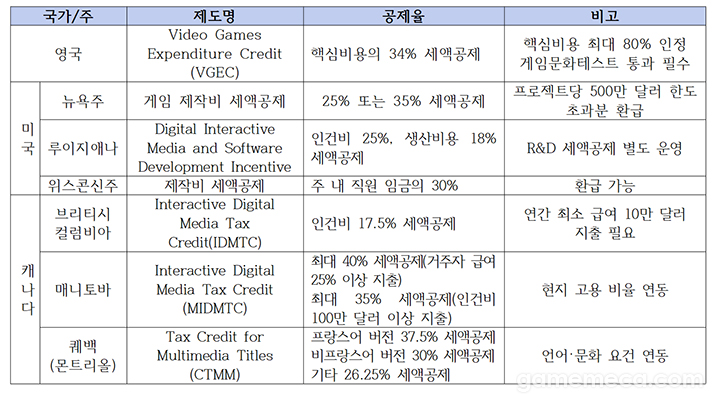
Indeed, from European nations like the UK and France, to North American regions like the US and Canada, major Asian players like Japan and China, and even emerging economies like Brazil and Thailand, governments are actively running game production tax credit schemes. Interestingly, some of these regions sweeten the deal with extra incentives if studios hire local talent or support native languages, cleverly driving job creation and cultural development.
When stacked against domestic counterparts, films and webtoons already enjoy production cost tax credits, making the exclusion of games a glaring fairness issue in content industry support. Song noted, "Despite the content sector requiring specialized tax support because general tax credits do not fit well, the current Restriction of Special Taxation Act limits this solely to films and webtoons."
What Would Game Production Cost Tax Credits Actually Look Like If Implemented?
As it stands, game production tax credits have not yet materialized in South Korea. Should such a system finally arrive, what would the fine print look like? The ultimate power to decide rests with the Ministry of Culture, Sports and Tourism and the Ministry of Economy and Finance. Still, we managed to get a glimpse of the kind of ideas the agency has put on the table.
Song revealed, "Through our research, we proposed recognizing 'production preparation, art production, and game production' within the scope of production costs." Production preparation covers scenarios, planning, and producing. Art production includes design and animation. Game production encompasses structural design, tech development, computer graphics, special effects, subtitle-related costs, sound costs, and playtesting.
The game industry relies heavily on outsourcing, meaning authorities also need to factor in commercial engine license fees like Unreal, along with the recently skyrocketing costs of generative AI. Song responded, "The actual detailed deductible items are matters to be discussed through separate enforcement decree and rule-making procedures after production tax credits are introduced. Still, we firmly believe the aforementioned items belong in the mix."

On top of that, enforcement decree drafting will need to iron out several other wrinkles: whether to apply tax credits to live service expenses for online games receiving long-term updates; whether to introduce refundable tax credits (where leftover credit amounts are handed back in cash if credits exceed actual taxes, considering game companies often operate at a deficit prior to launch); and tax credit rates scaled by company size.
Song explained, "Much like existing film and webtoon production cost tax credit schemes, the system will likely be designed to maximize benefits for small and medium-sized enterprises by differentiating benefit rates based on company size. Sticking to the framework of existing systems, the agency has proposed a basic tax credit rate of 10% for large and mid-sized enterprises, and 15% for SMEs."
How to handle the heavy volume of co-productions in the game industry is also bubbling up as a hot topic. Song explained, "The current enforcement rules for film production tax credits stipulate that 'jointly held rights are recognized only when entities co-own the rights and receive 50% of the revenue generated from exercising them.' Under current law, qualifying for film production tax credits requires meeting conditions such as: taking charge of signing contracts with writers; handling contracts with main cast members; managing contracts with key department heads across two or more areas; and steering all decision-making related to production cost execution and management."
Government Subsidies Such as Agency Support Grants Are Not Eligible for Deductions
Safeguards to prevent the abuse of tax credits are equally crucial. First off, government subsidies—such as the agency's game production support grants—will be excluded from deductions. Song noted, "Under Article 127 of the Restriction of Special Taxation Act, overlapping benefits are banned in principle. Since the enforcement decree for film production tax credits excludes subsidized costs, we expect the exact same standard to apply to games."
What happens to games whose development gets canned before launch? Song stated, "This too is likely a matter for discussion via separate enforcement decree and rule-making procedures once tax credits are introduced. However, if introduced in a format similar to films and webtoons—which target already-released content—projects canceled prior to official launch will likely miss out."

Discussions are also warranted around introducing a 'cultural merit evaluation' to block multinational mega-publishers from abusing the system simply by pushing localized versions through local South Korean branches. Song replied, "We expect reviews on whether this content is necessary for the gaming sphere, along with looks at overseas cases. Current film and webtoon frameworks do not demand additional requirements like cultural merit evaluations."
Sadly, the Ministry of Economy and Finance's tax reform package announced in early August did not include game production cost tax credits. Song shared, "The agency handles policy support roles such as gathering baseline data and conducting analyses for the introduction of production tax credits. We plan to keep communicating closely with related ministries and the industry to push for the system's adoption moving forward."
현재 국내 게임업계에서 ‘게임 제작비’ 세액공제 도입을 강하게 요구하고 있다. 특히 영상, 웹툰 제작비 세액공제가 신설된 후 게임에도 필요하다는 목소리가 높아졌다. 올해 3월에 이를 주제로 한 국회 토론회도 열렸고, 국회에서 게임 제작비를 세액공제 대상에 포함하는 것을 골자로 한 조세특례제한법 개정안도 발의된 상태다.
관련 토론회 현장에서 재정경제부가 주장하는 부분은, 지금도 게임사가 이용할 수 있는 세액공제제도가 마련되어 있다는 것이다. 그러나 게임산업 주무부처인 문화체육관광부와 콘텐츠 진흥을 담당하는 한국콘텐츠진흥원(이하 콘진원)의 생각은 다르다. 그렇다면 문체부와 콘진원이 국내 게임사에 제작비 세액공제가 필요하다고 말하는 이유는 무엇일까? 제도가 있는데도 왜 활용하지 못하는 것일까? 콘진원 송진 정책연구본부장과의 인터뷰를 통해 이에 대해 자세히 들어봤다.
기존 R&D 세액공제, 제조업 중심이라 적용 어렵다
앞서 밝혔듯이 현재 국내 게임사도 이용할 수 있는 세액공제제도가 없는 것은 아니다. 그러나 현실적으로 이를 제대로 쓰기는 어렵기에, 게임사가 실질적으로 이용할 수 있는 제도 개선이 필요하다는 것이 콘진원 측 의견이다.
송진 본부장은 "일반 제도가 제조업 중심으로 설계되어 있어, 연구개발 개념을 콘텐츠 분야에 맞게 적용하기 어렵다"라며 "콘텐츠 기획·제작은 기술 관점의 성과를 제시하기 어렵고, 인건비와 용역비가 집중 투입되는데, 기존 R&D 세액공제는 기획비용이나 제작비용에 대한 인정 범위가 제한된다"라고 답했다.
이어서 "특히 외주 인건비는 공제 항목으로 인정받을 수 없다. 외부 인력과의 협업이 다수 이뤄지는 콘텐츠 산업 특성을 고려하면 기술과의 결합 연구에 관계없이 위탁·공동연구개발 범위 확장이 매우 필요하다"라고 전했다.
기존 세액공제를 이용하기 위해서는 창작연구소 설치, 다른 업무를 겸직하지 않는 연구전담인력, 회계분리, 연구노트 작성 등이 요구된다. 송진 본부장은 "이와 같은 부분은 10인 미만 사업체가 87%를 차지하는 생태계 특성상 현실적으로 한계가 있다"라고 설명했다.
그렇다면 2026년 현재 국내 게임업계에서 세액공제를 받은 비중은 어느 정도일까? 송진 본부장은 "국세청에서 수혜기업 분야를 세부적으로 공개하고 있지 않아 게임 분야 수혜 비율을 별도로 파악하는 것은 불가능하다. 다만, 업계 의견 수렴이나 자체 조사 등에서 나타난 게임 기업의 R&D 세액공제 수혜는 매우 낮은 것으로 파악된다"라고 답변했다. 지난 3월 국회 토론회에서도 문체부에서 '조사 결과 R&D 세액공제를 받고 있다고 응답한 비율은 전체(약 1,300개사)의 2.1% 수준(20개사 미만)에 그쳤다'고 발표한 바 있다.
세금을 깎아주는 만큼의 사회적인 이익도 있을까?
세액공제는 세금을 감면하는 제도이기에, 이를 감수할 정도의 긍정적인 효과가 있어야 당위성을 확보할 수 있다. 이에 대해 송진 본부장은 "콘진원 연구 결과, 게임 제작비 세액공제 실시 후 5년간 총 1조 6,000억 원의 제작비 투자가 추가로 이뤄질 것으로 나타났다. 이러한 투자 증가가 부가가치유발액, 생산유발액, 취업자 수 증가 등 경제적 파급효과를 미칠 것으로 분석됐다"라며 "이러한 파급효과를 세수감소분과 비교하는 비용편익비율이 1.26으로 나타나서 세수감소보다 사회후생이 더 큰 것을 보여줬다"라고 말했다.
세액공제 등 세제지원으로 게임산업 경쟁력을 키우는 것은 전 세계적인 트렌드이기도 하다. 송진 본부장은 "우리나라는 내수 시장 규모가 작기 때문에 지속 성장을 위해서는 해외 진출이 필수불가결한 상황이다"라며 "중국 게임산업 급성장 등으로 글로벌 경쟁이 심화되고 있고, 주요국은 세제지원 등을 통해 게임에 대한 지원을 강화하고 있어 한국 게임산업의 상대적인 경쟁력 약화가 우려된다"라고 전했다.
실제로 영국, 프랑스 등 유럽은 물론 미국, 캐나다 등 북미 지역과 일본, 중국 등 아시아 주요국, 브라질, 태국과 같은 신흥국까지 게임 제작비에 대한 세액공제제도를 운영하고 있다. 이 중 일부는 해당 지역 인력을 고용하거나, 자국 언어를 지원하면 인센티브를 주는 방식으로 고용 창출, 문화 발전 등을 유도하는 점이 눈길을 끈다.
여기에 국내에서 비교해도 영상과 웹툰은 제작비 세액공제를 받고 있기에, 게임에 이를 적용하지 않는 것은 콘텐츠산업 지원 측면에서 형평성에 어긋난다고 볼 수 있다. 송진 본부장은 "일반 세액공제제도 적용이 어려운 콘텐츠 분야 특성상 특화된 조세지원이 필요함에도, 현행 조세특례제한법상 영상과 웹툰에 한정되어 있다"라고 언급했다.
게임 제작비 세액공제가 시행된다면 구체적인 내용은?
국내에서 게임 제작비 세액공제는 마련되지 않은 상황이다. 관련 제도가 생긴다면 세부적인 시행 내용은 어떻게 될까? 이에 대한 결정권은 문화체육관광부, 재정경제부에 있다. 다만 콘진원에서 '이러한 형태가 어떨까'라고 제안한 아이디어를 들어볼 수 있었다.
송진 본부장은 "관련 연구를 통해 제작비 인정 범위로 '제작 준비, 아트 제작, 게임 제작'을 제안한 바 있다"라고 밝혔다. 제작 준비에는 시나리오, 기획, 프로듀싱이 포함된다. 아트 제작에는 디자인과 애니메이션이 있다. 게임 제작에는 구조 설계, 기술 개발, 컴퓨터 그래픽, 특수효과, 자막 관련 비용, 사운드 비용, 플레이 테스트 등이 들어간다“라고 말했다.
게임업계는 외주가 많고, 그 외에도 언리얼과 같은 상용 엔진 사용비, 최근 급증하는 생성형 AI 사용비 등도 고려할 필요가 있다. 송진 본부장은 "실질적인 세부 인정 항목은 제작비 세액공제 도입이 이뤄진 후 별도 시행령, 시행규칙 마련 절차를 통해 논의될 사항이라 생각한다. 위 항목은 포함될 필요가 있다고 여겨진다"라고 답했다.
이 외에도 장기간 업데이트가 이뤄지는 온라인게임에 대한 라이브 서비스 비용의 세액공제 적용 여부, 출시 전 적자 상태에서 개발하는 경우가 많은 게임사 특성을 고려한 환급형 세액공제(공제 혜택이 세금보다 많은 경우 남은 금액을 현금으로 주는 것) 도입 여부, 기업 규모별 세액공제율 등도 시행령 마련 단계에서 정립할 필요가 있다.
송진 본부장은 "기존 영상, 웹툰 제작비 세액공제제도와 마찬가지로 기업 규모별 수혜율 차등으로 중소기업에 최대한 혜택이 돌아가도록 제도가 설계될 것으로 보인다"라며 "콘진원은 기존 제도 틀에 맞춰 대기업·중견기업 10%, 중소기업 15%의 기본 세액공제율 적용을 제안했다"라고 설명했다.
게임업계에서 많은 공동 제작을 어떻게 다룰 것인지도 화두로 떠오른다. 송 본부장은 "현행 영상 제작비 세액공제 시행규칙은 '권리를 공동으로 보유한 경우, 권리 행사에 따른 수익의 50%를 배분받는 경우에만 그 권리를 보유한 것으로 본다‘라고 규정하고 있다"라고 설명했다. 현행법상 영상 제작비 세액공제를 받기 위해서는 다음과 같은 요건을 갖춰야 한다. ▲작가와의 계약 체결 담당 ▲주요 출연자와 계약 체결 담당 ▲주요 스태프 중 2가지 이상 분야의 책임자와 계약 체결 담당 ▲제작비 집행 및 관리와 관련된 모든 의사 결정 담당이다.
콘진원 지원사업 등 정부 보조금은 공제 대상 아니다
세액공제 남용을 막기 위한 안전장치 마련도 필요하다. 우선 콘진원 게임 제작 지원사업처럼 정부에서 받은 보조금은 공제 대상에서 제외된다. 송진 본부장은 "조세특례제한법 제127조에 따라 중복 수혜는 원칙적으로 불가능하다. 영상 제작비 세액공제 시행령에서 지원금 비용은 제외하는 것을 규정하고 있어, (게임도) 동일한 기준이 적용될 것으로 예상된다"라고 말했다.
출시 전 개발이 중단된 게임은 어떻게 될까? 송진 본부장은 "이 내용 역시 세액공제 도입이 이뤄진 후 별도 시행령, 시행규칙 마련 절차를 통해 논의될 사항으로 보인다"라며 "다만 공개된 콘텐츠를 대상으로 한 영상, 웹툰과 유사한 형태로 도입될 경우, 정식 출시 전 중단된 프로젝트는 대상이 되지 않을 가능성이 높다"라고 전했다.
다국적 대형 게임사가 한국 지사를 통해 로컬라이징만으로 제도를 악용하는 것을 막기 위한 '문화성 평가' 도입에 대해서도 논의가 요구된다. 송진 본부장은 "게임 분야에 이 내용이 필요한지, 해외 사례 등에 대한 검토 등이 이뤄지리라 예상한다"라며 "현행 영상과 웹툰에서는 문화성 평가와 같은 추가 요건을 요구하고 있지는 않다"라고 답변했다.
아쉽게도 8월 초에 발표된 2026년 재정경제부 세제개편안에는 게임 제작비 세액공제가 포함되지 않았다. 송진 본부장은 "콘진원은 제작비 세액공제제도 도입을 위한 근거 자료 마련과 분석 등 정책 지원 역할을 수행한다. 앞으로도 지속적으로 관계 부처, 업계와 소통하며 제도 도입에 노력할 예정이다"라고 밝혔다.
This news was translated by AI.

Let's not lose our initial resolve. Meticulously, one by one. risell@gamemeca.com
READ MORE
-
 Legislation Proposed to Ban Game BJ Promotions, Liked to Chart Manipulation
-
 Partial Price Increase for Games on the PlayStation Store in South Korea, SIE's Stance
-
 Illegal currency exchange disguised as 'donations'? Sports prediction games pointed out during National Assembly audit
-
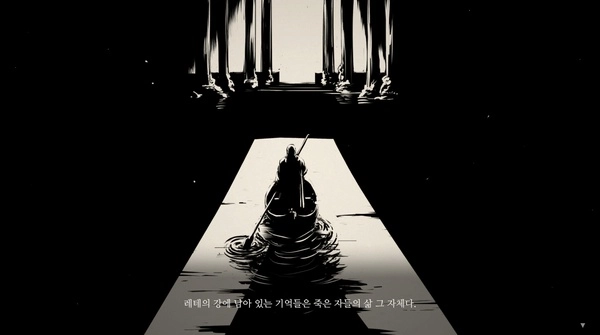 Psychological Horror Game Dealing with the Trial of the Dead, 'River of Lethe', Released on Steam
RECOMMENDED NEWS
MOST POPULAR NEWS
- [Today's steam] Aion 2 Records 400,000 Concurrent Players Upon Official Launch
- [Today's steam] Valve's new title 'Deadlock' surpasses 230,000 Concurrent Players
- Representative Cho Seung-rae: "Gamescom's Strength is Strong B2B, Desperately Needed for G-Star"
- Pre-load starts for World of Dokkaebi, releasing on October 8
- 'Dave the Diver' Complete Edition Released with All Expansions
- [Cartoon] The arrival of the sharpshooter 'Aion 2'?
- "Destined to Disappear Anyway" CyberConnect2 CEO Supports Abolishing Physical Discs
- Wardogs, which became the trend of shooting games, starts its second season on the 15th
- Dokkaebi World Achieves Number 1 Popularity on Both Major App Markets on Launch Day
- A Meeting of Isaac and Doom, Boomer Shooter 'Paperhead' Released on Steam
MEDIA PARTNERSHIPS



GAMEMECA SNS


 GAMEMECA GLOBAL SITE