
[Board Game] There is no story, but the sense of command remains, Nikke
[보드게임] 이야기는 없지만 지휘의 감각은 남았다, 니케
2026.09.10 10:01 UTC+9

AI Summary
Nikke board game arrives with 25 acrylic stands and tactical combat mechanics. Fans will enjoy the familiar squad drafting and Burst timing mechanics. However, steep pricing and a total lack of narrative lore leave something to be desired.
[보드게임] Gamemeca presents a monthly column exploring stellar board games, penned in collaboration with Wuchi, the CEO of board game developer Popuri.
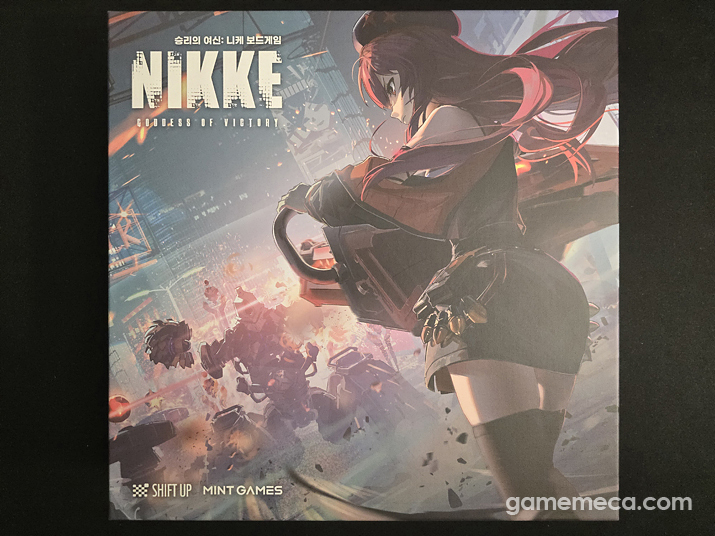
The box is large, and the artwork covering the exterior is flashy. Keeping the hefty 88,000 won price tag in mind upon opening the lid, the first thing that caught the eye was the striking Nikke acrylic stands. A fleeting thought crossed the mind that the production quality was quite impressive.
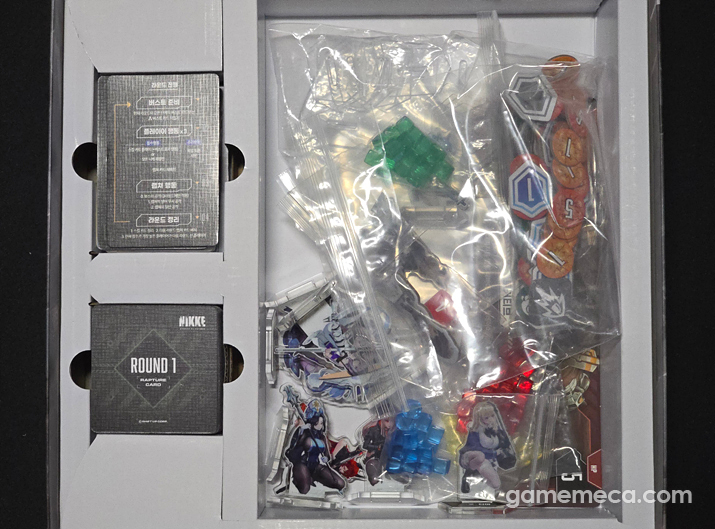
The trouble began right after. Lifting out the acrylic stands revealed yellowish corrugated cardboard crammed inside to keep the contents from shifting. Even the inserts partitioning the box were made of plain, unadorned white paper. For a moment peering into the guts of an official product released to commemorate the 3.5th anniversary, the first impression was somewhat awkward.
Acrylic stands and white paper, and that is pretty much what fills the box
The Goddess of Victory: NIKKE board game is crafted by Gembloux Company, specialists in trading card games and board games, utilizing Shift Up's Goddess of Victory: NIKKE IP. Launched in line with the original title's 3.5th anniversary, it marks South Korea's first official board game adaptation, having kicked off pre-orders last April. For the record, Gembloux Company also tackles the Nikke IP with its proprietary TCG Nibel Arena, but this board game is a completely separate beast.
Much like the source material, players step into the boots of commanders taking on the mechanical lifeforms known as Raptures. However, this is not a cooperative joint effort; it is a competitive slugfest where you share the same battlefield while vying to see who can blast away more Raptures.
Laying out the components reveals that the 25 types of acrylic stands are essentially the main event, leaving a handful of cards and a single punch board to round things out. Add in the aforementioned dreary fillers and inserts, and you will definitely find yourself double-checking that price tag.
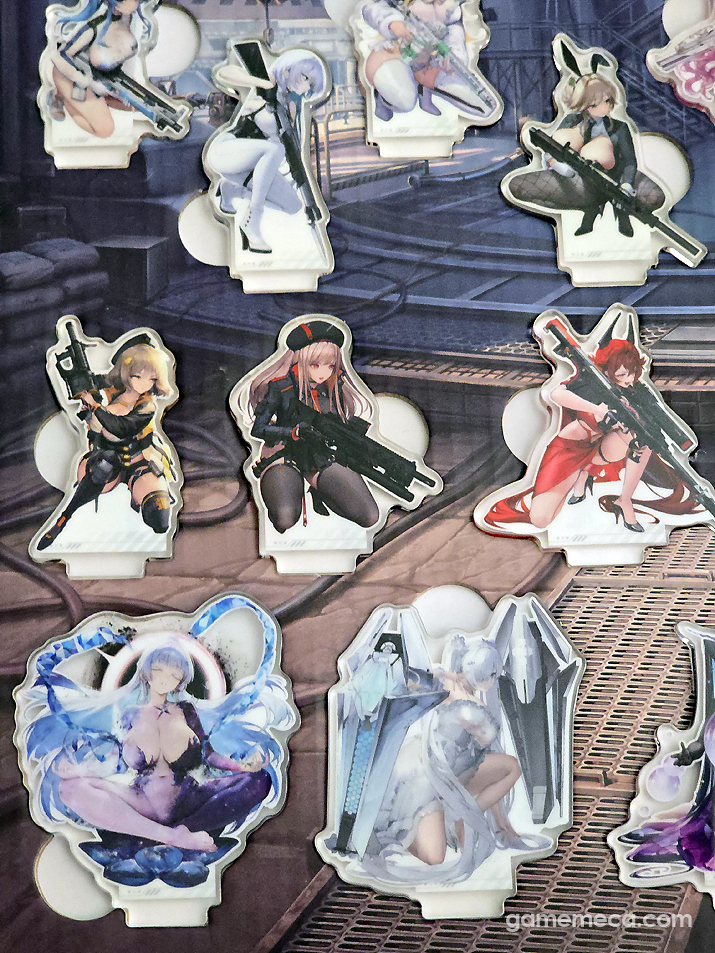
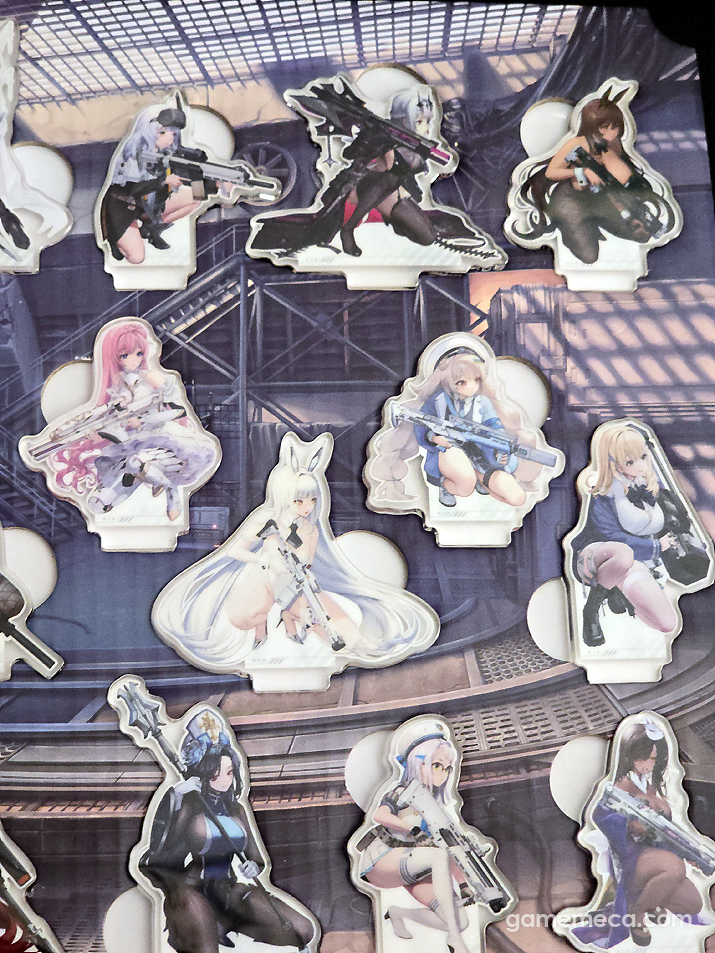
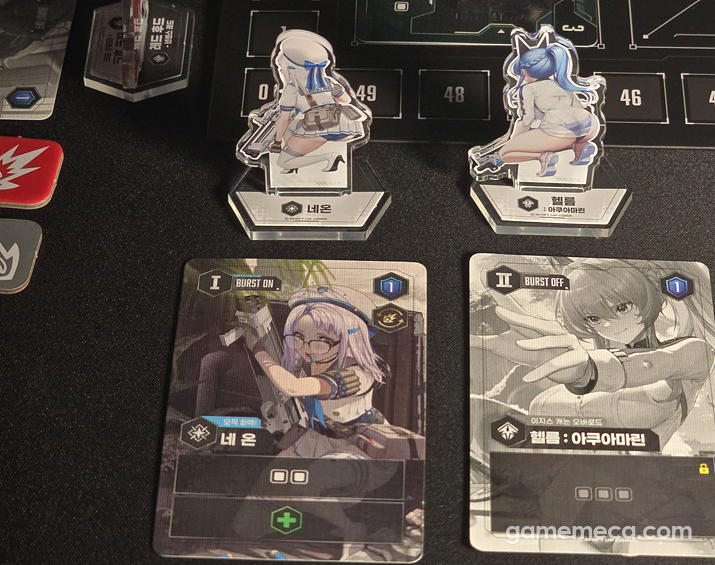
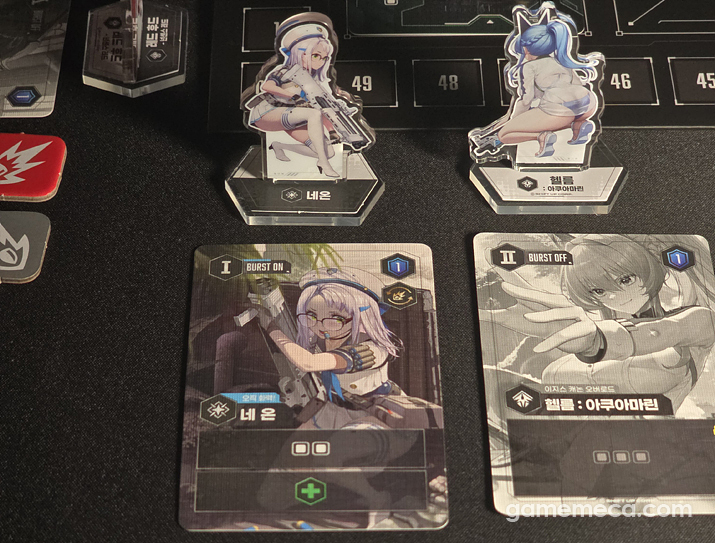
That said, dismissing the acrylic stands as mere trinkets would be a mistake. They double as actual functional components during gameplay. When playing Nikke skill cards, you rotate the corresponding acrylic stand to indicate an 'exhausted' state, with the rulebook designating the rear view for reloaded states and the front view for exhausted ones. It cleverly reflects whether a Nikke is facing the battlefield or not, which is a neat little mechanic recalling the original game's dance of shooting and taking cover.
Shoot, or reload
The game wraps up in three rounds. Each round rolls out in order: Burst preparation, player actions, Rapture actions, and round cleanup. Before kicking things off, players draft a squad of five Nikkes. If you haven't the slightest clue what kind of synergy to put together, you can simply lift the recommended squads straight out of the manual.
During the Burst preparation phase, you flip over the Burst cards corresponding to the current round. Burst cards are split into stages 1, 2, 3, and a Joker, but you can only flip cards matching the active round, meaning the spread grows by one card as the game progresses. You get two cards laid out in round two, and three in round three. As the rounds march on, your commanding reach expands as well.
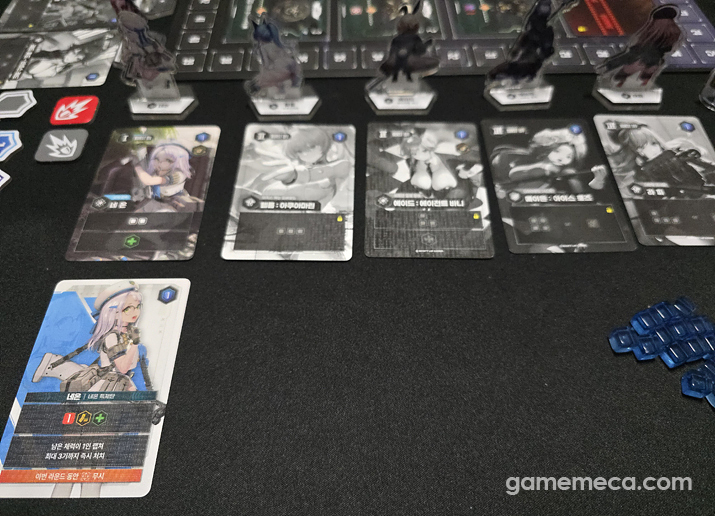
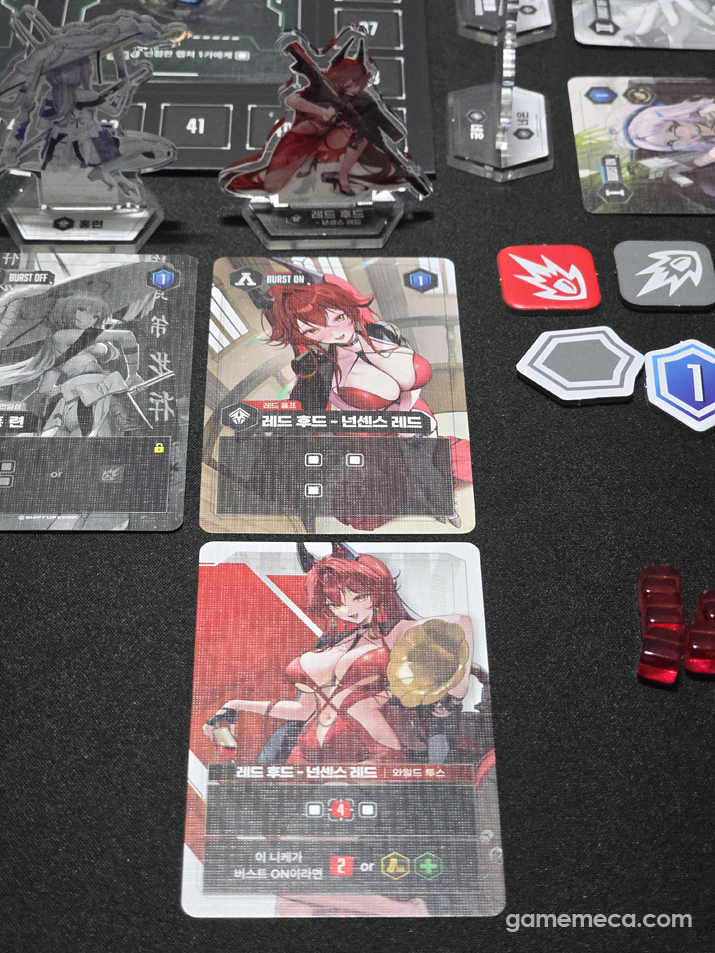
Players get a mere three actions per round, and the mandatory action on any given turn boils down to one of two choices: play skill cards or reload all your Nikkes.
You start with a hand of five skill cards and lay them face down beneath the Burst cards. Resolution flows strictly from top to bottom, row by row, culminating in the Burst effect at the end. Cards don't come printed with flat attack values; instead, the card effects themselves generate the damage, meaning the exact cards you pick and the stacking order dictate your raw firepower. That said, laying down a skill card requires the corresponding Nikke to be in a reloaded state.
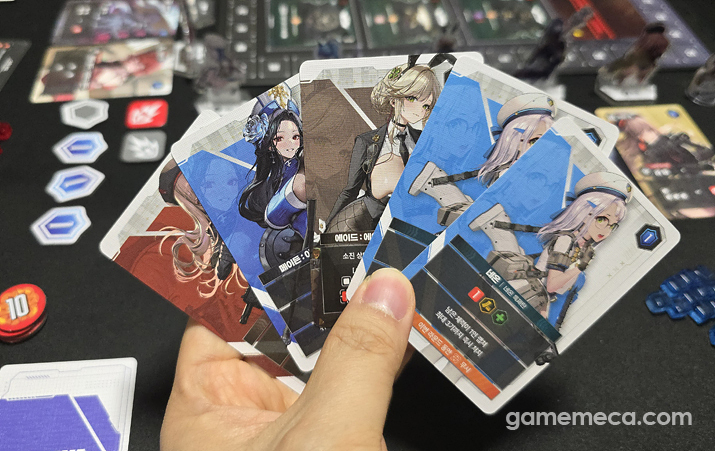
This is precisely where the necessity of 'reloading' comes to light. Once you play a skill card, that Nikke becomes exhausted, and exhausted Nikke cards can no longer be played. To flip them back up, you have to spend an entire turn purely on reloading. On the flip side, a reload snaps every single exhausted squad member back to their feet simultaneously. Do you pour on more firepower right now, or take a breather to prep for what's next? You are forced to weigh these options before every single one of your three precious turns.
Raptures boast individual attack power and health pools. When a Nikke's attack lands, you pile your colored cubes onto the Rapture card to tally the damage, and once the cubes match its health pool, it goes down in flames. Vacant spots are immediately backfilled with fresh Raptures the moment any player wraps up their turn, meaning the battlefield never stays quiet for long.
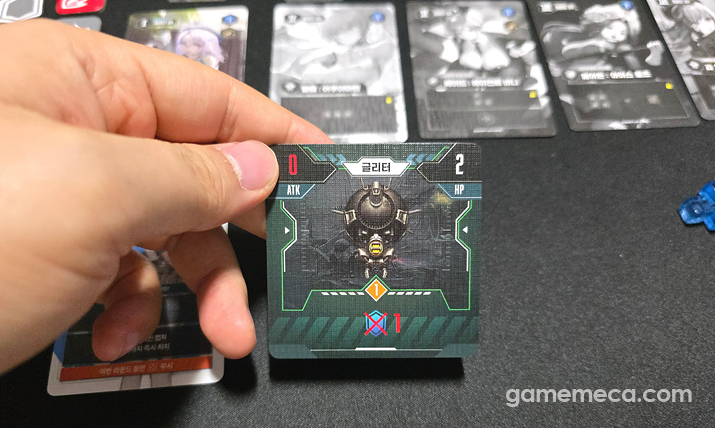
This introduces a rather unique mechanic to the game. When a Rapture is destroyed, the player who deals the killing blow claims the Rapture card for points. But does that mean everyone else who chipped in got nothing for their trouble? Far from it. Other players who pitched in with attacks also advance along the experience track based on how many cubes they left on the card.
The experience track is kept entirely separate from the victory point track. As you advance along the track, you will occasionally breeze past item spaces, hitting crossroads where you can activate defense or explosion tokens, or choose between recovery and reloading. At game's end, your final position on this track translates into bonus points.
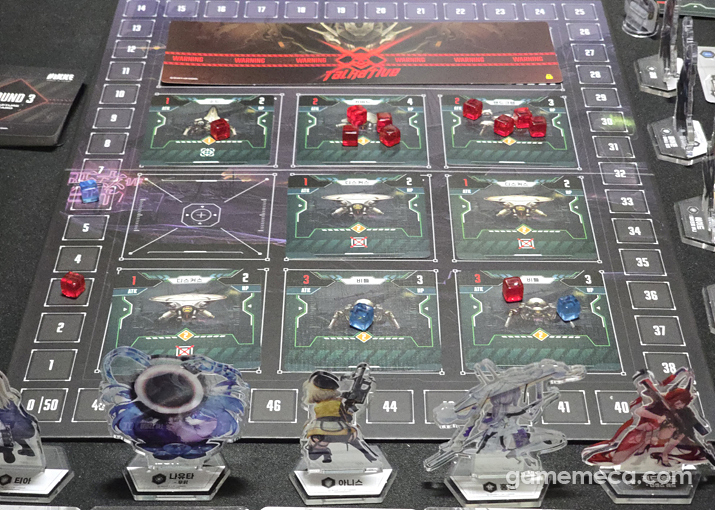
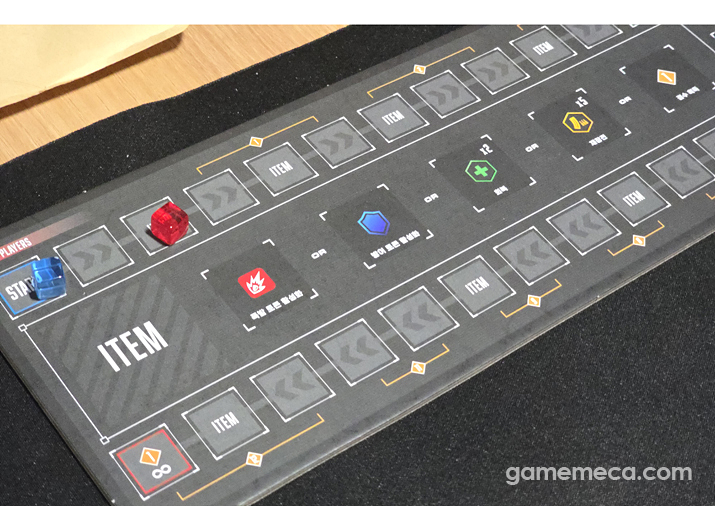
To sum it up, every single time you target a Rapture, you face a three-pronged choice. Snag the finishing blow for points, or settle for guaranteed experience if you can't seal the deal. That experience lets you scoop up defensive or offensive gear, which ultimately converts into points anyway.
Once all players burn through their three actions, the Rapture phase kicks off. Unmitigated attacks that completely bypass defenses hit first, followed by standard attacks. If a boss is present on the board, its offensive maneuvers are resolved ahead of everything else.
Standard attacks are calculated by pooling the attack values of every single Rapture currently on the field. To counter this, your Nikkes' collective defense is calculated by summing three things: the defense values printed on all Burst cards regardless of orientation, the defense from skill cards played that round, and any active defense tokens. If your defense falls short of the incoming onslaught, you take penalty tokens equal to the deficit.
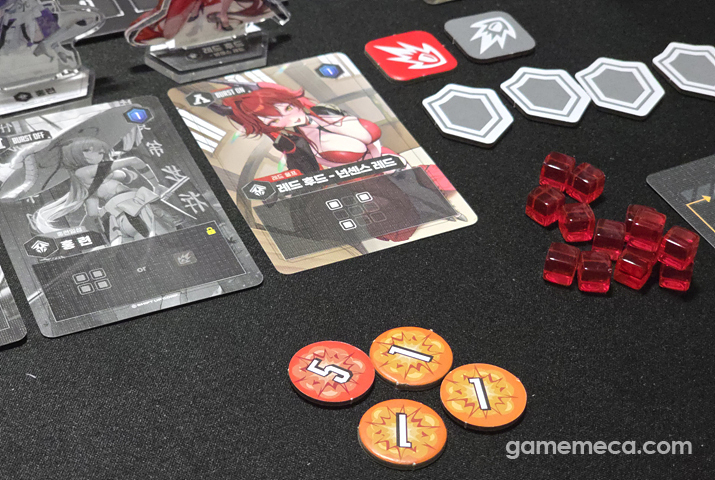
What deserves attention here is that one of the main pillars of your defense is literally 'the skill cards played in the current round.' Failing to lay down cards doesn't just mean you miss out on attacking; it leaves your defenses completely exposed.
One more thing: during the round cleanup phase, the player with the current highest score takes the starting player token for the next round. It sounds like a front-runner's privilege, but in reality, it leans closer to a curse. Since the player holding the lead token attacks Raptures first to stack cubes, trailing players can easily swoop in with finishing blows to steal away the points. It's a system where forging ahead essentially works for everyone else's benefit, though it isn't a total loss thanks to the aforementioned experience track cushioning the blow.
When an exhausted Nikke stares back at you
Running a two-player match, we stuck strictly to the manual's recommended squads. The squad chosen was an 'exhaustion-enhanced squad' comprising Neon, Maid: Agent Bunny, Helm: Aquamarine, Maiden: Rosanna, and Rapi. The opposing side rolled with a 'cumulative damage squad' featuring Tia, Anis, Nayuta, Hongren, Red Hood, and Nonsense Red. From setup to downing the boss, it clocked in at just over an hour.
Yet, despite deliberately picking a squad touted for utilizing exhaustion, the writer rarely ever found any Nikkes getting exhausted. Neon was the sole reason why. Skill cards indicate their Burst stage, restricting round-one plays strictly to Stage 1 Burst cards. Neon was the only Stage 1 Nikke in the squad, leaving zero room for alternative choices early on.
Curiously enough, Neon's skill card packed an effect that instantly executes up to three Raptures sitting at 1 HP, bundled together with a reload effect. Since the card reloads itself the moment it gets played, there was zero need to waste an entire turn purely on reloading. While opposing Nikkes grew tired one by one and turned to stare blankly at their commanders, the writer's squad kept standing tall with their backs proudly turned to the enemy.
Round one thus went swimmingly. The trouble started right after. Each Nikke only brings two skill cards to the table. Depending on the exact mix of cards drawn into your hand of five, your mobility options for that round get strictly locked in. By rounds two and three, where the Burst card count climbs to two or three and combos are supposed to pop off, the exact skill cards needed simply refused to show up in hand. The stage was set to rain down absolute devastation, yet there was nothing left in the chamber to fire.
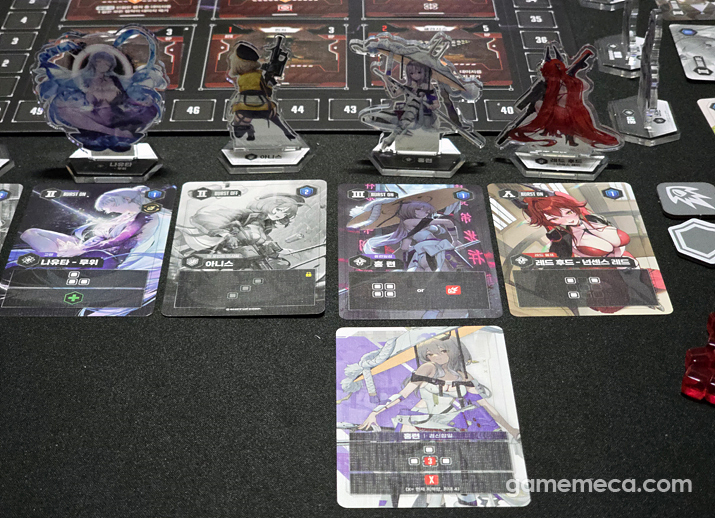
Across the table, the exact opposite played out. Late in the game, the opponent's entire roster of Nikkes burned out, turning all their acrylic stands around to face this side. With not a single Nikke left capable of laying down skill cards, their only option on those turns was to reload. Meanwhile, Raptures kept spawning relentlessly, and the Rapture phases marched forward on schedule. Most importantly, playing fewer skill cards that round meant their defense cratered, and wasting one of your precious three turns on maintenance meant sacrificing both points and protection in one fell swoop.
In hindsight, it was like witnessing both faces of the coin in a single match. The opponent stalled out because every single Nikke burned out, whereas the writer hit a wall because, although the squad never exhausted, the hand of cards couldn't be put to proper use. Both sides found their momentum choked off from completely opposite ends while dealing with the exact same three-turn limit.
The final result was a razor-thin victory for the writer. Given how narrow the point spread was, it wouldn't be much of a stretch to say that the single turn the opponent spent on reloading decided the entire match.
A final boss that fizzled out despite all the setup
The true letdown came at the very end. The boss attack triggers exclusively in round three, serving as the dramatic climax of the experience.
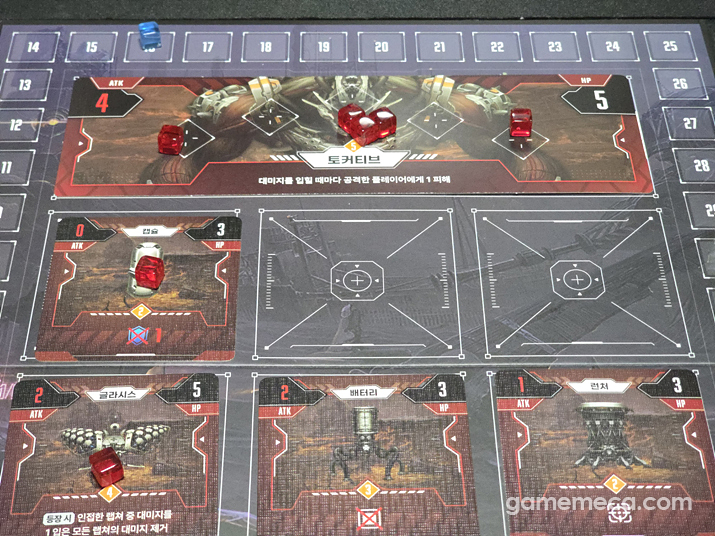
The boss faced this time around was Chatterbox. Occupying the boss slot while spanning three horizontal spaces across the board, it lacked any particularly troublesome abilities and was swept away in the blink of an eye. It felt rather anticlimactic.
Looking back, there was a structural reason for this. Round three is the exact moment when the maximum number of Burst cards are laid out and firepower hits its absolute zenith. Under such conditions, a massive target spanning three horizontal squares turns into sitting duck prime for area-of-effect punishment. The section meant to serve as the grand finale inadvertently devolved into the easiest leg of the journey.
This stings even more considering Chatterbox is explicitly recommended as the introductory boss. If a slot is meticulously designed for newcomers' first encounter, that exact moment dictates their initial impression. That said, the box packs a total of six distinct bosses featuring unique effects and patterns, leaving open the possibility that pulling a different adversary out of the box would flip the impression entirely.
Failing to capture Nikke's other core strength: the 'story'
The most regrettable aspect of this board game is the total absence of narrative. The box contains zero campaigns, scenarios, or lore text explaining the world setting. Someone completely unfamiliar with Nikke opening this box would remain entirely in the dark about humanity losing the surface or what a Nikke even is. The characters printed on the acrylic stands serve as practically the sole narrative touchpoint. Without those stands, the experience would feel infinitely more barren.
While it captures the original game's shooting mechanics nicely, its other great strength—the story—is entirely absent from the board game format. In that regard, it's tough to claim it captures every single facet of the Nikke IP.
Even so, anyone who has touched the source material will spot plenty of recognizable nods. The sensation of drafting squads and timing your Burst sequences, alongside the rhythm of shooting and reloading, ring true. Above all, the process of rotating those acrylic stands to decide which Nikke takes the field and when delivers a surprisingly convincing sensation of stepping into a commander's shoes.

Collector's value exists for Nikke fans
To wrap things up, let's break down who this title is actually for. First off, fans of the original work will find it well worth a recommendation. Getting your hands on 25 different acrylic stands carries inherent meaning alone, and the familiar sensation of assembling squads and triggering Bursts springs back to life right on your tabletop. How you swallow the 88,000 won price tag ultimately depends on how you value those acrylic stands.
For board gamers completely blind to Nikke, verdicts will likely split. The strategic depth of shifting which Nikkes you can deploy and what firepower you can unleash each round, adapting your tactics accordingly, is undeniably fun. However, the sparse components relative to the price tag will likely make buyers hesitate. You also have to factor in that playing this requires spreading Nikke's distinct artwork out across a table in front of multiple people, meaning personal tastes in art might dictate whether the game ever gets unboxed at all.
Just as a quick addendum: the writer tackled this as a two-player affair, but a strong hunch suggests filling the player count all the way up to four would make it considerably more enjoyable. Seeing an even wider array of Nikkes take the field, watching the combos born from differing squad combinations collide, and turning the score chase into a cutthroat scramble would surely cook up a much more thrilling showdown.
WuchiAn ordinary board game developer.Currently serving as the CEO of board game company 'Popuri'.Sharing board game play logs on Instagramrunning busily.
게임메카는 한 달에 한 번 보드게임 개발사 포푸리의 우치 대표와 함께 좋은 보드게임을 소개하는 코너 [보드게임]을 연재합니다.
박스는 크고, 겉면을 채운 일러스트는 화려했습니다. 8만 8,000 원이라는 가격표를 떠올리며 뚜껑을 열었을 때 가장 먼저 눈에 들어온 건 화려한 니케 아크릴 스탠드였습니다. 완성도가 꽤 높다는 생각이 스쳤습니다.
문제는 그 뒤였습니다. 아크릴 스탠드를 들어내자 내용물이 흔들리지 않도록 채워 넣은 누런 골판지가 보였습니다. 심지어 상자를 구획하는 인서트는 아무런 가공 없는 하얀 종이로만 만들었는데요. 3.5주년을 기념해 나온 공식 상품의 속을 들여다본 순간치고는, 다소 머쓱했던 첫인상이었습니다.
상자를 채운 건 아크릴 스탠드, 그리고 하얀 종이
승리의 여신: 니케 보드게임은 트레이딩 카드 게임과 보드게임을 전문으로 하는 젬블로컴퍼니가 시프트업의 '승리의 여신: 니케' IP를 활용해 만든 작품입니다. 원작 3.5주년에 맞춰 공개된 국내 첫 공식 보드게임으로, 지난 4월 사전예약을 받았습니다. 참고로 젬블로컴퍼니는 자사 TCG '니벨아레나'로도 니케 IP를 다루고 있는데, 이번 보드게임과는 별개 제품입니다.
이번 보드게임은 원작과 마찬가지로 플레이어는 지휘관이 되어 기계 생명체 '랩쳐'를 상대합니다. 다만 함께 힘을 합치는 협력 게임이 아니라, 같은 전장을 공유하면서 누가 더 많은 랩쳐를 쓰러뜨리는지 겨루는 경쟁 게임입니다.
구성품을 늘어놓고 보면 아크릴 스탠드 25종이 사실상 전부이며, 나머지는 카드 약간과 펀치보드 한 장이 끝입니다. 앞서 이야기한 완충재와 인서트까지 더하면, 가격표를 다시 확인하게 되는 구성인 것은 분명합니다.
다만 아크릴 스탠드를 단순한 굿즈로만 보기는 어렵습니다. 게임에서 실제로 쓰이는 부품이기 때문입니다. 니케의 스킬 카드를 사용하면 해당 아크릴 스탠드를 돌려놓아 '소진' 상태를 표시하는데, 룰북은 장전 상태를 뒷모습, 소진 상태를 앞모습으로 규정하고 있습니다. 니케가 전장을 향해 있는지 여부를 아크릴 스탠드 방향으로 보여주는 셈인데, 사격과 엄폐를 오가는 원작을 떠올리면 꽤 영리한 메카닉입니다.
쏘거나, 재장전하거나
게임은 3라운드로 끝납니다. 각 라운드는 버스트 준비, 플레이어 행동, 랩쳐 행동, 라운드 정리 순으로 진행됩니다. 시작하기 전 플레이어는 니케 5기를 골라 스쿼드를 짭니다. 어떤 조합을 짜야 할지 감이 오지 않는다면 매뉴얼에 실린 추천 스쿼드를 그대로 가져다 써도 됩니다.
버스트 준비 단계에서는 현재 라운드와 같은 단계의 버스트 카드를 뒤집습니다. 버스트 카드는 1, 2, 3단계와 조커로 나뉘는데, 해당 라운드의 카드만 뒤집을 수 있어 라운드가 진행될수록 앞에 펼쳐진 카드가 하나씩 늘어납니다. 2라운드에는 두 장, 3라운드에는 세 장이 깔린 상태가 되는 식입니다. 라운드가 갈수록 지휘할 수 있는 니케도 늘어납니다.
플레이어 행동은 라운드당 세 번뿐이며, 한 턴에 할 수 있는 필수 행동은 두 가지 중 하나입니다. 스킬 카드를 플레이하거나, 모든 니케를 재장전하거나로 정리됩니다.
스킬 카드는 손에 5장을 들고 시작하며, 버스트 카드 아래에 앞면으로 내려놓습니다. 처리는 위에서 아래로 한 줄씩 순서대로 이뤄지고, 마지막에 버스트 효과가 적용됩니다. 카드마다 공격력 수치가 적힌 것이 아니라, 카드 효과 자체가 피해를 만들어내는 방식이라 어떤 카드를 어떠한 순서로 쌓느냐가 그대로 화력이 됩니다. 다만 스킬 카드를 내려놓으려면 해당 니케가 반드시 장전 상태여야 합니다.
여기서 '재장전'이 왜 필수 행동인지가 드러납니다. 스킬 카드를 쓰면 해당 니케는 소진되고, 소진된 니케 카드는 더 이상 낼 수 없습니다. 니케를 되돌리려면 차례 하나를 통째로 재장전에 써야 합니다. 대신 재장전은 소진된 스쿼드 니케 전원을 한 번에 일으켜 세웁니다. 지금 화력을 더 쏟아부을 것인지, 한 박자 쉬고 다음을 준비할 것인지. 세 번뿐인 차례 앞에서 매번 이를 두고 저울질하게 됩니다.
랩쳐는 저마다 공격력과 체력을 지니고 있습니다. 니케의 공격이 들어가면 랩쳐 카드 위에 자기 색 큐브를 올려 피해를 표시하고, 큐브가 체력만큼 쌓이면 파괴됩니다. 빈 자리는 플레이어 각자가 차례를 마칠 때마다 새 랩쳐로 채워지므로 전장이 한산해지는 일은 없습니다.
여기서 이 게임의 독특한 메카닉이 나옵니다. 랩쳐가 파괴되면 마지막 일격을 넣은 사람이 랩쳐 카드를 가져가 점수를 얻습니다. 하지만 랩쳐를 공격했던 다른 플레이어는 헛수고를 한 걸까요? 그렇지 않습니다. 랩쳐를 함께 공격했던 다른 플레이어도 카드 위에 올려둔 본인 큐브 수만큼 경험치 트랙을 전진할 수 있습니다.
경험치 트랙은 점수 트랙과는 별개로 마련된 보드입니다. 트랙을 전진하다 보면 아이템 칸을 지나기도 하는데요, 방어•폭발 토큰을 활성화하거나 회복과 재장전 중 하나를 고르는 갈림길을 만나기도 합니다. 게임이 끝날 때는 트랙 위의 위치에 따라 추가 점수가 붙습니다.
정리하자면 랩쳐 하나를 공격할 때 세 갈래의 선택지가 생깁니다. 공격을 마무리하면 점수지만, 그렇지 못하더라도 경험치를 얻습니다. 그리고 경험치는 방어나 공격 아이템을 얻을 수 있도록 해주며 결국 점수로도 바꿀 수 있습니다.
플레이어들이 행동 세 차례를 모두 사용하면 랩쳐의 턴이 시작됩니다. 방어를 완전히 무시하는 공격이 들어온 뒤, 마지막으로 일반 공격이 이어집니다. 만약 보스가 있다면 보스의 공격이 먼저 처리됩니다.
일반 공격은 전장에 있는 모든 랩쳐의 공격력을 합산해 계산합니다. 이에 맞서는 니케의 방어력은 세 가지를 더한 값입니다. 앞, 뒷면을 가리지 않는 모든 버스트 카드에 표시된 방어력, 이번 라운드에 플레이한 스킬 카드의 방어력, 활성화된 방어 토큰 수입니다. 방어력이 공격력에 미치지 못하면 그 차이만큼 피해 토큰을 받습니다.
주목할 점은 방어력의 한 축이 '이번 라운드에 플레이한 스킬 카드'라는 것입니다. 카드를 내려놓지 못한 라운드는 공격을 못 하는 데서 그치지 않고 방어까지 약해집니다.
한 가지 더, 라운드 정리 단계에서 다음 라운드의 선은 현재 점수가 가장 높은 사람이 맡습니다. 앞서가는 사람의 특권처럼 보이지만, 실제로는 반대에 가깝습니다. 선을 잡은 플레이어가 랩쳐를 먼저 공격해 큐브를 쌓아두면, 뒤에 오는 사람이 마무리 일격으로 점수를 가로채기 쉬워지기 때문입니다. 앞서가는 만큼 남 좋은 일을 하게 되는 구조인 셈인데, 그럼에도 완전한 손해가 아닌 것은 앞서 이야기한 경험치 트랙이 뒤를 받쳐주기 때문입니다.
소진된 니케가 나를 바라볼 때
2인플로 진행된 게임에서는 매뉴얼의 추천 스쿼드를 그대로 썼습니다. 저는 네온, 메이드: 에이전트 바니, 헬름: 아쿠아 마린, 메이든: 아이스 로즈, 라피로 구성된 ‘소진 강화 스쿼드’였습니다. 상대는 티아, 아니스, 나유타 - 무위, 홍련, 레드 후드 - 넌센스 레드의 '피해 누적 스쿼드'였습니다. 세팅부터 보스를 잡는 데까지 한 시간 남짓 걸렸죠.
그런데 소진을 활용한다는 스쿼드를 골라놓고, 정작 필자는 니케가 소진될 일이 거의 없었습니다. 네온 덕분이었습니다. 스킬 카드에는 버스트 단계가 표기되어 있어, 1라운드에는 1단계 버스트 카드만 사용할 수 있습니다. 스쿼드에서 1단계에 해당하는 니케는 네온뿐이었으니 초반에는 선택의 여지가 없었습니다.
그런데 네온의 스킬 카드에는 체력이 1 남은 랩쳐를 최대 3기까지 즉시 처치하는 효과와 함께 재장전 효과가 붙었습니다. 카드를 쓰는 동시에 다시 장전되니, 차례 하나를 통째로 재장전에 소모할 필요가 없게 됐죠. 상대 니케가 하나둘 소진되어 지휘관을 바라보는 동안 제 니케들은 계속 굳건하게 등을 보이고 서 있었습니다.
1라운드는 그래서 순조로웠습니다. 문제는 그다음이었습니다. 니케 한 명당 스킬 카드는 2장씩만 들어 있습니다. 그래서 손에 쥔 다섯 장에 어떤 카드가 섞여 들어오느냐에 따라 그 라운드에 움직일 수 있는 니케가 정해집니다. 버스트 카드가 두 장, 세 장으로 늘어나 콤보를 터뜨려야 할 2~3라운드에, 정작 필요한 스킬 카드는 손에 들어오지 않았습니다. 화력을 몰아칠 판은 깔렸는데 쏠 카드가 없는 상황이었죠.
반대편에서는 정반대의 일이 벌어졌습니다. 상대의 경우 후반부에 니케가 모두 소진되어 아크릴 스탠드가 전부 이쪽을 바라보게 됐습니다. 스킬 카드를 내려놓을 수 있는 니케가 하나도 남지 않아 그 차례에는 재장전 외에 선택지가 없었죠. 그 사이에도 랩쳐는 계속 출현했고, 랩쳐 행동도 예정대로 진행됐습니다. 무엇보다 그 라운드에 스킬 카드를 덜 내려놓은 만큼 방어력이 줄었고, 세 번뿐인 차례에서 하나를 정비에 내주면 점수와 방어를 동시에 잃는 격이 됩니다.
돌이켜보면 이 게임의 두 얼굴을 한 판에서 다 본 셈입니다. 상대는 니케가 전부 소진되어 멈춰 섰고, 필자는 니케가 소진되지는 않았으나 손패(손 안에 있는 카드)를 제대로 활용할 수 없다는 점이 발목을 잡았습니다. 같은 세 차례를 두고 정반대 방향에서 둘 다 전개가 막힌 것입니다.
최종 결과는 간발의 차이로 필자의 승리였습니다. 점수 차가 크지 않았던 만큼, 상대가 재장전에 내준 그 한 차례가 승부를 갈랐다고 봐도 무리는 아닐 것 같습니다.
판 깔기에 비해 허무하게 끝난 최종 보스
아쉬웠던 대목은 마지막이었습니다. 보스의 공격은 3라운드에만 발생하며, 이 게임의 클라이맥스에 해당하는 존재입니다.
이번에 상대한 보스는 토커티브였습니다. 보스 칸을 점유하면서 가로로 세 칸을 차지하는데, 별다른 능력이 없어 순식간에 정리됐습니다. 조금 허탈했죠.
돌이켜보면 구조적인 이유가 있었습니다. 3라운드는 버스트 카드가 가장 많이 깔린, 화력이 정점에 오른 시점입니다. 그런 순간에 가로 세 칸을 차지한 큼직한 표적은 광역 공격에 취약한 대상이 됩니다. 클라이맥스여야 할 구간이 오히려 가장 손쉬운 구간이 되어버린 셈입니다.
토커티브가 첫 플레이용으로 추천되는 보스라는 점을 감안하면 더 아쉽습니다. 입문자가 처음 마주하도록 설계한 자리라면 그 자리야말로 첫인상을 좌우하기 때문입니다. 다만 수록된 보스는 총 6종이고 각기 다른 효과와 패턴을 지녔다고 하니, 다른 보스를 꺼냈다면 인상이 달라졌을 가능성은 남아 있습니다.
니케의 또 다른 강점인 '스토리'는 담지 못했다
이 게임에서 가장 아쉬운 점은 이야기의 부재입니다. 상자 안에는 캠페인도, 시나리오도, 세계관을 설명하는 텍스트도 없기 때문입니다. 니케를 모르는 사람이 상자만 열어서는 지상을 빼앗긴 인류에 대해서도, 니케라는 존재가 무엇인지도 알 수 없습니다. 아크릴 스탠드에 그려진 캐릭터가 사실상 유일한 서사 접점입니다. 아크릴 스탠드마저 없었다면 훨씬 삭막했을 것입니다.
원작의 슈팅 플레이는 잘 살렸으나 또 다른 강점인 스토리는 보드게임에서는 느낄 수 없습니다. 그러한 점에서 니케라는 IP의 모든 부분을 담아냈다고 말하기는 어렵습니다.
그럼에도 원작을 해본 사람이라면 알아볼 만한 요소는 충분히 담겨 있습니다. 스쿼드를 짜고 버스트 순번을 맞추는 감각, 쏘고 재장전하는 리듬이 그렇습니다. 무엇보다 아크릴 스탠드를 돌려가며 어떤 니케를 언제 전장에 세울지 판단하는 과정에서, 지휘관이 된 듯한 감각만큼은 제법 잘 전달됐습니다.
니케 팬이라면 소장 가치는 존재한다
마지막으로 어떠한 유저에게 추천하는지에 대해 정리하겠습니다. 우선 원작 팬이라면 권할 만합니다. 아크릴 스탠드 25종을 손에 쥔다는 사실만으로도 의미가 있고, 스쿼드를 짜고 버스트를 터뜨리는 익숙한 감각이 테이블 위에서 되살아납니다. 8만 8,000원이라는 가격을 어떻게 받아들일지는 결국 이 아크릴 스탠드를 어떻게 보느냐에 달렸습니다.
니케를 모르는 보드게이머라면 판단이 갈릴 것 같습니다. 라운드마다 쓸 수 있는 니케와 터뜨릴 수 있는 화력이 달라지고, 그에 맞춰 운용을 바꿔가는 전략적인 재미는 분명합니다. 다만 가격에 비해 부실한 구성은 구매를 망설이게 만듭니다. 여기에 니케 특유의 일러스트를 여러 사람 앞에 펼쳐놓고 플레이해야 한다는 점도 고려할 필요가 있습니다. 아트에 대한 취향이 게임을 꺼낼 수 있는 자리 자체를 좌우할 수 있기 때문입니다.
한 가지 덧붙이자면, 필자는 2인으로 플레이했지만 인원을 4인까지 꽉 채웠을 때가 더 즐겁겠다는 생각이 들었습니다. 더 다양한 니케가 전장에 서는 모습을 볼 수 있을 테고, 서로 다른 스쿼드 조합이 만들어내는 콤보에, 점수 경쟁도 치열해지면서 흥미진진한 대결을 기대해볼 수 있겠다 싶었습니다.
우치평범한 보드게임 개발자.보드게임 회사 '포푸리' 대표를 맡고 있습니다.보드게임 플레이로그로 인스타그램을 운영 중입니다.
This news was translated by AI.

MOST POPULAR NEWS
- Up to 75% Off, Epic Games Store Late Summer Sale Begins
- NVIDIA reveals local AI technology at IFA, RTX Spark to launch in October
- Nikke detects numerous illegal program users in Solo Raid
- A Remake That Snipes Newbie Nostalgia, Trails in the Sky the 2nd
- What is the relationship with Asera? Star Savior savior 'Amora' appears
- [Today's steam] Large-scale FPS Wardogs records 160k concurrent players on the first day of testing
- Warframe and Soulframe Unveil Major Updates at TennoCon Seoul
- RPG Switching Between Vampire and Human 'Blood of the Dawnwalker' Released
- What is the user reaction to DLSS 5 implementing hyper-realistic graphics?
- [Today's steam] Anticipated game 'Dawn Walker' receives favorable reviews for story, harsh criticism for optimization
MEDIA PARTNERSHIPS



GAMEMECA SNS