
[precedent.zip] Does deriding the appearance of a character modeled after a real person constitute the crime of insult?
[판례.zip] 실존 인물 본뜬 캐릭터 외모 비하, 모욕죄 성립될까?
2026.09.15 14:00 UTC+9

AI Summary
Scanned faces in games spark legal debates.
Real-world recognition defines defamation risks.
Sexual mods blur the line into sexual crimes.
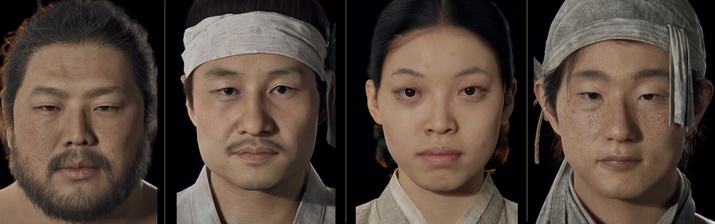
Look, let's be honest, we've all stared at a game character at least once and thought, "Wait, haven't I seen that mug somewhere before?" From lead protagonists modeled after bona fide movie stars to background NPCs sculpted from the very developers who built the code, lifting real-world faces for digital avatars is practically old hat by now. Even NEXON Games' upcoming title Woochi: The Wayfarer recently spilled the beans on how scanning staff members' faces helped bring its in-game South Korean characters to life with striking authenticity.
Naturally, this clever little production shortcut opens up a rather prickly legal can of worms. If a player decides to hurl abuse at a game character modeled after a real human—saying things like "that looks ugly" or "it's utterly repulsive," or tossing around crude sexual remarks—can the actual flesh-and-blood owner of that face step forward and claim it amounts to direct defamation or a personal insult against themselves rather than just a bunch of pixels?
And hey, let us push the envelope a bit further. What happens if a player decides to turn that character into the subject of sexualized material, churning out nude deepfakes or saucy custom mods? Can we really just brush that off as someone simply "playing around with a fictional video game avatar"?
Same Face, Same Person? Clearing the Hurdle of 'Identification'
At the very heart of the matter lies a simple question: Just how far do the legal tentacles stretching from an in-game character reach into the real world? South Korean laws on defamation and insult are designed to protect the actual social reputation of living people. A digital avatar on its own isn't an independent legal entity capable of feeling insulted or having its good name dragged through the mud. Therefore, for any remarks directed at a character to cross into unlawful territory, people encountering those statements must first be able to recognize the real human standing behind the digital mask.
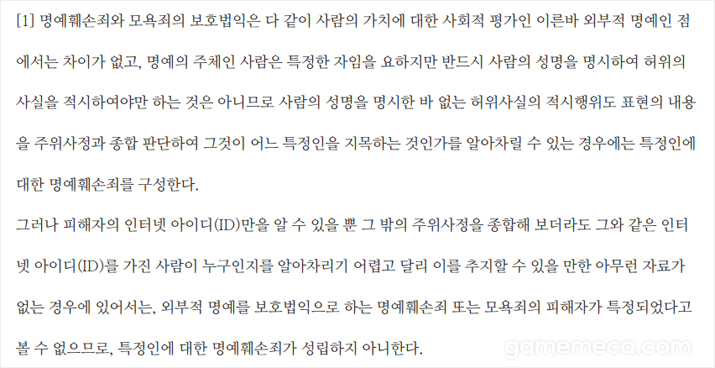
A ruling by the Uijeongbu District Court (Case No. 2014 Gohap 1619, delivered on October 23, 2014) highlights this exact principle. The court ruled that even if someone posts false information targeting a specific online ID on an internet forum, unless there is enough context or background data to figure out who that ID holder actually is in the real world, it is mighty tough to argue that a specific victim has been identified. While a real name doesn't always have to be explicitly dropped, there needs to be enough meat on the bone for folks in the surrounding community to point fingers and say, "Ah, they're talking about *that* specific person in real life" before you can even begin arguing about illegality.
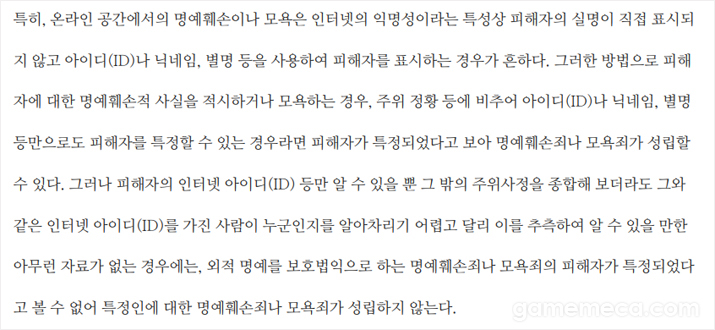
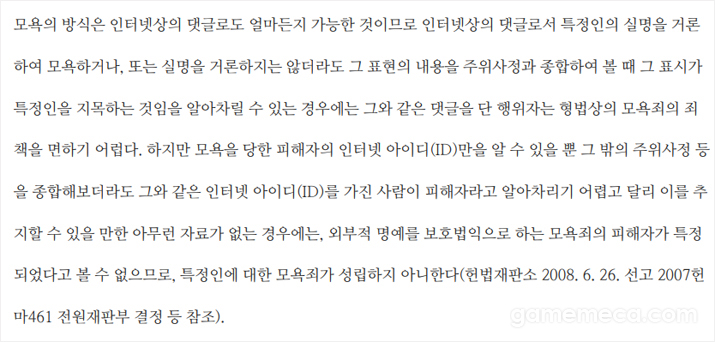
This cautious judicial stance extends well past online community boards and straight into video games. In a ruling by the Suwon District Court (Case No. 2023 No 5627, handed down on November 29, 2024), a player sent insulting messages using the victim's chosen in-game character name. The court held that even if other players were well aware of the victim's nickname and avatar, without accompanying real-world markers like a full name, actual face, workplace, age, or home address, it was a stretch to claim a real-life victim had been legally identified.
Similarly, the Daejeon District Court (Case No. 2020 Gojeong 605, decided on November 24, 2020) acquitted a defendant accused of hurling severe aesthetic insults and explicit sexual profanities at a game character. Even though the defendant clearly intended to slag off the digital avatar, the court reasoned there wasn't enough evidence to prove the perpetrator consciously realized they were publicly insulting the actual human breathing behind the code. On the flip side, if an in-game moniker is paired with real-world identifiers like a real name, age, job, or hometown—or if it is common knowledge among the user base that multiple character tags point to the exact same real individual—then legal identification starts sticking.
So, how does this legal framework apply to face-scanned NPCs? If the publisher merely tosses out a vague press blurb saying, "Hey, we scanned our company staff's faces!", casual players might have a hard time guessing which NPC maps to which desk worker. But if a behind-the-scenes making-of video or developer interview explicitly unmasks the model, showing a digital twin that looks practically identical to the real person, the script flips entirely. If a hefty chunk of players instantly connects the virtual model to the real-world counterpart, publishers and trolls alike can't just wave their hands and say, "Well, the character's name is different, so it has zero to do with the real human."
Flaying the Villain, Suing the Actor? The Boundary Between Character and Reality
Of course, hurling criticism at a character built from a real-world face doesn't automatically mean you're launching an assault on the living person. If a cinephile watches an actor play a slimy scoundrel on screen and grumbles, "What an absolute creep," nobody assumes the reviewer thinks the actor themselves kicks puppies for a living. Video games operate under the exact same logic: an in-game persona's personality and deeds are fundamentally works of fiction.
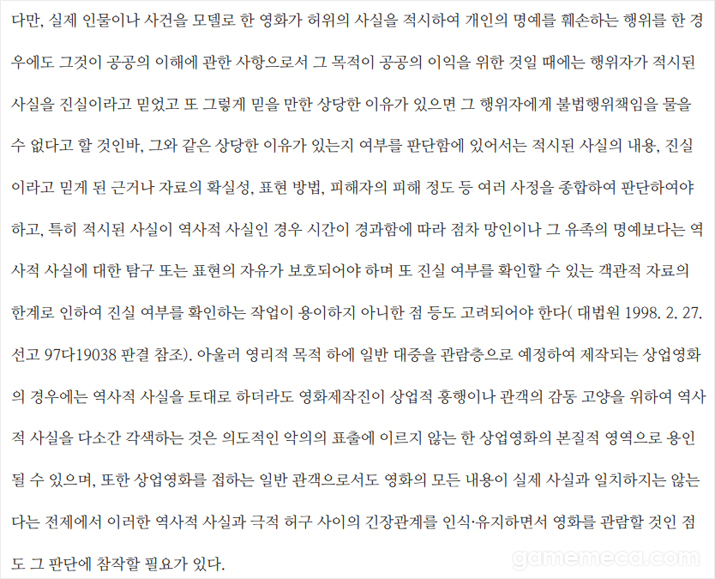
A brilliant point of reference here is a Supreme Court ruling regarding the hit film Silmido (Supreme Court Case No. 2007 Da 3483, delivered on July 15, 2010). When deciding whether a movie based on real people and historical events crossed the line into defamation, the court wisely noted that you shouldn't just rip a single scene or piece of dialogue out of context. Instead, you have to look at the overall flow of the work, the framing of the visual composition, the conventional meaning of the lines, and the overall impression left on a typical audience member.
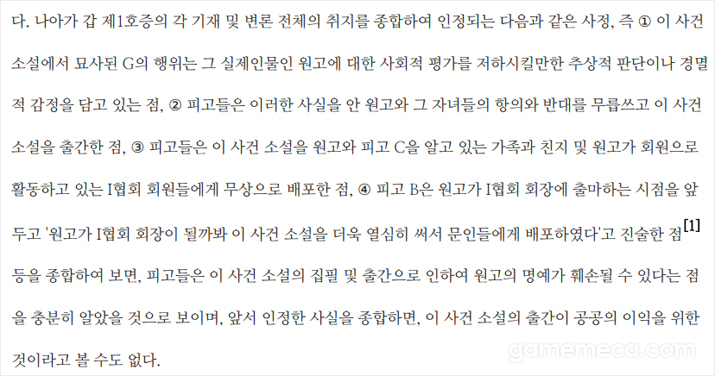
The same goes for literature. In a ruling by the Gwangju District Court (Case No. 2019 Gadan 543675, issued on January 12, 2022), the bench determined that even if an author changes character names and adopts a fictional novel format, if educational backgrounds, workplaces, and surrounding social circles make it painfully obvious to readers who the real-life model is, defamation claims can very well stick.
At the end of the day, just because a game character shares a real person's face doesn't mean every single in-game plot point applies to that person's actual life. Griping that "this NPC betrayed the party" is clearly commentary on the game's narrative. But the moment someone slaps a character screenshot next to the real model's name and adds, "Looking at them pull off a stunt like that in-game, I bet they look like a backstabber in real life too," or "They've probably embezzled company funds as well," the dynamic shifts entirely. The target of the critique instantly leaps away from the fictional pixel creation and lands squarely on the living human.
Is Calling Someone 'Ugly' Defamation? Navigating the Nuances of Insult
In everyday internet parlance, folks tend to lump every nasty comment under the umbrella term "defamation," but the law is a bit more particular. Spouting specific, falsifiable allegations—such as claiming "that person embezzled company cash"—triggers defamation laws. Meanwhile, flinging generalized, contemptuous swipes without any factual backing, like calling someone "ugly" or "repulsive," usually falls under the legal banner of criminal insult.
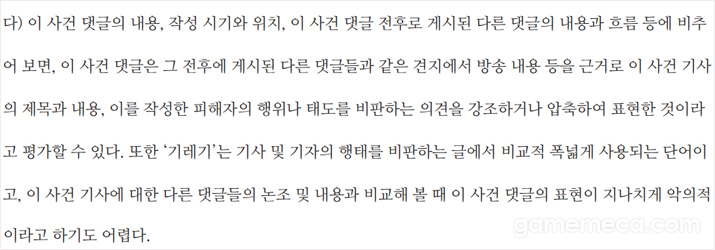
That said, not every harsh remark automatically constitutes a legal insult. In Supreme Court Case No. 2017 Do 17643, involving a netizen who slapped the derogatory term "jjiragi journalist" on a reporter, the court acknowledged the phrasing was certainly insulting. However, taking into account the broader context of criticizing media reporting and the overall degree of the expression, the court ruled the behavior didn't overstep customary social bounds.
In gaming circles, complaining that "the facial modeling looks janky" or "the graphics are stiff" is, at its core, a critique of game assets. But if a player knows full well who the real model is and sneers, "The only reason this character is so ugly is because the actual model looks like that," or repeatedly plasters real-world comparison photos alongside vicious body-shaming, it stops looking like harmless video game critique real quick.
Courts will also weigh whether the remarks took place in a public forum—like an open chat room or public message board—and whether the author actually knew about the connection between the digital character and the real-life model. If the comments were whispered to a tiny handful of people, prosecutors have to rigorously prove whether there was a realistic chance those words would actually ripple outward. Indeed, recent Supreme Court precedents emphasize that public dissemination requires concrete proof of both that propagation risk and the offender's awareness of it.
Can Nasty Sexual Comments Directed at an Avatar Cross Into 'Telecommunication Obscenity' Against the Real Model?
When sexualized language rears its head, people instantly think of offenses related to obscenity via communication media—commonly known in South Korea as 'Tongmaeeum'. But the legal architecture behind an insult charge and a telecommunication obscenity violation are worlds apart.
Article 13 of the Act on Special Cases Concerning the Punishment of Sexual Crimes penalizes anyone who uses communication networks to transmit sexual remarks, text, pictures, or videos intended to trigger or satisfy sexual desires, thereby causing the recipient sexual humiliation or disgust.
The crucial catch here is the word 'transmit' (reaching the recipient). Imagine a scenario where users are bantering back and forth on a game forum, dropping raunchy jokes about a specific NPC. Even if everyone knows that character's face was modeled after a real company employee, if that employee wasn't part of the chat and those remarks never actually landed in their lap, it's a mighty tough sell to claim a 'Tongmaeeum' offense occurred with that employee as the victim.
Unlike defamation laws, which safeguard a person's social reputation, telecommunication obscenity laws protect an individual's right not to be ambushed by unwanted sexual expressions. The Supreme Court has repeatedly affirmed that the protected legal interest here centers around sexual self-determination and general personal rights.
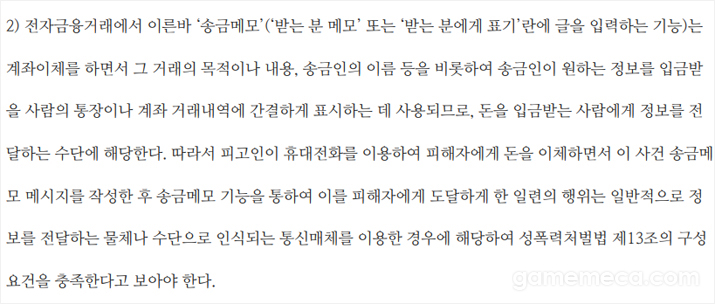
Conversely, the script changes dramatically if a user takes sexually charged imagery or text regarding an in-game character and fires it straight into the real model's personal social media DMs or messenger apps. Courts have also been casting a surprisingly wide net over what counts as a telecommunication medium lately. For instance, Supreme Court Case No. 2025 Do 12709 (delivered on March 12, 2026) ruled that even an electronic bank transfer's 'remittance memo' field counts as a communication medium capable of transmitting info to a person. Ultimately, when dealing with telecommunication obscenity laws, whether the words actually reached the real human matters infinitely more than claiming, "Hey, I was just talking to a video game character."
What If You Turn the Character Into 'Sexual Material' Entirely?
Now, let us take this slippery slope one step further. What happens when folks take an avatar built from a scanned real-world face and whip up custom nude renders, explicit sexual animation scenes, or adult-themed mods?
This particular nightmare is tough to untangle using telecommunication obscenity charges alone. Under Article 14-2 of the current Act on Special Cases Concerning the Punishment of Sexual Crimes, anyone who edits, synthesizes, or manipulates audiovisual recordings featuring a person's face, body, or voice against their will into sexually explicit forms that provoke sexual desire or shame can face severe penalties.
Crucially, a 2024 legal amendment scrapped the old requirement that the offender must act with the "intent to distribute." Nowadays, simply manufacturing fake sexual media against someone's wishes—even without uploading or sharing it publicly—can land you in legal hot water. Naturally, distinct legal penalties also govern the distribution, possession, storage, or viewing of such edited material.
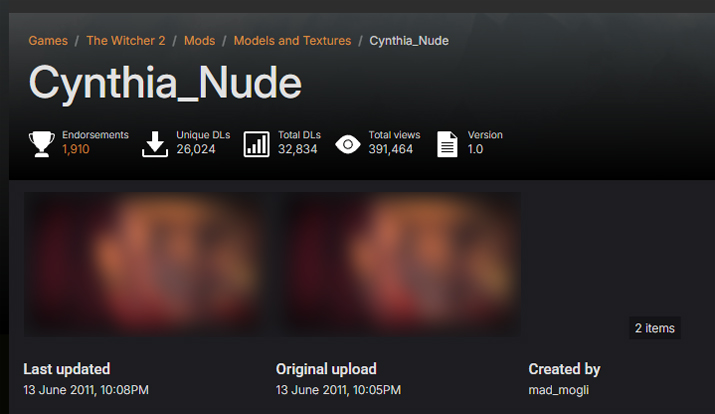
Does this sweeping legislation apply to video game characters sculpted from scanned real-world faces? As of now, it's tough to unearth a definitive, well-established precedent that directly addresses cases where an actual employee's scanned face was sexually altered in a video game. Therefore, we cannot hastily assume that every single 'spicy character mod' automatically runs afoul of Article 14-2 of the sexual crimes act.
However, if someone takes facial data lifted directly from a real person's photos or scans, keeps enough recognizable real-world features intact so that onlookers can easily identify the living model, and splices that face into explicit nudity or sexual acts, the legal reality diverges wildly from standard fictional character editing. Key battlegrounds will revolve around what source materials were used, how well the real face was preserved, whether someone viewing the final product can recognize the real-world model, and exactly what boundaries of consent the original party agreed to regarding their likeness.
Crucially, signing off on letting a company use "my face for an in-game NPC" is light-years away from giving third parties a green light to cook up sexual deepfakes with those features. Consequently, when people start treating face-scanned avatars as sexual objects, statutory issues concerning fabricated sexual media under sexual crime statutes and the infringement of portrait and personality rights take center stage—often overshadowing simple insult laws. Moreover, if the published sexual montage is convincing enough to make folks believe the real model actually engaged in such behavior, defamation charges can easily stack on top depending on the narrative framing.
Critiquing a Game Character Is Not a Free Pass to Attack Real People
To wrap this all up neatly: just because an in-game character is modeled after a living human doesn't mean every single critique leveled at that avatar counts as a criminal strike against the real model. Video game players retain every right to evaluate character design, tear into narrative plot choices, or complain if they think the modeling looks dreadful.
Yet that boundary shifts the moment the real human hiding behind the pixelated mask gets dragged into the crosshairs. Pointing at the real-world model while launching personal attacks with full knowledge of who the character is can quickly invite charges of insult and defamation. Firing sexually explicit remarks straight at the real model crosses into telecommunication obscenity territory. And escalating all the way to manufacturing sexualized imagery or videos using a living person's face pushes the issue far beyond a petty flaming incident, demanding a hard look at illegal fabricated media under sexual violence laws.
As video game graphics march ever closer to photorealism, the legal shield protecting real-world models won't rely on how many pixels make up a cheekbone. Instead, courts will look at who players thought of when they saw that avatar, who they directed their insults toward, and how that person's face and personal dignity were exploited. As developers lean harder into face-scanned NPCs and AI-generated personas, judicial benches will likely find themselves wrestling with these exact questions more and more often. Adieu, mate!

게임 속 캐릭터를 보며 "어디서 많이 본 얼굴인데?"라고 생각한 적이 있으실 겁니다. 실제 배우 얼굴을 그대로 옮긴 주인공부터 개발에 참여한 직원의 얼굴을 기반으로 만든 NPC까지, 실존 인물을 모델로 삼은 게임 캐릭터는 낯설지 않은 일로 자리 잡았습니다. 넥슨게임즈 신작 '우치: 더 웨이페어러'도 직원 얼굴을 스캔해 한국인 캐릭터 얼굴을 더 생생하게 만들 수 있었다는 개발 일화가 공개된 바 있죠.
여기서 조금 생각해 볼 만한 이슈가 생깁니다. 유저가 실제 사람을 모델로 한 게임 캐릭터를 향해 "못생겼다", "역겹다"는 식으로 외모를 비하하거나, 성적인 발언을 한다면 그 얼굴의 실제 주인은 게임 캐릭터가 아닌 자신에 대한 모욕이나 명예훼손이라고 주장할 수 있을까요?
한발 더 나아가 유저가 해당 캐릭터를 성적인 대상으로 삼아 누드 합성 이미지나 성적인 모드를 만든다면 어떨까요? 그것도 단순히 '가상의 게임 캐릭터를 가지고 논 것'이라고 볼 수 있을까요?
얼굴이 같으면 같은 사람? 먼저 넘어야 할 ‘특정성’의 문턱
문제의 핵심은 '게임 속 캐릭터와 현실의 사람이 법적으로 어디까지 연결되어 있는가'입니다. 명예훼손죄와 모욕죄가 보호하는 것은 현실에 존재하는 사람의 사회적 평가입니다. 게임 캐릭터 자체가 독립된 인격체로서 명예훼손이나 모욕죄의 피해자가 되지는 않습니다. 따라서 캐릭터를 향한 표현이 문제가 되려면, 먼저 그 표현을 접한 사람들이 캐릭터 뒤에 있는 현실의 사람을 알아볼 수 있어야 합니다.
의정부지방법원 2014. 10. 23. 선고 2014고정1619 판결은 이 점을 잘 보여줍니다. 법원은 인터넷 카페에서 특정 아이디를 지칭해 허위 사실을 적었더라도, 그 아이디의 사용자가 현실에서 누구인지 알아차릴 만한 자료가 없다면 피해자가 특정되었다고 보기 어렵다고 판단했습니다. 실명이 반드시 적혀 있어야 하는 것은 아니지만, 적어도 주변 사람들이 "이 말이 현실의 누구를 가리키는 것인지" 알아볼 수 있어야 위법성 여부를 따져볼 수 있다는 의미입니다.
온라인 커뮤니티를 넘어 게임에서도 비슷한 판단이 이어지고 있습니다. 수원지방법원 2024. 11. 29. 선고 2023노5627 판결은 온라인게임에서 피해자가 선택한 캐릭터명을 이용해 모욕적 메시지를 보낸 사건에서, 다른 이용자들이 피해자의 닉네임과 캐릭터를 알고 있었다고 하더라도 이름, 얼굴, 직장, 나이, 거주지 등 실제 인물과 연결할 만한 정보가 없었다면 현실의 피해자가 특정되었다고 보기 어렵다고 판단했습니다.
대전지방법원 2020. 11. 24. 선고 2020고정605 판결 역시 게임 캐릭터를 향해 상당히 심한 외모 비하와 성적인 욕설을 한 사건에서 무죄를 선고했습니다. 피고인이 게임 속 캐릭터를 모욕할 의사는 있었다고 하더라도, 그 배후에 있는 실제 사람을 공연히 모욕한다는 인식까지 있었다고 보기 어렵다는 이유였습니다. 반대로 게임 닉네임과 함께 실명·나이·직업·거주지역 등 현실의 정보가 제시되거나, 여러 캐릭터명이 동일한 현실 인물을 가리킨다는 사실이 이용자 사이에 알려져 있다면 특정성이 인정될 수 있습니다.
이 기준을 얼굴 스캔 NPC에 적용하면 어떨까요? 단순히 "우리 회사 직원들의 얼굴을 스캔했습니다"라고 홍보한 정도라면 특정 NPC가 어느 직원인지까지는 알기 어려울 수 있습니다. 반면 메이킹 영상이나 인터뷰를 통해 모델이 공개되어 있고 실제 얼굴과 캐릭터가 거의 동일하다면 이야기는 달라집니다. 특히 캐릭터를 본 이용자 중 상당수가 자연스럽게 현실의 모델을 떠올릴 정도라면, 적어도 "캐릭터 이름이 다르니 현실 사람과는 아무 관계가 없다"고 단정하기는 어렵습니다.
악역을 욕했는데 배우가 고소한다면? 캐릭터와 현실의 경계
실존 인물의 얼굴을 사용한 캐릭터에 대한 비판이 모두 현실 인물에 대한 공격으로 인정되는 것도 아닙니다. 배우가 연기한 악역을 보고 "정말 비열한 인간이다"라고 말한다고 해서 배우 본인을 비열한 사람이라고 평가한 것은 아닙니다. 게임 역시 등장인물의 성격이나 행적은 기본적으로 창작된 설정입니다.
이 문제에 참고할 수 있는 판례가 영화 '실미도'를 둘러싼 대법원 2010. 7. 15. 선고 2007다3483 판결입니다. 실제 인물이나 사건을 바탕으로 한 영화가 명예를 훼손했는지를 판단할 때 특정 장면이나 대사 하나만 떼어 볼 것이 아니라, 작품 전체의 흐름과 화면 구성, 대사의 통상적인 의미, 일반 관객이 받는 전체적인 인상 등을 함께 살펴야 한다고 보았습니다.
소설에서도 비슷합니다. 광주지방법원 2022. 1. 12. 선고 2019가단543675 판결은 등장인물 이름을 바꾸고 소설의 형식을 취했더라도, 학력과 직장, 주변 인물 등 여러 사정을 통해 독자들이 현실의 모델이 누구인지 쉽게 알아볼 수 있다면 명예훼손이 문제될 수 있다고 판단했습니다.
결국 게임에서도 캐릭터의 '얼굴'이 실제 사람과 같다는 이유만으로 모든 설정이 그 사람의 사실이 되는 것은 아닙니다. 가령 "이 NPC는 사람을 배신한 악당이다"라는 말은 게임 스토리에 대한 의견일 가능성이 높습니다. 하지만 캐릭터 사진과 실제 모델의 이름을 함께 올리면서 "게임에서 저런 역할을 하는 걸 보니 실제로도 사람 등쳐먹게 생겼다"거나, "실제로 회사 돈도 빼돌렸을 것"이라고 말하기 시작한다면 이야기가 달라집니다. 그 순간부터 평가의 대상이 캐릭터를 벗어나 현실의 사람으로 옮겨가기 때문입니다.
"못생겼다"는 명예훼손일까? 외모 비하는 먼저 모욕을 따져야
일상에서는 악성 댓글을 통틀어 '명예훼손'이라고 부르지만 법적으로는 조금 다릅니다. "저 사람은 회사 돈을 횡령했다"처럼 구체적인 사실을 이야기했다면 명예훼손 문제가 생길 수 있지만, "못생겼다", "혐오스럽게 생겼다"와 같이 구체적 사실 없이 경멸적인 평가를 하는 경우에는 모욕죄가 주로 문제로 떠오릅니다.
부정적인 표현이라고 모두 모욕죄가 되는 것도 아닙니다. 대법원은 2017도17643 판결에서 인터넷 기사에 기자를 두고 "기레기"라는 표현을 쓴 사건에서 표현 자체는 모욕적이지만, 기사에 대한 비판이라는 전체적인 맥락과 표현의 정도를 고려해 사회상규에 위배되지 않는 행위로 볼 수 있다고 판단했습니다.
게임에서도 "얼굴 모델링이 이상하다", "그래픽이 너무 부자연스럽다"는 평가는 기본적으로 게임 그래픽에 대한 평가입니다. 반면 모델이 누구인지 알면서 "이 캐릭터가 못생긴 이유는 실제 모델이 저렇게 생겼기 때문이다"라거나 현실 모델의 사진과 함께 노골적인 외모 비하를 반복한다면 단순한 게임 비평이라고 보기 어려워집니다.
여기에 공개 채팅이나 게시판처럼 불특정 또는 다수인이 볼 수 있는 장소였는지, 작성자가 캐릭터와 현실 모델의 관계를 알고 있었는지까지 함께 살펴보게 됩니다. 특히 소수의 사람에게만 말한 경우에는 그 내용이 실제로 다른 사람에게 퍼질 가능성이 있었는지도 엄격하게 따져야 합니다. 대법원 역시 최근 판례에서 전파 가능성만으로 공연성을 인정하려면 그 가능성과 이에 대한 행위자의 인식이 충분히 증명되어야 한다고 보고 있습니다.
캐릭터에게 한 성적인 말, 실제 모델에 대한 '통매음'도 될까?
성적인 표현이 등장하면 흔히 통신매체이용음란죄, 이른바 '통매음'을 떠올리게 됩니다. 하지만 모욕죄와 통매음은 구조가 상당히 다릅니다.
성폭력처벌법 제13조는 자기 또는 다른 사람의 성적 욕망을 유발하거나 만족시킬 목적으로 통신매체를 이용해 성적 수치심이나 혐오감을 일으키는 말·글·그림·영상 등을 '상대방에게 도달하게 한 경우'를 처벌합니다.
여기서 중요한 것은 '도달'입니다. 게임 게시판에서 이용자끼리 특정 NPC를 두고 성적인 농담을 했다고 가정해 보겠습니다. 그 캐릭터의 모델이 실제 직원이라는 사실이 알려져 있더라도 해당 직원이 그 대화에 참여하지 않았고 그 표현도 직원에게 전달되지 않았다면, 그 직원을 피해자로 하는 '통매음'이 곧바로 성립하기는 어렵습니다.
통매음은 사람의 사회적 평가를 보호하는 명예훼손죄와 달리, 원하지 않는 성적 표현을 직접 접하지 않을 권리를 보호하기 때문입니다. 대법원도 통매음의 보호법익을 성적 자기결정권과 일반적 인격권 등으로 설명하고 있습니다.
반대로 유저가 해당 캐릭터에 관한 성적인 이미지나 표현을 실제 모델의 SNS나 메신저로 직접 전송한다면 상황은 달라집니다. 최근에는 통신매체 범위도 상당히 넓게 인정되고 있습니다. 대법원 2026. 3. 12. 선고 2025도12709 판결은 은행 계좌이체의 '송금 메모'도 사람에게 정보를 전달하는 통신매체에 해당한다고 보기도 했습니다. 결국 통매음에서는 "게임 캐릭터에게 한 말이었다"는 사실보다 실제로 그 표현이 현실의 사람에게 전달되었는지가 중요합니다.
캐릭터를 아예 ‘성적인 이미지’로 만들었다면?
여기서 한 단계 더 나아가 볼 필요가 있습니다. 실존 인물의 얼굴을 그대로 스캔한 캐릭터를 이용해 누드 이미지나 성행위 장면을 만들거나, 이른바 성인용 모드나 영상을 제작한 경우입니다.
이 문제는 단순히 통매음만으로 설명하기 어렵습니다. 현행 성폭력처벌법 제14조의2는 사람의 얼굴·신체 또는 음성을 대상으로 한 촬영물이나 영상물 등을 당사자의 의사에 반하여 성적 욕망 또는 수치심을 유발할 수 있는 형태로 편집·합성 또는 가공한 경우를 처벌하고 있습니다.
특히 2024년 법 개정으로 '반포(세상에 널리 알리다) 등을 할 목적'이라는 요건이 삭제됐습니다. 현재는 반포하지 않더라도 요건을 충족하는 성적 허위영상물을 당사자 의사에 반하여 만드는 행위 자체가 처벌 대상이 될 수 있습니다. 이를 반포하거나 일정한 편집물 등을 소지·저장·시청하는 행위에 관한 처벌 규정도 마련돼 있죠.
실존 인물의 얼굴을 스캔한 게임 캐릭터도 여기에 해당할까요? 아직 실제 직원의 얼굴을 그대로 스캔한 게임 캐릭터를 성적으로 변형한 경우를 정면으로 다뤘던 확립된 판례는 찾기 어렵습니다. 따라서 모든 '야한 캐릭터 모드'가 곧바로 성폭력처벌법 제14조의2에 해당한다고 단정할 수는 없습니다.
하지만 실제 사람의 사진이나 얼굴 스캔 데이터에서 만들어진 얼굴을 그대로 이용해, 현실의 모델을 충분히 알아볼 수 있는 상태에서 다른 사람의 나체나 성행위 장면과 결합했다면 이는 단순한 가상 캐릭터 제작과 상당히 다른 문제가 됩니다. 어떤 자료를 기초로 이미지를 만들었는지, 실제 얼굴이 어느 정도 그대로 보존되어 있는지, 결과물을 본 사람이 현실의 모델을 알아볼 수 있는지, 얼굴 사용에 관한 당사자의 동의 범위가 어디까지였는지 등이 중요한 쟁점이 될 것입니다.
특히 게임 제작을 위해 "내 얼굴을 NPC에 사용하는 것"에 동의했다는 사실과, 제3자가 그 얼굴을 이용해 성적인 합성물을 만드는 데 동의했다는 것은 전혀 다른 문제입니다. 따라서 얼굴 스캔 캐릭터를 성적인 대상으로 이용하는 문제에서는 통매음보다 오히려 허위 영상물 제작·유포에 관한 성폭력처벌법과 초상·인격권 침해 문제가 더 직접적인 쟁점이 될 수 있습니다. 나아가 공개된 성적 합성물이 마치 실제 모델이 그러한 행동을 한 것처럼 받아들여질 정도라면, 내용과 표현 방식에 따라 명예훼손 문제까지 추가될 수 있습니다.
게임 캐릭터 비판과 현실의 사람을 공격할 자유는 다르다
정리하자면, 실존 인물을 모델로 만들었다는 이유만으로 그 캐릭터에 대한 모든 비판이 현실의 모델에 대한 범죄가 되는 것은 아닙니다. 게임 이용자는 캐릭터 디자인을 평가할 수 있고, 스토리 속 행동을 욕할 수도 있으며, 모델링이 마음에 들지 않는다고 말할 수 있습니다.
하지만 그 경계는 캐릭터 뒤의 현실 사람이 모습을 드러내기 시작할 때 달라집니다. 캐릭터 모델이 누구인지 알고 있는 상태에서 현실 인물을 직접 지칭하며 인신공격을 한다면 모욕과 명예훼손이 문제로 떠오를 수 있습니다. 성적인 표현을 현실 모델에게 직접 전달하면 통매음에 해당할 수 있고, 실제 사람의 얼굴을 이용해 성적인 합성물이나 영상을 만드는 단계까지 나아간다면 단순한 욕설 사건이 아니라 성폭력처벌법상 허위 영상물 문제까지 검토해야 합니다.
게임 그래픽이 현실에 가까워질수록 모델을 보호하는 법적인 부분에서 중요한 것은 결국 픽셀의 사실성이 아닐 것입니다. 그 캐릭터를 본 사람들이 누구를 떠올렸는지, 그 말을 누구에 대한 것으로 받아들였는지, 그 사람의 얼굴과 인격이 어떤 방식으로 이용됐는지 등을 고려해야 합니다. 실존 인물을 스캔한 NPC와 AI로 생성한 캐릭터가 늘어날수록 법원이 답해야 할 질문도 점점 이 지점으로 모일 가능성이 높습니다.
This news was translated by AI.
READ MORE

RECOMMENDED NEWS
MOST POPULAR NEWS
- Which Team is the Strongest This Year? LCK 2026 Finals to Be Held on the 12th and 13th
- Already the third time, Overwatch x LE SSERAFIM detailed look revealed
- XLGAMES Decides to Sell ArcheAge IP for 39.2 Billion Won
- Unity Launches Official Plugin for 'Claude Code'
- Lim Yo-hwan vs Kang Min Match, SOOP Official Live Broadcast for BlizzCon 2026
- Popup events to be held in Dongdaemun and Yongsan to celebrate the release of Liftbound
- [Today's steam] FPS Wardogs released... 340,000 Concurrent Players, 340,000 in queue
- Doomfist's Companion, Overwatch Vampire New Hero 'Doctrine'
- Marvel Rivals Welcomes 'Gorr the God Butcher' on the 11th
- Legendary Rapper 'Lil Wayne' Arrives in Fortnite Along with Three Representative Songs
MEDIA PARTNERSHIPS



GAMEMECA SNS