[Gamemeca Column] The Lax Security of the Game Industry
[이구동성] 게임업계의 허술한 문단속
2025.11.28 16:25 UTC+9
AI Summary
The gaming industry faces a surge of security breaches this year. From major corporate hacks to data leaks, the risks are no longer just warnings. Companies must move past mere damage control and start investing in proactive security measures immediately.

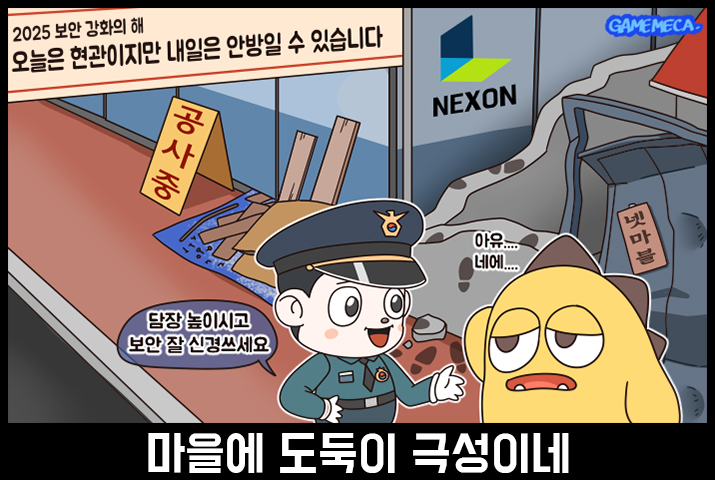
In safety theory, there is a concept called 'Heinrich's Law'. It suggests that for every major catastrophe, there are 29 minor mishaps and 300 lingering warning signs. Looking at the string of security breaches plaguing the gaming industry this year, I find myself thinking about this law quite often.
Just look at the major incidents alone: the Netmarble hacking incident, the Nexon client modification blunder, and the Wemade WEMIX asset theft to name a few. These are just the ones that made headlines; dig a little deeper, and the list grows even more grim. Dragonfly, the developer of Special Force, was hit by ransomware, and NCSoft also reported a massive DDoS attack against Aion 2.
If we broaden our scope to the international stage, even the titan of PC gaming platforms, Steam, saw user phone numbers leaked via hacking, and Discord, which gamers use religiously, suffered a hack on its outsourced customer service center, leading to the exposure of personal data, including ID cards. Game Freak, famous for its Pokémon franchise, also faced a massive blow when data stolen in a previous hack was leaked further, exposing details of upcoming titles.
The sheer volume of security failures this year alone proves that the risks latent within the gaming industry are no longer just 'warnings'—they are full-blown crises. While most of these were the work of external bad actors, internal mismanagement regarding access control and privilege management played a significant role as well.
Ultimately, the industry must stop merely cleaning up the mess after the fact. We need to systematically analyze these danger signs and build a proactive defense system. It has long been pointed out that the gaming industry under-invests in security relative to the scale of its data and its market value. The events of this year have laid these vulnerabilities bare; we need to fortify our last line of defense before a truly catastrophic failure hits.
안전이론에는 ‘하인리히 법칙’이라는 말이 있습니다. 하나의 큰 사고 뒤에는 29개의 경미한 사고와 300개의 잠재적 신호가 있다는 이야기죠. 올해 게임업계에서 연이어 벌어진 보안 사고를 보며, 이 법칙이 자꾸 떠오릅니다.
주요 사례만 보더라도 넷마블의 해킹 사고, 넥슨의 클라이언트 수정 사고, 위메이드의 위믹스 자산 탈취 사건 등 굵직한 사고가 이어졌습니다. 크게 언급된 것만 이 정도이며, 세밀하게 들여다보면 더 많은 사고가 있었습니다. 스페셜포스를 서비스하는 드래곤플라이는 랜섬웨어 공격을 받았고, 엔씨소프트 역시 아이온2에 대규모 DDoS(디도스) 공격이 있었다고 설명한 바 있습니다.
해외로 범위를 넓혀봐도 대표 PC게임 플랫폼인 스팀에서 일부 유저 전화번호가 해킹으로 유출된 바 있고, 게이머들이 자주 사용하는 디스코드도 외주 고객센터가 해킹 피해를 입으며 신분증을 포함한 개인정보가 유출됐습니다. 포켓몬 개발사로 잘 알려진 게임프리크는 지난해 해킹된 자료가 2차로 배포되며 신작 정보가 유출되는 큰 피해를 입기도 했죠.
이처럼 올해만 해도 손에 꼽기 어려울 정도로 벌어진 보안 사고는, 게임업계 전반에 잠재돼 있던 보안 리스크가 더 이상 경고 단계에 머물지 않고 있다는 점을 보여줍니다. 대부분 외부 공격자에 의해 발생했지만, 접근 통제 미흡, 권한 관리 오류 등 내부적인 관리 부실도 존재합니다.
궁극적으로는 발생한 사고 수습에 그칠 것이 아니라, 지금까지 포착된 위험 신호를 체계적으로 분석해 선제적인 대응 체계를 구축해야 합니다. 게임업계는 보유하고 있는 정보의 중요도나 산업 규모에 비해 보안에 투자하는 자금 규모가 적다는 지적을 꾸준히 받아 왔습니다. 올해 벌어진 여러 사태는 업계에 잠재된 보안 위험을 명확히 드러냈는데요, 더 큰 사고가 일어나기 전에 마지막 보루를 마련해야 합니다.
This news was translated by AI.

I am dedicated to games and writing. viina@gamemeca.com
READ MORE
-
 What is 'Doomscrolling'? Roblox Bans Related Gameplay Elements Entirely
-
 [Gamescom 26] Inscryption Developer Set to Release Pony Island 2 in April Next Year
-
 Decisive Battle Across 30 Servers, MMORPG 'Zeus: God of Arrogance' Officially Released
-
 Formiga, Pepe, and others revealed for FC 27 Icon player roster
RECOMMENDED NEWS
MOST POPULAR NEWS
- New DLC and Level Cap Increase, Borderlands 4 Content Revealed
- Massive GTA 6 Leak Reveals Gameplay Footage and Map Details
- 100-Year Career Mode Added, NBA 2K27 Core Content Revealed
- Lenoa, Haru, and Meilin Arrive in Epic Seven: Chaos Zero Nightmare Collaboration Announced
- Fortnite Introduces 'Override Console' to Change Battlefield Rules
- Epic CEO Tim Sweeney: “Opening the Platform, Leading Toward Unreal Engine 6”
- Among Us introduces Judge role, allowing ejection regardless of vote results
- 2026 LCK Finals Ticket Sales Begin on the 27th
- [Today's Steam] Bioshock Vibes, 'Twisted Tower' Receives Overwhelmingly Positive Reviews
- [Steam Today] Modern Warfare 4 Climbs to 2nd Place Ahead of Upcoming Test
MEDIA PARTNERSHIPS



GAMEMECA SNS