
[precedent.zip] Weak punishment for event terror threats, changes are coming
[판례.zip] 행사 테러협박 솜방망이 처벌, 이제 달라진다
2025.10.15 12:17 UTC+9

AI Summary
New Public Intimidation law drastically increases penalties for bomb threats. Gaming events now have stronger legal protections against mass-threat disruptions. Offenders face up to five years in prison or massive fines for such acts.

On the evening of November 22, 2024, the Dungeon & Fighter Festival held at KINTEX, Ilsan, was abruptly halted just one hour before its scheduled opening. The culprit? A bomb threat posted on a DC Inside gallery at approximately 4:55 PM. Thousands of attendees were forced to evacuate, and while a subsequent police search confirmed that no explosives were present, the delay caused significant disruption and distress to fans and organizers alike.
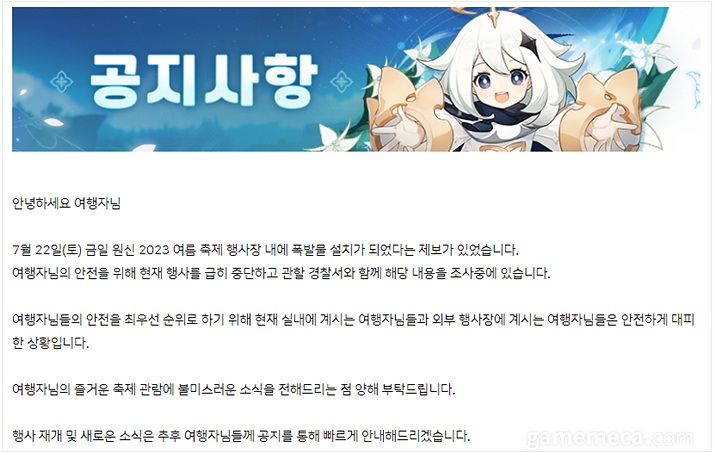
This wasn't an isolated incident. Large-scale gaming events—from the 2023 Genshin Summer Festival and Black Desert Mobile offline meetups to the 2024 HoYoverse Land—have been plagued by recurring bomb threats. Unfortunately, the legal framework at the time proved woefully inadequate for proper prosecution.
However, the landscape shifted dramatically on March 18 of this year with the introduction of Article 116-2 of the Criminal Act: the Crime of Public Intimidation. This new provision allows for much harsher penalties for threats directed at an unspecified public compared to traditional intimidation charges.
The 2023 Lotte World bomb threat: A mere 5 million KRW fine.
Since there are no precedents for gaming-related threats yet, we must look at the 2023 Lotte World incident as a benchmark.
In the case of Busan District Court Eastern Branch 2023Godan2583, the defendant posted a comment on an online community on August 5, 2023, claiming: "I will carry out a bomb terror attack at Lotte World from August 5 to August 7." It was a clear act of public intimidation targeting a theme park visited by tens of thousands.
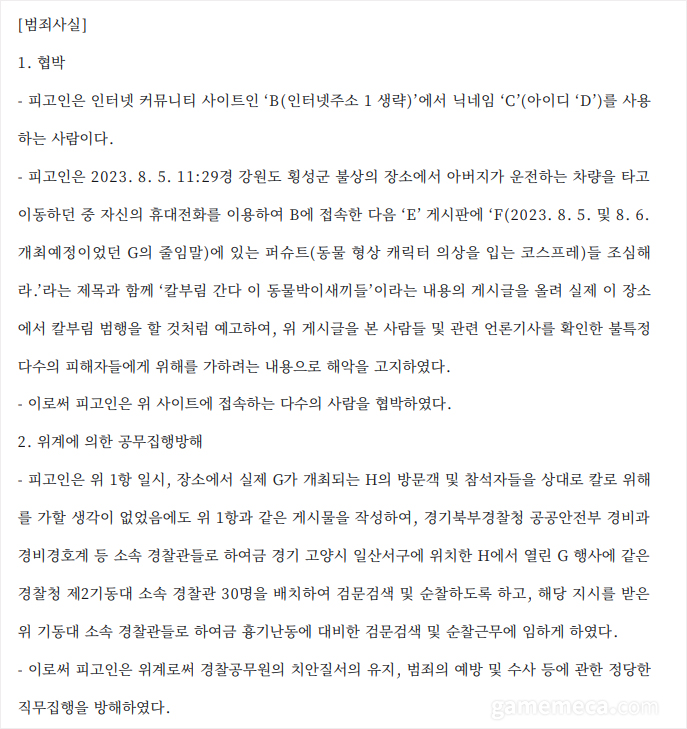
The court applied Article 283 (Intimidation) and Article 137 (Obstruction of Official Duties by Deception) of the Criminal Act. The sentence? A 5 million KRW fine, or labor in a detention facility at a rate of 100,000 KRW per day if unpaid.
At the time, the maximum penalty for intimidation was 3 years in prison or a 5 million KRW fine, while obstruction of official duties carried up to 5 years or 10 million KRW. The court opted for the former. Critics argued this was a slap on the wrist, considering that dozens of public safety personnel were mobilized and a facility hosting tens of thousands was paralyzed.
The deeper issue was the structural difficulty in applying the law. Traditional intimidation charges were designed for threats against 'specific individuals,' creating a legal vacuum when dealing with threats against the masses. Victims were hard to identify, and the point of criminal culpability was murky, leading to inconsistent rulings across different courts.
March 2025: The birth of the Crime of Public Intimidation.
The new Crime of Public Intimidation, codified in Article 116-2, is crystal clear: "A person who publicly intimidates the public by threatening to inflict harm on the life or body of an unspecified or multiple persons shall be punished by imprisonment for up to 5 years or a fine of up to 20 million KRW."
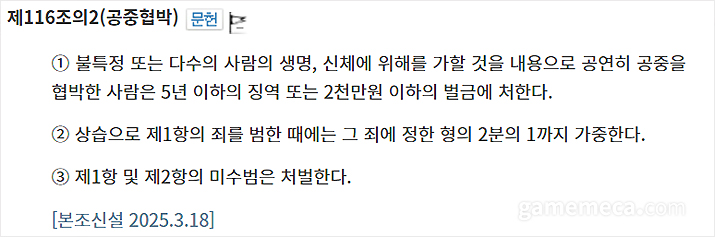
Compared to the old laws, the penalties have surged. Imprisonment terms increased from 3 to 5 years (a 67% jump), and the maximum fine quadrupled from 5 million to 20 million KRW. Repeat offenders face a 50% sentencing enhancement, potentially reaching 7.5 years in prison or 30 million KRW in fines. It serves as a stern warning to those who treat gaming events as their personal playground for terror.
Beyond the numbers, the criteria for the crime have been clarified. The old "victim must be specific" loophole is gone. Gaming event threats are the quintessential example of this new law.
Furthermore, attempted crimes are now punishable. Even if no explosives were planted—or if the perpetrator never even set foot at the venue—the act of posting the threat is enough to warrant prosecution. This is a vital move toward proactive deterrence.
What if the new law applied to the 2023 Lotte World incident?
Had this law been in effect during the Busan District Court case 2023Godan2583, the outcome would have been starkly different.
Instead of the 5 million KRW fine under the old intimidation charge, the defendant would have faced the new 5-year/20 million KRW maximum under Article 116-2.
Even if the court had opted for a fine, it would likely have fallen in the 10 to 20 million KRW range—two to four times the original penalty.
If the court had considered the massive social disruption and waste of public resources, an actual prison sentence would have been well within the realm of possibility.
Legal squabbles over the definition of the crime would have been largely avoided. The new law eliminates the need to argue over whether a threat against the public qualifies as intimidation; it is now the very essence of the charge.
The shift brought by the Public Intimidation Law.
This legal shift is set to transform the environment surrounding gaming event threats.
First, the efficacy of criminal punishment is bolstered. The "it's just a fine" mentality is dead. With the threat of up to 5 years in prison, criminal records, and potential employment restrictions, the deterrent effect is significantly stronger.
Civil liability is also on firmer ground. Organizers seeking damages for event cancellations and lost revenue can now cite the Public Intimidation Law as a core pillar of their claims, significantly increasing the likelihood of successful litigation.
Expect faster investigations and indictments. Police and prosecutors no longer need to waste time debating whether the old intimidation law applies; they have a clear, actionable statute. Since March 18, 2025, authorities have been acting with much greater agility.
However, the devil is in the details, and the courts will need time to form precedents. Distinguishing between a "joke" and a "serious threat" or handling anonymous posts will be the next major legal battleground. Early on, we may see inconsistent rulings as judges grapple with these nuances.
The changing face of punishment for gaming event threats.
The 2024 Dungeon & Fighter Festival incident highlighted the vulnerability of offline gaming events. The old legal tools were simply insufficient to protect organizers and fans.
The Public Intimidation Law, effective since March 2025, is changing that. With a 4x increase in fines, a 67% increase in potential prison time, and clear definitions, the consequences are no longer a slap on the wrist.
If the 2023 Lotte World case were to happen today, the perpetrator would face at least 10 to 20 million KRW in fines or even jail time. Repeat offenders could now be looking at up to 7.5 years behind bars.
Gaming events are festivals for thousands to enjoy. A single "joke" threatens the safety of the many, causes massive financial damage, and leaves the perpetrator with a permanent criminal record and a prison sentence. It’s time to realize this is no longer a light offense.

2024년 11월 22일 저녁, 일산 킨텍스에서 열릴 예정이었던 던전앤파이터 페스티벌(이하 던파 페스티벌)은 개막 1시간 전 급작스럽게 중단됐습니다. 오후 4시 55분경 디시인사이드 갤러리에 올라온 폭탄테러 예고 글 때문이었는데요. 이미 입장한 수천 명의 관람객이 전원 퇴장했고, 경찰이 출동해 현장을 수색했지만 실제 폭발물은 없었습니다. 이후 던파 페스티벌은 예정보다 늦은 시간에 다시 열렸으나, 현장에 자리한 많은 팬들과 행사 관계자 다수가 큰 불편을 겪었습니다.
이러한 사건은 비단 던파 페스티벌만의 문제가 아니었습니다. 2023년 원신 여름축제, 검은사막 모바일 오프라인 행사, 2024년 호요랜드 등 대형 게임 행사마다 테러 예고가 이어졌습니다. 하지만 당시 법체계로는 이런 범죄를 제대로 처벌하기 어려웠죠.
다만 올해 3월 18일, 이 상황을 완전히 바꿔 놓을 법이 시행됐습니다. 형법 제116조의2, 공중협박죄인데요. 이 조항이 신설되면서 불특정 다수를 대상으로 한 협박 행위에 대해 기존 협박죄보다 훨씬 강력한 처벌이 가능하게 되었습니다.
2023년 롯데월드 놀이동산 폭탄테러 사건, 벌금은 500만 원
앞서 설명한 게임 관련 협박 사건의 경우 관련 판례가 아직 없습니다. 그래서 2023년에 롯데월드에서 벌어진 폭탄테러 사건을 사례로 기존 판례를 살펴보도록 하겠습니다.
부산지방법원 동부지원 2023고단2583 판결입니다. 이 사건에서 피고인은 2023년 8월 5일 인터넷 커뮤니티에 "8월 5일부터 8월 7일까지 롯데월드 놀이동산에 폭탄테러를 하겠다"는 취지의 댓글을 게시했습니다. 수만 명이 찾는 대형 테마파크를 타겟으로 한 명백한 공중협박이었습니다.
이 사건에서 법원이 적용한 죄명은 형법 제283조 협박죄와 형법 제137조 위계공무집행방해죄였습니다. 선고된 형량은 벌금 500만 원, 미납 시 하루 10만 원씩 환산해 노역장 유치였습니다.
당시 협박죄의 법정형은 3년 이하 징역 또는 500만 원 이하 벌금, 위계공무집행방해죄는 5년 이하 징역 또는 1,000만 원 이하 벌금이었습니다. 법원은 이 중 협박죄 수준 벌금형을 선택했는데요, 30여 명의 공공인력이 동원되고 수만 명이 이용하는 시설이 마비됐다는 피해를 감안하면 처벌이 너무 가볍다는 지적이 나왔습니다.
더 큰 문제는 법 적용 자체의 어려움이었습니다. 협박죄는 본래 '구체적인 특정인'을 협박하는 범죄로 설계되어 있었기 때문입니다. 이로 인해 불특정 다수를 대상으로 한 테러 예고에 협박죄를 적용하기에는 구조적 한계가 있었습니다. 피해자가 누구인지 특정하기 어렵고, 범죄 성립 시점도 불명확했기 때문입니다. 이런 이유로 심지어 같은 유형의 사건에서도 법원마다 판단이 엇갈리는 경우도 있었습니다.
2025년 3월, 공중협박죄의 탄생
올해 3월에 신설된 공중협박죄는 형법 제116조의2에 규정되어 있습니다. 조문의 핵심은 명확합니다. "불특정 또는 다수의 사람의 생명, 신체에 위해를 가할 것을 내용으로 공연히 공중을 협박한 자는 5년 이하의 징역 또는 2천만원 이하의 벌금에 처한다"라는 것입니다.
우선 기존 협박죄와 비교하면 처벌 수위가 대폭 강화됐습니다. 징역형은 3년 이하에서 5년 이하로 약 67% 증가했고, 벌금형은 500만 원 이하에서 2,000만 원 이하로 무려 4배 증가했죠. 상습범의 경우 형의 2분의 1까지 가중되어, 최대 징역 7년 6개월 또는 벌금 3,000만 원까지 가능합니다. 이는 게임행사 테러 예고를 반복하는 범죄자에게 강력한 경고가 될 것으로 보입니다.
처벌 수위만 강화된 것이 아닙니다. 실무적으로는 범죄 구성요건 자체가 명확해진 점 또한 중요한 변화입니다. 과거에는 "피해자가 특정되지 않아서 처벌할 수 없다"는 법리적 공백이 있었지만, 공중협박죄는 불특정 또는 다수를 대상으로 하는 것 자체를 범죄 성립 요건으로 삼았습니다. 게임행사 테러 예고는 바로 이 공중협박죄의 전형적 사례에 해당하죠.
더욱이 미수범도 처벌 대상입니다. 실제로 폭발물을 설치하지 않았어도, 심지어 행사장에 가지 않았어도, 협박 글을 올리는 행위 자체가 처벌됩니다. 이는 범죄를 사전에 차단한다는 예방적 관점에서 매우 중요한 변화입니다.
2023년 롯데월드 협박 사건에 새 법이 적용됐다면?
만약 롯데월드 협박 사건에 관련된 부산지방법원 2023고단2583 사건 당시 공중협박죄가 존재했다면 어떤 결과가 나왔을까요? 가장 극적인 변화는 죄명과 법정형입니다.
당시 판결에서는 협박죄(형법 제283조)가 적용되어 벌금 500만 원이 선고됐습니다. 하지만 공중협박죄가 적용됐다면 형법 제116조의2에 따라 5년 이하 징역 또는 2,000만 원 이하 벌금이 가능했을 것입니다.
법원이 벌금형을 선택했다고 가정하더라도, 최소 1,000만 원에서 2,000만 원 수준의 벌금이 선고되었을 가능성이 높습니다. 이는 기존 500만 원의 2배에서 4배에 해당하는 금액입니다.
만약 법원이 범행의 파급력, 사회적 불안 조성 정도, 공공 자원의 낭비 등을 고려하여 징역형을 선택했다면, 실형 선고도 충분히 가능했을 것입니다.
범죄 성립 과정에서의 법리 다툼도 크게 줄어들었을 것입니다. 기존에는 "불특정 다수에 대한 협박이 협박죄에 해당하는가", "피해자를 어떻게 특정할 것인가" 등의 쟁점이 있었지만, 공중협박죄는 이런 쟁점 자체를 제거했습니다. 불특정 다수를 대상으로 하는 것이 바로 범죄의 본질이기 때문입니다.
공중협박죄가 가져올 변화
공중협박죄 시행으로 게임행사 테러 예고를 둘러싼 법적 환경도 크게 달라질 것으로 예상됩니다.
가장 먼저 체감할 변화는 형사 처벌의 실효성 강화입니다. 과거에는 "어차피 벌금형"이라는 안일한 인식이 있었다면, 이제는 최대 5년 징역에 대한 가능성을 심각하게 고려해야 합니다. 전과 기록은 물론 취업 제약, 해외여행 제한 등 실질적 불이익이 커지면서 범죄 억제 효과가 클 것으로 보입니다.
민사 손해배상 청구 근거도 강화됩니다. 행사 주최사가 테러 예고로 인한 행사 중단, 인력 동원, 매출 손실 등을 배상받기 위한 소송에서 공중협박죄 성립 여부가 핵심 판단 근거가 될 것입니다. 형사처벌이 강화된 만큼 불법행위 성립도 용이해져, 과거보다 손해배상 청구의 인용 가능성이 높아졌습니다.
수사와 기소 과정의 신속화도 기대됩니다. 과거에는 "이 사건에 협박죄를 적용할 수 있는가"부터 검토해야 했지만, 이제는 명확한 법조문이 있어 경찰과 검찰의 초동 대응이 빨라질 수밖에 없습니다. 실제로 2025년 3월 18일 공중협박죄 시행 직후부터 유사 사건에 대한 적극적 수사와 신속한 기소가 이뤄지고 있습니다.
다만 법 적용의 세부 기준은 앞으로 판례를 통해 형성될 것으로 보입니다. 어느 정도의 표현이 공중협박에 해당하는지, 단순 농담과 진지한 협박을 어떻게 구분할 것인지, 익명 게시물은 어떻게 처벌할 것인지 등 구체적 쟁점은 법원 판단을 기다려야 합니다. 초기에는 유사 사안에서도 법원마다 판단이 엇갈릴 수 있고, 이에 따라 법리 해석을 둘러싼 치열한 공방이 예상됩니다.
달라진 게임행사 테러 예고의 처벌
2024년 11월 던파 페스티벌 폭탄테러 예고 사건은 한국 게임업계에 오프라인 행사의 취약성을 각인시켰습니다. 하지만 당시 법적 대응 수단의 한계로 인해 행사 주최사와 참가자들은 충분한 보호를 받지 못했는데요.
2025년 3월부터 시행된 공중협박죄는 이런 상황을 바꾸고 있습니다. 4배 증가한 벌금형, 67% 증가한 징역형, 명확해진 범죄 구성요건은 게임행사 테러 예고에 대한 처벌 수위를 대폭 강화했습니다.
2023년 롯데월드 사건이 벌금 500만 원으로 마무리됐다면, 같은 사건이 지금 발생한다면 최소 1,000만 원에서 2,000만 원의 벌금, 또는 징역형까지 선고될 수 있습니다. 게임행사 테러 예고는 상습범의 경우, 이제 최대 7년 이상의 징역에 처해질 수 있는 명백한 범죄가 됐습니다.
게임행사는 수천 명이 함께 즐기는 축제의 장입니다. 장난 한 번이 수만 명의 안전을 위협하고, 주최사에 막대한 손해를 입히며, 본인에게는 전과 기록과 징역형이라는 평생의 짐을 안길 수 있습니다. 공중협박죄는 더 이상 가벼운 범죄가 아니라는 점을 유의해야겠습니다.
This news was translated by AI.
READ MORE
-
 Is it okay to start Warframe now, which is in its 13th year?
-
 [+9 Enhanced] RedMagic Astra 2, 'Tier 0' in both performance and heat control
-
 [precedent.zip] Does deriding the appearance of a character modeled after a real person constitute the crime of insult?
-
 [Board Game] There is no story, but the sense of command remains, Nikke
RECOMMENDED NEWS
MOST POPULAR NEWS
- [Today's steam] Aion 2 Records 400,000 Concurrent Players Upon Official Launch
- [Today's steam] Valve's new title 'Deadlock' surpasses 230,000 Concurrent Players
- Representative Cho Seung-rae: "Gamescom's Strength is Strong B2B, Desperately Needed for G-Star"
- Pre-load starts for World of Dokkaebi, releasing on October 8
- 'Dave the Diver' Complete Edition Released with All Expansions
- [Cartoon] The arrival of the sharpshooter 'Aion 2'?
- "Destined to Disappear Anyway" CyberConnect2 CEO Supports Abolishing Physical Discs
- Wardogs, which became the trend of shooting games, starts its second season on the 15th
- Valve's New Game 'Deadlock' Concurrent Players Surpass Team Fortress 2 Record
- Dokkaebi World Achieves Number 1 Popularity on Both Major App Markets on Launch Day
MEDIA PARTNERSHIPS



GAMEMECA SNS


 GAMEMECA GLOBAL SITE